




Iowa testing student detection systems for school buses
A system from Rostra Precision Controls Inc. and a system from National Patent Analytical Systems Inc. are undergoing evaluation for potential installation on school buses in the state to help prevent danger zone injuries and fatalities. The installation of such a system is a goal of the Smile BIG Foundation, which was founded in honor of Justin Bradfield. Bradfield was killed in a 2011 danger zone accident.
A pilot program is underway at several Iowa school districts to test two student detection systems following a 2011 fatal danger zone accident.
On Oct. 31, 2011, Justin Bradfield was killed near Janesville, Iowa, when he stepped in front of his school bus to pick up something he’d dropped.
Following Justin’s death, a sophomore at Janesville High School began researching sensors that could be installed on a school bus to detect children who are in the danger zone and are not visible to the bus driver.
The student named her project “The Smile BIG Project” after Justin’s smile. A committee was formed to support and raise money for her project, and the Smile BIG Foundation was also created.
One of the foundation’s goals is to have school buses in the state equipped with sensors to detect children in blind spots, but Iowa requires that all school bus-related technology or equipment first be tested before it is approved for buses statewide.
Iowa state pupil transportation director Max Christensen told SBF that for this process, when a product is brought to his office by a vendor, district or group that believes the product will improve the state’s school buses, Christensen will evaluate it and determine if it should be tested. If he believes it should be tested, it’s his responsibility to facilitate the testing period.
“My agency accepts no financial responsibility in running the project, and the vendor/manufacturer must come to the table with a plan to provide the item free of charge to the districts running the project, along with technical assistance on installation and operation,” he explained. “As is the case with the Smile BIG Project, they and the vendors have partnered in providing the technology to three districts where it is being tested. We must have a minimum of five applications of the technology when running the test, and we typically run it for half of a school year.”
Christensen added that since they are working with two vendors that have similar products, there are six applications — three for each vendor — at three different school bus operations.
(Different locations are chosen to obtain more objective and varied evaluations of the products, and piloting them side by side at each location will help in determining any critical differences in the technology.)
“Assuming the project and evaluation are successful, we would then take immediate steps to approve the use of the technology on all buses in Iowa. If the project is not successful, the pilot technology is removed from the test buses as soon as possible,” Christensen said.
Janesville Consolidated School District is one of the districts piloting the student detection systems, and Transportation Director Bob Hanson said that the test period will be complete in early June when school is out for the summer. (The other two districts testing the systems are Spencer Community School District and Union Community School District.)
Janesville's Hanson told SBF that during the test period, he will monitor how the systems function and then report the results to Christensen at the conclusion of the pilot program.
“I am excited to test the equipment,” he added.
The systems being tested by Janesville Consolidated School District and the other two school systems are the Student Detection System (SDS) from Rostra Precision Controls Inc. and SafeZone from National Patent Analytical Systems Inc.
Mike Douglas, director of OEM sales for the automotive accessories division at Rostra Precision Controls, told SBF that he was intimately involved with the design and engineering of the system, so when the company was approached to participate in the pilot project for the Smile BIG Foundation, he traveled to Iowa to ensure that all questions about the system were addressed.
Rostra’s SDS uses up to 10 sensors around the bus to maximize coverage of the five danger zones around the bus. It becomes active when the bus’ stop sign is extended during a stop. Douglas said there’s a driver display module mounted near the driver that has a bus graphic and red and green indicator LEDs on it.
“Whenever a child wanders into one of the designated danger zones, the radar sensor will detect the child and alert the driver with an audible and visual alert (a flashing red light),” he explained. “When the danger zone is clear, the display module will show a solid green light. When the stop sign is retracted, the system is inactive except for the front two sensors that stay on a few seconds longer to detect any intrusions while the bus is pulling away.”
Douglas also said he’s honored and excited that the Rostra SDS is being evaluated for the Smile BIG Foundation’s project.
National Patent Analytical Systems Inc.’s SafeZone product provides a Doppler radar detector that fits under the school bus and warns the driver if there are kids in the danger zone, according to Mike Udolph, who works in sales for the company. It is sold as a two-, three- or four-zone system.
“When the driver opens the bus' door, it activates the system, and when the driver closes the door, the system remains active for however long the district has decided to make it active — either zero, two, four or six seconds,” Udolph explained. “That doesn’t seem like a lot of time, but a child can move a long distance in two seconds.”
Udolph said the system is adjustable to provide radar protection from 3 to 40 feet.
“We adjust the front sensors so that they're just inside the crossing arm, if there’s a crossing arm on the bus, or about 6 to 7 feet out,” Udolph said. “The [radar] beams will not allow the children to get anywhere near the front tires [of the bus] without being noticed. It won't false alarm if kids are walking on the sidewalk. On either the right or left side of the bus, we recommend 3 to 4 feet. It protects the kids from getting near the rear wheels.”
To read more about the Smile BIG Foundation and its goals, visit www.smilebigfoundation.com.
More Safety
School's Back. Here's What Happened to Traffic, Speeding & Distraction
What happens to traffic when school resumes? New data analysis examines changes in distracted driving, congestion, and speeding around schools.
Read More →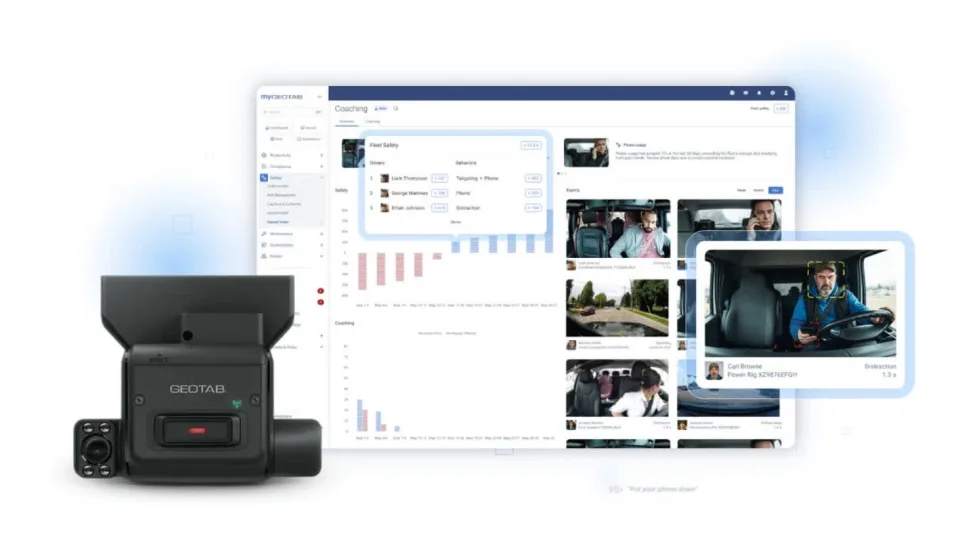
Geotab Expands Fleet Safety Tools With Video Coaching, Risk Insights
New safety and video capabilities aim to help fleet managers assess risk, support drivers, and take targeted action through video coaching, red-light violation detection, and more.
Read More →
How to Build a Better School Bus Driver Training Program
Is it time to strengthen your driver training? Here’s how to pick the right talent and improve recruitment, retention, and safety. This video is brought to you by IC Bus.
Read More →

Recent School Bus Accidents Leave 2 Dead, 2 Injured
Four school bus crashes in Florida, Illinois, and Georgia highlight risks in transportation lots, at bus stops, and during student loading and unloading.
Read More →
When Every Second Matters, Clarity Keeps Routes Moving
From routine delays to urgent incidents, strong communication practices help drivers, dispatchers, schools, and families respond with confidence.
Read More →
What Happens When a School Bus Catches Fire — and What Can Help
School bus fires are rare but can be devastating. Learn how advances in fire suppression and asset protection help fleets detect fires earlier, reduce damage, and improve safety.
Read More →
Geotab Launches Tool to Help Fleets Investigate Road Incidents
Geotab Investigations combines telematics data, video, documents, and other evidence to help fleets reconstruct incidents, resolve claims, and determine what happened.
Read More →
Texas Sixth Grader Wins 2026 National School Bus Safety Poster Contest
Sai Darshana Yekolu of Moseley Middle School in Prosper, Texas, was named the newest winner for her artwork, bringing the theme of “Safe Rides, Everyday Heroes” to life.
Read More →
Doing More With Less: How Transportation Directors Can Prioritize Safety Amid Budget Uncertainty
With diesel prices soaring and nearly one-third of transportation directors expecting budget cuts, maintaining student safety has never been more challenging. Download this guide to learn how leading districts are prioritizing risk, funding critical safety technology, and building stronger budget cases with data.
Read More →
Walton County Schools Adds Gatekeeper Stop-Arm Enforcement System
The Florida district will deploy Gatekeeper’s updated Student Protector technology, which now incorporates AI to improve video evidence.
Read More →