




Fla. district targets efficiency, saves $6.5M
Orange County Public Schools takes numerous steps to make its transportation operation more efficient, from consolidating routes and stops to reducing the number of surplus buses. Senior Director of Transportation Jim Beekman discusses the changes with SBF.

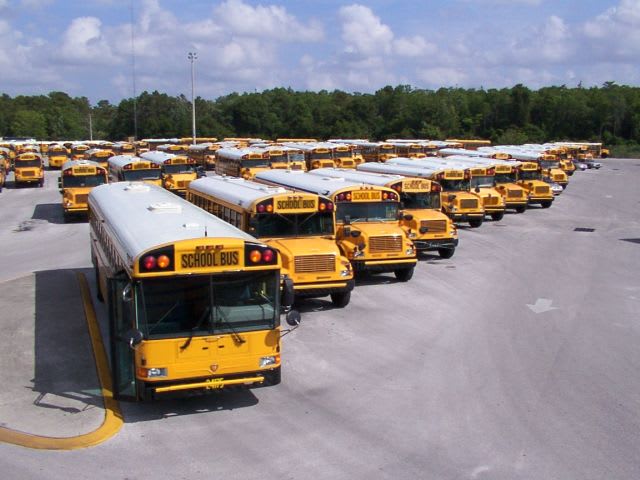
Consolidating routes and decreasing surplus buses are among the steps Orange County Public Schools has taken to boost efficiency.
ORLANDO, Fla. — Orange County Public Schools (OCPS) has taken numerous steps to make its transportation operation — one of the larger district-owned fleets in the nation — more efficient, resulting in a savings of more than $6.5 million.
The cost-cutting actions, many of which were recommended in an audit by consulting firm TransPar Group, ranged from routing changes to reducing the number of surplus buses. The cost savings of $6,508,037 was for the 2010-11 fiscal year, out of a total budget of $59,224,673.
Senior Director of Transportation Jim Beekman, who came to OCPS in October 2010, told SBF that the district had initially made significant bell schedule adjustments, which “saved money but caused some major parental objections. The audit was brought in to look for other ways to save transportation costs.”
In one component of the new plan, OCPS consolidated bus routes and stops throughout the district and made map improvements for more efficient routing. As a result, 44 routes were cut from the previous year, for a cost savings of $1,902,747.
Beekman, who has worked in student transportation since 1983, said that OCPS ended the 2010-11 school year with 931 routes and has brought the total down further to 911 this school year.
The routing reductions also led to some staff restructuring to eliminate redundancy. Two routing positions and two area manager positions were cut, for a savings of $178,411.
In another key move, the district decreased the number of spare buses needed to support its daily service requirement. A total of 280 buses were sold at auction, generating one-time revenue of $1,762,150.
For the 2011-12 fiscal year, OCPS’ spare bus ratio is down to 18 percent, and additional reductions will be considered in the future.
The district’s reduced fleet size eliminated the need to fill mechanic positions that were vacant. Three positions were cut, for a savings of $90,000.
Beekman said that OCPS also removed 71 late-model buses, and radio relief drivers (full-time, permanent substitutes) were strategically placed at compounds throughout the district. The radio relief drivers use equipment that was already assigned to routes to cover absenteeism. These changes reduced operating costs for a savings of $3,728,842 in 2010-11.
In addition to cutting costs, OCPS made efforts that enhanced its service. For example, expanding the use of automated vehicle location and GPS improved routing efficiencies and reduced average daily ride time by about 11 percent. Daily ride time was 84 minutes in 2010-11, down from 94 minutes 2009-10.
Beekman noted that cost reductions were tailored to avoid negatively impacting service for the district’s more than 73,000 daily passengers. The savings are continuing.
“We have reorganized the operations structure since October 2010,” Beekman said, “and we will realize another $2.5 million in savings this year. A large portion of that is in routing efficiencies.”
More Management

6 School Districts Named Transfinder's 2026 Top Transportation Teams
The software company has named six school districts across four states to its list for the fourth year, with one 'three-peat' winner. Find out which teams took home top honors!
Read More →
Innovation Was the Answer: Five Lessons Learned in School Transportation from 2025–26
Transportation leaders are embracing technology, transparency, and operational flexibility to meet growing demands with limited resources.
Read More →
AI Tools Roundup: New Fleet Tools Aim to Turn Data Into Faster Decisions
The latest AI-powered platforms could help student transportation teams analyze fleet performance, manage maintenance, and uncover operational insights using natural-language queries.
Read More →



EverDriven Integrates Pathwise's EZRouting into Routing Services
The new partnership combines trusted software with industry expertise to help district transportation teams streamline general education routing, improve efficiency, and lower operating costs.
Read More →
First Student Safety Executive Named Samsara Technology Leader of the Year
David Perez earned the honor for deploying AI-powered safety and fleet technologies that improved driver behavior and family communication.
Read More →
Zum Expands to Rhode Island with 2 New District Partnerships
The Ocean State becomes Zum’s 18th state served as the company expands its presence in the Northeast U.S., while launching operations in Philadelphia, and supporting FIFA World Cup 2026.
Read More →
The Driver Shortage Playbook
Driver shortages are still a major challenge for student transportation fleets, but the real issue has shifted. It’s no longer just about filling seats quickly. It’s about finding safe, reliable drivers who meet performance expectations and want to stay. The Driver Shortage Playbook covers why traditional recruitment tactics are falling short and how school fleets are adapting with smarter hiring, stronger retention strategies and a greater focus on driver quality.
Read More →
Stertil-Koni Announces New Company President
Lewis Nelson joins the heavy-duty vehicle lift provider, succeeding Scott Steinhardt in the lead role.
Read More →
Tennessee Hall of Fame Honors Drivers for Decades of Service
Frances Theiring, a school bus driver for Wilson County Schools, retires this year after almost 50 years on the road. She is one of two long-time drivers honored for their service in the state.
Read More →
What Happens to a School Bus After Retirement? First Student Has a New Answer
Through a new partnership with Advanced Remarketing Services, proceeds from retired vehicle sales will support Special Olympics and other community-focused organizations while advancing sustainability goals.
Read More →