




Dominion Energy Proposes Electric School Bus Program
The power and energy company’s electric school bus program would add 50 buses to its Virginia service territory by the end of 2020, and then possibly 1,000 buses to the area by 2025.

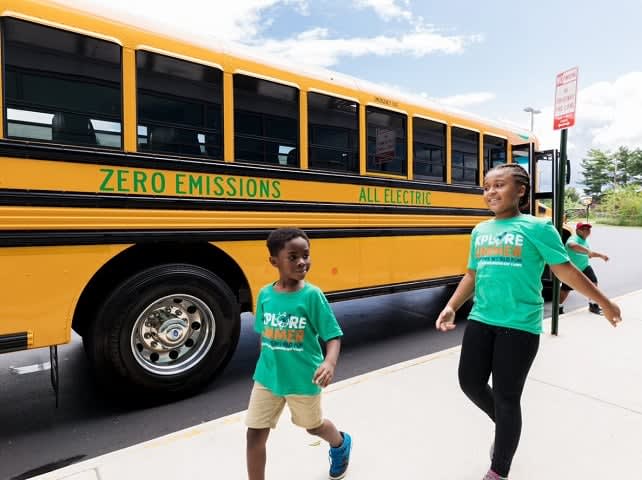
Dominion Energy's electric school bus program would add 50 electric buses to the company's Virginia service territory by the end of 2020, and then possibly 1,000 more buses by 2025. Photo courtesy Dominion Energy
Dominion Energy's electric school bus program would add 50 electric buses to the company's Virginia service territory by the end of 2020, and then possibly 1,000 more buses by 2025. Photo courtesy Dominion Energy
RICHMOND, Va. — Dominion Energy is proposing an electric school bus program that would reduce emissions, provide cost savings to school districts, and enhance vehicle-to-grid reliability.
In the coming weeks, the program will accept bids through an RFP process from school bus manufacturers and school districts can express their interest in participating in the program, receiving buses as soon as next year, according to a news release from the company.
The initial phase of the electric school bus program aims to have 50 buses fully operational within Dominion Energy’s Virginia service territory by the end of 2020 — all without any change in prices paid by customers, according to the company. Phase two of the project, with state approval, would expand the program to bring 1,000 electric school buses to the area by 2025. Once phase two is fully implemented, Dominion Energy reports that the bus's batteries could provide enough energy to power more than 10,000 homes. Phase three would set the goal of having 50% of all diesel school bus replacements be electric by 2025 and 100% by 2030.
“We’re committed to lowering our carbon emissions, but we can’t do it alone. Transportation is the number-one source of carbon emissions in the U.S., and by partnering with this industry, we can expedite the development of innovative, cleaner, more sustainable solutions,” said Thomas F. Farrell II, Dominion Energy’s chairman, president, and CEO. “We think that electric school buses will provide a wide range of benefits for the customers and communities we serve, including cleaner air, cost savings for school districts, and enhanced grid reliability.”
If fully implemented, by 2025, Dominion Energy said the program's effect would be the equivalent of removing more than 5,000 cars from the road per year. Additionally, the company said that it plans to reduce carbon emissions by 80% by 2050 and have 3,000 megawatts of solar and wind in operation or under development by 2022.
Under the program, Dominion Energy plans to offset the additional costs of an electric school bus, including charging infrastructure, above the standard cost for a diesel bus. Operational and maintenance costs would also be reduced by up to 60% per year for localities, according to the company.
“This innovative electric school bus program is one of many steps we are taking to make electric vehicles accessible to all Virginians, and we look forward to working with Dominion as they bring electric school buses to communities in all corners of our Commonwealth," said Gov. Ralph Northam.
The electric school buses will serve as a grid resource by creating additional energy storage technology to support the company’s integration of distributed renewables such as solar and wind, according to Dominion Energy. The “vehicle-to-grid” technology would leverage the bus batteries to store and inject energy onto the grid during periods of high demand when the buses are not needed for transport.
Dominion Energy held a tele-town hall meeting on Wednesday to provide school districts with more information about the program.
More Alternative Fuels

CALSTART and Forth Combine to Form Catalyst Mobility
The new name represents a renewed vision for the nonprofit focused on advancing clean, equitable, and affordable transportation solutions that move people and goods.
Read More →
Alt-Fuel Moves: New Buses, Charging Hubs & Real-World EV Testing
Propane and electric school bus deployments continue to grow as districts add new vehicles, expand charging infrastructure, and gather more real-world operating data.
Read More →
Fewer Electric School Bus Models Reshape the U.S. Market
WRI’s latest buyer’s guide points to a consolidating electric school bus market, but fewer options may reflect a maturing industry rather than fewer meaningful choices for school bus operators.
Read More →
The Fuel Budget You Can Actually Predict: How Propane Autogas Keeps Money in the Classroom
Learn how propane autogas helps school districts manage fuel costs with predictable pricing, lower maintenance, and reduced emissions from former transportation director Joel Stutheit.
Read More →
Hendrickson, Driventic Introduce New Electric Powertrain for School Buses
ELECTRAAX, the electrified, lightweight drive axle offers integrated ePowertrain efficiency and modular flexibility for Class 6–7 school bus use.
Read More →
The Mobility House Joins PowerFlex in Fleet Electrification Deal
The acquisition combines intelligent charging software, bidirectional charging expertise, and fleet electrification services to support the growing adoption of electric school buses across North America.
Read More →
Alt-Fuel Moves: Electric School Bus Investments Hit the Road
See which districts across the U.S. are putting electric school buses into service, expanding charging infrastructure, and planning the next phase of fleet electrification.
Read More →
With Fuel Volatility Ahead, School Districts Turn to Propane
While diesel prices peaked above $5 this spring, districts with propane autogas-powered fleets paid under $2 per gallon, according to PERC.
Read More →
EPA Unveils Proposed Changes to 2027 Heavy-Duty Engine Rules
The federal agency has proposed changes to next year’s targets that would eliminate DEF derates, ease warranty requirements, and retain current NOx emissions standards.
Read More →
Alt-Fuel Moves: EV Charging & Infrastructure Projects Gain Momentum
The latest developments include new funding, charging infrastructure, utility investments, and fleet technologies designed to support the transition to electric school buses nationwide.
Read More →