




Connecticut district saves $200K with propane school buses
Contractor All-Star Transportation acquired 51 Blue Bird Propane Vision Type C school buses to service Torrington Public Schools about two years ago when the district was looking to replace some of its older diesel school buses.

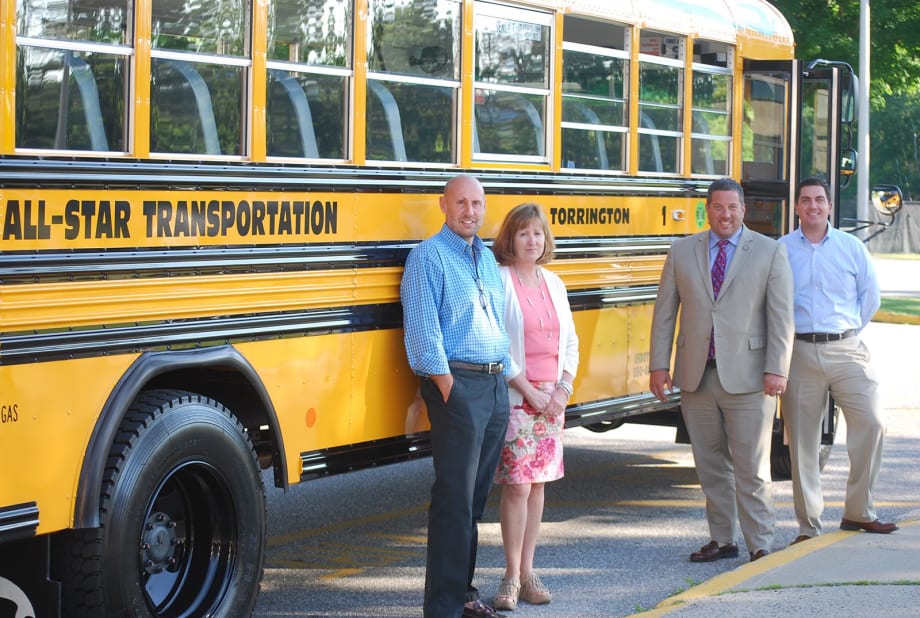
Shown here with one of All-Star Transportation's propane buses, from left to right: John Dufour, president, All-Star Transportation; Leslie Sheldon, operations manager, All-Star Transportation; Connecticut State Rep. John Case; and Ryan Bingham, former Torrington mayor. Photo courtesy of All-Star Transportation.
John Dufour, president of All-Star Transportation, a Connecticut-based, family-owned school bus contractor, acquired 51 Blue Bird Propane Vision Type C school buses about two years ago to service Torrington Public Schools, saving the district about $200,000 in fuel costs per year.
Torrington Public Schools’ transportation contractor first proposed making a switch to alternative fuels in 2012 when the district was looking to replace some of its older diesel school buses.
“With fuel being such a big expense for schools, any advantage we can provide that will save schools money, they’re open to it," said Dufour, whose company maintains the propane autogas buses for Torrington.
According to Dufour, the district uses more than 140,000 gallons of fuel each year. With propane autogas, the school system pays less than $2.00 per gallon, compared with diesel, which costs upwards of $3.50 per gallon.
“Once we ran the numbers it was a no-brainer,” Dufour said. “We made them a deal on the buses and they signed a new seven year contract. To date, Torrington Public Schools has saved about $200,000 in fuel costs per year, money that can now be spent on teachers, supplies, classrooms, and all of the other things they’re working on.”
Torrington Public Schools set a fixed price for propane through a fuel contract with its local propane provider, and All-Star Transportation installed the refueling infrastructure on its property: a single dispenser and two 1,980 gallon tanks. They also trained two staff members to handle refueling the propane autogas fleet.
“Roush CleanTech came in and helped do refueling and maintenance training with our staff and that was it,” Dufour said. “The local propane provider comes with a bobtail truck every other or every third week and fills up our tanks. We’ve had absolutely no issues at all, and we didn’t have to make any alterations to our facilities and shop, either.”
Dufour added that the buses have performed well in cold weather not only for his staff, but for others in the Northeast, too.
“I made phone calls to contractors currently running them in upstate New York and talked to people in climates worse than ours, and they all had no issues with cold weather performance,” Dufour said. “The propane-autogas-powered buses even started better than diesels.”
A majority of the 700 Class C buses All-Star Transportation operates run on diesel, which has to be treated during the winter with additives so the fuel doesn’t gel. With propane autogas, Dufour said they’ve saved both time and money because the fuel doesn’t require any additional work.
“With propane, you just continue your normal routine and it’s the same no matter the temperature," he added. "In fact, the propane buses start almost instantly, even when it’s zero or 10 below. With the diesels, we sometimes bring staff in early just to ensure they start.”
Additionally, with a diesel bus, Dufour explained it can take 20 minutes of drive time before they warm up, and that’s an important consideration, especially with Connecticut’s tough standards on idling.
During the time All-Star Transportation has been running its propane autogas buses with Torrington Public Schools, Dufour and his team have noted the potential for less maintenance when using propane autogas.
“We think we’ll see long term maintenance savings with propane autogas,” Dufour said. “We still service the buses at the same manufacturer-recommended intervals, but the volume of oil we use compared with diesel is less because the engines run so clean. Our guys work on diesel buses in the Torrington shop for other schools in the area, and any one of them will tell you they would rather work on the propane buses. They’re that easy.”
More Alternative Fuels

CALSTART and Forth Combine to Form Catalyst Mobility
The new name represents a renewed vision for the nonprofit focused on advancing clean, equitable, and affordable transportation solutions that move people and goods.
Read More →
Alt-Fuel Moves: New Buses, Charging Hubs & Real-World EV Testing
Propane and electric school bus deployments continue to grow as districts add new vehicles, expand charging infrastructure, and gather more real-world operating data.
Read More →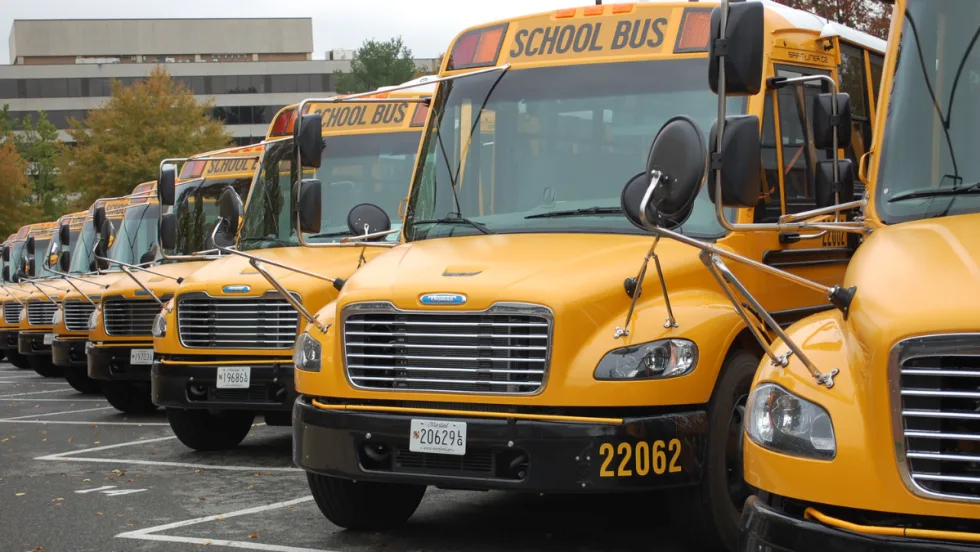
Fewer Electric School Bus Models Reshape the U.S. Market
WRI’s latest buyer’s guide points to a consolidating electric school bus market, but fewer options may reflect a maturing industry rather than fewer meaningful choices for school bus operators.
Read More →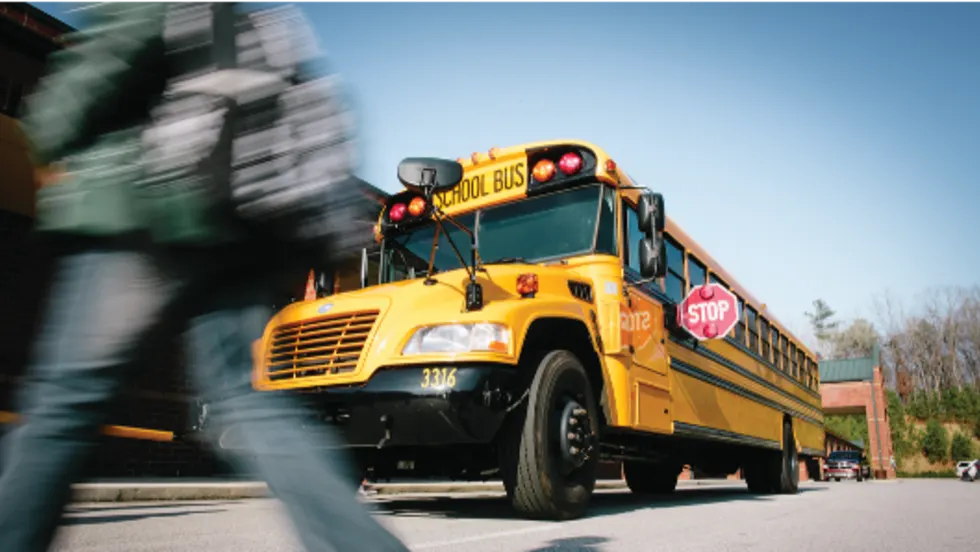
The Fuel Budget You Can Actually Predict: How Propane Autogas Keeps Money in the Classroom
Learn how propane autogas helps school districts manage fuel costs with predictable pricing, lower maintenance, and reduced emissions from former transportation director Joel Stutheit.
Read More →
Hendrickson, Driventic Introduce New Electric Powertrain for School Buses
ELECTRAAX, the electrified, lightweight drive axle offers integrated ePowertrain efficiency and modular flexibility for Class 6–7 school bus use.
Read More →
The Mobility House Joins PowerFlex in Fleet Electrification Deal
The acquisition combines intelligent charging software, bidirectional charging expertise, and fleet electrification services to support the growing adoption of electric school buses across North America.
Read More →
Alt-Fuel Moves: Electric School Bus Investments Hit the Road
See which districts across the U.S. are putting electric school buses into service, expanding charging infrastructure, and planning the next phase of fleet electrification.
Read More →
With Fuel Volatility Ahead, School Districts Turn to Propane
While diesel prices peaked above $5 this spring, districts with propane autogas-powered fleets paid under $2 per gallon, according to PERC.
Read More →
EPA Unveils Proposed Changes to 2027 Heavy-Duty Engine Rules
The federal agency has proposed changes to next year’s targets that would eliminate DEF derates, ease warranty requirements, and retain current NOx emissions standards.
Read More →
Alt-Fuel Moves: EV Charging & Infrastructure Projects Gain Momentum
The latest developments include new funding, charging infrastructure, utility investments, and fleet technologies designed to support the transition to electric school buses nationwide.
Read More →