




Looking to Electrify Your School Bus Fleet? Check Out: Lowering Hurdles on The Route Podcast
Cherokee Indians Herald North Carolina’s First Electric School Bus
The Thomas Built Buses vehicle is just the first for the tribe, which is expected to get at least four more with funds from a Diesel Emissions Reduction Act (DERA) grant award.
by SBF Staff
March 16, 2022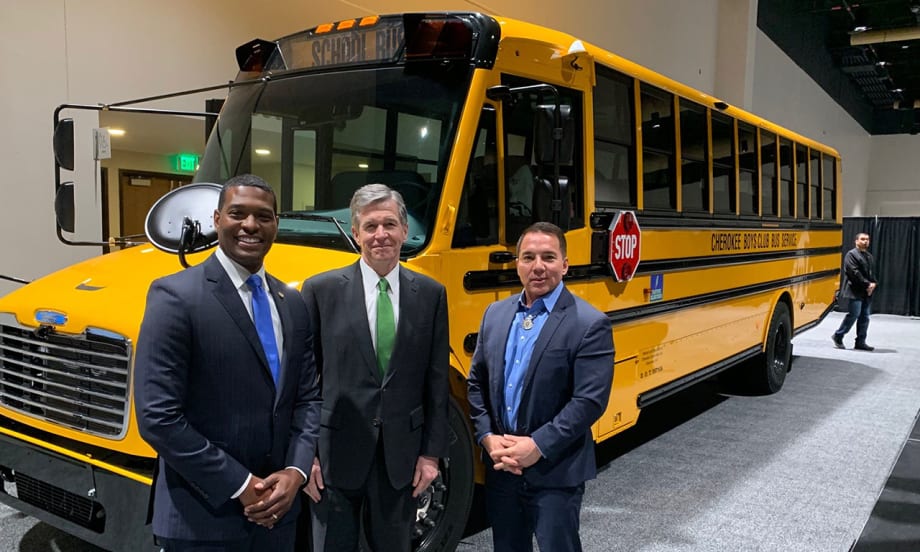
Richard Sneed (right), principal chief of the Eastern Band of Cherokee Indians, joined EPA chief Michael Regan (left) and North Carolina Gov. Roy Cooper (middle) to celebrate the state's first electric school bus.
Photo: Environmental Protection Agency
3 min to read
The Eastern Band of Cherokee Indians welcomed North Carolina’s first electric school bus, along with Gov. Roy Cooper and Michael Regan, administrator of the U.S. Environmental Protection Agency.
“We are grateful and excited for cooperation we have received from Governor Cooper and the Environmental Protection Agency in the effort to provide better and safer transportation for our school children,” said Richard Sneed, principal chief of the Eastern Band of Cherokee Indians. “We are confident that the new electric school buses will be an asset for the community for years to come.”
Cooper called the first bus a win-win for North Carolina, because it’s better for children’s health and the environment, and the vehicle was built in the town of High Point – home of Thomas Built Buses.
“The transition to clean transportation is critical in our fight against climate change, and this new emission-free bus shows just how many opportunities for clean energy transitions there are in our everyday life,” the governor said.
Besides this inaugural bus, Regan announced, the tribe also has been awarded a Diesel Emissions Reduction Act (DERA) grant to buy for more all-electric school buses.
“Thanks to the leadership of Governor Cooper and Principal Chief Sneed, EPA and our partners are delivering on our mission to protect children’s health and the environment and hitting the accelerator on a clean transportation future through this investment in electric school buses,” Regan said. “With an unprecedented $5 billion investment in low- and zero-emission school buses from the Bipartisan Infrastructure Law coming soon for communities across the country, this is only the beginning.”
Kevin Bangston, president and CEO of Thomas Built Buses, said that his company is proud to deliver the first all-electric school bus in their home state.
“Our company has deep roots here in North Carolina tracing back over 100 years,” Bangston said. “In that time, we’ve led the way in supplying reliable, quality buses to transport students to and from school, and we’re excited to continue to do so as we enter a new era of clean, sustainable, zero-emission transportation.”
Stephen DeMay, president of Duke Energy North Carolina, praised the tribe’s commitment to electric school buses.
“This celebration is an example of what transformation-minded organizations can do when we work together,” he said. “Duke Energy applauds the vision demonstrated today, and we stand ready to make electric buses a reality across North Carolina.”
One electric school bus removes more than 23 tons of carbon dioxide emissions each year, according to Elizabeth S. Biser, the state’s secretary of the Department of Environmental Quality.
This electric bus is part of a larger goal of the Eastern Band of Cherokee Indians to buy at least 50% electric or hybrid vehicles when making new fleet purchases and to install 20 electric vehicle charging stations on the Qualla Boundary and at tribal buildings by 2024. The tribe is also working to install electric vehicle chargers and install solar panels on residential homes.
The purchase of this school bus was made possible through a VW grant administered by the NCDEQ’s Division of Air Quality as part of the Volkswagen Settlement Phase 1 Mitigation Plan. The bus is the first of six electric school buses awarded in Phase 1 of the Volkswagen program. The application period for Volkswagen Phase 2 school bus replacement grants is open now through June 6, 2022, and includes $27 million available to replace diesel school buses with a goal of directing at least 50% of available funds toward electrification projects.
In January, Governor Cooper signed Executive Order No. 246, which directs the North Carolina Department of Transportation to work with public and private sectors to create a Clean Transportation Plan that will craft solutions for a cleaner and more resilient transportation system. The order underscores the importance of emphasizing environmental justice and equity in the state’s transition to a clean economy.
More Alternative Fuels
Bipartisan Bill Seeks to Extend Clean School Bus Program Through 2031
The proposed legislation would renew federal support for cleaner school buses as districts navigate funding uncertainty, rising fuel and infrastructure costs, and fleet replacement needs.
Read More →
Alt-Fuel Moves: Electric Bus Rollouts, Bidirectional Charging & Propane Growth
See which fleets are adding electric and propane school buses as districts and operators invest in charging infrastructure, bidirectional technology, and alternative-fuel expansion.
Read More →
Nobody Told Diesel Prices They Were Supposed to Come Down
With diesel prices surging, school bus fleets have new reason to stress-test fuel costs, consider diversification, and calculate what each route really costs to operate.
Read More →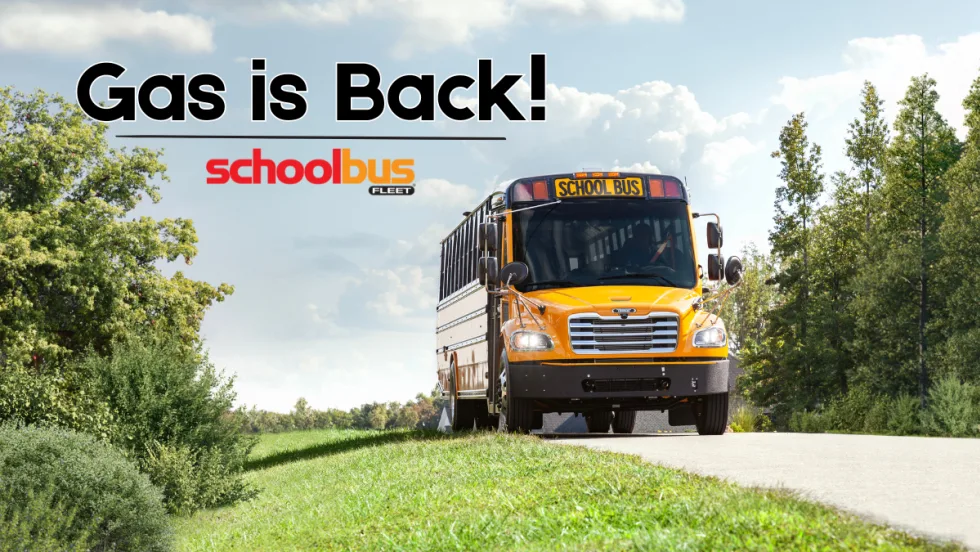
Why Gasoline School Buses Are Making a Comeback
Gasoline is gaining ground in full-size school buses. See how today’s options stack up against diesel on cost, maintenance, emissions, performance, and more.
Read More →
EPA Opens $180M DERA Funding Round for Diesel Upgrades
The 2026 Diesel Emissions Reduction Act program seeks applications from eligible organizations to accelerate the retirement of legacy diesel vehicles.
Read More →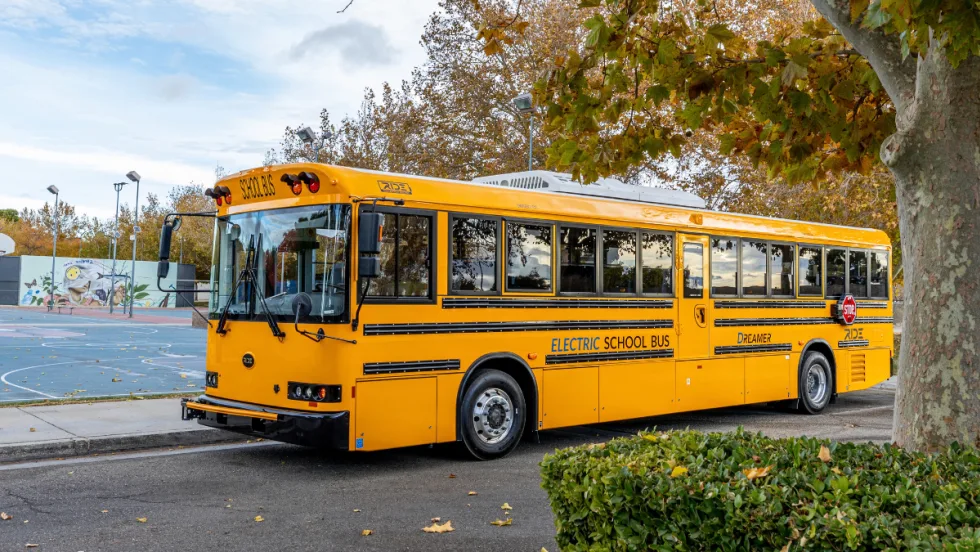
The Secret Life of an Electric School Bus Battery
Batteries change throughout years of daily routes, but degradation doesn’t necessarily mean the end. Here’s what operators should know about performance, safety, and second life.
Read More →
CALSTART and Forth Combine to Form Catalyst Mobility
The new name represents a renewed vision for the nonprofit focused on advancing clean, equitable, and affordable transportation solutions that move people and goods.
Read More →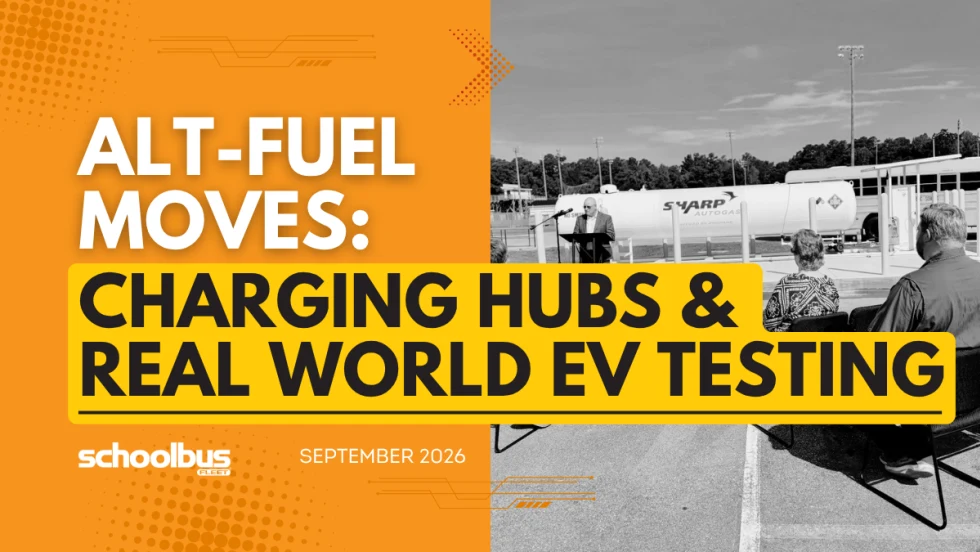
Alt-Fuel Moves: New Buses, Charging Hubs & Real-World EV Testing
Propane and electric school bus deployments continue to grow as districts add new vehicles, expand charging infrastructure, and gather more real-world operating data.
Read More →
Fewer Electric School Bus Models Reshape the U.S. Market
WRI’s latest buyer’s guide points to a consolidating electric school bus market, but fewer options may reflect a maturing industry rather than fewer meaningful choices for school bus operators.
Read More →
The Fuel Budget You Can Actually Predict: How Propane Autogas Keeps Money in the Classroom
Learn how propane autogas helps school districts manage fuel costs with predictable pricing, lower maintenance, and reduced emissions from former transportation director Joel Stutheit.
Read More →