




Census Bureau Early Data Indicates Pupil Transportation Spending Fell in 2020
Despite growth in most other aspects of elementary and secondary schools throughout the United States, pupil transportation seems to take a spending hit during the COVID-19 pandemic year.

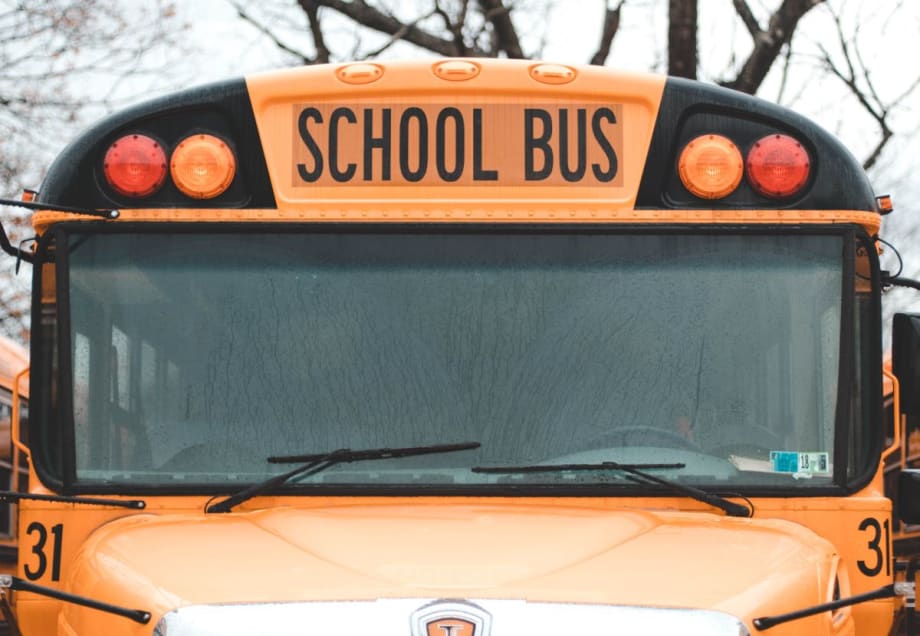
Preliminary data from the Annual Survey of School System Finances shows a drop in pupil transportation spending in 2020, despite overall total spending by elementary and secondary schools in the United States.
Photo by Austin Pacheco via UnSplash.
Based on preliminary data from the U.S. Census Bureau, elementary and secondary school revenues and spending mostly increased during the COVID-19 pandemic in 2020, with a notable (and perhaps unsurprising) exception: pupil transportation.
While total spending rose to $586.4 billion (about 2.5 percent higher than $571.8 billion in 2019), transportation expenditures dropped 5.7 percent from $21.3 billion in 2019 to $20.1 billion.
“Because of the pandemic, the two areas that had 1-year declines (student transportation and food services) had slower growth in 10-year spending than other categories,” wrote Stephen Wheeler, a supervisory statistician in the Census Bureau’s economic reimbursable surveys division.
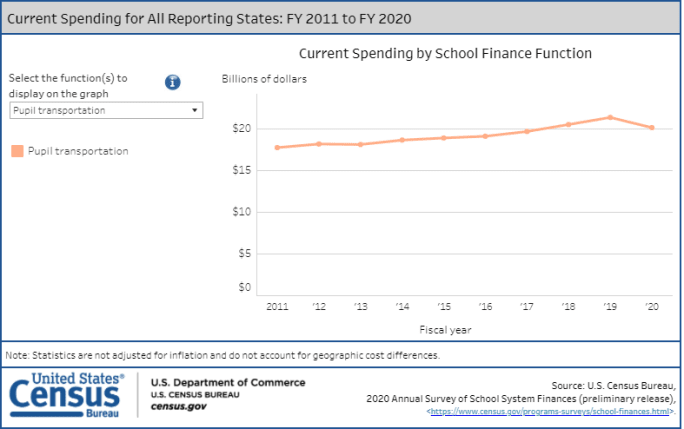
This chart shows that, based on early numbers form the U.S. Census Bureau, student transportation expenditures fell about 5.7 percent in 2020, down to $20.1 billion from $21.3 billion.
Image courtesy U.S. Census Bureau.
Of 36 areas reporting in these early numbers from the Census Bureau’s Annual Survey of School System Finances, however, five indicated that they spent more on pupil transportation in 2020 than in the previous year: Delaware, the District of Columbia, Minnesota, Washington, and Wyoming.
The survey’s final results won’t come until May 2022. But early numbers suggest that while revenue from state and local sources increased, school districts saw less funding from federal sources.
It remains to be seen, though, what the full implications of the Coronavirus Aid, Relief, and Economic Security Act (CARES Act) are for public school system funding after the next full fiscal year, the Census Bureau reports.
No matter the final outcome of the survey, the National Association of State Directors of Pupil Transportation Services (NASDPTS) is warning against basing future spending on 2020's numbers.
"Transportation spending is an important component of any school district's budget," said NASDPTS President-Elect Pat Schofill. "Given the many different ways in which school districts handled the pandemic, it's difficult to quantify expectations around what we would have or should have expected. The most important takeaway, however, is that school districts should not look to reduce their transportation spending based on their 2020 numbers and should instead look to their 2019 numbers and some type of adjustments based on what they now now. Now is not the time to reduce transportation spending."
More Management

How to Build a Better Driver Training Program
Ready to boost up your school bus instructor training? Here’s how to pick the right talent and improve recruitment, retention, and safety.
Read More →
CALSTART and Forth Combine to Form Catalyst Mobility
The new name represents a renewed vision for the nonprofit focused on advancing clean, equitable, and affordable transportation solutions that move people and goods.
Read More →
What Makes a Great School Bus Driver Trainer?
Choosing the right school bus driver trainer takes more than experience. Learn six keys to selecting and developing trainers and evaluating program effectiveness.
Read More →


School Bus Contractors Expand Through New Deals, Acquisitions & Partnerships
STA's Canadian division acquires Ontario-based G&L Stevenson Transport while Durham School Services adds a new district contract in California, First Student adds a New Jersey contract, and Minnesota Coaches acquires Halo Transportation.
Read More →
Logan Bus Company Rolls Out AI Phone System for NYC School Bus Families
A summer pilot found that AI agents could handle most routine calls, freeing up time for customer service staff to focus on emergencies and complex family concerns.
Read More →
From Intent to Impact: What I Learned About Leadership from TAPT
A Texas transportation supervisor shares lessons on self-awareness, accountability, managing stress and building trust — and why investing in leadership development matters at every stage of your career.
Read More →
NAPT Names 2026 Award Recipients, Hall of Fame Inductee
Who earned national recognition for their work in student transportation? This year, NAPT named five recipients of its 2026 awards for service, safety, and leadership, plus its newest Hall of Famer.
Read More →
2026 State of Student Transportation Report
Driver shortages. Rising costs. Growing safety expectations. More data, but not enough time to act on it. The 2026 State of Student Transportation Report reveals what transportation leaders say is putting the most pressure on their operations—and where they’re investing next. See how your priorities compare.
Read More →
How to De-Escalate an Angry Person: 5 Steps for Handling Workplace Conflict
What makes emotions run high, and how should you handle an angry colleague or parent? Follow these steps for staying calm, listening, showing empathy, and resolving conflict.
Read More →
What Readiness Looks Like This School Year
Learn about the challenges shaping the 2026–2027 school year, from persistent driver shortages and budget pressure to technology and readiness gaps. See how school districts are responding and adapting in Zonar’s 2026 Back-to-School Readiness Report.
Read More →