




Related: Canadian Officials Hold Off on Seat Belt Requirement
Bill Would Require Seat Belts on British Columbia School Buses
Proposed legislation would require all new school buses purchased in the province after September 2021 to be equipped with seat belts.

Sadiah Thompson・Assistant Editor
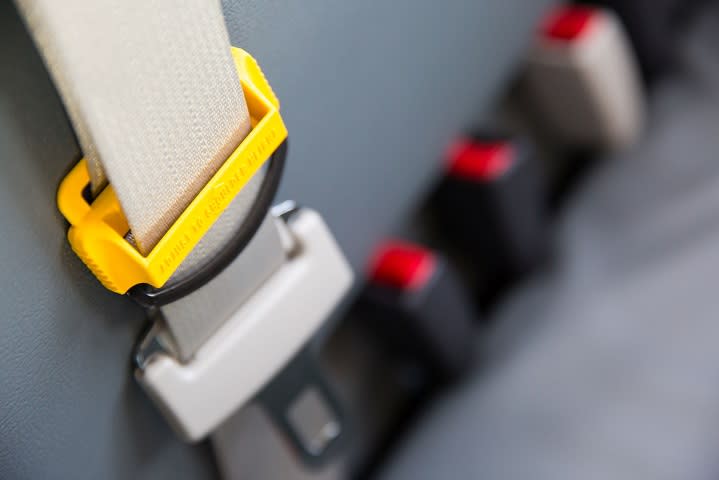
The bill would require all new school buses purchased in the province after September 2021 to be equipped with seat belts. Photo courtesy Des Moines (Iowa) Public Schools
2 min to read
The bill would require all new school buses purchased in the province after September 2021 to be equipped with seat belts. Photo courtesy Des Moines (Iowa) Public Schools
BRITISH COLUMBIA, Canada — A provincial lawmaker here introduced a bill on Monday that would require seat belts on new school buses, Vancouver Sun reports.
Laurie Throness, a member of the province's legislative assembly, presented the bill to the legislature after a local school bus driver created an online petition demanding that Transport Canada require three-point seat belts on school buses, according to the news source. The new bill would amend British Columbia’s Motor Vehicle Act and make seat belts mandatory on all new buses purchased in the province after September 2021.
As previously reported, Gary Lillico started the petition after he came across an investigative report in October 2018 on CBC’s “The Fifth Estate” about a study from Transport Canada that reached the conclusion that school bus safety features were insufficient in preventing injuries. The conclusion was apparently based on a flawed study from 1984, according to the CBC story.
Throness told CityNews that the more he looked into the lack of seat belts on school buses, the more he considered the need for a policy change. He also told the news source that he wants to give school boards some time to make the shift to add seat belts, and that the initiative will need to be phased in if the bill passes.
On Monday, Claire Trevana, the minister of transportation and infrastructure, told CityNews that the provincial government is participating in a task force initiated by Transport Canada to analyze “measures to improve safety in and around school buses, including seat belts.” She added that safety is a top priority for the province, and that “if there is a way to improve the safety of school buses, we are interested in looking at it — and we already are.” She also said that the task force’s recommendations will be presented in January.
As of press time, Lillico’s petition has collected more than 120,000 signatures, with a goal of 150,000.
More Safety

Geotab Expands Fleet Safety Tools With Video Coaching, Risk Insights
New safety and video capabilities aim to help fleet managers assess risk, support drivers, and take targeted action through video coaching, red-light violation detection, and more.
Read More →
How to Build a Better School Bus Driver Training Program
Is it time to strengthen your driver training? Here’s how to pick the right talent and improve recruitment, retention, and safety. This video is brought to you by IC Bus.
Read More →
Recent School Bus Accidents Leave 2 Dead, 2 Injured
Four school bus crashes in Florida, Illinois, and Georgia highlight risks in transportation lots, at bus stops, and during student loading and unloading.
Read More →

Sponsored•September 8, 2026
When Every Second Matters, Clarity Keeps Routes Moving
From routine delays to urgent incidents, strong communication practices help drivers, dispatchers, schools, and families respond with confidence.
Read More →
What Happens When a School Bus Catches Fire — and What Can Help
School bus fires are rare but can be devastating. Learn how advances in fire suppression and asset protection help fleets detect fires earlier, reduce damage, and improve safety.
Read More →
Geotab Launches Tool to Help Fleets Investigate Road Incidents
Geotab Investigations combines telematics data, video, documents, and other evidence to help fleets reconstruct incidents, resolve claims, and determine what happened.
Read More →
Texas Sixth Grader Wins 2026 National School Bus Safety Poster Contest
Sai Darshana Yekolu of Moseley Middle School in Prosper, Texas, was named the newest winner for her artwork, bringing the theme of “Safe Rides, Everyday Heroes” to life.
Read More →
Sponsored•August 27, 2026
Doing More With Less: How Transportation Directors Can Prioritize Safety Amid Budget Uncertainty
With diesel prices soaring and nearly one-third of transportation directors expecting budget cuts, maintaining student safety has never been more challenging. Download this guide to learn how leading districts are prioritizing risk, funding critical safety technology, and building stronger budget cases with data.
Read More →
Walton County Schools Adds Gatekeeper Stop-Arm Enforcement System
The Florida district will deploy Gatekeeper’s updated Student Protector technology, which now incorporates AI to improve video evidence.
Read More →
How To Build a More Secure School Bus Yard During and After Hours
As thefts and overnight security threats continue, school transportation leaders are combining stronger operational practices with AI-enabled surveillance to better protect buses, facilities, and staff.
Read More →