




All eyes on Alabama bus belt study
As a pilot study of the impact of lap-shoulder belts on school buses enters its final year, national and state transportation safety agencies are awaiting the results.

TUSCALOOSA, Ala. — As a pilot study of the impact of lap-shoulder belts on school buses enters its final year, national and state transportation safety agencies are awaiting the results.
The study, conducted by the University of Alabama’s University Transportation Center for Alabama, has 12 new school buses at 10 school districts equipped with different types of lap-shoulder (or three-point) belts.
According to the university, the project involves four areas of research: a review of national experiences and trends, alterations needed to the Alabama bus fleet if seat belt use is adopted, analysis of Alabama school bus crash data and a cost-benefit analysis.
The buses in the study each have four ceiling-mounted video cameras, allowing the research team to gather data on the level of restraint use, review the percentage of students using the belts and the percentage of students using the belts properly, and investigate whether using the belts keeps students from moving into the aisle and out of the protective compartment provided by the seats.
Researchers said that the camera data will also gauge the benefit of having a bus aide to monitor students, and time devoted to buckling at each stop will be tracked.
“The first two years of our study have given us insight into the basic pattern of school bus seat belt use by Alabama’s schoolchildren,” said Dr. Jay Lindly, director of the University Transportation Center for Alabama. “The third and final year will allow us to vary some of the basic parameters of the study to see how that affects results. For example, does changing the bus driver on a route affect seat belt usage, or does adding an aide to a route affect seat belt usage?”
Dr. Dan Turner, professor of civil engineering and the principal investigator of the research team, said that detailed results will not be released until the study is completed. However, the team did say that the number of students wearing the belts properly has risen during the past year, and that there has been an increase in positive public perception regarding the installation of the belts.
The University of Alabama said that it is the first institution to carry out a large-scale scientific study of seat belts on school buses. Accordingly, the National Highway Traffic Safety Administration, the National Transportation Safety Board and other agencies have contacted the research team and are awaiting the results.
The study was prompted by the 2006 school bus crash in Huntsville, Ala., in which four students were killed.
More Safety
School's Back. Here's What Happened to Traffic, Speeding & Distraction
What happens to traffic when school resumes? New data analysis examines changes in distracted driving, congestion, and speeding around schools.
Read More →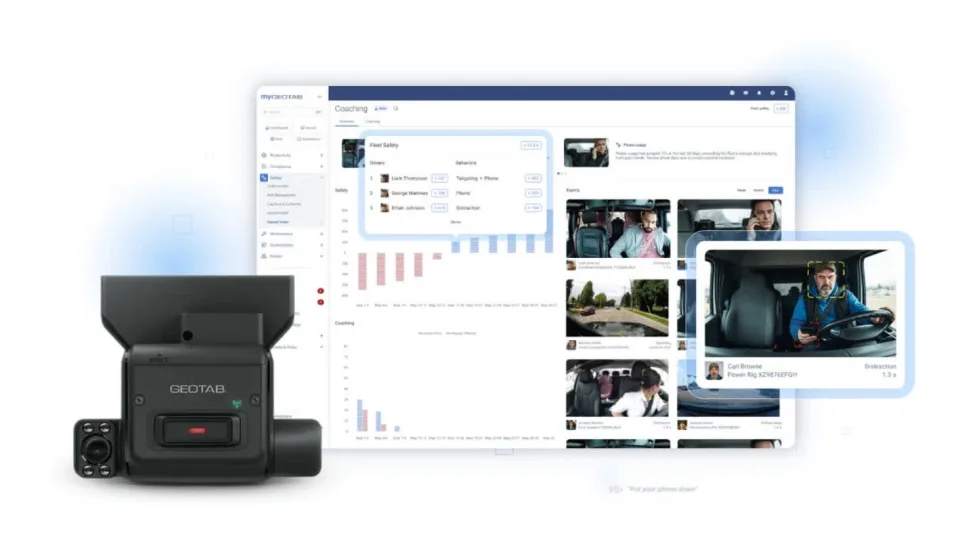
Geotab Expands Fleet Safety Tools With Video Coaching, Risk Insights
New safety and video capabilities aim to help fleet managers assess risk, support drivers, and take targeted action through video coaching, red-light violation detection, and more.
Read More →
How to Build a Better School Bus Driver Training Program
Is it time to strengthen your driver training? Here’s how to pick the right talent and improve recruitment, retention, and safety. This video is brought to you by IC Bus.
Read More →

Recent School Bus Accidents Leave 2 Dead, 2 Injured
Four school bus crashes in Florida, Illinois, and Georgia highlight risks in transportation lots, at bus stops, and during student loading and unloading.
Read More →
When Every Second Matters, Clarity Keeps Routes Moving
From routine delays to urgent incidents, strong communication practices help drivers, dispatchers, schools, and families respond with confidence.
Read More →
What Happens When a School Bus Catches Fire — and What Can Help
School bus fires are rare but can be devastating. Learn how advances in fire suppression and asset protection help fleets detect fires earlier, reduce damage, and improve safety.
Read More →
Geotab Launches Tool to Help Fleets Investigate Road Incidents
Geotab Investigations combines telematics data, video, documents, and other evidence to help fleets reconstruct incidents, resolve claims, and determine what happened.
Read More →
Texas Sixth Grader Wins 2026 National School Bus Safety Poster Contest
Sai Darshana Yekolu of Moseley Middle School in Prosper, Texas, was named the newest winner for her artwork, bringing the theme of “Safe Rides, Everyday Heroes” to life.
Read More →
Doing More With Less: How Transportation Directors Can Prioritize Safety Amid Budget Uncertainty
With diesel prices soaring and nearly one-third of transportation directors expecting budget cuts, maintaining student safety has never been more challenging. Download this guide to learn how leading districts are prioritizing risk, funding critical safety technology, and building stronger budget cases with data.
Read More →
Walton County Schools Adds Gatekeeper Stop-Arm Enforcement System
The Florida district will deploy Gatekeeper’s updated Student Protector technology, which now incorporates AI to improve video evidence.
Read More →