




Ohio District School Buses Equipped With Automated Misters
Systems reduce labor for Akron Public Schools bus drivers while battling COVID-19 and other viruses, mold, and mildew.

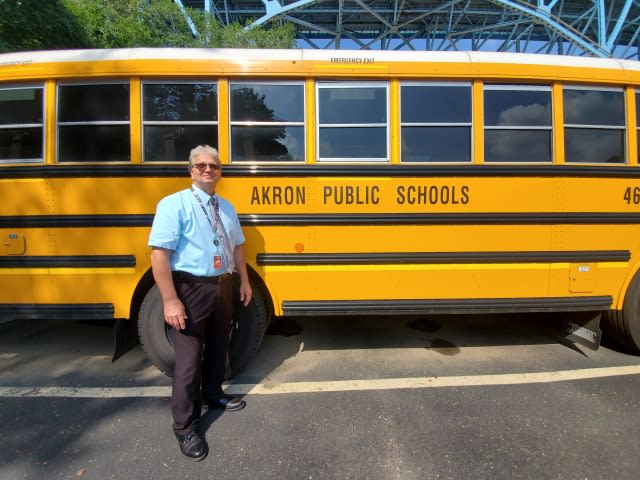
William Andexler, coordinator of transportation for Akron Public Schools, wanted to bring rigorous cleaning "out of our classrooms and onto the buses."
Photo courtesy Akron Public Schools
School bus drivers in Akron rolled out this week with automated sanitation assistance instead of the usual spray bottle.
All 100 buses in the Akron Public Schools district got upgraded with misting sanitizer equipment that disperses disinfectant from nozzles above the seats while the vehicles are empty.
“All the school districts since the pandemic are really bumping up cleaning and disinfecting inside classrooms,” said William Andexler, coordinator of transportation services for Akron schools. His is the first Ohio district to incorporate the sanitizing misters. “We needed to bring it out of our classrooms and onto the buses.”
Maximizing Clean Air, Surface Technologies for Safe School Bus Operations
The district spent $200,000 in federal COVID-19 pandemic relief funding on equipment and installation of the new systems by Michigan-based Transit Safety Solutions Plus. Without the pandemic funds, Andexler said, the district might still have proceeded with the upgrade, but on a significantly smaller scale.
“This particular disinfectant gets rid of mold, mildew, and viruses, and helps ease everyone’s minds,” Andexler said. “I want to make sure we can cut down on the flu or whatever kids catch. If we can keep kids in school, it’s better for everybody.”
Previously, drivers had to mask up and use bottles of alcohol-based disinfectant to clean buses between routes. Now, the driver turns a key, triggers the system, steps off, and waits about 15 minutes for the water-based mixture to disperse and dry in the unoccupied bus.

Nozzles above each seat spray water-based Goldshied disinfectant into the unoccupied bus.
Photo courtesy Akron Public Schools
The installation crew averaged about eight Thomas Built and Blue Bird buses per day, but the district faced some challenges due to being down three mechanics, Andexler said. So, Akron Public Schools hired an outside firm to help with the project.
Previously, drivers had to mask up and use bottles of alcohol-based disinfectant to clean buses between routes. Now, the driver turns a key, triggers the system, steps off, and waits about 15 minutes for the water-based Goldshield mixture to disperse and dry in the unoccupied bus.
8 Tips for Cleaning School Buses in the Age of Coronavirus
Bill Hadden, chief executive officer of Transit Safety Solutions Plus, said about 10,000 installations of the Trans Mist system are currently deployed or budgeted throughout the country, including these 11 states:
Pennsylvania
New Jersey
New York
Ohio
South Carolina
Alabama
Texas
South Dakota
Illinois
Because the system is fully installed, Hadden said, “it does not require anyone to transport it around to do cleaning and then have to store it. This saves time, physical labor, labor cost, and storage space.”
More Safety
Illegal School Bus Passing Drops 24% in New York Districts
With fewer than 5% of citations involving repeat offenders, Westchester County officials said enforcement, education, and community partnerships are helping change driver behavior.
Read More →
School's Back. Here's What Happened to Traffic, Speeding & Distraction
What happens to traffic when school resumes? New data analysis examines changes in distracted driving, congestion, and speeding around schools.
Read More →
Geotab Expands Fleet Safety Tools With Video Coaching, Risk Insights
New safety and video capabilities aim to help fleet managers assess risk, support drivers, and take targeted action through video coaching, red-light violation detection, and more.
Read More →

How to Build a Better School Bus Driver Training Program
Is it time to strengthen your driver training? Here’s how to pick the right talent and improve recruitment, retention, and safety. This video is brought to you by IC Bus.
Read More →
Recent School Bus Accidents Leave 2 Dead, 2 Injured
Four school bus crashes in Florida, Illinois, and Georgia highlight risks in transportation lots, at bus stops, and during student loading and unloading.
Read More →
When Every Second Matters, Clarity Keeps Routes Moving
From routine delays to urgent incidents, strong communication practices help drivers, dispatchers, schools, and families respond with confidence.
Read More →
What Happens When a School Bus Catches Fire — and What Can Help
School bus fires are rare but can be devastating. Learn how advances in fire suppression and asset protection help fleets detect fires earlier, reduce damage, and improve safety.
Read More →
Geotab Launches Tool to Help Fleets Investigate Road Incidents
Geotab Investigations combines telematics data, video, documents, and other evidence to help fleets reconstruct incidents, resolve claims, and determine what happened.
Read More →
Texas Sixth Grader Wins 2026 National School Bus Safety Poster Contest
Sai Darshana Yekolu of Moseley Middle School in Prosper, Texas, was named the newest winner for her artwork, bringing the theme of “Safe Rides, Everyday Heroes” to life.
Read More →
Doing More With Less: How Transportation Directors Can Prioritize Safety Amid Budget Uncertainty
With diesel prices soaring and nearly one-third of transportation directors expecting budget cuts, maintaining student safety has never been more challenging. Download this guide to learn how leading districts are prioritizing risk, funding critical safety technology, and building stronger budget cases with data.
Read More →