



The Future is Now: Upcoming Hybrid and Electric Trucks and Vans
Check out electric pickups, vans, and medium-duty trucks either already available or soon on the way.
 MENU
MENU SEARCH
ACT Research predicts that electrification of the Class 4-8 commercial vehicle market in the U.S. and Canada will top 40% by 2040. HDT sits down with ACT's Jim Meil to dig into the report.
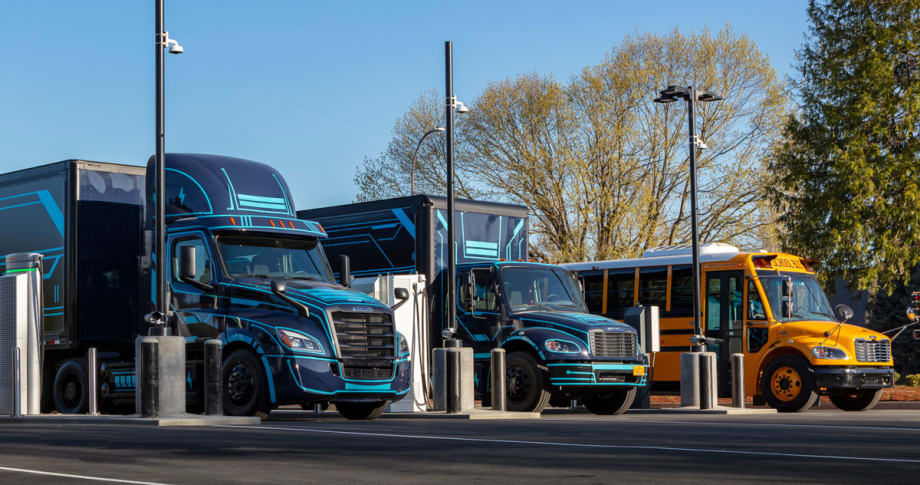
Class 8 day cabs, medium-duty delivery trucks, and school buses are among the applications ACT Research sees as a good fit for electrification.
Photo: Daimler Trucks North America
With the total cost of electric-vehicle ownership for some commercial applications already beating out internal-combustion engines, ACT Research predicts that electrification of the Class 4-8 commercial vehicle market in the U.S. and Canada will top 40% by 2040 – with a third of the market migrating to battery-electric solutions in the next 10 years.
For a follow-up to its 2018 report on commercial vehicle electrification, which predicted electric Class 4-7 truck sales could top 100,000 by 2035, ACT Research put together a comprehensive total cost of ownership analysis covering 14 sub-segments and 23 applications.
The resulting report, Charging Forward: 2020-2040 BEV & FCEV Forecast & Analysis, predicts 317,000 electric Class 4-8 vehicles by 2040.
“We think electrification is a reality,” said ACT analyst and economist Jim Meil in an interview with HDT. “Certainly a reality over the course of the 20-year time span, where we anticipate that across the [Class] 4 through 8 space, the market share migration from internal combustion engine to an electric powertrain of one kind or another will be upwards of 40% of the available market. That translates into over 300,000 vehicles.
“And a lot of that progress we think is going to be made in the next 10 years. So you don't have to wait till 2035 or 2040 to realize that. We think a lot of the traction is going to be gained between now and 2031.”
Even when it did its 2018 study, he said, “We were pretty optimistic.” Three years later, “fleet operators grasp this as a more tangible reality.”
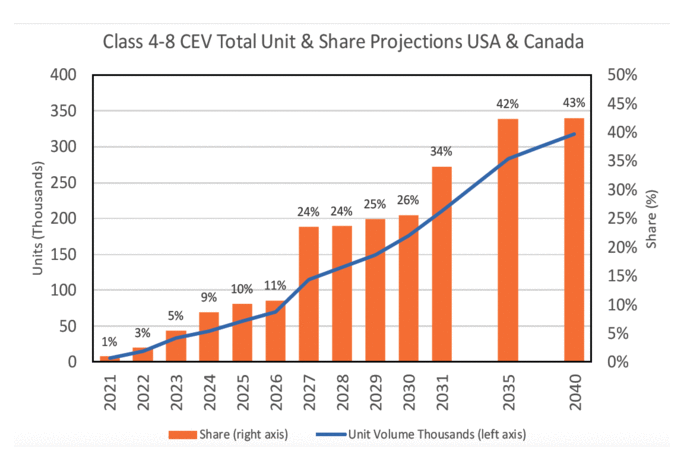
Although the ACT Research report looks out 20 years, much of the adoption is expected to take place in the next decade.
Graph: ACT Research
The TCO analysis is vital, Meil said, because what drives commercial fleets to buy electric vehicles is very different from what drives consumers.
“When it comes to the personal vehicle, there’s a certain status that gets conveyed by having a Tesla and being the first on the block to have [it], and the neighbors come over and look, or you impress your colleagues in the faculty lounge,” he said with a chuckle. “Those kind of, say, psychographics don't work in the ROI-driven, the hard-nut financials of fleet operations.”
In fact, ACT’s findings show that for most Class 4-8 commercial vehicle operations, the total cost of ownership for electric vehicles is already below that for internal-combustion vehicles.
For example, for Class 6-7 box trucks in a local delivery application, ACT finds electric vehicles already have a 12% advantage. That advantage is expected to jump to 23% in 2027 as new regulations limiting NOx emissions are anticipated to kick in.
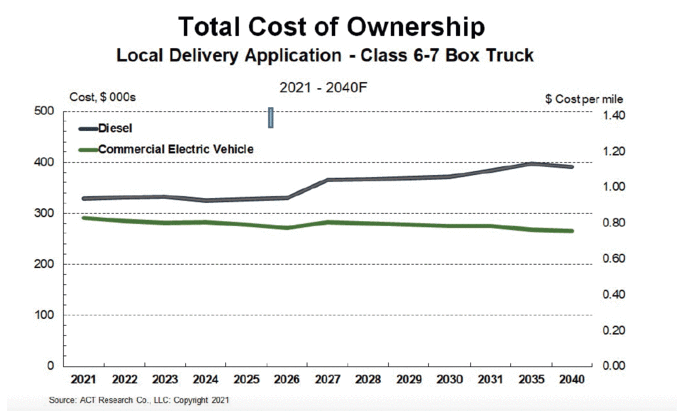
ACT Research sees the Class 6-7 market as one of the biggest adopters of commercial vehicle electrification.
Graph: ACT Research
But fleet operators are risk-averse and need “proof cases,” so they prefer the “first mover” to be someone else, according to ACT’s report.
Yes, there are some early adopters who see the marketing or public relations benefits of being seen as a leading “green” fleet, but they’re in the minority.
One factor driving ACT’s TCO projections: The cost of batteries is dropping.
Currently, ACT is estimating the cost of battery packs for OEMs to run around $250 per kilowatt hour. ACT estimates that with volume production, that will drop to $164 by 2035 and to $143 by 2040.
“As you see that kind of cost curve occur, what that does do is opens up more and more applications that start to make economic sense for operators, particularly in medium-duty market segments, but even some niche markets in heavy-duty,” Meil said. We think the low-hanging fruit will be in Class 6-7.”
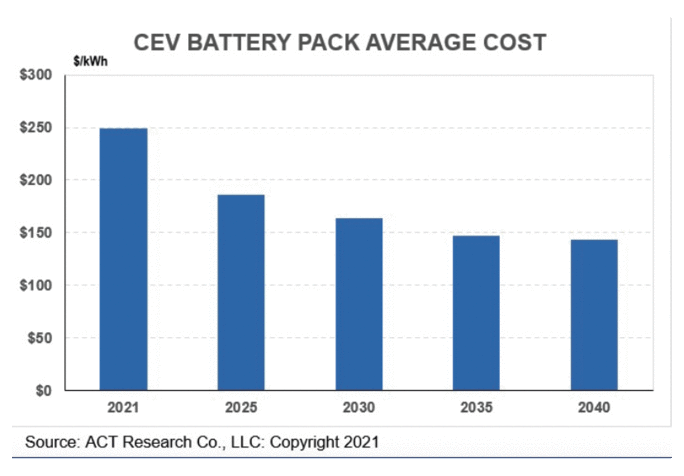
One of the key factors driving further adoption of electric vehicles will be falling battery costs, says ACT Research.
Graph: ACT Research
ACT sees an even higher penetration of electrification in the medium-duty market than overall, Meil said.
While the total Class 4-8 share is expected to be around 42% in 20 years and 34% in 10 years, in the Class 6-7 marketplace, ACT sees a 70% share in that 20-year horizon, and in the next 10 years, almost 60%.
There are several factors that ACT considers where electric vehicles can reap the most benefit:
Meil singles out two types of markets where ACT predicts electrification will see big gains in the coming years.
One is those with potential for high volume, such as Class 4-7 conventional trucks, Class 4 and 5 low-cab-forward trucks, Class 8 day cabs, and Type C and D school buses.
The other area is markets that may not be as high volume, but where ACT sees an especially high adoption rate – where the transition to electrification could be close to 100% within the next 20 years. These include low-cab-forward medium-duty trucks, transit buses, step vans, school buses, and yard spotters.
For example, he said, “Class 8 yard spotters is a small volume market, it's a niche market. But the mission requirements are so conducive to electrification, that we see almost a full migration for yard spotters.”
What isn’t going to electrify anytime soon? It’s pretty obvious, he said: Class 8 over-the-road applications, especially long-haul. These applications, Meil said, “sort of work the opposite way of those tendencies to electrify,” with high mileage, random routing, not doing start-and-stop, and not returning to base for easy charging.
ACT’s projections make certain assumptions about various factors, and changes in those factors could result in electrification happening faster or slower than outlined in the report, including:
And then there’s what Meil called “a third rail” in the conversation: fuel-cell electric vehicles. It’s something that was factored into this new report that wasn’t three years ago.
Hydrogen fuel-cell vehicles are “getting press play,” Meil said. “It's sort of a sexy kind of thing, right? Water out of the tailpipe.”
But ACT is somewhat skeptical.
“It is possible that fuel cells can be economically viable,” he said. “But we see a big mountain to climb in the next 10 to 15 years, having to do both with the development progress and the costs for the vehicle powertrain itself.
“And perhaps even more so, the surrounding infrastructure of hydrogen manufacture and distribution that you're going to need in order to support extensive migration to fuel cells as an electric power source.”
Right now, he said, hydrogen fuel costs are very high without subsidies. “After our work, it's difficult for us to envision how those costs can come down enough in order to make up for the head start that battery-powered vehicles have.”
Much of the emphasis on fuel-cell powered trucks is coming from Europe. But one of the reasons it may be more viable there, Meil said, is that there are significant government subsidies in the development of technology and infrastructure.
One thing Meil said is certain – that over the next two decades, “internal combustion engines are not going away.” Even if the market reaches the projected 42% by 2040, “that still means that more than half of the marketplace… is going to be an ICE-powered workspace. So they’re not going away.”
Originally posted on Heavy Duty Trucking

The new name represents a renewed vision for the nonprofit focused on advancing clean, equitable, and affordable transportation solutions that move people and goods.
Read More →
Propane and electric school bus deployments continue to grow as districts add new vehicles, expand charging infrastructure, and gather more real-world operating data.
Read More →
WRI’s latest buyer’s guide points to a consolidating electric school bus market, but fewer options may reflect a maturing industry rather than fewer meaningful choices for school bus operators.
Read More →
Learn how propane autogas helps school districts manage fuel costs with predictable pricing, lower maintenance, and reduced emissions from former transportation director Joel Stutheit.
Read More →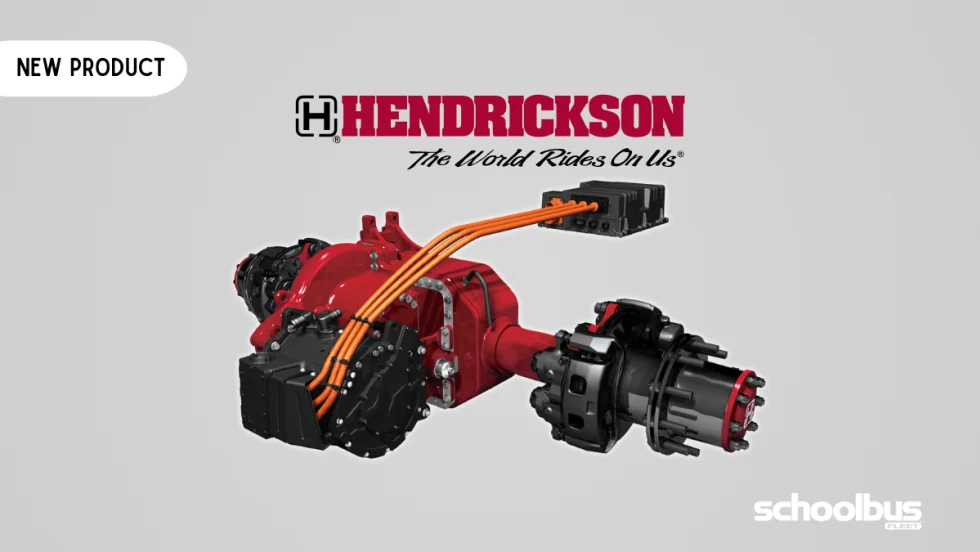
ELECTRAAX, the electrified, lightweight drive axle offers integrated ePowertrain efficiency and modular flexibility for Class 6–7 school bus use.
Read More →
The acquisition combines intelligent charging software, bidirectional charging expertise, and fleet electrification services to support the growing adoption of electric school buses across North America.
Read More →
See which districts across the U.S. are putting electric school buses into service, expanding charging infrastructure, and planning the next phase of fleet electrification.
Read More →
While diesel prices peaked above $5 this spring, districts with propane autogas-powered fleets paid under $2 per gallon, according to PERC.
Read More →
The federal agency has proposed changes to next year’s targets that would eliminate DEF derates, ease warranty requirements, and retain current NOx emissions standards.
Read More →
The latest developments include new funding, charging infrastructure, utility investments, and fleet technologies designed to support the transition to electric school buses nationwide.
Read More →