




Related: 4 Keys for Enforcing Seat Belt Use
Iowa to Require Seat Belts on All New School Buses
Lap-shoulder belts will be required on all new school buses ordered as of Oct. 2. Safety equipment such as a second stop arm, hand rails, exterior boarding lights, and fire-resistant crash barriers are also required.

Nicole Schlosser・Former Executive Editor
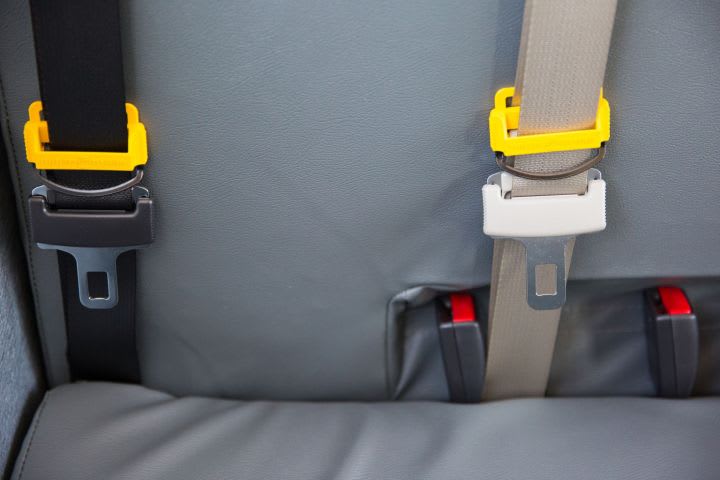
In Iowa, lap-shoulder belts will be required on all new school buses ordered as of Oct. 2.
Photo: Des Moines (Iowa) Public Schools
3 min to read
Iowa is joining eight other states in requiring seat belts, as well as mandating other safety equipment, on all new school buses this fall.
As of Oct. 2, the Iowa State Board of Education adopted a rule to require lap-shoulder, also known as three-point, belts in all new school buses ordered by Iowa school districts and state-accredited non-public schools. As School Bus Fleet previously reported, the Iowa State Board of Education on Aug. 1 adopted new rules on the requirement for students to wear seat belts. (The rule carries the same weight as law.)
The requirement also extends to other safety equipment, such as one additional stop arm per bus, hand rails, exterior boarding lights, and fire-resistant crash barriers between the front bus seat and the bus driver, on new school buses. Additionally, fire suppression systems will be allowed, Max Christensen, an executive officer for school transportation at the Iowa Department of Education, told SBF.
Rules were also adopted to require mandatory bus inspections for all school vehicles that take students to and from school activities, and to require documentation that mandatory school bus evacuation drills are completed twice a year as required by law, Christensen confirmed.
Orders for school buses currently in the pipeline and buses ordered through Oct. 1 will be grandfathered in via a waiver between the school and the state Department of Education, he said.
“Buses that are manufactured after Oct. 2 but ordered prior to that date will technically need to comply with new rules, but due to the order/build process, will be unable to, thus the waiver,” Christensen added. “The waiver will acknowledge the existence of the new rules, but will also acknowledge the fact that certain buses built after the effective date of the new rules cannot meet those new rules.”
Despite school buses already being very safe, adding lap-shoulder belts to all new school buses in the state will add “an extra layer of safety and protection in certain accident scenarios,” he said.
Using three-point belts in buses has also consistently shown improved student behavior and fewer discipline problems, which also makes school buses safer, he added.
“The driver will be able to spend more time actually driving the bus than disciplining the children,” Christensen said. “Additionally, better behavior on the bus may improve the hiring dynamics for new drivers and help with the retention of current drivers.”
“It's been a long journey getting to this point, but I believe it was a journey worth taking for the benefit of the students riding the school buses here in Iowa," he added.
Iowa is the ninth state to require seat belts in school buses. Seat belt laws and requirements also have been adopted in New Jersey, New York, Florida, Nevada, and California. Texas requires three-point belts unless the district's board of education determines that the district can't afford it. Louisiana passed a school bus seat belt bill, but it is contingent on funding being allocated to pay for the restraints. Since the mandate remains unfunded, it has not been enforced. Meanwhile, Arkansas requires the restraints if they are authorized by a local petition.
More Safety
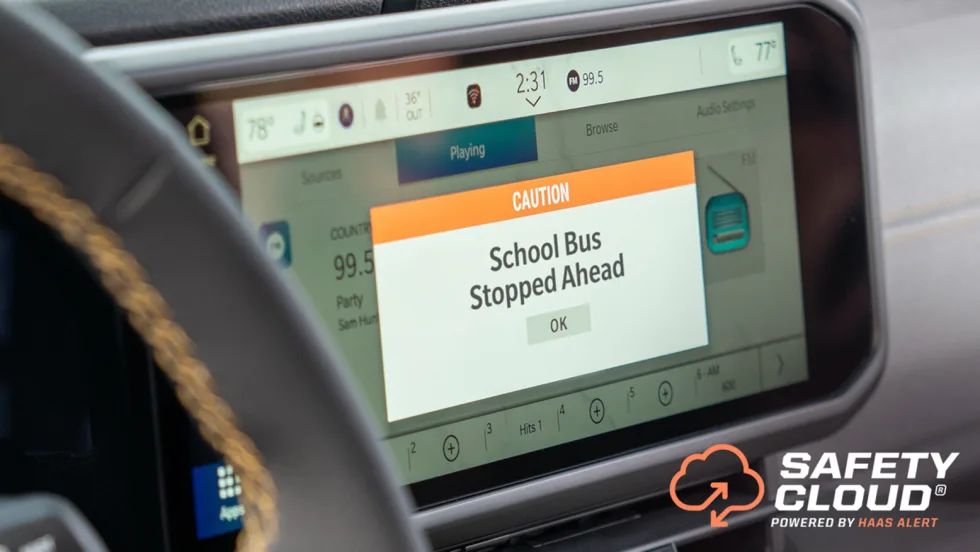
HAAS Alert’s Safety Cloud Warns Motorists of Stopped School Buses
Through a transponder or Samsara connection, the product lets school bus fleets send advance warnings to approaching drivers through in-vehicle alerts.
Read More →
HopSkipDrive Reports Progress on Safety Advisory Council
More than a year after forming the council, independent safety experts have helped shape new rider-safety features and policy progress, with a new goal to address rider behavior.
Read More →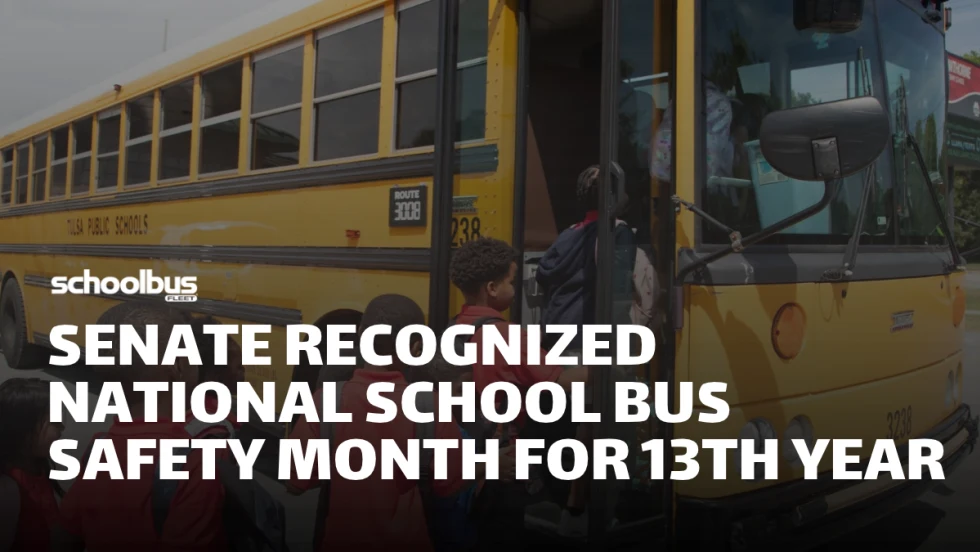
What the 2026 National School Bus Safety Month Resolution Means for Student Transportation
The bipartisan resolution highlights illegal school bus passing, student safety during loading and unloading, and the need for driver training and public education.
Read More →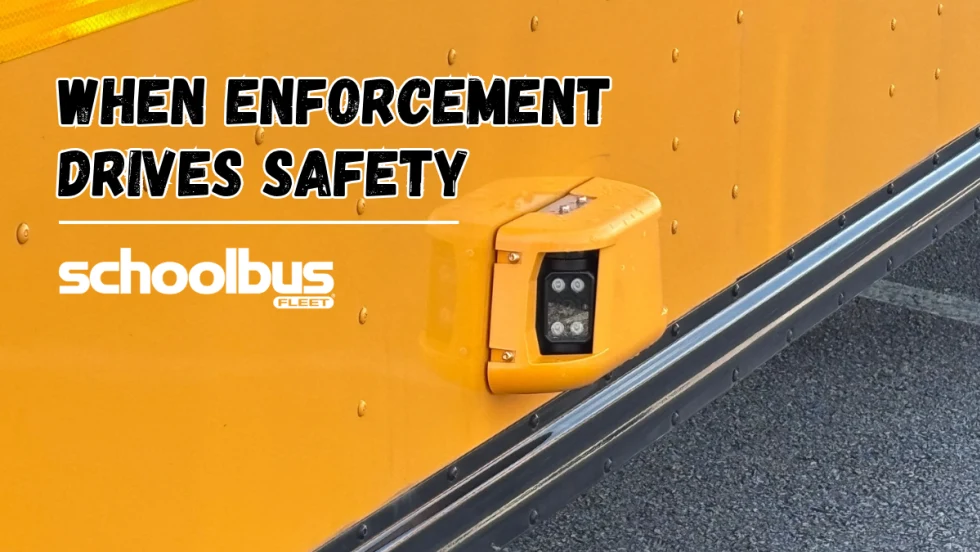
School Bus Stop-Arm Violations Decline 53% Across Verra Mobility Programs
Verra Mobility shares how school bus stop-arm cameras and school zone safety programs are changing driver behavior, reducing violations, and protecting students.
Read More →
Most Bus Crashes Aren’t Your Fault. Here’s How to Prove It.
A guide for what to do in between a school bus crash and a claim: what to preserve, who to notify, and how to keep the facts available when they matter.
Read More →
National School Bus Safety Week 2026: Tips, Toolkits & Resources to Keep Students Safe
School bus safety takes more than awareness. Explore expert tips, enforcement strategies, and free resources to help protect students on every ride.
Read More →
2 Killed, Dozens Injured in Florida School Bus Crash
A multi-vehicle collision caused a Polk County school bus carrying 37 students to overturn on its way to Winter Haven High School.
Read More →
Illegal School Bus Passing Drops 24% in New York Districts
With fewer than 5% of citations involving repeat offenders, Westchester County officials said enforcement, education, and community partnerships are helping change driver behavior.
Read More →
School's Back. Here's What Happened to Traffic, Speeding & Distraction
What happens to traffic when school resumes? New data analysis examines changes in distracted driving, congestion, and speeding around schools.
Read More →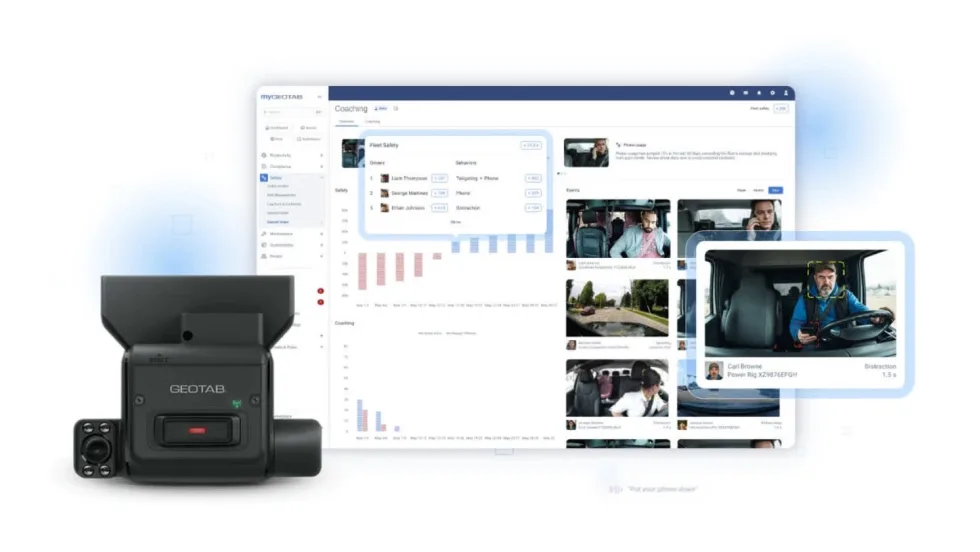
Geotab Expands Fleet Safety Tools With Video Coaching, Risk Insights
New safety and video capabilities aim to help fleet managers assess risk, support drivers, and take targeted action through video coaching, red-light violation detection, and more.
Read More →