Navajo Nation Names October School Bus Safety Month
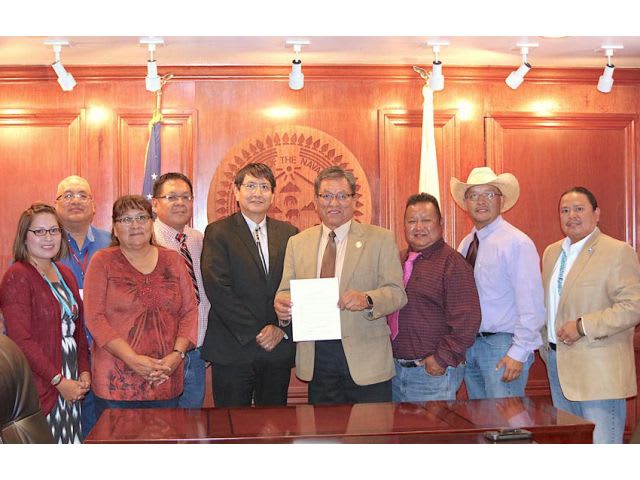
The Navajo president and VP sign an official proclamation that was advocated by Ganado USD school bus drivers and staff.
Thomas McMahon・Executive Editor
August 31, 2017
2 min to read
WINDOW ROCK, Ariz. — October will officially be a month to promote school bus safety in the Navajo Nation, thanks to the efforts of a group of pupil transporters.
On Aug. 23, Navajo Nation President Russell Begaye and Vice President Jonathan Nez signed a proclamation that designates October 2017 as “National School Bus Safety Month.”
Ad Loading...
“Parents place their kids in the hands of the bus drivers, to make sure that they get picked up safely, delivered to the school safely, and then returned home,” Begaye said. “So I know, as a parent, I would really say, ‘Let’s praise the bus drivers,’ because they are one of the most important employees at the school.”
The Navajo Nation territory covers about 27,000 square miles in northeastern Arizona, southeastern Utah, and northwestern New Mexico.
School bus drivers and staff from Ganado (Ariz.) Unified School District (USD) worked with Navajo Nation Council Delegate Alton Joe Shepherd on the School Bus Safety Month initiative.
Freddie Yazzie, a driver for Ganado USD, told SBF that this was the first time School Bus Safety Month has been declared in the Navajo Nation. It coincides with National School Bus Safety Week, which is held annually across the U.S. in the third full week of October.
The Navajo presidential proclamation last week followed a meeting in which Shepherd and the Ganado USD transportation team discussed the importance of school bus safety with Begaye and Nez.
Ad Loading...
“When we proclaim a month for school bus safety, I think that gives other school boards across the Navajo Nation a chance to interact with their local communities, and Ganado has been doing that for several years now,” Shepherd said.
The Ganado USD school bus drivers and staff have spearheaded other efforts to advocate for safe transportation in their community. That has included taking to the airwaves.
"We've been doing bus safety messages through our Navajo Nation radio station in English and in Navajo," Yazzie told SBF.
The GUSD drivers and staff who were present for the signing of the School Bus Safety Month proclamation included Jackson Curtis, Yazzie, Frederick Shirley, Davis Begay, Lynette Looking-Back, and Norma Noble.
Yazzie, a longtime school bus driver on the Navajo reservation, has also encouraged his passengers to go further in their education with his "Legacy of Excellence Bus."
Ad Loading...
Shepherd, the Navajo Nation Council delegate, said that he would establish a similar School Bus Safety Month proclamation for Apache County, for which he serves as a supervisor. He added that he would also advocate for infrastructure improvements that would contribute to safe pupil transportation, such as road widening, paving, and maintenance.
A Williamsburg community is mourning after a child was fatally struck by a private yeshiva bus, prompting calls for urgent safety improvements at the high-traffic crossing.
The new data shows 99.99% incident-free trips and strong on-time performance, reinforcing how dependable transportation, especially for vulnerable student populations, can help districts combat chronic absenteeism.
Driver shortages, safety expectations, and staffing limits define student transportation in 2026. New survey data shows how fleet leaders are responding.
The federal agency's report asks NHTSA to require all new school buses to be equipped with vehicle-integrated alcohol detection systems and passenger lap-shoulder belts.
Student transportation teams are being asked to do more with less, facing driver shortages, rising costs, and increasing safety expectations. This report uncovers how fleets are adapting, where technology is making the biggest impact, and why student ridership tracking is emerging as a top priority. Download the report to explore the key trends shaping 2026 and what they mean for your operation.
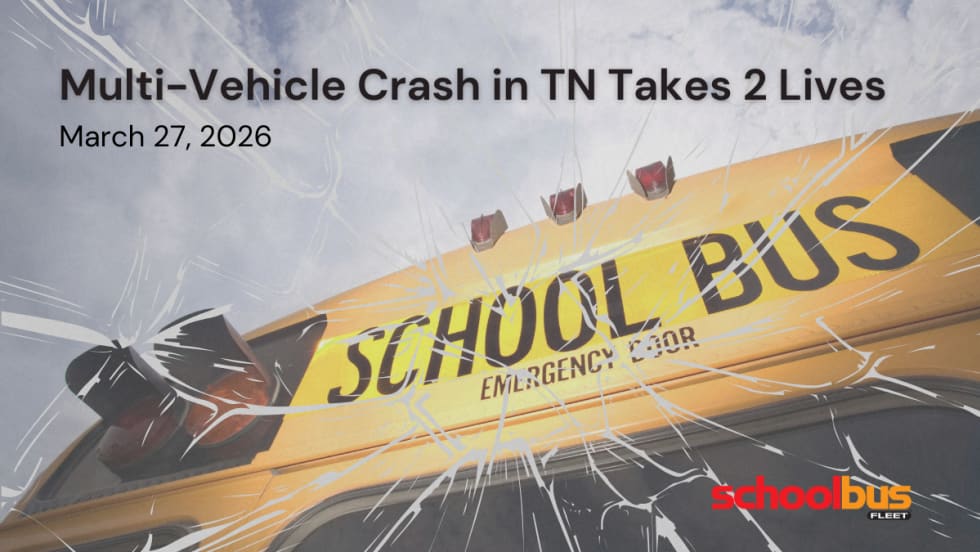
A Carroll County accident claimed the lives of two students and injured over a dozen others on a March 27 field trip for eighth graders at Clarksville-Montgomery County. A preliminary report adds new information to the story.
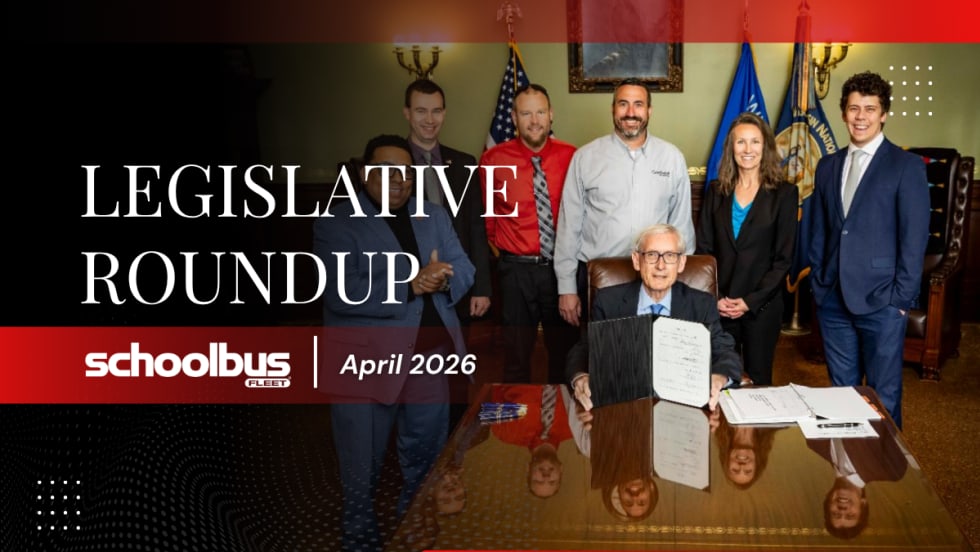
From driver shortage solutions in Tennessee and rural connectivity debates in Utah to new safety laws in Wisconsin and ongoing electric bus mandate discussions in New York and Connecticut, here’s the latest in school bus legislation across the U.S.
Waymo’s self-driving vehicles are under fire again after repeated school bus passing violations, raising questions about safety, remote operators, and regulation.
Distracted driving continues to pose serious risks in school zones, with new data and driver insights highlighting ongoing concerns and potential solutions to improve student and roadway safety.
A former airline pilot has stepped into a new role at the independent federal agency, but where does he stand on issues like seat belts on school buses? Here’s what he’s said.