




10 killed in school bus danger zone last school year
The latest national survey of school bus loading and unloading fatalities finds that in the 2013-14 school year, six children were killed by passing vehicles, and four were fatally struck by their own bus.

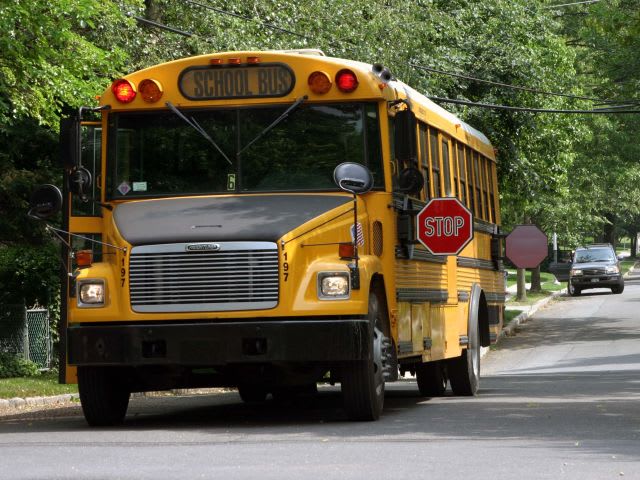
A national survey found that in the 2013-14 school year, six children were killed by passing vehicles, and four were fatally struck by their own bus.
Ten students lost their lives in loading and unloading accidents around school buses in the U.S. in the 2013-14 school year, a new report reveals.
The Kansas State Department of Education’s latest national survey of school bus danger zone fatalities found that six students were killed by passing vehicles, and four were fatally struck by their own bus.
The total of 10 fatalities in 2013-14 is up slightly from the previous school year, in which there were nine such deaths.
Of the four students who were killed by their own school bus in the 2013-14 school year, three were struck at the front of the bus, and one was struck at the back. Three of those accidents involved Type C school buses, and one involved a Type D bus.
The loading/unloading report is compiled annually by the Kansas State Department of Education’s School Bus Safety Education Unit. It is a collection of fatality accident records provided by the state agencies responsible for school transportation safety and/or accident records. Onboard fatalities are not included.
Here are other key details from the 2013-14 school year findings:
• Age: Five of the students who were killed (half of the total) were 6 years old. One of the students was 8, one was 9 and one was 14. Two were 17 years old.
• Gender: Seven male students and three female students were killed.
• Destination: Seven of the accidents were during the trip to school. The other three were on the trip home.
• Type of area: Eight of the fatalities occurred in urban locations. The other two were in rural areas.
• Light conditions: Five of the accidents were in daylight, three were in the dark and two were at dawn.
• Weather: In six of the accidents, weather conditions were described as clear. The other four were described, respectively, as cloudy, cloudy/raining, rain and fog.
• State: There were two fatalities each in Texas, Louisiana and Georgia. There was one fatality each in California, Utah, North Carolina and New Jersey. (It should be noted that New York state and Washington, D.C., did not respond to the survey.)
The loading/unloading statistics have been collected since the 1970-71 school year. During that school year, there were 75 danger zone fatalities, which is the highest total on record. In the 44-year history of the survey, there has been a total of 1,222 fatalities recorded.
The survey is described as an effort to raise awareness of the dangers involved in loading and unloading schoolchildren.
“Fatalities continue to occur at the bus stop, caused by a variety of circumstances and errors on the part of the school bus driver or passing motorist,” the report says. “It points out the continuing need for forceful, advanced instruction to school bus drivers and students, as well as the need to increase our efforts to thoroughly inform the driving public about the requirements of the school bus stop law."
The full 2013-14 report, including descriptions of each loading/unloading fatality incident, is available here.
More Safety

HopSkipDrive Reports Progress on Safety Advisory Council
More than a year after forming the council, independent safety experts have helped shape new rider-safety features and policy progress, with a new goal to address rider behavior.
Read More →
What the 2026 National School Bus Safety Month Resolution Means for Student Transportation
The bipartisan resolution highlights illegal school bus passing, student safety during loading and unloading, and the need for driver training and public education.
Read More →
School Bus Stop-Arm Violations Decline 53% Across Verra Mobility Programs
Verra Mobility shares how school bus stop-arm cameras and school zone safety programs are changing driver behavior, reducing violations, and protecting students.
Read More →
Most Bus Crashes Aren’t Your Fault. Here’s How to Prove It.
A guide for what to do in between a school bus crash and a claim: what to preserve, who to notify, and how to keep the facts available when they matter.
Read More →
National School Bus Safety Week 2026: Tips, Toolkits & Resources to Keep Students Safe
School bus safety takes more than awareness. Explore expert tips, enforcement strategies, and free resources to help protect students on every ride.
Read More →
2 Killed, Dozens Injured in Florida School Bus Crash
A multi-vehicle collision caused a Polk County school bus carrying 37 students to overturn on its way to Winter Haven High School.
Read More →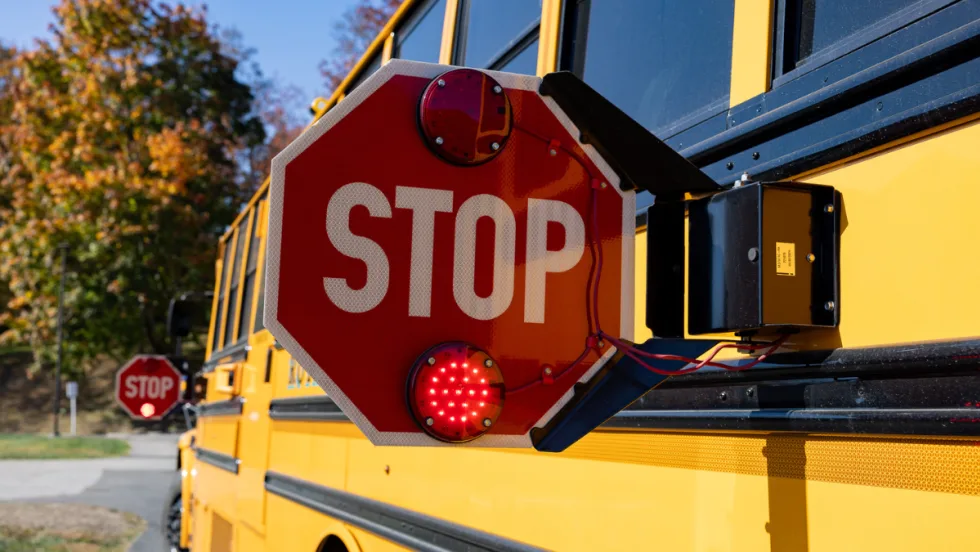
Illegal School Bus Passing Drops 24% in New York Districts
With fewer than 5% of citations involving repeat offenders, Westchester County officials said enforcement, education, and community partnerships are helping change driver behavior.
Read More →
School's Back. Here's What Happened to Traffic, Speeding & Distraction
What happens to traffic when school resumes? New data analysis examines changes in distracted driving, congestion, and speeding around schools.
Read More →
Geotab Expands Fleet Safety Tools With Video Coaching, Risk Insights
New safety and video capabilities aim to help fleet managers assess risk, support drivers, and take targeted action through video coaching, red-light violation detection, and more.
Read More →
How to Build a Better School Bus Driver Training Program
Is it time to strengthen your driver training? Here’s how to pick the right talent and improve recruitment, retention, and safety. This video is brought to you by IC Bus.
Read More →