





Trip Sheet: Evolution of Seat Belt Laws on U.S. School Buses
Used School Bus Shopping Made Easy in 11 Steps
Proper research, planning, budgeting, and assistance from a reputable dealer with full-service capabilities and deep industry knowledge can make buying used school buses hassle free.
April 22, 2019
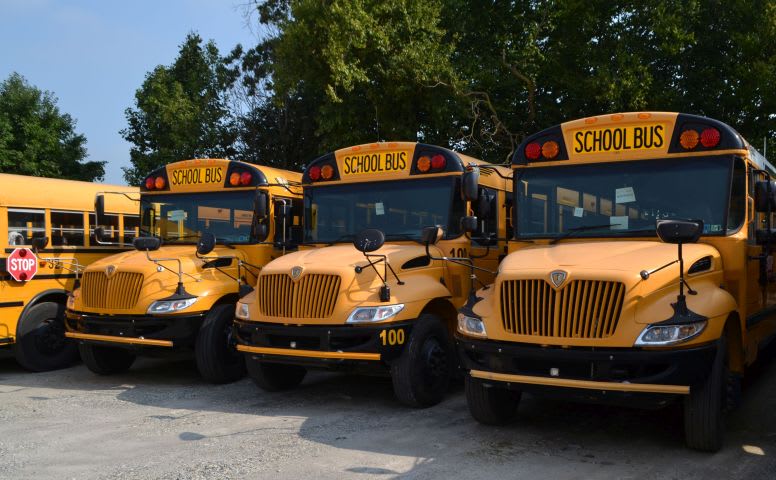
Dealers such as Wolfington Body Co. can help used school bus buyers navigate the wide variety of models and specifications available with detailed information from the manufacturers. Shown here are some of Wolfington’s 2012 and 2013 buses.
8 min to read
With the ongoing obstacles for many school districts of tightening budgets and increasing enrollment, buying new buses to expand a fleet isn’t always an option.
The cost of a new school bus often exceeds $100,000. Even a two- or three-year-old bus can now be a $70,000 investment, says Richard Wolfington Jr., president of Wolfington Body Co. in Exton, Pennsylvania.
However, used school buses can be budget-friendly and reliable for a substantial period of time, with the proper research, planning, budget, timeline, and assistance, ideally from a reputable dealer with full-service capabilities and deep industry knowledge. SBF spoke with dealers across the U.S. and a couple of their customers to get advice on the used bus purchasing experience. They shared these 11 steps for a successful and hassle-free buying experience.
1. Know State Specifications, Regulations
Before even thinking about purchasing a used bus, operators should be well-versed in what makes a school bus legal to operate in their state, says David Wronka, used bus sales manager for BusWest in Carson, California.
He notes that a mistake often made in California by some small schools, such as charter schools or private schools, is buying a school bus in another state for a cheaper price, but finding out that the California Highway Patrol won’t allow the school to operate it because it doesn’t meet state requirements.
“The [school] just wasted $15,000,” Wronka says.
Like California, New York state specifications surpass those of many other states, says Tom Hays, director of business development at Don Brown Bus Sales in Johnstown, New York. He advises that customers who are unsure of their state specifications go online to find out which state authority administers them. For example, in New York, the state Department of Transportation handles specifications, and in Massachusetts, that falls under the Registry of Motor Vehicles. Many school bus dealers can also provide this information.
2. Prepare a Budget
Because there is a wide variety of used bus models and specifications available, David Tinsley, business development director/special projects for Midwest Bus Sales in Bonner Springs, Kansas, recommends creating a budget before looking.
Within that budget, set aside a maintenance account, advises Chad Brinkley, used and commercial bus manager for Midwest Bus Sales.
“Put a little aside for possible breakdowns,” he says. “If something happens, you can get it fixed and get back on the road.”
That budget should also include insurance. Tom Buhle, used bus sales manager at Midwest Transit Equipment in Lansing, Michigan, says that customers should figure out how much insurance coverage they will need.
3. Research Components, List Preferences
With their budget in mind, customers should consider what type of bus and specifications they want, including size, capacity, and options such as air conditioning, a wheelchair lift, or air brakes, and do research to determine which vehicle components — such as powertrains and engines — they prefer.
Brinkley says that Google and online forums are useful tools for researching components.
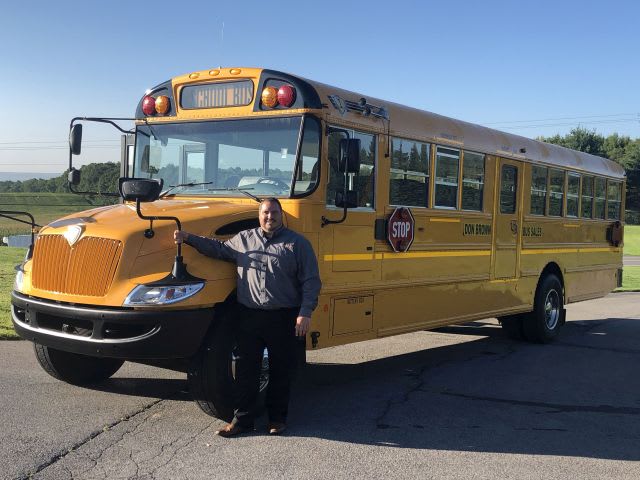
Tom Hays, director of business development at Don Brown Bus Sales in Johnstown, New York, recommends that buyers determine in advance how much maintenance they will be able to perform on a used bus.
4. Create a Timeline, Maintenance Plan
Tinsley recommends starting to do research for a used school bus purchase in the winter and starting to look in early spring, before summer gets underway.
“That’s when there is the greatest opportunity to select from the largest portion of our incoming inventory,” he says. “See what’s out there before school is out, and prepare for the following school year. Do your homework, put a budget together before summer break, and get the bus [for the upcoming school year] in a timely manner.”
Tinsley explains that dealers experience a time crunch during the summer with school bus deliveries, so shops can get backed up.
Hays recommends that buyers figure out in advance how much maintenance they are capable of performing or having performed. Factors in determining this could include whether the buyer has their own garage or uses an outside garage, and how old or new a vehicle they plan to purchase.
“Understand that you are buying a previously owned piece of equipment, and there is a certain level of maintenance that will come along with it,” he says.
Buhle advises investing in new tires and professional paint work, if the bus is being repainted.
5. Find a Reputable Dealer Offering Additional Services
Buying from a larger, reputable dealer — as opposed to a broker or smaller company — that has been in business for a long time, understands the product and pupil transporters’ needs, and provides servicing capabilities, is worth possibly paying more money, and is a better investment in the long term.
“We try to steer people in the right direction and not put them in a vehicle that they may not be able to use,” Hays says. “Some smaller organizations may not be able to [provide] that level of care.”
Corey Muirhead, director of contracts and business development at Logan Bus Co., says that his company buys used buses from Don Brown Bus Sales on a regular basis because the company trusts them and the dealer anticipates their needs.
“When it’s time for us to buy vehicles used, they know what we’re looking for,” Muirhead says. “We [often] don’t have to search for used buses. We get a call from Tom [Hays], and he’ll say, ‘I have a vehicle that I think you might be interested in.’”
Additionally, Don Brown has a service department with representatives who have been in the school transportation industry for a long time, which Logan Bus values, because they can rely on getting the buses serviced when needed, and when a bus is delivered, it’s ready to hit the road that day.
Muirhead suggests attending state association conferences in school transportation to meet longtime dealers and suppliers who understand how the industry operates, know its needs, and cater to those needs.
Wolfington agrees, and adds that a broker might not have the same access that a dealer of the OEM equipment has to detailed information from the manufacturers — such as build sheet documents — on various bus models and specifications.
6. View the Bus in Person
Checking out the bus in person is ideal, if not always feasible, Wolfington says.
If that isn’t possible, customers need to do more to protect themselves, whether through a purchase order or language in a contract.
“I am at times surprised over how much is done over the phone and via internet,” Wolfington adds. “To truly evaluate the condition of a used bus, you need to see it, touch it, tilt the hood, and drive it.”
7. Bring your Mechanic to Look Under the Hood
All the dealers who spoke to SBF agree that a used school bus shopper should bring their mechanic or pay a trusted mechanic to check out any buses they may purchase.
Samuel Misher, executive director and founder of Next Generation Academy, a public charter school in Greensboro, North Carolina, purchased three used 2016 Thomas C2 air-conditioned buses in July from Midwest Bus Sales for his new school, which opened Aug. 22. This being the school’s first bus purchase, Misher said having its mechanic evaluate the buses at the El Reno, Oklahoma, dealership was key in his decision to buy the buses.
“My mechanic was able to get a feel for what their mechanics do to get those buses ready,” Misher says.
Midwest Transit Equipment’s Buhle adds that the more eyes that are on a bus, the better.
“Someone educated in the engine in a bus, along with items like king pins and electronics, can go a long way in determining conditions,” he explains. “The buyer can also get a feel for the bus on a test drive, along with a certified mechanic’s sense of its shifting, handling, seals, brakes, etc.”
8. Overall Condition is the Most Important Criterion
Buyers of pre-owned school buses should view them more like a bulldozer than a Honda Accord, Wronka says.
“This is equipment, not a car,” he adds.
The overall condition of this equipment — the engine, brakes, suspension, interior, etc. — should be considered before anything else, including the mileage or year.
“If you were to look at a bus that had 200,000 miles on it, most [people] would say, ‘That’s a lot,’” Wronka says. “But it’s really not, for that piece of equipment. The useful life of that bus shouldn’t be considered by miles, because school buses never get anywhere near [the end of the useful life].”
Similarly, Buhle of Midwest Transit Equipment says that just because a price is lower on a bus with lower mileage, that doesn’t signify a great deal.
“Lower mileage diesel buses should be checked the same way you’d check higher-mileage buses,” he adds. “A good miles average is 12,000 to 18,000 miles per year.”
9. Region is Another Essential Consideration
A 2000 model school bus in California can still be valuable, but a model of the same year in New York may be inoperable because of rust issues, Wronka says.
“The region [the bus came from] has a lot to do with condition,” he notes.
Region is a particularly important factor for buyers who can’t see the buses they are considering in person. Weather in some regions, such as snowstorms that prompt salting of roads for de-icing, may have impacted the condition of the buses, Wolfington says.
10. Get Maintenance Records
Tinsley suggests getting the maintenance records for the bus to see where it has run, who has maintained it, warranty records, and any failures the bus has had.
Buhle also recommends asking what recent work has been done by the seller; where the bus came from — such as an auction, a school, or another dealer; when it was last inspected by the state department of transportation or a school district; whether the tires match the manufacturer’s recommended grade; and what any dash codes are showing.
Just like with a used car, some people save maintenance records, and some don’t, Hays says. In cases where the records aren’t available, many dealers can obtain information from the bus’s manufacturer based on the VIN.
11. Buy the Warranty
Always purchase the warranty, if available, BusWest’s Wronka says. The upfront investment is worth guarding against possibly having to spend several thousands of dollars if an engine or a transmission fails.
“An engine will cost $25,000 on a big bus,” he says. “We give a 30-day warranty on the powertrain for free on our units, and we have an additional warranty available.”
Misher recommends that those who don’t have the money to buy a new bus purchase a used bus under warranty.
“The Thomas Built powertrain is [under warranty] for five years,” he says. “We wanted a bus that is still under warranty so we wouldn’t have to worry about anything in the first few years because of startup capital.”
Subscribe to Our Newsletter
More Management

The Right Ride for Every Student: Navigating the New Student Transportation Ecosystem
How should districts blend school buses with small-vehicle transportation and other options? EverDriven CEO Mitch Bowling discusses safety, costs, partnerships, and strategy.
Read More →
Annette Brown Always Takes the Extra Time: Meet Our 2026 School Bus Driver Hero
For more than 30 years, the Wa-Nee Community Schools driver has treated students like family, combining safety, compassion, and servant leadership to make a lasting difference on and beyond the school bus.
Read More →
How to Build a Better Driver Training Program
Ready to boost up your school bus instructor training? Here’s how to pick the right talent and improve recruitment, retention, and safety.
Read More →


CALSTART and Forth Combine to Form Catalyst Mobility
The new name represents a renewed vision for the nonprofit focused on advancing clean, equitable, and affordable transportation solutions that move people and goods.
Read More →
What Makes a Great School Bus Driver Trainer?
Choosing the right school bus driver trainer takes more than experience. Learn six keys to selecting and developing trainers and evaluating program effectiveness.
Read More →
School Bus Contractors Expand Through New Deals, Acquisitions & Partnerships
STA's Canadian division acquires Ontario-based G&L Stevenson Transport; Durham School Services adds a new district in California; First Student expands in New Jersey; and Minnesota Coaches rebrands and acquires Halo Transportation.
Read More →
Logan Bus Company Rolls Out AI Phone System for NYC School Bus Families
A summer pilot found that AI agents could handle most routine calls, freeing up time for customer service staff to focus on emergencies and complex family concerns.
Read More →
From Intent to Impact: What I Learned About Leadership from TAPT
A Texas transportation supervisor shares lessons on self-awareness, accountability, managing stress and building trust — and why investing in leadership development matters at every stage of your career.
Read More →
NAPT Names 2026 Award Recipients, Hall of Fame Inductee
Who earned national recognition for their work in student transportation? This year, NAPT named five recipients of its 2026 awards for service, safety, and leadership, plus its newest Hall of Famer.
Read More →
Sponsored•September 2, 2026
2026 State of Student Transportation Report
Driver shortages. Rising costs. Growing safety expectations. More data, but not enough time to act on it. The 2026 State of Student Transportation Report reveals what transportation leaders say is putting the most pressure on their operations—and where they’re investing next. See how your priorities compare.
Read More →