




Thomas Built CEO sees permanent shifts in school bus market
Kelley Platt, the company's president and CEO, says that transportation changes many districts are making — from running buses longer to increasing walking distances — have reduced the need for new buses and aren’t likely to be reversed. In turn, the OEM is focused on becoming more cost-effective in its manufacturing while maintaining quality. Platt discusses the market shifts, cost of ownership and product developments with SBF.

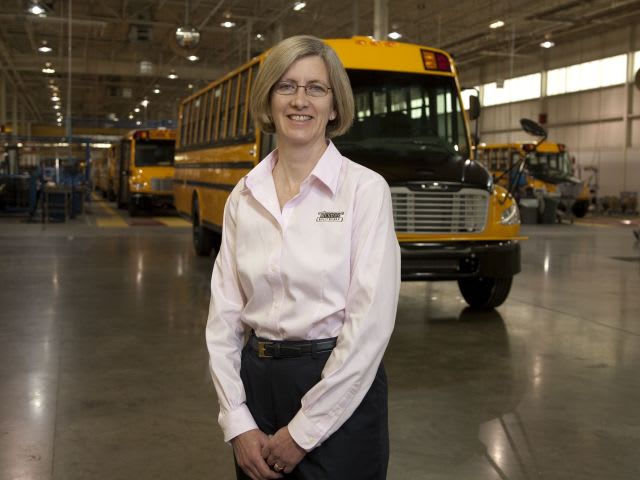
Kelley Platt became president and CEO of Thomas Built Buses in 2010.
SBF: It’s been about two and a half years since you came to Thomas Built Buses as president and CEO. What have been the biggest changes in that time?
KELLEY PLATT: For the school bus industry, the biggest change has been the lower tax base and municipal budgets. School districts are not just delaying purchases, like they might have done in previous recessions, but rather they’ve had to fundamentally look at how they approach school buses and school bus purchases.
We’ve seen districts implement straightforward changes, like increasing walking distances, consolidating routes, staggering bell times or extending the operating life of buses — where the industry average used to be somewhere around 10 to 12 years, it’s now probably in the 12- to 15-year range. In some places, operating life is creeping toward 20 years or more.
We’re also seeing districts explore some of the more complex changes, like looking at privatization where they might have not looked at it before. Some of them are experimenting with fees; some of them are experimenting with public transit systems.
So all of these changes that they’re making have shrunk the size of the school bus population, which in turn means you don’t need as many new ones. I think this is a fundamental shift in the industry — one that districts are not going to go back from. Once you stagger your bell times, you’re very unlikely to unstagger them.
The other thing we’re seeing is people interested in alternative fuel school buses of all varieties. Part of the interest is driven by a need to reduce costs, and part of it is driven by an increasing desire to have a clean, domestic fuel. We are still seeing a lot more looking than purchasing, but we’re starting to see more and more concrete activity in that regard.
At Thomas Built Buses specifically, historically our role has been to provide solutions for our customers, so we’re looking at these changes in the marketplace — both that they want to shrink the size of their fleet and that they’re becoming more cost conscious.
We have to look at our manufacturing and say, “What can we do to help them with that? How can we be more cost-effective? How can we continue to provide our commitment to quality and durability?” Because if they’re going to run their buses longer and harder, we’ve got to have a bus that’s going to meet those demands. And we also have to be responsive to their concerns about the environment.
[PAGEBREAK]
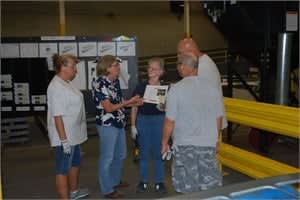
Platt (second from left) says that the company is committed to manufacturing smartly to provide a more cost-effective bus to customers. She is pictured here with a team in the fabrication department.
Are there any product developments on the horizon that you can talk about?
As you know, we’ve recently redesigned the EFX, our front-engine product, to provide an array of upgrades that make the Type D bus even more appealing to value-conscious customers. One of the benefits of doing that and getting the family look out there with our HDX, our rear-engine transit product, is that it gives you commonality of parts between the two buses. That commonality means that we can be more cost-effective and provide better content and better quality, because we’re building something that’s consistent across multiple product lines. It makes it easier for service. It makes it easier for our dealers, having one set of parts instead of two sets of parts.
In the future, I think you’re going to see us make some upgrades to the HDX product to even further that commonality and to really bring those product lines in sync with each other.
Twice a year, we hold customer focus groups. The interesting thing that we’ve heard very consistently since I’ve been here, no matter what OEM product people are currently using, is that corrosion is becoming more and more of an issue. It’s something that’s relatively new, and it’s driven by the chemicals that are put on the roads in the northern climates for de-icing — particularly magnesium chloride, which is four to five times more aggressive than regular sodium chloride. So you’re seeing a bus age in one year the equivalent of what it used to age in four or five years.
What we’ve done is put together a cross-functional anti-corrosion team, and they’ve been out visiting customers and trying to figure out, regardless of whose bus it is, where the most problematic areas are and what we can do about it. We’re going to have some options available for customers later in the year to address some of those specific problem spots. One of the things that we’ll have out there is a flexible, high-performance coating that can be used in particular areas that are susceptible to chipping or corrosion. We think that this is going to really provide an extra layer of protection to vehicles to help them fight this.
In terms of new engine products, we’ve already announced that we’re adding a propane Minotour [Type A bus]. The first ones were delivered in August. We’re really excited about being able to expand into the propane market.
How big of a role does total cost of ownership play in school bus purchasing decisions?
Historically, the total cost of ownership has not played a role in the bid process. The reason it hasn’t is that in most school districts, the money for buying buses comes out of a separate budget than the money for operating the bus. And there’s often a third budget for fuel. So you have three different pockets of money, and in a lot of cases, they haven’t previously been evaluated together. Procurement hasn’t been looking at the total picture.
That’s changing as school districts have to get smarter and smarter about how they use their money. They’re starting to look across lines, and they’re starting to think about how they can make better decisions that will decrease the cost of ownership over the life of the vehicle.
From our perspective, what we have to do is understand what those operational costs are and show our customers how they can look at their buses to be better stewards of their tax dollars. We show them how to find fuel economy, to look at maintenance intervals, parts durability, replacement costs and reparability so they can factor all of that into their purchasing decisions.
Fuel economy in particular plays a major role in that decision, and we feel like we’ve provided a real service to school districts in terms of offering our fuel-efficient SCR [selective catalytic reduction] technology. The buses we’ve built since 2010 get better fuel economy than the ones we built prior to that.
And finally, if we manufacture smartly, then we can provide a more cost-effective bus to our customers. Not only do we not send any waste to the landfill, so we don’t have to pay any garbage dumping fees anymore, but we’re also keeping our manufacturing costs low as we find more efficiencies and we eliminate the waste in our production process.
We’re really trying to look at all different aspects of the total cost of ownership and provide people with the most cost-effective solution that we can.
[PAGEBREAK]Have you found that there are many districts that may be interested in alternative fuel buses, but they’re reluctant or unable to take the initial step? And if so, what are their challenges?
There really are a growing number of districts that are interested in alternative fuel buses of all types. Part of it is because of the cost of ownership, part of it is because it’s a domestic sourced fuel, and part of it is the reduction in greenhouse gas emissions. They’ve got all the right reasons for wanting to do it.
There are a couple of major challenges that we hear about. The first is infrastructure: “How am I going to get it?” That’s true whether you’re talking about natural gas or propane. Secondly, they say, “OK, if I can get it, do I have to maintain multiple fuels at my fleet, or am I going to change the whole fleet over? Am I going to make a short-term decision for one type of fuel, then move to a different one?”
It’s also about what you do with price fluctuations in the future, and you particularly see this when people are trying to make a decision between propane and natural gas. Propane adds a lower upfront cost for infrastructure, but it’s got a much higher per-gallon equivalent cost than natural gas. In some cases, people are finding ways to get over the initial infrastructure cost for natural gas because they want the lower, more stable long-term price of the natural gas fuel. In other cases, they’re saying, “I don’t think I can deal with that hurdle. Give me the propane because I’ll get a little bit of benefit on fuel cost now, but I’ve got almost no infrastructure.” It’s a real challenge for them to decide what the right option is.
As of the 2011 sales year, school bus sales had declined for five years in a row. Do you expect that to turn around anytime in the near future?
We started talking about some of the challenges that I’ve seen and the changes in the business, and I honestly think that because of that, we’re not going to see an increase. I think the best we can hope for is that it levels off. But will it level off at the current level or somewhere a little lower than that? I don’t know. I’m certainly hopeful that it doesn’t get any worse than it is. Only time will tell, because we know that transportation departments have made changes in the way they purchase buses and how they operate them.
Is there anything else you want to discuss?
I mentioned before that we’re focusing on smart business practices so that we can deliver a lower total cost of ownership, and I just want to emphasize that we want to do that, but we still want to deliver reliability, durability and quality. We don’t want to take anything out of what we’re building — we just want to do it better. And that comes from our commitment to continuous improvement and really believing that we have a part to play in shaping the future of transportation.
More Management

Changing Lanes: BusWhere, EverDriven, InterMotive, Summit School Services, Switzer-Carty & Thomas Built Buses
Check out who's been hired, promoted, and appointed to leadership positions at various school transportation suppliers, contractors, and manufacturers.
Read More →
The Most Expensive Thing You Do Before Selling a School Bus: Wait
When should you sell an aging school bus? Learn how maintenance, mileage, corrosion, specifications, and timing can affect resale value long before the auction.
Read More →
American Student Transportation Partners Acquires AJ Myers and Sons
A new deal brings a 75-year Pennsylvania student transportation provider into one of the nation’s largest private school bus contracting groups.
Read More →
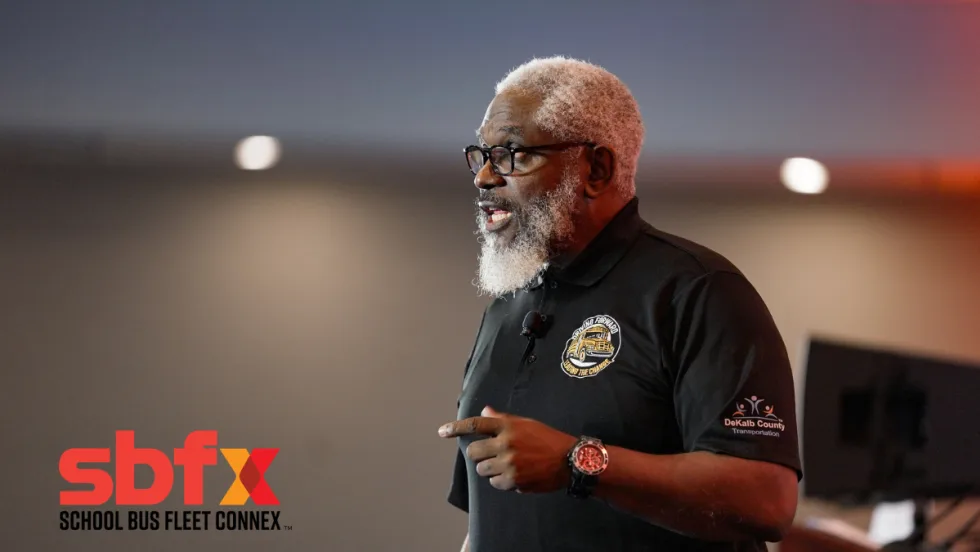
What I Brought Home From SBFX: Relationships, Leadership, and Preparing What's Next
Who could lead your transportation operation tomorrow if you couldn't? Bernando Brown explores succession planning, mentorship, and preparing emerging leaders to step up.
Read More →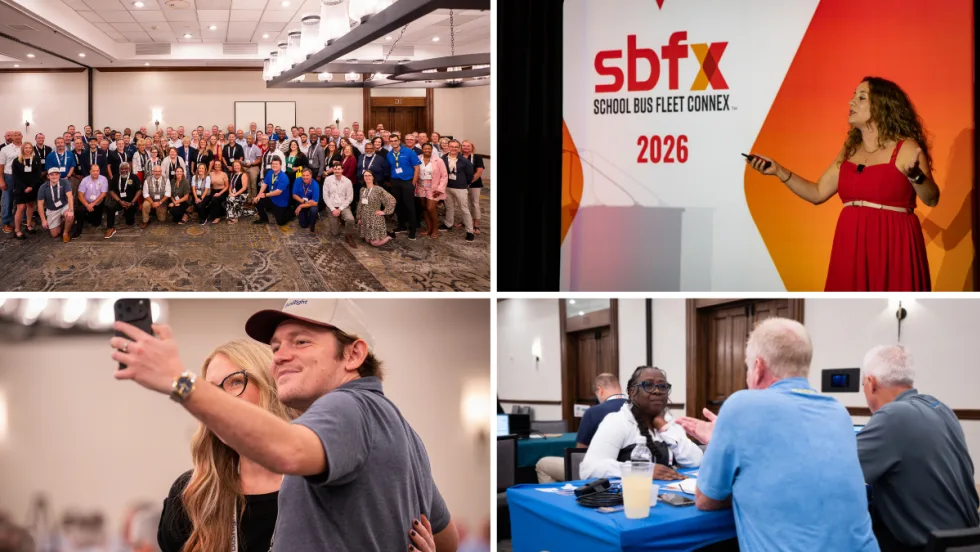
Inside School Bus Fleet ConneX 2026: Industry Leaders Connect in Scottsdale [Photos]
See highlights from SBFX 2026 in Arizona, where school bus operators and suppliers gathered for meetings, education, networking, awards, and more.
Read More →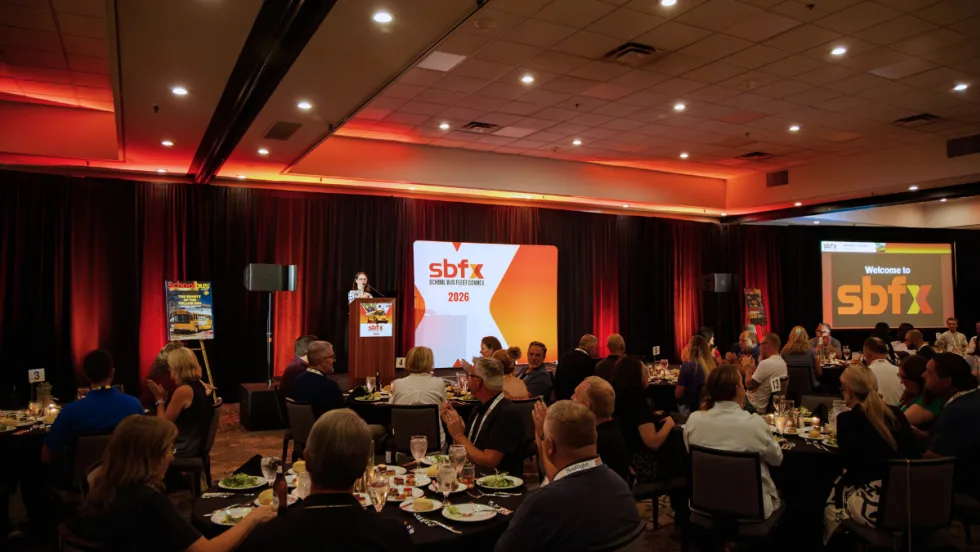
School Transportation’s Biggest Pressures and Opportunities: SBFX Attendees Weigh In
School bus operators point to rising costs, staffing, and vehicle prices as immediate pressures while identifying technology, training, and routing as opportunities for growth.
Read More →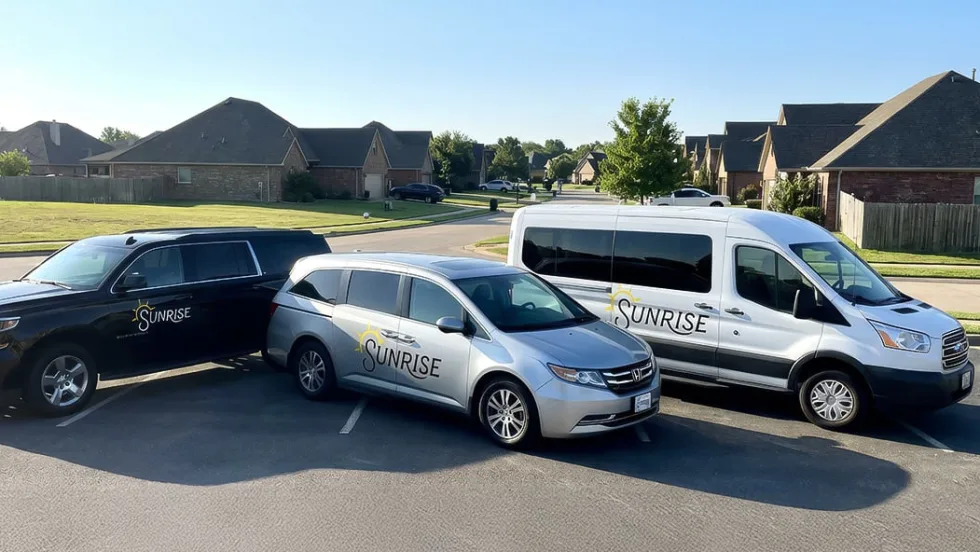
STA Acquires Sunrise Transportation
Student Transportation of America expands in Illinois and Connecticut through Sunrise's fleet of nearly 1,000 vehicles.
Read More →
EPA Opens $180M DERA Funding Round for Diesel Upgrades
The 2026 Diesel Emissions Reduction Act program seeks applications from eligible organizations to accelerate the retirement of legacy diesel vehicles.
Read More →
HopSkipDrive’s CareEngine Targets the ‘Exceptions’ in Student Transportation
The new platform works alongside districts’ existing transportation management systems to coordinate specialized rides, automate last-minute changes, and turn ride data into operational improvements.
Read More →
The Right Ride for Every Student: Navigating the New Student Transportation Ecosystem
How should districts blend school buses with small-vehicle transportation and other options? EverDriven CEO Mitch Bowling discusses safety, costs, partnerships, and strategy.
Read More →