



The NSTA goes to Washington
WASHINGTON, D.C. — The National School Transportation Association (NSTA) has had a strong presence in the nation’s capital in the past few months.

WASHINGTON, D.C. — The National School Transportation Association (NSTA) has had a strong presence in the nation’s capital in the past few months.
In late April, several members of the association, including its executive committee, flew to Washington to attend the annual “Day on the Hill,” which included visits with several members of Congress and their staff as well as federal regulatory officials.
According to NSTA lobbyist Becky Weber, topics discussed with congressional representatives included school bus security legislation for threat assessments and funding for the Diesel Emissions Reduction Act, which seeks to improve air quality through clean diesel retrofits.
NSTA members also spoke with officials at the National Highway Traffic Safety Administration about the issue of seat belts on school buses, which has taken on greater urgency at the congressional level because of last November’s fatal crash in Huntsville, Ala.
This D.C. visit broke new ground with the display of a new Blue Bird Vision conventional school bus. The bus was toured by members of both the House and Senate. Weber said the presence of this state-of-the-art bus was helpful to illustrate the many safety features of new school buses.
In May, Terry Thomas, chair of the NSTA’s Government Relations Committee and president of Community Bus Services in Youngstown, Ohio, revisited the Beltway to deliver testimony about the impact of high fuel prices before the House Select Committee on Energy Independence and Global Warming.
Thomas warned the House panel that reductions in school bus service as a result of higher fuel prices will increase congestion, pollution and overall fuel consumption. Most importantly, he said, reductions in school bus service will result in more child deaths as students are forced into taking higher-risk transportation.
Already, schools across the country have reacted to increased energy costs by eliminating sports and activity trips, charging parents for bus service, increasing walking distances and shifting students from school buses to public transit.
Thomas compared the 20 fatalities nationwide among the 25 million students who ride the school bus to and from school with the 800 fatalities nationwide among the 20 million students who do not take the bus. He urged the panel to provide the resources to ensure that dedicated school bus systems continue to protect our children.
“We remind Congress that the nation’s school buses comprise a larger mass transit system than public transportation, and are every bit as worthy of federal financial support,” Thomas said.
Thomas noted that in a recent SCHOOL BUS FLEET survey, 60 percent of school districts reported an increase in ridership due to increased fuel costs. He said this puts schools and their contractors in a difficult financial irony: They are being asked to accommodate more students for the same reason that they are being forced to cut service.
More Management
The Back-to-School Checklist Every Director Should Complete Before the First Bell
Help your transportation team start the school year strong with these tips for contingency planning, communication, fleet visibility, technology, and trip management.
Read More →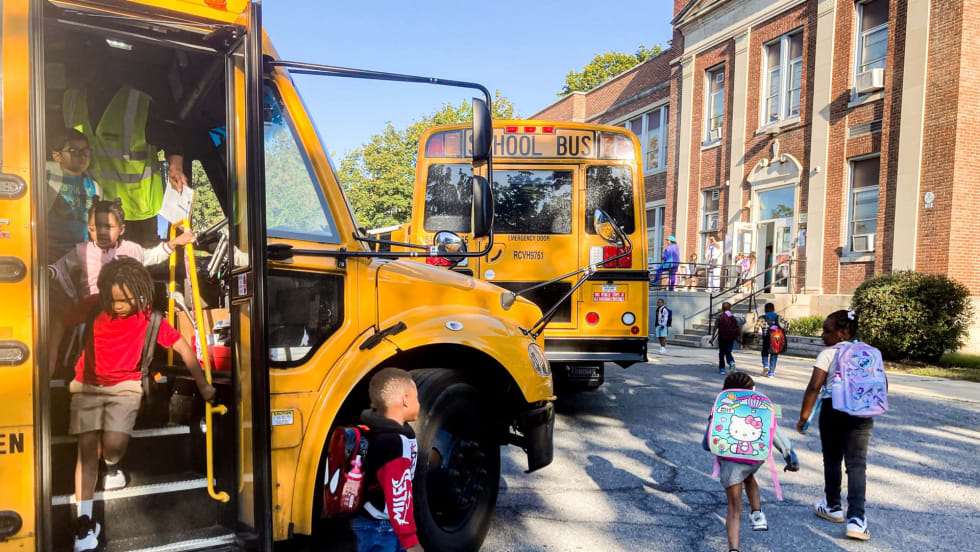
How a New York District Cut Nearly $1M in Transportation Costs While Expanding Bus Access
A data-driven overhaul with BusRight reduced Poughkeepsie City School District's planned routes from 26 to 17 while extending school bus service to about 1,200 additional students.
Read More →
Budgets Down, Enrollment Shifting: What the Data Says Districts Should Watch
School transportation departments face two converging challenges this year: tightening budgets and shifting enrollment. Most districts still address these issues separately, but the assumption that either trend will simplify operations is proving incorrect.
Read More →
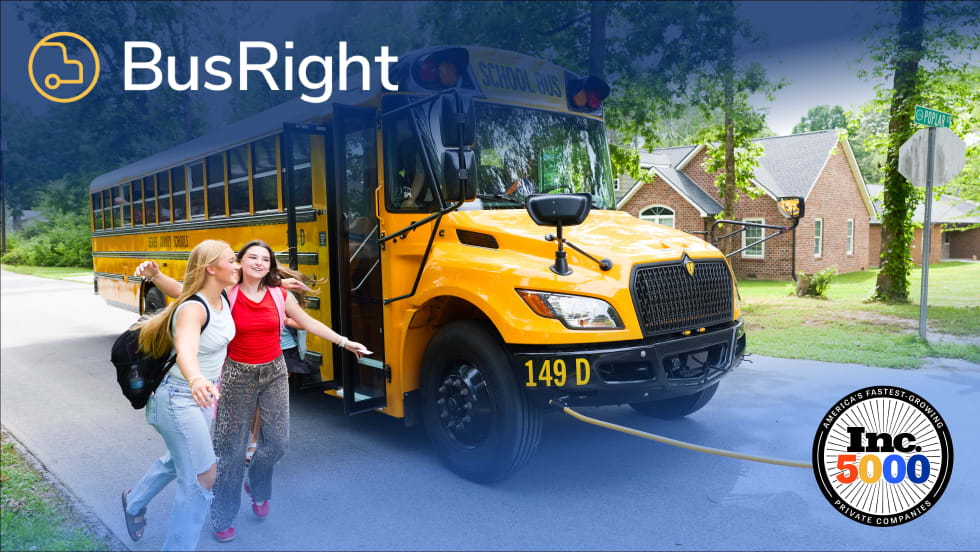
These 8 School Transportation Companies Made the 2026 Inc. 5000 List
Find out which school transportation contractors, technology providers, and suppliers ranked among America’s fastest-growing private companies.
Read More →
The Link Between Emotional Intelligence and School Bus Safety
How can emotional intelligence help transportation pros navigate stress, manage change, and build stronger relationships? Listen to find out.
Read More →
What Emotional Intelligence Has to Do With School Bus Safety
In this video, discover how emotional intelligence can help transportation leaders and drivers navigate stress, manage change, and build stronger relationships. The Route is sponsored by IC Bus.
Read More →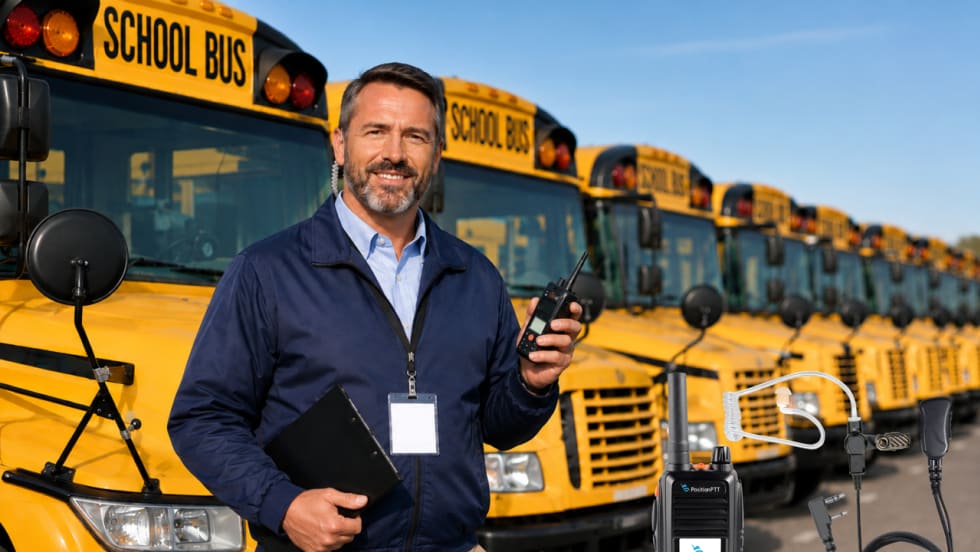
Beyond Two-Way Radios: School Bus Communications Evolve With Push-to-Talk Over Cellular
PRYME Radio and PositionPTT join forces to advance hands-free radio use and reduce distracted driving. See how PoC compares with traditional radios on range, cost, safety, and connectivity.
Read More →
Have School Districts Adapted to Bus Driver Shortages or Simply Accepted Less Service?
According to a recent report from HopSkipDrive, many districts appear to have recalibrated what "normal" transportation service looks like.
Read More →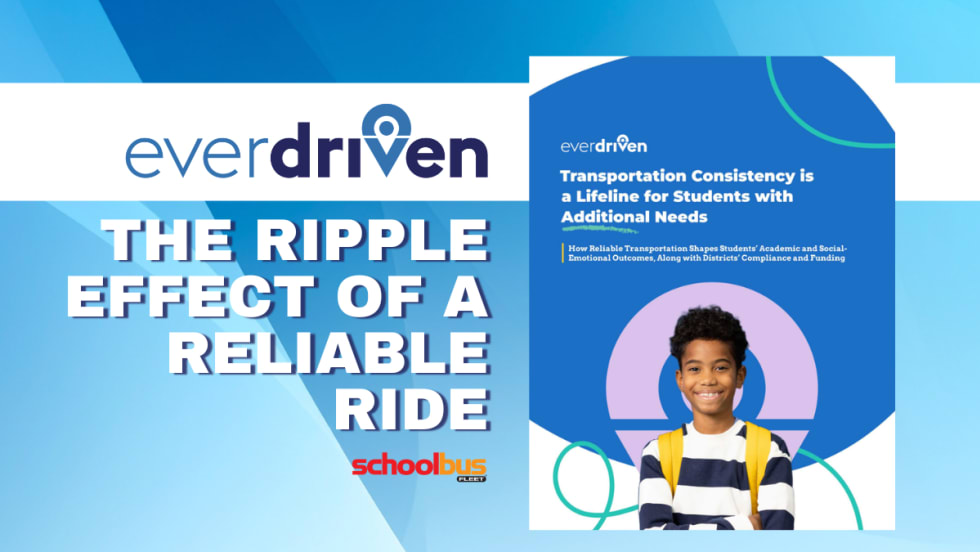
Reliable Transportation Linked to Better Student Outcomes, New EverDriven Study Finds
See why new research suggests transportation consistency improves student outcomes while influencing attendance, funding, IEP compliance, and family trust.
Read More →
Switzer-CARTY Enters the U.S. with New Acquisition
The Canadian contractor’s acquisition of Minnesota-based Agnes Corporation marks its first cross-border expansion into the United States and adds 350 vehicles.
Read More →