



The Industry's Voice in Washington D.C.
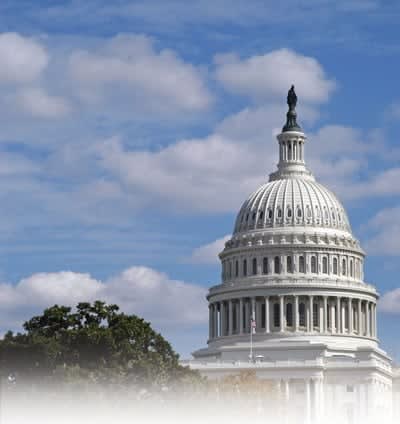
The three major pupil transportation associations have been lobbying lawmakers in the nation's capital about concerns over rising fuel prices, security and funding of the Clean School Bus USA program.

The following statements were issued by the three presidents of the major pupil transportation associations — Lenny Bernstein of the National Association for Pupil Transportation, Pete Japikse of the National Association of State Directors of Pupil Transportation Services and John Corr of the National School Transportation Association.
Negative surcharge for diesel fuel requested
March 13, 2006
Dear Member of Congress:
On behalf of school transportation providers around the country (both public and private), we are writing to seek congressional aid with respect to the staggeringly high fuel costs that are threatening our ability to provide low-cost, safe transportation for 25 million schoolchildren each day. The nation’s school bus fleet is the largest mass transportation fleet in the country, 2.5 times the size of all other forms of mass transportation, including transit, intercity buses, commercial airlines and rail, combined. This system is also the safest way to transport children to and from school every day. The National Academy of Sciences has reported that there are an average of 800 fatalities a year among children who do not ride school buses, while the school bus-related annual fatality rate is less than 20. Keeping our school buses running is vital to the safety of our children.
In the wake of instability in crude oil supplies, Hurricane Katrina and other factors, rising fuel costs have devastated the industry and now threaten to force the involuntary reduction of school bus transportation nationwide due to diesel fuel prices that are today 25 percent higher than a year ago and more than twice what they were four years ago. In fact, contrary to past experience, diesel fuel prices are now more than 20 cents higher in most states than the price of regular gasoline. This is proving to be a burden to public and private operators alike. While the high fuel costs affect all modes of transportation, other transportation modes are better able to either absorb the costs or pass them on in the marketplace.
Public school systems and their school transportation providers are not able to pass on the costs to the students they drive to and from school every day. Instead, many school districts have responded to this crisis by eliminating field trips and worse, reducing transportation to and from school, forcing students to find less safe and reliable ways to access their education.
For example, in Ohio school districts have eliminated school bus service to 80,000 school children a day.
This reduction in service has a number of significant effects on students and families, and also on our national economy. Some of the most notable are:
Reduction in service eliminates the protection students receive from a school bus, and results in their having to travel in one of the other transportation modes that are documented as being more dangerous.
Loss of available school transportation service places a burden on working parents and single parents who have come to depend upon the school bus as their child’s only mode of transportation to school. This disrupts households and impacts the public workforce when parents must interrupt their workday to manage the transportation of their children.
Reduction in school transportation service results in an increase in personal vehicle use during morning and afternoon rush hours. In an era when we are globally concerned about air pollution and traffic congestion, we are actually increasing the problems by increasing the number of vehicles on the road.
This increase in personal vehicle use also increases the consumption of fuel as we place more vehicles on the road to replace the service that was provided by school buses.
In schools where educators are struggling to continue school transportation services, additional funds and tax dollars have to be spent on fuel for vehicles, resulting in a negative impact on the funds available for education services.
We understand that there are no easy solutions to this problem, but are writing to ask for your help nonetheless. We ask that Congress consider providing a negative surcharge for diesel fuel used in public school transportation that could be in the form of a grant, a tax credit for fuel vendors that supply fuel to school bus systems or other benefit to allow public schools to continue to provide low-cost, safe transportation services to our nation’s school children. Even though we are the lowest-cost, highest-volume form of public mass transit in the country, we have never received a subsidy of any kind. While funds are always tight, we understand that Congress is considering raising additional oil- related revenue through either an accounting change for oil industry profits, limiting royalty relief for exploration or repeal of tax incentives that the oil industry executives have indicated may no longer be needed. While the oil industry may no longer need federal help, our industry desperately does. We would appreciate your consideration of any measure, even if temporary, that could help reduce fuel costs for transportation of schoolchildren by public and private fleets.
We would be happy to meet with you to provide additional information about these issues or to discuss potential actions that may be viable to address these issues.
[PAGEBREAK]
Funding urged for security enhancements
Statement for the record of the U.S. House of Representatives, Committee on Transportation and Infrastructure Subcommittee on Highways, Transit, and Pipelines, Hearing on Public Transportation Security. March 29, 2006.We appreciate the opportunity to enter remarks into the record of the subcommittee’s hearing on public transportation security. We commend the Committee for their interest in expanding funding for security beyond the airlines and Amtrak, but are concerned that the largest mass transportation fleet in the country has been overlooked.
Each weekday more than 450,000 yellow school buses travel the nation’s roads. Our fleet is 2.5 times the size of all other forms of mass transportation — transit, intercity buses, commercial airlines and rail — combined. During the school year we make more than 50 million passenger trips daily carrying the country’s most vulnerable passengers — our children. Our exposure is far greater than public transportation’s at 32 million trips daily, yet the school bus industry has received little attention and no funding at all from the federal government.
School buses and terrorism — School buses have been targets of terrorists not only in countries such as Israel, Thailand, Yemen, but also in Canada and the U.S. So far, the attacks in this country have been domestic, but they illustrate the concerns of the industry — and indeed of the country. The most notorious case occurred 30 years ago when a gang of armed men hijacked a school bus in California, taking 26 children hostage. The men forced the children and their driver into a buried van and kept them underground for 16 hours, demanding $5 million ransom.
In 1995, a man claiming to have a bomb hijacked a school bus with 11 special needs children in Miami. Police killed the hijacker, who turned out to be unarmed.
In 1996, a 15-year-old boy commandeered a school bus in Salt Lake City and killed the driver. He later killed himself after crashing into a home.
In January 2002, a school bus driver in Pennsylvania abandoned his regular route and took 13 children on an unauthorized trip to Washington, D.C. The driver, armed with a rifle, eluded attempts to find the bus for six hours. Despite a massive search by police, the bus wasn’t found until the hijacker turned himself in.
Just this past January, an armed man hijacked a school bus in Los Angeles County, Calif., forcing the driver at gunpoint to drive 200 miles before the driver outwitted him and escaped.
The Committee knows that buses are a common target of terrorists worldwide. Buses carrying children are particularly popular targets, for there is little that human beings fear more than a threat to their children. Despite the potential for devastating results if terrorists were systematically to target school buses in this country, the federal government has not included school transportation in its efforts to provide a secure public transportation system.
School buses and security — Like public transit, school buses operate in an open environment. Routes are routinely published at the beginning of the school year and rarely change during the year. School buses make the same stops at the same time every day, making it very easy for anyone to intercept a bus. School bus stops are unprotected, and usually unattended by an adult.
School buses, by state law, cannot be locked when students are on board; therefore they are vulnerable to penetration by outsiders. School bus drivers have no shield, compartment or other protection; since they, unlike public transit or intercity bus drivers, are responsible for their passengers, they cannot be isolated from them.
School bus operations vary greatly in their sophistication and their facilities, but the majority operate from unprotected bus yards, where prior to 9/11, the biggest concern was vandalism. The number of bus fleets that are grounded during the year by vandals indicates how vulnerable the industry is to terrorists.
In many communities across the country, school buses are the only form of mass transportation available for evacuation of large populations. Security of the school transportation system is important not only to protect the students who ride buses daily, but also to ensure that we are ready and able to respond to critical incidents elsewhere in our communities. Many fleets participate in emergency planning with local government for everything from police responses to nuclear plant evacuation planning. School buses from New York, New Jersey and Connecticut played an important role in both evacuating people from the impact area in Manhattan on 9/11 and transporting critical workers into the area during the search and recovery period. This is part of a long tradition of service in times of disaster, whether natural or manmade.
Officials in New Orleans have been criticized for not incorporating the school bus fleet into their emergency plans prior to and during Hurricane Katrina. Buses that could have been used to transport residents to safety were instead trapped under water. We all are aware of the consequences in that instance of the failure to recognize the importance of the local school bus fleet.
In the fall of 2002, NSTA conducted a survey to gauge how the industry had responded to the events of 9/11. The results showed that the primary response of the members, private companies who provide school transportation under contract to public school districts, was to increase training for drivers in security awareness. Ninety percent reported two-way radio communications in their fleets, and about half have video cameras in some buses. But nearly all said there was no funding available for capital investments such as fencing and lighting for bus yards or sophisticated tracking equipment for buses.
In the past four years, our three associations have worked with the Transportation Security Administration (TSA) in trying to determine the security needs of the school bus industry. In 2003, NSTA published “The Top 25 Security Action Items for School Bus Operations”; more recently, NAPT developed a security assessment tool as a guide for school bus operators to improve their operations. We collaborated with TSA on a brochure for school bus drivers, and all three associations have posted security information on our websites. In addition, many of our members attended security forums at their own expense, and most are involved in their local emergency response planning activities.
Recently, the American Trucking Associations and the three national school bus associations collaborated to develop “School Bus Watch,” a training program derived from “Highway Watch.” In addition, we have been working with Consolidated Safety Services Inc. on a security awareness and training program funded by TSA, which is currently in the testing stage. While these programs provide welcome training to school transportation personnel, our industry still lags behind all other modes in asset protection. A few school districts scattered across the country have introduced GPS systems into their school buses, and some are upgrading communications. But as yet there is no consistent, coordinated effort to ensure the security of the nation’s school transportation system.
[PAGEBREAK]
School buses and funding — School transportation is funded almost entirely by state and local government. The federal government provides no funding source for routine home-to-school transportation or school activity transportation. (In fiscal year 2003, the first federal funds became available for school buses when the EPA provided $5 million for grants to reduce diesel emissions as part of their Clean School Bus USA program.)
As state governments are decreasing expenditures, a larger burden falls on municipalities to support school transportation. Some school districts have turned to parents to pay part of the cost of busing their children, and some have wrestled with the possibility of discontinuing school bus transportation entirely — knowing that such a move would not only present a hardship for many families and increase traffic and pollution around schools, but more importantly, would put students at much greater risk as they find less safe ways to get to school.
In this economic climate, finding the means to make significant security improvements to school transportation systems is difficult if not impossible.
Congress acknowledged the importance of school transportation in the Patriot Act, by specifically including school buses in the definition of mass transportation. But even though all other forms of mass transportation — airlines, rail, transit and intercity buses — have received some federal funding for security improvements, school transportation has received none.
This industry specializes in training. Driver training in particular is one of the highest priorities of every school bus operator, public or private. This emphasis on training is one of the reasons we continue to be the safest form of ground transportation. Our response to the need for greater security reflects that priority: We do what we know best. We develop training programs, we include security awareness and response in our regular safety classes, we work with law enforcement personnel to find effective ways to present the information. And we do it within current budgets, using the carriers’ own funds.
But if we are to make significant improvements in school transportation security, we must go beyond training to capital investments in facilities and equipment. Some of the priorities of the industry:
Professional security-vulnerability assessments.
Fencing, lockable gates and lighting to secure bus facilities.
Video monitoring systems for buses, bus yards and bus stops.
Communications equipment for small and rural school bus systems.
Vehicle locator systems.
FBI background checks for employees.
In addition, TSA has invited the school bus industry to participate in ISAC (Information Sharing and Analysis Center), believing that it would benefit the industry and TSA. We cannot finance an expense of that size on our own; like the American Public Transportation Association, we would need a federal grant to establish an ISAC presence.
These are needs that neither school bus operators nor local boards of education can fund alone. If we are to provide security for the 25 million children transported on school buses daily, we must have help from the federal government. As Mr. Luner testified before the Committee in 2004, “Without consistent application of reasonable and prudent security measures across modes, we risk creating weak links that may drive terrorism from one mode to another.” The airline industry has received $18 billion for security enhancements; Amtrak has received $5.7 billion; the transit industry has received $250 million; and the intercity bus industry has received $50 million. The school transportation industry — providing over 10 billion passenger trips a year — has received nothing. We urge the Committee to ensure that the largest public transportation system in the country, the one that transports our children, is at least as secure as other ground transportation modes.
We look forward to working with the Committee in its continued efforts to provide all Americans with a safe, secure transportation environment.
Increased funding of Clean School Bus USA urged
April 3, 2006
Chairman Thad Cochran
Senate Appropriations Committee
Dear Chairman Cochran:
On behalf of school transportation providers around the country (both public and private), we are writing to seek Congressional support for the maximum funding possible for the Clean School Bus USA program as part of the diesel emission reduction programs funded through the Fiscal Year 2007 Interior and Related Agencies Appropriations bill.The nation’s school bus fleet is the largest mass transportation fleet in the country, 2.5 times the size of all other forms of mass transportation — including transit, intercity buses, commercial airlines and rail — combined. This system is also the safest way to transport children to and from school every day.
Nonetheless, school buses, like other heavy-duty diesel vehicles, emit pollutants that add to regional air quality problems and present particular concerns for the children that ride them. As an industry, we are committed to doing everything we can to make the buses as safe as possible, including supporting new standards for model year 2007 buses that will result in significantly lower emissions levels. Because school districts continue to face increasing budget deficits, however, it will be many years before our existing fleet of buses can be replaced. Therefore, we have been working with EPA and other partners to fund the Clean School Bus USA program, which provides assistance for the retrofit and replacement of existing school buses around the country.
The Administration is seeking $49.5 million for diesel emission reduction programs under the umbrella of sections 791 through 797 of the Energy Policy Act of 2005, including funding for the Clean School Bus USA program. While the amount requested is approximately one-sixth of the total authorized for clean school bus and other clean diesel programs, it represents a significant increase over last year’s funding for all diesel emission reduction programs. This increase is fully justified based on studies showing that diesel reduction programs are among the most cost-effective programs available to local communities in addressing pollutants of concern.
We ask that you lend your support for diesel emission reduction programs by providing the highest possible funding as part of the Interior and Related Appropriations bill for Fiscal Year 2007.
More Management

The Back-to-School Checklist Every Director Should Complete Before the First Bell
Help your transportation team start the school year strong with these tips for contingency planning, communication, fleet visibility, technology, and trip management.
Read More →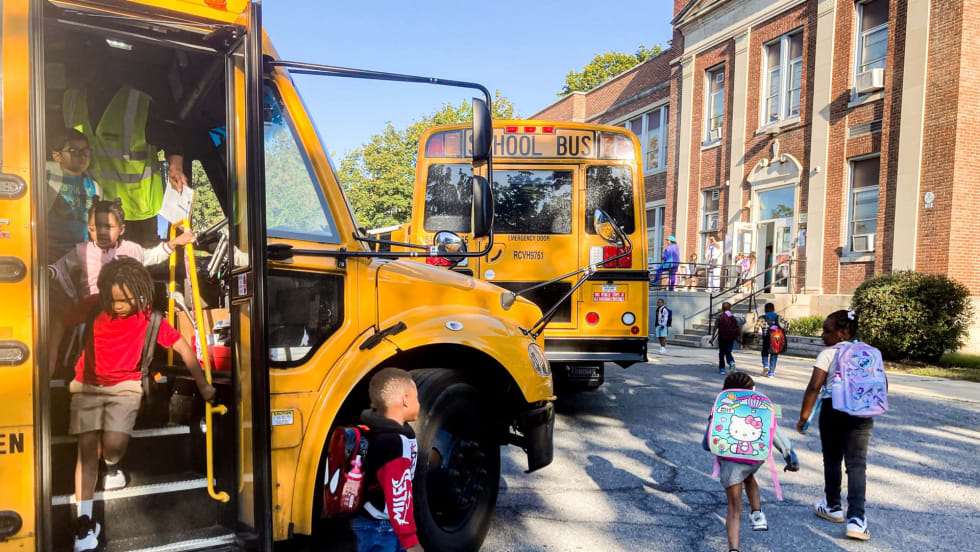
How a New York District Cut Nearly $1M in Transportation Costs While Expanding Bus Access
A data-driven overhaul with BusRight reduced Poughkeepsie City School District's planned routes from 26 to 17 while extending school bus service to about 1,200 additional students.
Read More →
Budgets Down, Enrollment Shifting: What the Data Says Districts Should Watch
School transportation departments face two converging challenges this year: tightening budgets and shifting enrollment. Most districts still address these issues separately, but the assumption that either trend will simplify operations is proving incorrect.
Read More →
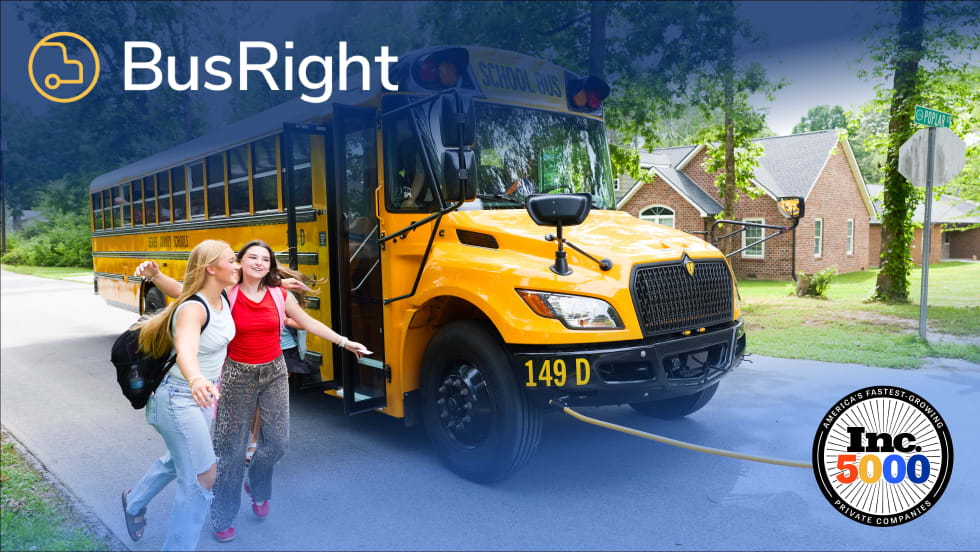
These 8 School Transportation Companies Made the 2026 Inc. 5000 List
Find out which school transportation contractors, technology providers, and suppliers ranked among America’s fastest-growing private companies.
Read More →
The Link Between Emotional Intelligence and School Bus Safety
How can emotional intelligence help transportation pros navigate stress, manage change, and build stronger relationships? Listen to find out.
Read More →
What Emotional Intelligence Has to Do With School Bus Safety
In this video, discover how emotional intelligence can help transportation leaders and drivers navigate stress, manage change, and build stronger relationships. The Route is sponsored by IC Bus.
Read More →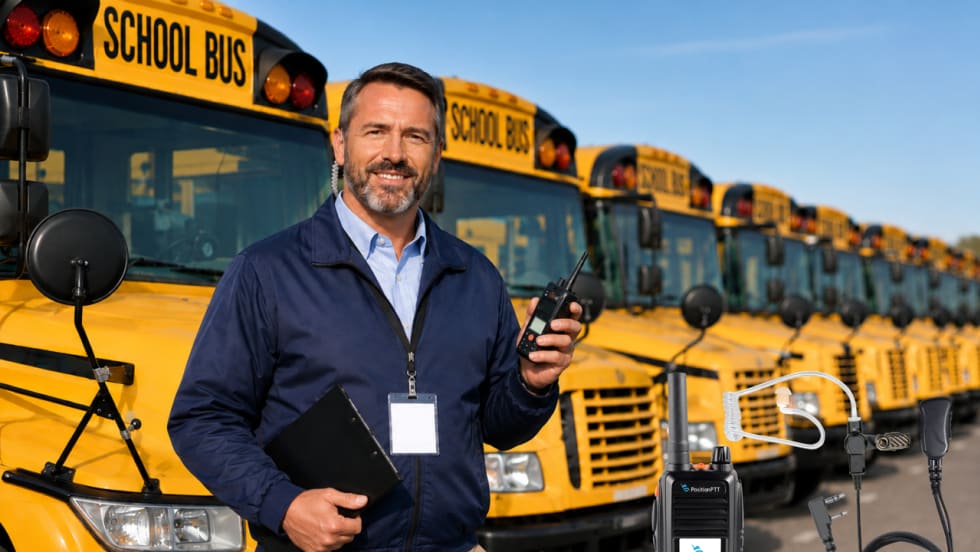
Beyond Two-Way Radios: School Bus Communications Evolve With Push-to-Talk Over Cellular
PRYME Radio and PositionPTT join forces to advance hands-free radio use and reduce distracted driving. See how PoC compares with traditional radios on range, cost, safety, and connectivity.
Read More →
Have School Districts Adapted to Bus Driver Shortages or Simply Accepted Less Service?
According to a recent report from HopSkipDrive, many districts appear to have recalibrated what "normal" transportation service looks like.
Read More →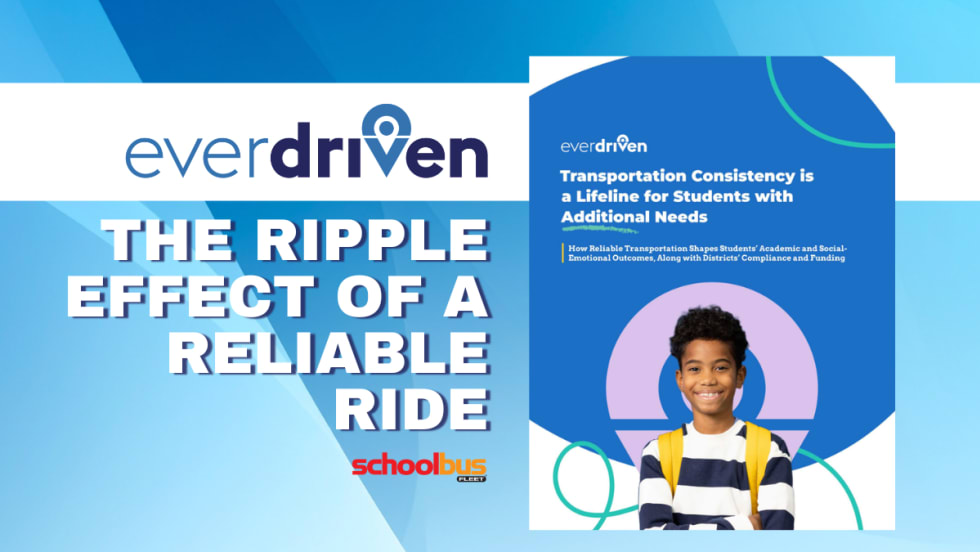
Reliable Transportation Linked to Better Student Outcomes, New EverDriven Study Finds
See why new research suggests transportation consistency improves student outcomes while influencing attendance, funding, IEP compliance, and family trust.
Read More →
Switzer-CARTY Enters the U.S. with New Acquisition
The Canadian contractor’s acquisition of Minnesota-based Agnes Corporation marks its first cross-border expansion into the United States and adds 350 vehicles.
Read More →