




Staying Out of Harm's Way
Road salts prompt Monroe-Woodbury Central School District to relocate air-conditioning condensers to the roof.

Monroe-Woodbury bus driver Jeanine Peck (right) transports students to Tuxedo Park School, a non-public school in the Ramapo Mountains in Orange County, N.Y.
Road salt is a necessary evil during the winter in many parts of the country. Although it helps to keep roads passable during icy or snowy weather, it has a corrosive effect on the undercarriage of vehicles, including school buses.
In Monroe, N.Y., where roads are often de-iced during the winter, the Monroe-Woodbury Central School District has taken a novel approach to try to protect at least some of the components of its buses from salt corrosion.
Last November, it started operating three small buses with air-conditioning units perched on the roof. The buses, built by Girardin Minibus, are used on longer routes, some of which wend their way through the local mountains.
Clifford Berchtold, transportation director at Monroe-Woodbury, says the new G5 buses were spec’d with both dashboard and passenger compartment air conditioning. “They have to have a fairly powerful air-conditioning system because we plan to run them 12 months a year,” he said.
Carrier air-conditioning units were fitted on the buses by NESCO Bus Maintenance in Bay Shore, N.Y. “We’ve never had the condensers placed on the roof before, so it’s a bit of an experiment,” Berchtold says, adding that the standard placement of condensers inside the body skirt has not protected them. “The road salt just eats up the condensers.”
A loyal following
The three new G5 units that have been in service since November continue a long-term relationship that the district has had with the manufacturer. Berchtold says the school district was one of the first in New York to buy Girardin buses back in the late 1980s. “What we’ve found over the years is that they build a very good van,” he says. “So we’ve been staying with them.”
Over the years, Monroe-Woodbury has amassed more than 50 Girardin units in its fleet, procuring them through Leonard Bus Sales in Deposit, N.Y. Overall, the district operates more than 150 buses in the rolling foothills of the Catskill Mountains, about 45 miles north of New York City. Its service area covers the towns of Monroe, Woodbury, Chester, Blooming Grove and Tuxedo.
So far, the G5s have been well received by the drivers. “They’ve been very pleased with these buses,” Berchtold says. “They like the looks of the vehicle and the fact that there aren’t many squeaks and rattles. They’re quiet.”
They’ve also stayed dry, even during the rainy period in the fall. “The drivers say there haven’t been any leaks, which in itself speaks to the quality of the vehicle,” Berchtold says.
Bold changes to the G5
The district previously purchased the G5’s predecessor, the MB IV, which they found to be a reliable bus. Berchtold says the company let him know they were planning to make major changes, but the extent of the changes was still a surprise.
“They did it in one fell swoop,” Berchtold says. “When they made the G5, they were bold.”
The G5 was unveiled at the National Association for Pupil Transportation’s 2005 Conference and Trade Show in Austin, Texas. Design and engineering enhancements include a one-piece roof panel, energy-absorbing rubber mounting pucks, increased floor width, enlarged viewing area of the loading zone and an 8-inch safety zone that’s incorporated into the rear wall. The appearance of the vehicle also was modified, incorporating a clean, stylish design.
“We have to go to a little trouble to get these vehicles,” says Berchtold. Because they’re not included in the state contract, he bid for them locally and paid approximately $61,000 for each bus. “Our mechanics and drivers are so pleased with these buses that we go to the extra trouble of bidding for them locally,” he says.
The 2007 G5s were spec’d on a Chevrolet chassis with a GM Duramax diesel engine. They have a 28-passenger capacity and are used on three different types of routes: one for the non-public Tuxedo School up in the mountains, another for a Montessori facility about 30 minutes away and the other for a Board of Cooperative Educational Services satellite school that’s about 45 minutes away. “They all go out of district on longer routes,” Berchtold adds.
Nimble response cited
Berchtold says he enjoys working with Girardin because they are responsive to his input. “We’ve worked with a lot of manufacturers, and I’ve found that it generally takes years for them to fix a wiring problem or to address a corrosion issue,” he says. “With Girardin, they get things fixed the next year. They are quick to get things corrected.”
Berchtold hopes to order more small buses next year, but the district’s budget will first have to be approved by local voters on May 15. “At least 20 percent of the school budgets in the state don’t get approved, which means that you can’t buy new buses,” he says.
The district is behind the curve in regard to its fleet replacement cycle. Berchtold says he would prefer to replace the small buses on a nine-year cycle but currently operates on an 11-year cycle. “We’ve gotten a little out of rotation,” he says. If the voters pass the budget in May, he hopes to buy 10 new small buses, of which five would likely be G5s.
More Maintenance
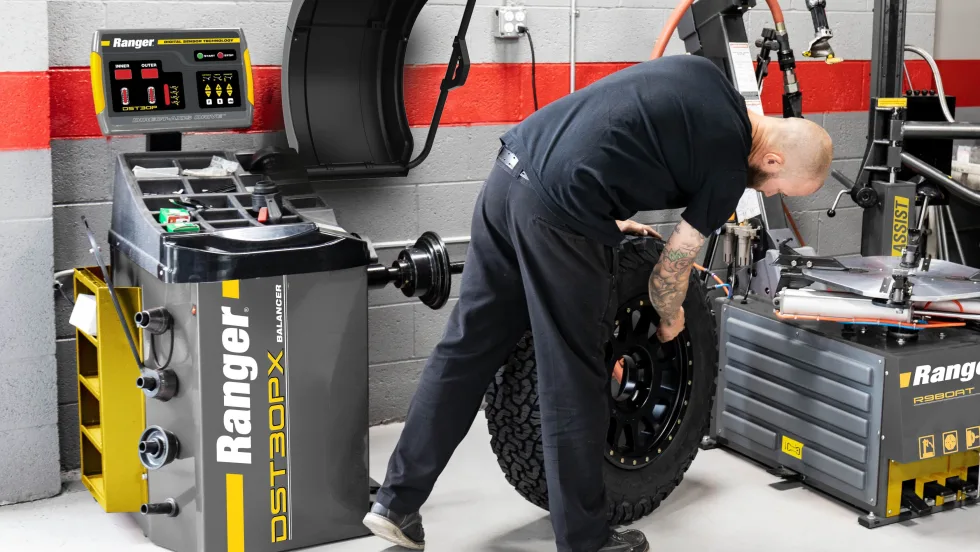
BendPak Launches Ranger DST30PX Wheel Balancer
BendPak's new wheel balancer handles tires up to 43 inches in diameter, with a reinforced design, precise weight placement, and faster service cycles.
Read More →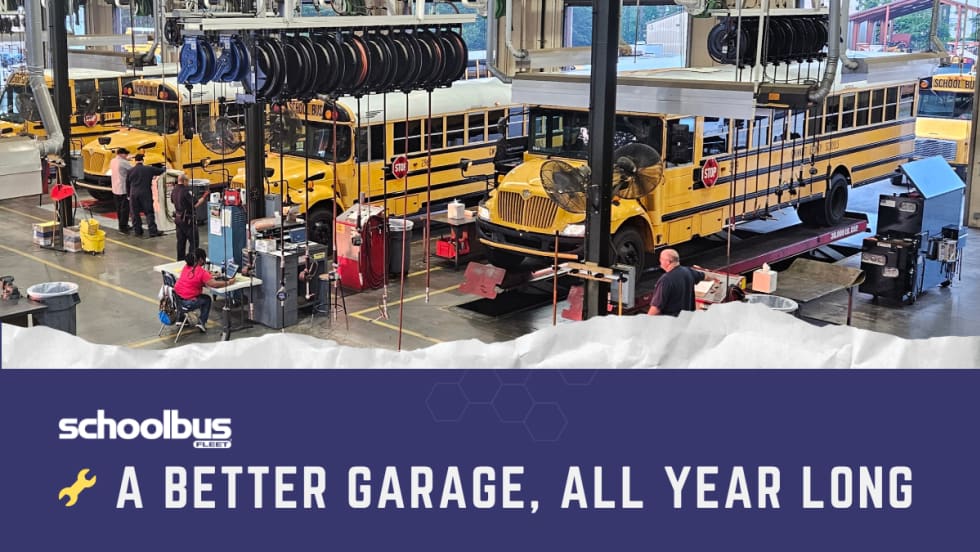
Tips for Ensuring School Bus Garages Are Safe and Warm Year-Round
Cold maintenance bays and rising heating costs? Learn how school bus garages can improve comfort with targeted heating, better airflow, and winter preparation.
Read More →
ASE Highlights School Bus Technician Certification Requirements
ASE is encouraging school bus maintenance professionals to maintain their certifications, highlighting seven specialized tests and five-year renewal requirements.
Read More →
International Adds E-Commerce Capabilities to Fleetrite.com
IC Bus customers can now browse, buy, and track shipments for more than 400,000 aftermarket parts online.
Read More →
The Most Expensive Thing You Do Before Selling a School Bus: Wait
When should you sell an aging school bus? Learn how maintenance, mileage, corrosion, specifications, and timing can affect resale value long before the auction.
Read More →
The Evolution of DEF Header Technology: What School Bus Operations Should Know at Replacement Time
See what school bus fleets should consider when replacing DEF headers to improve reliability, reduce repeat repairs, and control maintenance costs.
Read More →
The Essential Guide to School Bus Maintenance and Student Safety
Your district's buses carry students to school every day. This guide shows how predictive maintenance powered by fleet data helps keep buses reliable, drivers accountable and students safer from the first bell to the last stop.
Read More →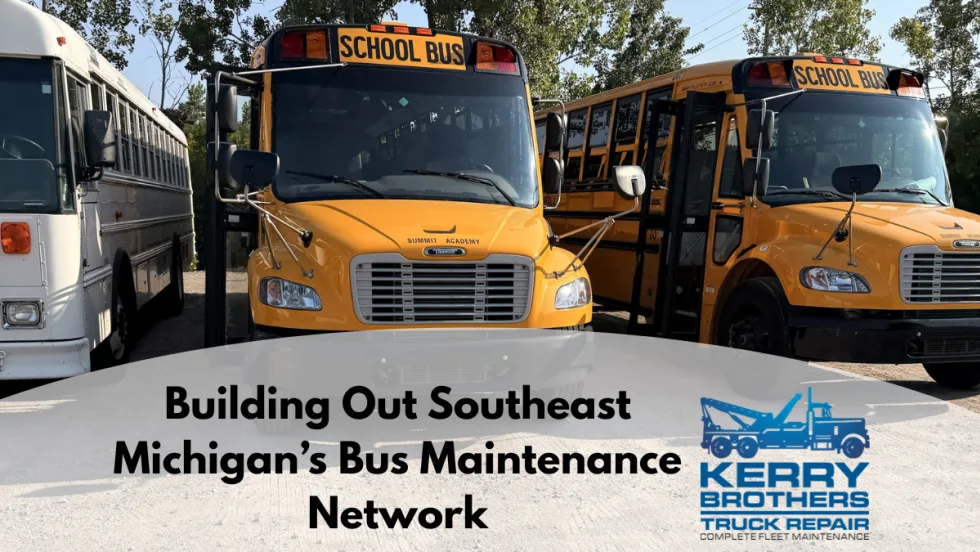
Kerry Brothers Grows Michigan School Bus Repair Network
The acquisition of Downriver Truck and Bus expands Kerry Brothers’ school bus maintenance footprint across southeast Michigan, adding repair capacity, diagnostic resources, and state inspection support.
Read More →
Noregon Introduces CAN Bus Diagnostic Tool, Expands JPRO Features
CAN Mentor and the latest JPRO update aim to simplify vehicle network diagnostics and improve repair efficiency for technicians of all experience levels.
Read More →
Cummins on Smarter, Simpler Engine Innovation
Cummins discusses its first-ever gasoline engine for school buses, EPA 2027, and why bus fleets still want durable, simpler internal combustion options.
Read More →