




Small Buses Take On Tough Terrain
With about 1,500 square miles of mostly rural area to cover, West County Transportation Agency (WCTA) school buses regularly venture off paved stre...

With about 1,500 square miles of mostly rural area to cover, West County Transportation Agency (WCTA) school buses regularly venture off paved streets and onto dirt roads and driveways.
The agency relies on its small buses, most of which carry students with special needs, to endure and maneuver well on the rugged terrain.
“A lot of what we do, because it’s rural, is going off-road and onto driveways — we may travel up a dirt driveway for a ways to get to the house,” says Michael Rea, executive director of WCTA. “That’s why a van-type cutaway works better for us.”
Even the on-road driving can be rough: Sonoma County, where WCTA is based, is one of the lowest-rated counties in California for road condition.
WCTA runs about 50 small buses, most of which are Girardins on Ford or Chevy chassis. For the agency, one of the key features of the Girardins is that they are mounted on the chassis using rubberized pucks to isolate shock.
“That makes a difference,” Rea says. “We keep our buses a long time.”
Cost-saving service
WCTA is a joint-powers agreement of 16 school districts in Sonoma
County. The agency transports about 3,500 students throughout the
area, which covers vineyards, orchards and redwood forests.
The WCTA headquarters is in Santa Rosa, which, at a population of about 150,000, is relatively large compared to the towns in the surrounding region.
Since most of the local school districts are small and not well positioned to run their own transportation services, WCTA fills a vital role. Rea says that through economies of scale and efficiency, the agency yields significant savings for the districts.
WCTA was formed in 1988 with eight school district members. Since then, it has gradually accepted more members to broaden its base and spread its fixed costs. The agency brings in some additional revenue by providing services for non-member districts and government agencies, helping to further defray its member districts’ transportation costs.
Still, funding is a significant challenge for the school districts. Rea says that, on average, California pays only about 45 percent of school transportation operational costs.
Meeting many needs
In WCTA’s early days, it covered its members’ general-education
transportation but not special needs. But that has
changed over the years, with the agency now having full
responsibility for members’ special-needs transportation as
well as general-ed.
About half of WCTA’s small buses are equipped with wheelchair lifts. The other half are ambulatory-type buses. Rea notes that one of the perks of their small bus operation is working with Girardin.
“They are very responsive,” Rea says. “If there are things that we like about a bus, even if it isn’t part of their regular model, they are willing to go ahead and re-engineer something for us.”
In addition to the small buses, WCTA runs about 90 large buses, mostly 40-foot, 84-passenger models.
About a third of WCTA’s buses are powered by compressed natural gas. The agency’s diesel buses have been equipped with emissions-reducing technology, such as particulate traps.
Diverse duties
WCTA has a total staff of 108 people. Rea and a few
other staff members have been with the agency since its
inception.
Rea started in pupil transportation more than 30 years ago when he got a job as a school bus driver to help pay his way through college. Before WCTA, he worked in transportation for a local school district.
As executive director of WCTA, Rea says that he enjoys the diversity of his tasks. Since the agency is not part of a district administration, “I’m responsible for everything,” Rea says.
In addition to the operational aspects of school transportation, his duties include managing and building the budget, handling labor negotiations and personnel issues, and overseeing facility matters like construction.
“There’s a lot of exciting things that I’ve been able to do that I wouldn’t normally have done if I was working for a school district,” Rea says. “Probably the most creative part has been building a new organization from the ground up.”
WCTA’s board of directors is composed of superintendents from member school districts. Rea has monthly meetings with the board.
In addition to his responsibilities at WCTA, Rea is involved with the California Association of School Transportation Officials. He currently serves as government relations chair and as president of the association’s Chapter 13, which covers Sonoma and three adjacent counties.
Due recognition
WCTA’s school bus drivers are members of the California
School Employees Association, a union that also represents
staff in other school support positions like food services, security,
and office and clerical services.
At the end of each school year, WCTA holds a potluck picnic, in which awards are given for safety performance and other achievements. Drivers as well as office staff members are recognized for such matters as retirement, roadeo participation and safety commendations from the California Highway Patrol.
Throughout the year, employees of the month are named, and an employee of the year is named at the picnic. There is also a special recognition each year for the group of staff members who conducted the bus evacuation drills.
Although Rea recognizes the value of holding get-together type events like the picnic, he focuses on the agency’s accountability to its school district members and the public in general.
“We try to keep that kind of stuff at a minimum, because we’re cognizant of the taxpayers’ contribution,” Rea says.
Fleet Facts
School buses: 140 (92 large, 48 small)
Students transported daily: 3,500
Districts served: 16
Staff: 108
Annual mileage: 1,352,176
Area of service: 1,500 sq. miles
More Special Needs Transportation
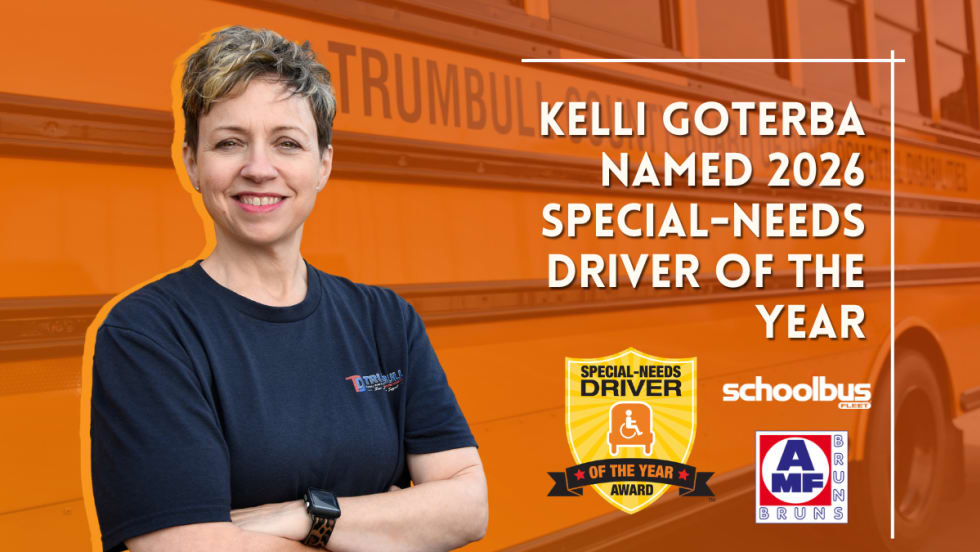
Kelli Goterba Named 2026 Special-Needs School Bus Driver of the Year
Through building trust with students and strengthening her transportation team, Goterba exemplifies the impact special-needs drivers can make.
Read More →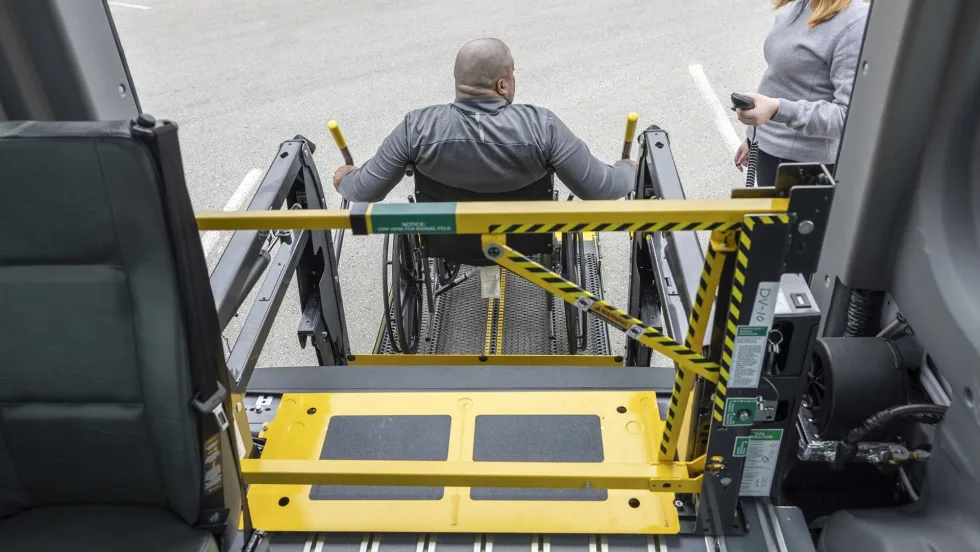
BraunAbility Introduces New Safety Barrier for Wheelchair Lifts
LiftSentinel is designed to add another layer of protection during wheelchair loading and unloading and can be retrofitted to many existing commercial lift installations.
Read More →
HopSkipDrive Launches New Safety, Driver Consistency Features for 2026-27 School Year
The company’s free ride recording, live ride tracking, and consistent driver assignments aim to improve safety and continuity for diverse student transportation needs.
Read More →
The Most Common Wheelchair Securement Mistakes on School Buses (and How to Fix Them)
Small missteps in wheelchair securement can have serious consequences. Here are 32 tips from experts to reduce risk and increase student safety on the bus.
Read More →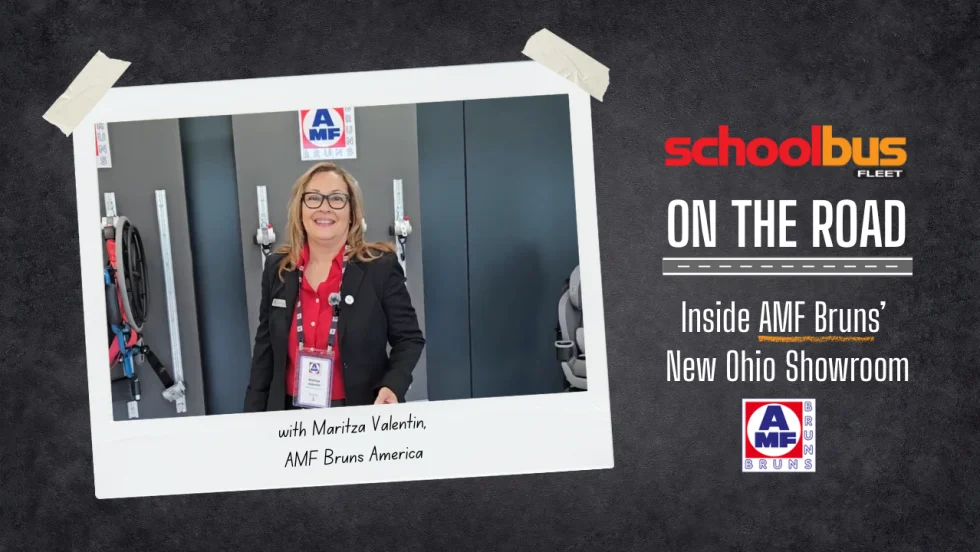
Inside AMF Bruns’ New Showroom: School Bus Securement Solutions Explained
Go inside AMF Bruns America’s new Ohio showroom with Maritza Valentin to see its FutureSafe technology, driver training tools, securement systems, and seating innovations.
Read More →
What AMF Bruns’ New Facility Means for Customers [Video]
Inside AMF Bruns’ new Stow, Ohio, operations: See how expanded space and innovation will enhance customer support and operations.
Read More →
AMF Bruns Expands in Ohio, Investing in Growth and Community
With expanded production space, local investment, and a growing workforce, AMF Bruns is scaling its U.S. presence. Here’s an exclusive first look inside the new Stow, Ohio, HQ.
Read More →
Inside AMF Bruns of America’s New Ohio Manufacturing Facility [Photos]
Take a behind-the-scenes look at AMF Bruns of America’s new 41,000-square-foot Stow, Ohio, headquarters, featuring advanced manufacturing, expanded space, and future-ready mobility solutions.
Read More →
First Student Boosts Student Support in Wichita & Texas
First Student and Wichita Public Schools are using behavioral support strategies to improve student ride experiences, while a separate initiative expands access to after-school programs through a bus donation.
Read More →
2026 Special-Needs Transportation Survey
What’s changing in special-needs transportation? This year, student transportation operators report a rising need, easing driver shortages, growing tech adoption, and evolving challenges. Sponsored by AMF Bruns of America.
Read More →