




Severe behavior problems managed by teacher-drivers
On every school bus lurks that student (or group of students) who consistently misbehaves. Not only is this disturbing, but it can be downright dangerous.
On every school bus lurks that student (or group of students) who consistently misbehaves. Not only is this disturbing, but it can be downright dangerous. Now imagine that you had 120 such students, half of whom had police records. How would you go about transporting them? Those are the conditions faced daily by officials at the A.E.R.O. Special Education Cooperative in Burbank, Ill. Their surprisingly simple solution — use teachers as drivers. “With teachers driving the students, behavior management begins when students leave the front door of the house,” says Assistant Director Thomas Bever. Teachers control the school transportation environment and issue immediate consequences for student misbehavior, he explains.
Teachers bridge the gap
A.E.R.O. has been using teachers as drivers for the past 20 years. The program currently employs 18 teachers, who use nine-passenger Chevy Suburbans to cover 20 routes and various activity trips. Bever has seen the special-needs program grow from 20 to 120 students and attributes its success, in part, to the cohesiveness provided by having a teacher behind the wheel. “It is an important social experience for kids to learn to ride properly,” says Bever. With contractor drivers, who were constantly coming and going, this lesson was not being learned. Under the new system, the students earn points, called tokens, for riding well. Tokens are also earned in the classroom. The number of tokens they have determines their level and the number of privileges they’re allowed. At Level 4, for example, they can be in the job program. They must be at Level 6 to be considered for return to the mainstream school. Though Bever originally budgeted for an aide on each vehicle, he has found that, with a teacher driving, an aide is not necessary. Because the program is so effective, parents support efforts to improve student behavior. They don’t complain if a “jumper” has his shoes taken away to prevent him from getting out of the vehicle unexpectedly. Using Suburbans instead of yellow buses, says Bever, has multiple benefits. For one, teachers do not have to be commercially licensed. They do, however, undergo written and behind-the-wheel exams, drug and alcohol tests, medical exams and federal background checks. Teachers will most likely not be hired if they are not willing to drive. Overall, says Bever, teachers like the system because they get to drive the vehicles to and from their homes each day, saving gas money and wear-and-tear on their own vehicles. A second benefit of using Suburbans is that students feel less conspicuous and self-conscious about going to a special school. The vehicles have no school identification on them, and they are painted a color that the students choose themselves. The riders, who are transported with other students their age, develop a sense of community distinct from the typical school bus atmosphere.
Program helps ‘bottom line’
In addition, says Bever, the system is highly cost-effective. The state reimburses 80 percent of the cost of transportation. The vans are depreciated over a five-year period and traded in for new ones. The district pays for fuel, insurance, driver training (about $300 per person) and salary, all of which adds up to a lot less than what the contractor was being paid. The greatest benefit to the system, however, is the effect it has on the students’ education. “It prevents special education from becoming a lifelong sentence,” says Bever. “The goal for these kids is to reintegrate into the mainstream school.” With teachers driving, students can easily be transported to community activities or to the mainstream school for classes.
More Management
How to Build a Better Driver Training Program
Ready to boost up your school bus instructor training? Here’s how to pick the right talent and improve recruitment, retention, and safety.
Read More →
CALSTART and Forth Combine to Form Catalyst Mobility
The new name represents a renewed vision for the nonprofit focused on advancing clean, equitable, and affordable transportation solutions that move people and goods.
Read More →
What Makes a Great School Bus Driver Trainer?
Choosing the right school bus driver trainer takes more than experience. Learn six keys to selecting and developing trainers and evaluating program effectiveness.
Read More →

School Bus Contractors Expand Through New Deals, Acquisitions & Partnerships
STA's Canadian division acquires Ontario-based G&L Stevenson Transport while Durham School Services adds a new district contract in California, First Student adds a New Jersey contract, and Minnesota Coaches acquires Halo Transportation.
Read More →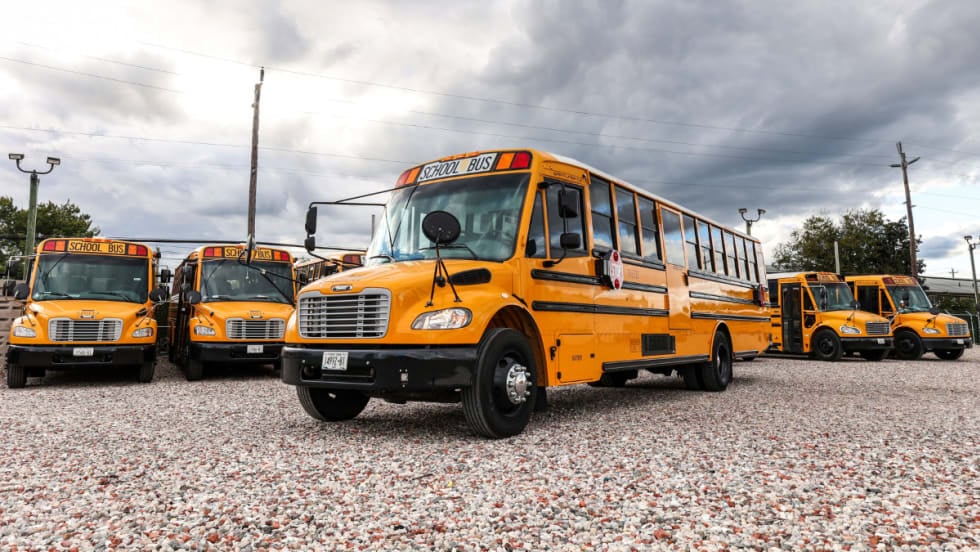
Logan Bus Company Rolls Out AI Phone System for NYC School Bus Families
A summer pilot found that AI agents could handle most routine calls, freeing up time for customer service staff to focus on emergencies and complex family concerns.
Read More →
From Intent to Impact: What I Learned About Leadership from TAPT
A Texas transportation supervisor shares lessons on self-awareness, accountability, managing stress and building trust — and why investing in leadership development matters at every stage of your career.
Read More →
NAPT Names 2026 Award Recipients, Hall of Fame Inductee
Who earned national recognition for their work in student transportation? This year, NAPT named five recipients of its 2026 awards for service, safety, and leadership, plus its newest Hall of Famer.
Read More →
2026 State of Student Transportation Report
Driver shortages. Rising costs. Growing safety expectations. More data, but not enough time to act on it. The 2026 State of Student Transportation Report reveals what transportation leaders say is putting the most pressure on their operations—and where they’re investing next. See how your priorities compare.
Read More →
How to De-Escalate an Angry Person: 5 Steps for Handling Workplace Conflict
What makes emotions run high, and how should you handle an angry colleague or parent? Follow these steps for staying calm, listening, showing empathy, and resolving conflict.
Read More →
What Readiness Looks Like This School Year
Learn about the challenges shaping the 2026–2027 school year, from persistent driver shortages and budget pressure to technology and readiness gaps. See how school districts are responding and adapting in Zonar’s 2026 Back-to-School Readiness Report.
Read More →