




Seeing through the fog index
Short sentences are easy to read. And understand. One-syllable words are good too. Just ask SCHOOL BUS FLEET’s editorial adviser, Howard Rauch....
Short sentences are easy to read. And understand. One-syllable words are good too. Just ask SCHOOL BUS FLEET’s editorial adviser, Howard Rauch.
Howard critiques several issues of our magazine each year, providing the staff with statistical and qualitative analysis of the editorial content. We receive three or four pages of feedback from Howard, much of it in the form of tables and charts. The critiques help us improve the magazine, because we’re so close to what we do that we can benefit from an outside perspective.
What’s a fog index?
But I can’t say that I understand everything that’s included in the critiques. Take, for example, the fog index. This is a rating system based on a complex formula that’s meant to help us write more clearly and concisely.
To determine the fog index of, say, a news story in the front of the magazine, Howard literally counts the number of words in each sentence as well as the number of words with three or more syllables. Long words and long sentences create a high fog index, which is bad. Conversely, short words and short sentences create a low fog index, which is good.
I have to admit that I enjoy saying “fog index” more than I enjoy having it applied to my work. In all the years I’ve been a professional writer, I’ve never consciously tried to write shorter sentences or to use shorter words (which may be obvious to long-time readers, especially those of you who tire of my inexhaustible supply of clauses and compound sentences). I’m not bragging either. I’m sure my writing would be better and, more importantly, easier to read if I lowered my fog index, but I just never seem to get around to it.
Which brings me to my point. How many of you could benefit from taking the leap of commitment that you’ve always put off? It could be something as simple as setting up a regular exercise program or creating a monthly household budget. Or it could be something more complicated, such as setting up a paperless shop program for your fleet or designing and implementing a special-needs roadeo for your district or terminal.
Take the challenge
Running a school bus operation is not a simple task. On the contrary, it’s actually quite complicated and getting more complicated each day, what with legislative mandates such as the No Child Left Behind Act and transportation budgets that seem to continue to shrink even as the U.S. economy seems to recover. This is not a profession for people unwilling to embrace challenges. And yet we’ve all got our own personal fog index.
That’s because it’s so easy to make excuses about why we can’t get something done. We’d rather run around putting out small fires than confront the really dangerous fire that’s been smoldering under our noses. Delaying things for another day, or week, or year is so much simpler than tackling the challenge right then and there. I’d like to think that we’re all capable of changing our ways.
Especially when it comes to safety, don’t allow complacency to cloud your judgment. Make it a daily goal to tackle one lingering challenge. Even if you only make an inch of headway, you’re better off than you were before. And never give up on yourself or those who work for you and with you. I, for one, promise to write shorter sentences, beginning now. Howard will be surprised. See?
More Management

How to Build a Better Driver Training Program
Ready to boost up your school bus instructor training? Here’s how to pick the right talent and improve recruitment, retention, and safety.
Read More →
CALSTART and Forth Combine to Form Catalyst Mobility
The new name represents a renewed vision for the nonprofit focused on advancing clean, equitable, and affordable transportation solutions that move people and goods.
Read More →
What Makes a Great School Bus Driver Trainer?
Choosing the right school bus driver trainer takes more than experience. Learn six keys to selecting and developing trainers and evaluating program effectiveness.
Read More →

School Bus Contractors Expand Through New Deals, Acquisitions & Partnerships
STA's Canadian division acquires Ontario-based G&L Stevenson Transport; Durham School Services adds a new district in California; First Student expands in New Jersey; and Minnesota Coaches rebrands and acquires Halo Transportation.
Read More →
Logan Bus Company Rolls Out AI Phone System for NYC School Bus Families
A summer pilot found that AI agents could handle most routine calls, freeing up time for customer service staff to focus on emergencies and complex family concerns.
Read More →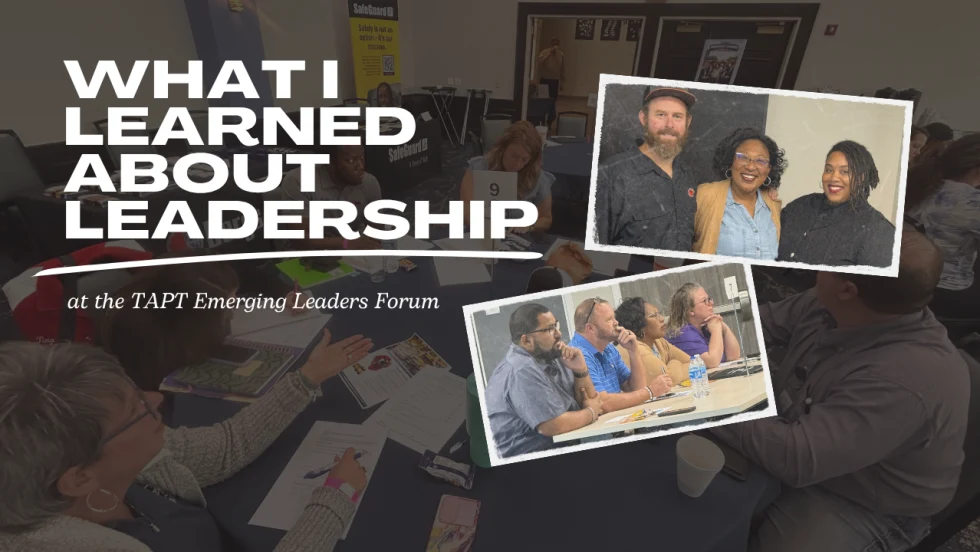
From Intent to Impact: What I Learned About Leadership from TAPT
A Texas transportation supervisor shares lessons on self-awareness, accountability, managing stress and building trust — and why investing in leadership development matters at every stage of your career.
Read More →
NAPT Names 2026 Award Recipients, Hall of Fame Inductee
Who earned national recognition for their work in student transportation? This year, NAPT named five recipients of its 2026 awards for service, safety, and leadership, plus its newest Hall of Famer.
Read More →
2026 State of Student Transportation Report
Driver shortages. Rising costs. Growing safety expectations. More data, but not enough time to act on it. The 2026 State of Student Transportation Report reveals what transportation leaders say is putting the most pressure on their operations—and where they’re investing next. See how your priorities compare.
Read More →
How to De-Escalate an Angry Person: 5 Steps for Handling Workplace Conflict
What makes emotions run high, and how should you handle an angry colleague or parent? Follow these steps for staying calm, listening, showing empathy, and resolving conflict.
Read More →
What Readiness Looks Like This School Year
Learn about the challenges shaping the 2026–2027 school year, from persistent driver shortages and budget pressure to technology and readiness gaps. See how school districts are responding and adapting in Zonar’s 2026 Back-to-School Readiness Report.
Read More →