




Related: Using Wi-Fi on Wheels to Improve the School Bus Ride
Schools Emerge As Profitable Market For Luxury Buses
Luxury pupil transportation is a potential niche market that operators should consider exploring. Though it requires raising the bar with both vehicle assets and driver hiring and training practices, it can drive business and brand growth.
by Chris Wolski
October 1, 2019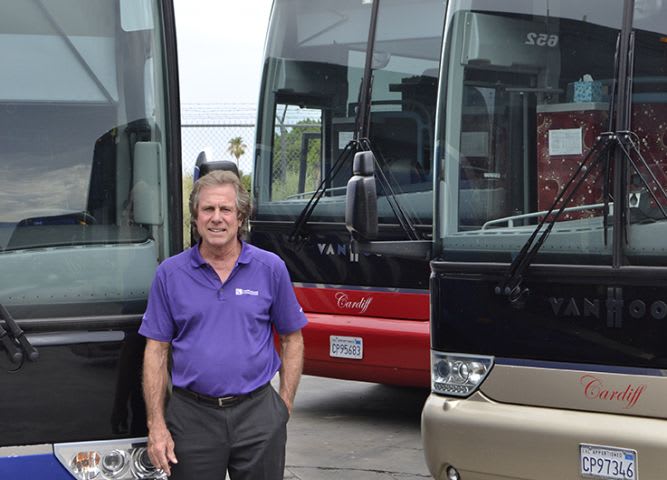
Southern California motorcoach operator Gary Cardiff caters to the private and public school transportation markets, which show an increasing interest in luxury group transportation. Photo courtesy LCT
5 min to read

Southern California motorcoach operator Gary Cardiff caters to the private and public school transportation markets, which show an increasing interest in luxury group transportation. Photo courtesy LCT
This article initially appeared on School Bus Fleet'ssister publicationsMetroandLuxury Coach & Transportation (LCT).
With the shifts and fragmentation in every area of the transportation industry, it is often necessary to diversify into new markets to remain viable and profitable.
Combining luxury transportation and private and public schools is a win-win for the students and the operators.
“It’s more than just a school bus experience,” observes Joe Gillis, CEO of Portland, Ore.-based Northwest Navigator Luxury Coaches. “We provide luxury, convenience, and safety.”
Northwest Navigator Luxury Coaches currently operates four 27 to 35 passenger Mini Coaches and a Thomas Built Bus for its school contracts, which consist primarily of elite private institutions in the Portland area.
The company’s vehicles offer a nice interior, comfort (including air conditioning), seat belts, and device plug-ins so students can charge their devices or tap into the movies offered on board.
Meeting the Luxury Challenge
While there is little doubt that there is a market for luxury pupil transportation, operators need to keep in mind that its more than just purchasing a nice vehicle, and advertising that you have an air-conditioned vehicle.
Gillis notes that, because you’re transporting children, a safe and well-maintained vehicle is only a small part of the equation. Perhaps more important is having a driver with a clean record who is properly trained.
“It’s not just about transportation, it’s about safety and quality,” he says.
Gillis notes that while operating in the private sector means that he’s not required to perform some of the same background checks as a public school bus operator, he has raised the bar on his own hiring practices — which will disqualify a driver with any sort of criminal record.
Operators also need to make sure that they are following their local and state ordinances or requirements related to their vehicles and personnel. Not doing so could cause legal and business headaches that could go right to the bottom line.
In addition, operators need to make sure that their drivers are properly licenses, their vehicles all have U.S. Department of Transportation (DOT) numbers, and the operation remains in compliance with hours of service (HOS) and other regulations.
The operator also needs to make sure that it emphasizes customer service, Gillis noting that “When we fail, we try to make it right. It’ll get around quickly if poor the service was poor.”
Because of the greater expectations of luxury transportation — particularly from parents — operators must emphasize service, reliability, and safety in their day-to-day operations.
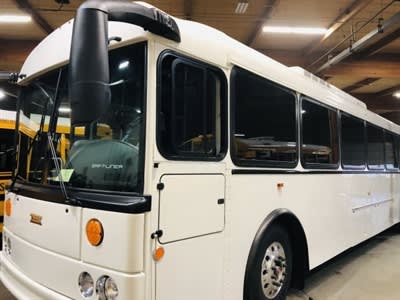
While there is little doubt that there is a market for luxury pupil transportation, operators need to keep in mind that it's more than just purchasing a nice vehicle. Photo courtesy Northwest Navigator Luxury Coaches
Private Luxury + Pupil Safety = Profitability
At Cardiff Limousine & Transportation in Palm Desert, Calif., owner Gary Cardiff has taken the luxury transportation model and have made it work for both private and public schools. He runs buses for private and public school pupil groups, especially for school events and field trips.
At private schools, teachers often have budgets for enrichment and educational outings where students travel on Cardiff’s luxury motorcoaches to destinations such as Sea World in San Diego or to arts and cultural museums in the Los Angeles region.
Graduation nights throughout May and June are also big business now since they involve day trips instead of just an evening out, Cardiff says.
“Rarely do private schools have their own buses for their sporting events and enrichment trips,” he says. “They have to call a [state] certified company with over-the-road motorcoaches.”
As a California bus operation, the company must be certified under state rules, known as SPAB (school pupil activity bus). Any vehicle, whether a van, minibus, or motorcoach that carriers nine or more passengers, must also be SPAB certified.
“When private or public schools don’t want to ride on (regular) school buses, they use SPAB certified buses,” Cardiff says.
SPAB rules require every driver to complete 15 hours of classroom instruction and 20 hours of behind-the-wheel training, pass a written California High Patrol (CHP) test and a CHP driving test, and pass fingerprint and background checks. Every year, each SPAB driver must complete another 10 hours of continuing education.
On the vehicle side, every vehicle used for pupil transportation must undergo a rigorous annual CHP inspection, and Cardiff sets up a certified mechanic inspection every 3,000 miles or 45 days, whichever comes first, per SPAB rules. Inspectors thoroughly evaluate the safety and mechanical equipment of the bus.
That means Cardiff buys only the highest quality buses. Private and public schools mostly request 56 to 57 passenger motorcoaches, which at Cardiff Transportation include Van Hool and Prevost models. The large coaches handle about 90% of the company’s school-related business, with the remaining 10% using 27-passenger Grech Motors minibuses or Sprinter vans.
During some weeks of the year, all of the SPAB-certified motorcoaches in Cardiff’s 74-vehicle fleet are sold out for school-related trips.
“All of our buses are all newer models with the same general body style,” Cardiff says.
Worth the Effort
While private bus transportation for pupils invokes many rules and recordkeeping requirements, this evergreen client niche tied to seasonal and school year cycles produces steady, reliable, and profitable work for operators that can be planned out well in advance.
Northwest Navigator’s Gillis sees adding a luxury pupil transportation to the mix as worth the effort.
“People just love it, they see the difference when you pull up,” he says. “It’s a new market and if you do well, other schools will find out. It’ll open up the market for you.”
LCT editor Martin Romjue contributed to this article.
Subscribe to Our Newsletter
More Management

How to Build a Better Driver Training Program
Ready to boost up your school bus instructor training? Here’s how to pick the right talent and improve recruitment, retention, and safety.
Read More →
CALSTART and Forth Combine to Form Catalyst Mobility
The new name represents a renewed vision for the nonprofit focused on advancing clean, equitable, and affordable transportation solutions that move people and goods.
Read More →
What Makes a Great School Bus Driver Trainer?
Choosing the right school bus driver trainer takes more than experience. Learn six keys to selecting and developing trainers and evaluating program effectiveness.
Read More →


School Bus Contractors Expand Through New Deals, Acquisitions & Partnerships
STA's Canadian division acquires Ontario-based G&L Stevenson Transport while Durham School Services adds a new district contract in California, First Student adds a New Jersey contract, and Minnesota Coaches acquires Halo Transportation.
Read More →
Logan Bus Company Rolls Out AI Phone System for NYC School Bus Families
A summer pilot found that AI agents could handle most routine calls, freeing up time for customer service staff to focus on emergencies and complex family concerns.
Read More →
From Intent to Impact: What I Learned About Leadership from TAPT
A Texas transportation supervisor shares lessons on self-awareness, accountability, managing stress and building trust — and why investing in leadership development matters at every stage of your career.
Read More →
NAPT Names 2026 Award Recipients, Hall of Fame Inductee
Who earned national recognition for their work in student transportation? This year, NAPT named five recipients of its 2026 awards for service, safety, and leadership, plus its newest Hall of Famer.
Read More →
Sponsored•September 2, 2026
2026 State of Student Transportation Report
Driver shortages. Rising costs. Growing safety expectations. More data, but not enough time to act on it. The 2026 State of Student Transportation Report reveals what transportation leaders say is putting the most pressure on their operations—and where they’re investing next. See how your priorities compare.
Read More →
How to De-Escalate an Angry Person: 5 Steps for Handling Workplace Conflict
What makes emotions run high, and how should you handle an angry colleague or parent? Follow these steps for staying calm, listening, showing empathy, and resolving conflict.
Read More →
Sponsored•September 1, 2026
What Readiness Looks Like This School Year
Learn about the challenges shaping the 2026–2027 school year, from persistent driver shortages and budget pressure to technology and readiness gaps. See how school districts are responding and adapting in Zonar’s 2026 Back-to-School Readiness Report.
Read More →