




Safety, Security Lead Discussion at NASDPTS Meeting
Although the intent is not to scare people, security against terrorism needs to be a more prominent issue in the school transportation community. ...

Although the intent is not to scare people, security against terrorism needs to be a more prominent issue in the school transportation community.
That was one of the messages delivered to members of the National Association of State Directors of Pupil Transportation Services (NASDPTS) at their annual meeting in Salt Lake City in November.
The messenger, John Green, school transportation supervisor for the California Department of Education, is a former sheriff’s deputy who was involved in the 1976 investigation of the Chowchilla kidnappings in northern California.
“The most common misconception about terrorism is that it can’t happen to me,” Green said. “In Israel, terrorists target buses that carry kids.”
Green said school transportation providers should prepare for a terrorist attack by assessing vulnerabilities, developing and implementing strategies, planning enforcement and training employees. “Our frontline employees need to be taught to observe and report,” Green said. “If they see a suspicious car near a bus stop, they need to write down that license plate number and report it to the authorities.”
Buster makes friends
Topics on the NASDPTS agenda varied from the extremely serious to more light-hearted fare.
One of the more interactive sessions involved Buster the Bus, the robotic bus that enchants children with its movement, speech and flashing lights.
The Buster session was led by Deborah Graham, a route specialist for the Rowan-Salisbury School System in North Carolina. Enlisting several NASDPTS members as an audience of first-graders, Graham put Buster through his paces, asking him questions about school bus safety and directing the responses to the young audience.
Derek Graham, state pupil transportation director of North Carolina, was the voice of Buster. Using a remote microphone and voice filter, he responded to Deborah Graham’s (no relation) questions and chimed in with amusing answers and observations.
Influencing the media
NASDPTS Executive Director Charlie Gauthier explained how the association and its public information arm, the School Bus Information Council, has been able to positively influence media coverage of school bus-related stories. As an example, Gauthier cited the broadcast coverage of an Ohio school bus crash on Sept. 30 that was captured by the video surveillance camera. Footage of the vehicle tipping over and spilling the busload of students onto the left side wall and windows was broadcast by many media outlets. Because he was contacted and interviewed by national broadcast networks, however, Gauthier said he was able to balance the coverage of the incident.
“I’m on a first-name basis with some of these reporters, such as Bob Hagger at NBC, and they know who to call when there’s an incident like this,” Gauthier said, adding that he was contacted at home at 10:30 on a Sunday evening by a reporter looking for his perspective on the crash.
“It’s a whole new world compared to five or six years ago,” agreed Barry McCahill, a media consultant with Strat@comm. “Public relations issues have changed because we’ve inoculated the media. Some of the smaller incidents used to make national news, but they don’t as much these days.”
McCahill said pupil transportation professionals need to be prepared to talk with the media in the event of a breaking news story. “There are a few things that you should do: tell the truth, be in the loop at your operation so you know what’s going on and make only three points during the interview,” he said.
Safety and convenience
Although safety is the primary reason why students should be riding school buses to and from school, the industry should also be exploiting another key benefit — convenience. “It’s another way to think yellow,” said McCahill.
Specifically, McCahill said, many parents take it for granted that the school bus will be shuttling their children to and from school each day, freeing them up to commute to work and back home at their convenience.
To promote the convenience aspect of pupil transportation, McCahill said the industry should be communicating this message to natural allies such as women’s and minority groups, large community employers, homeowners’ associations and police and public safety groups.
The positive effects of this promotion could be additional funding for operations and capital expenditures as well as prevention of service cuts.
NASDPTS business
This year’s meeting was presided over by Deborah Lincoln, pupil transportation director for the Oregon Department of Education. One of the key changes during Lincoln’s tenure was the retirement of Ted Tull, who was administrative director of NASDPTS for eight years. To fill the void created by Tull’s departure, the association expanded Gauthier’s role and, at press time, was in final negotiations to hire a part-time administrative director.
Another development in the past year was the discontinuation of the “Buslines” newsletter, which Lincoln said will save the association several thousands of dollars in printing and distribution costs. Lincoln said the dissemination of industry news through clipping services, e-newsletters and Websites reduced the need for the newsletter. In addition, she said breaking news can be distributed to NASDPTS members by Gauthier via e-mail.
Next year’s state directors meeting will be held in Cincinnati in conjunction with the NAPT’s annual conference and trade show. For more information about NASDPTS, visit http://www.nasdpts.org.
More Management

The Back-to-School Checklist Every Director Should Complete Before the First Bell
Help your transportation team start the school year strong with these tips for contingency planning, communication, fleet visibility, technology, and trip management.
Read More →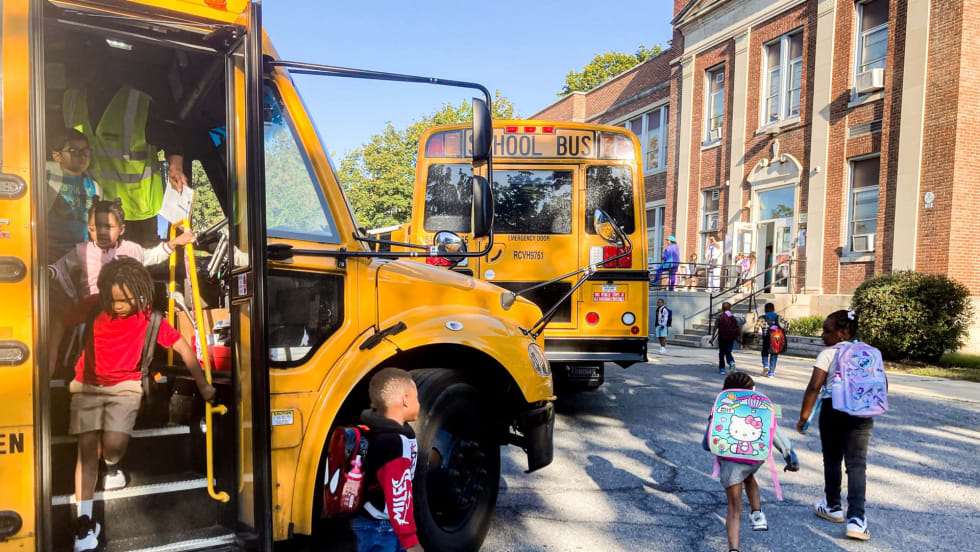
How a New York District Cut Nearly $1M in Transportation Costs While Expanding Bus Access
A data-driven overhaul with BusRight reduced Poughkeepsie City School District's planned routes from 26 to 17 while extending school bus service to about 1,200 additional students.
Read More →
Budgets Down, Enrollment Shifting: What the Data Says Districts Should Watch
School transportation departments face two converging challenges this year: tightening budgets and shifting enrollment. Most districts still address these issues separately, but the assumption that either trend will simplify operations is proving incorrect.
Read More →
These 8 School Transportation Companies Made the 2026 Inc. 5000 List
Find out which school transportation contractors, technology providers, and suppliers ranked among America’s fastest-growing private companies.
Read More →
The Link Between Emotional Intelligence and School Bus Safety
How can emotional intelligence help transportation pros navigate stress, manage change, and build stronger relationships? Listen to find out.
Read More →
What Emotional Intelligence Has to Do With School Bus Safety
In this video, discover how emotional intelligence can help transportation leaders and drivers navigate stress, manage change, and build stronger relationships. The Route is sponsored by IC Bus.
Read More →
Beyond Two-Way Radios: School Bus Communications Evolve With Push-to-Talk Over Cellular
PRYME Radio and PositionPTT join forces to advance hands-free radio use and reduce distracted driving. See how PoC compares with traditional radios on range, cost, safety, and connectivity.
Read More →
Have School Districts Adapted to Bus Driver Shortages or Simply Accepted Less Service?
According to a recent report from HopSkipDrive, many districts appear to have recalibrated what "normal" transportation service looks like.
Read More →
Reliable Transportation Linked to Better Student Outcomes, New EverDriven Study Finds
See why new research suggests transportation consistency improves student outcomes while influencing attendance, funding, IEP compliance, and family trust.
Read More →
Switzer-CARTY Enters the U.S. with New Acquisition
The Canadian contractor’s acquisition of Minnesota-based Agnes Corporation marks its first cross-border expansion into the United States and adds 350 vehicles.
Read More →