




Q&A: STA’s Gallagher Sees More Growth Ahead
Since its inception just over 10 years ago, Student Transportation of America Ltd. (STA) has undergone a staggering transformation. The company...


Since its inception just over 10 years ago, Student Transportation of America Ltd. (STA) has undergone a staggering transformation.
The company’s school bus fleet has multiplied from a few hundred buses to more than 5,000 throughout the U.S. and Canada. STA is now the fourth largest school transportation contractor in North America.
In April, STA sold several million of its common shares for gross proceeds of about $60 million.
SNCF Participations S.A., a new investor to STA, purchased 6,557,377 common shares for $40 million. The company is a subsidiary of Société Nationale des Chemins de fer Français, the French National Railway.
The Caisse de dépôt et placement du Québec, STA’s largest shareholder, purchased 1,709,402 common shares for $10 million.
Additionally, several of STA’s other existing shareholders purchased just under $10 million in common shares.
Along with SNCF’s investment, STA agreed to expand its board of directors to eight members and add Jean-Pierre Farandou, director of SNCF’s Public Transport Division.
Here, STA Chairman and CEO Denis Gallagher shares details on the deals and how they tie in with the company’s goals for growth.
SBF: How did these transactions come about?
DENIS GALLAGHER: This actually started with SNCF. They have been interested in transportation in the U.S. Through Rothschild Investment Banking in New York, they contacted us and asked if we would be interested in at least having a meeting with them. So we did, and they were interested in making an investment in the company.
They did understand that the Caisse de dépôt was the largest shareholder through the filings that they were able to see, and they had a great deal of respect for the Caisse. They thought they could be a good strategic investor for us as well. As we were coming close on firming up an agreement with them, I told them that I would like to show the deal to the Caisse and some other large shareholders within the company to see if anybody else would be interested in participating alongside of them. And SNCF had some “asks,” as I would call them. One of their asks was that they wanted to be a long-term partner and a long-term investor. They also wanted an opportunity to have board representation. I explained to them that that was going to require them paying a bit of a premium to the trading price versus just coming in and buying shares.
Caisse has been investing in STA for several years. What are the driving forces for its continued confidence in STA?
Well, the Caisse has been a passive but certainly supportive investor for STA since October of 2001. We went public in December of 2004. So they had been in the company about three years and were very supportive of us through an investment that they had in a private equity fund. They like the continuity of the revenues and the contractual nature of the business. This is pension-fund money — they like a good yield. And they get to learn the business. They are in investments all over the world, and they manage them very carefully. They’re not month-by-month, quarter-by-quarter investors — they look at the long-term. They got in with us when we were about $30 million or so in revenue, and this year we’ll be upwards of $220 million in revenue. So they certainly have been able to grow with us.
What type of experience and insight does SNCF’s Jean-Pierre Farandou bring to the STA board of directors?
Jean-Pierre was a nominee that SNCF put forward, and I was pleased that they did. He is highly experienced in passenger transportation, both from rail and bus operations that SNCF is involved with in France. SNCF competes with FirstGroup and National Express in rail and in some bus business in the U.K. and Europe.
Jean-Pierre is somebody that I think will fit extremely well in our board. Our board is a bit of an orchestra, as I like to call it, because the last thing I want is an all-tuba section or an all-drum section. It’s a very eclectic board. And I think Jean-Pierre has a good sense of transportation in general. Basically, he is really an operations guy, so he’s going to bring operations experience to the board.
What are the key benefits of the transactions for STA?
We used the proceeds to pay down some of our existing debt, which we use just for growth. The key benefit of the transaction is that it sets us up at a very good time, with so many opportunities in school bus transportation in North America, for us to continue the growth that we’ve had in the rural and suburban markets — and in nice, profitable venues for our shareholders.
The opportunities in school transportation in North America are driven by not only the Laidlaw/FirstGroup merger; they also are driven by the increased amount of conversion activity that is going on in the U.S. This is a very promising time for school districts to take a look at what business they are in: education or transportation? Unfortunately, sometimes it requires hard times for them to take this look. There are severe budget constraints in a lot of states that we deal with, and there are capital investments that need to be done in equipment.
States where there’s not contracting — we probably see those as the biggest opportunities to be able to come in and bring capital and bring resources and bring expertise, and to see some major changes in the conversion process over the next 10 years.
STA has been expanding rapidly since you founded it about a decade ago. Do you expect that to continue?
We’ve been growing at about a 20-percent compounded annual growth rate for the last seven years. We don’t see any reason why we can’t continue that growth rate for the near future. Again, we like to acquire companies in targeted markets. We don’t plan on being in every market. We like the rural and suburban business. So we like to get into a market with an acquisition and see if we can grow the market through bids, privatizations and other tuck-in acquisitions in the region. Our appetite is good.
This is a business where, despite the consolidation that has happened, there is still a tremendous number of smaller companies out there. We see our ABC program — which is acquisitions, bids and conversions — being able to feed our growth in the foreseeable future. We’re about 55 percent acquired and about 45 percent organic growth through bids and conversions. We would like to maintain that as we go forward.
More Management

The Right Ride for Every Student: Navigating the New Student Transportation Ecosystem
How should districts blend school buses with small-vehicle transportation and other options? EverDriven CEO Mitch Bowling discusses safety, costs, partnerships, and strategy.
Read More →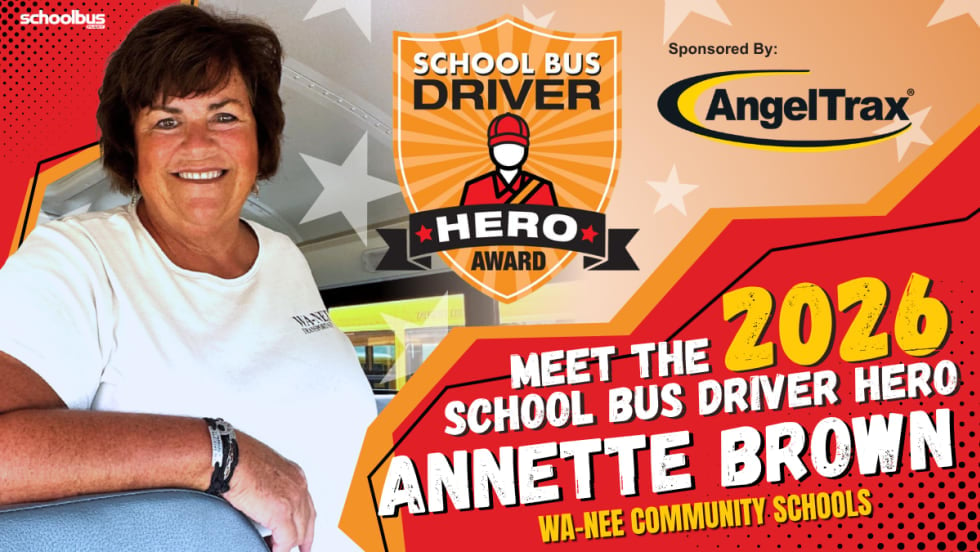
Annette Brown Always Takes the Extra Time: Meet Our 2026 School Bus Driver Hero
For more than 30 years, the Wa-Nee Community Schools driver has treated students like family, combining safety, compassion, and servant leadership to make a lasting difference on and beyond the school bus.
Read More →
How to Build a Better Driver Training Program
Ready to boost up your school bus instructor training? Here’s how to pick the right talent and improve recruitment, retention, and safety.
Read More →


CALSTART and Forth Combine to Form Catalyst Mobility
The new name represents a renewed vision for the nonprofit focused on advancing clean, equitable, and affordable transportation solutions that move people and goods.
Read More →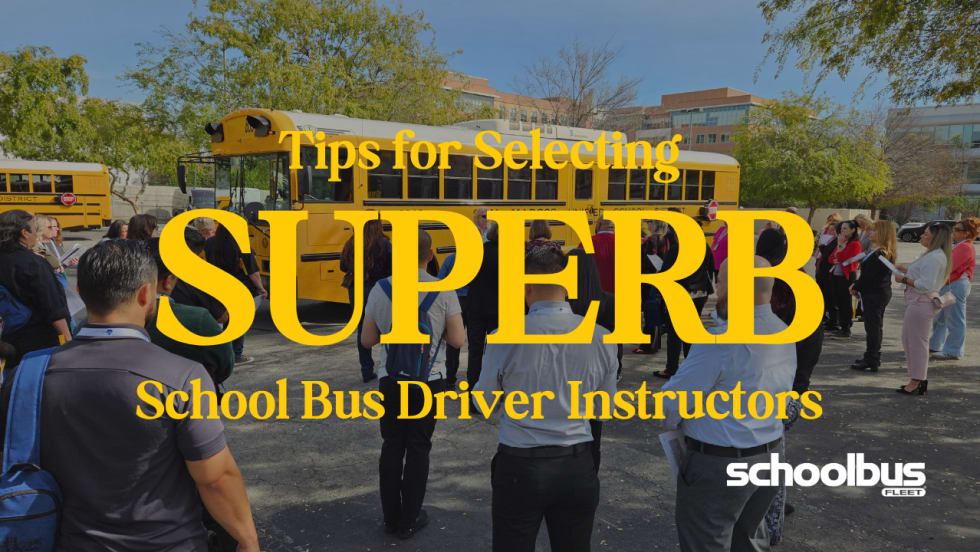
What Makes a Great School Bus Driver Trainer?
Choosing the right school bus driver trainer takes more than experience. Learn six keys to selecting and developing trainers and evaluating program effectiveness.
Read More →
School Bus Contractors Expand Through New Deals, Acquisitions & Partnerships
STA's Canadian division acquires Ontario-based G&L Stevenson Transport; Durham School Services adds a new district in California; First Student expands in New Jersey; and Minnesota Coaches rebrands and acquires Halo Transportation.
Read More →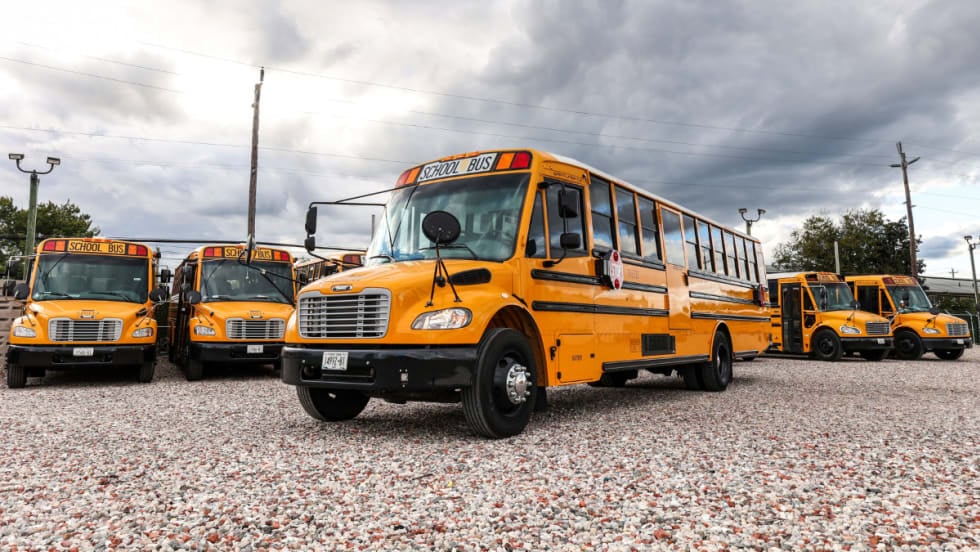
Logan Bus Company Rolls Out AI Phone System for NYC School Bus Families
A summer pilot found that AI agents could handle most routine calls, freeing up time for customer service staff to focus on emergencies and complex family concerns.
Read More →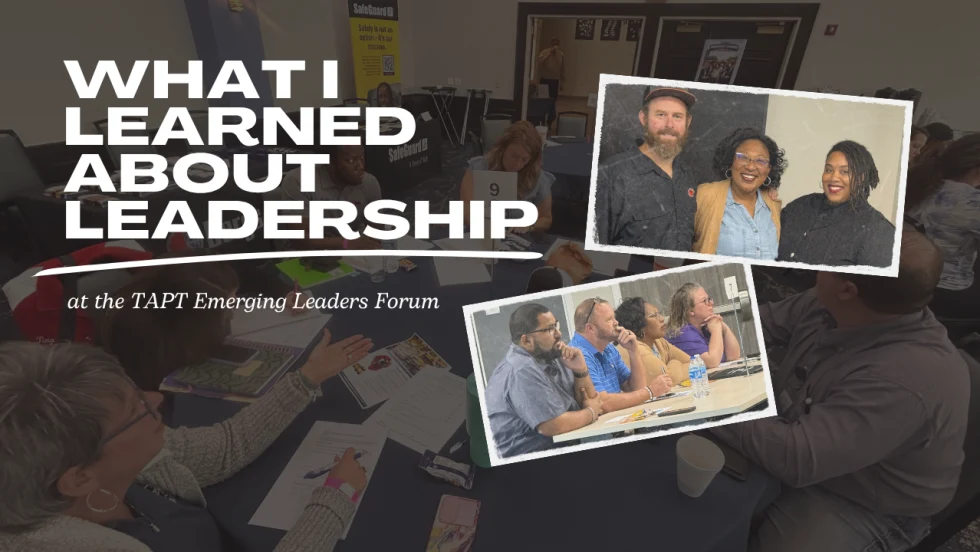
From Intent to Impact: What I Learned About Leadership from TAPT
A Texas transportation supervisor shares lessons on self-awareness, accountability, managing stress and building trust — and why investing in leadership development matters at every stage of your career.
Read More →
NAPT Names 2026 Award Recipients, Hall of Fame Inductee
Who earned national recognition for their work in student transportation? This year, NAPT named five recipients of its 2026 awards for service, safety, and leadership, plus its newest Hall of Famer.
Read More →
2026 State of Student Transportation Report
Driver shortages. Rising costs. Growing safety expectations. More data, but not enough time to act on it. The 2026 State of Student Transportation Report reveals what transportation leaders say is putting the most pressure on their operations—and where they’re investing next. See how your priorities compare.
Read More →