




Q&A: Manufacturing Improvement is Jeff Bust's Mission
More than a year ago, Jeff Bust was brought aboard by Blue Bird Corp. as president and CEO to help right a ship that was foundering. Production proble...

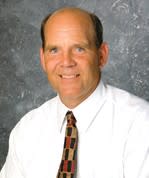
More than a year ago, Jeff Bust was brought aboard by Blue Bird Corp. as president and CEO to help right a ship that was foundering. Production problems were plaguing Blue Bird's manufacturing facility in LaFayette, Ga., and its parent company, Henlys, was suffering through tough times of its own, putting even more pressure on its U.S. school bus unit to meet high expectations.
Bust, a graduate of the Naval Academy, understood that dramatic changes were necessary to keep the ship from continuing to take on water. In the past year, he's used his background in manufacturing and operations to reinvigorate the processes at Blue Bird. He's also slashed overhead by more than $22 million.
In the meantime, Henlys has entered into an even more steep decline, leading to changes in Blue Bird's ownership.
Amid this tumult, Bust took time to answer the following questions from SBF Editor Steve Hirano.
Can you tell us a little about your background?
JEFF BUST: I was born in the Midwest and graduated in 1975 from the U.S. Naval Academy with a mechanical engineering degree. I served for five years in the naval nuclear power program as a commissioned officer.
Following my naval service, I earned an MBA at Dartmouth concentrating in accounting and finance. My business career has been nearly entirely focused on manufacturing and operations. I most recently was chairman and CEO of Grove Worldwide, a $700 million manufacturer of mobile hydraulic cranes.
How has your background prepared you to run a bus manufacturing company?
Many of Blue Bird’s opportunities are connected with design, production and overall process improvements. Most of these issues commonly occur in all businesses manufacturing engineered products. Nevertheless, there is a lot to learn about the bus industry specifically.
What is the biggest challenge you’ve faced at Blue Bird thus far, both on the school bus and non-school bus sides?
The biggest challenge I face is causing the Blue Bird team to understand the need for change and improvement without making it sound like everything that was done before was wrong. It wasn’t. At the same time, doing everything the same is not right either.
What changes has Blue Bird made to its manufacturing processes since you’ve come aboard?
We have outsourced a large part of our sheet metal fabricating activities at Fort Valley to make room for the new Liberty Type D assembly line that began making deliveries in January 2004. We began construction of the new line in early October 2003. Once we had Type D production concentrated in our Fort Valley facility, we were able to go back and optimize Type C assembly processes at our Lafayette, Georgia, and Brantford, Ontario, facilities.
Workstation content was standardized, online stocking was implemented, ANDON lights were installed and processes improved at all three facilities. We reorganized our material support and planning, including centralizing order entry, formalizing the master scheduling process and streamlining material handling processes.
Also, we cleaned up the options and features we offer on Blue Bird school bus products and then designed and implemented a new distributor order entry system around these revised product offerings. We also moved nearly all of our non-school bus activities into our Coachworks facility. We reduced salary and indirect overhead costs by over $22 million annually by restructuring and flattening out the organization.
With all that being said, the most important thing we did during the past 12 months was improve quality. Blue Bird goes to market by being the best school bus anyone can buy, and over the past year we have significantly widened the lead between Blue Bird quality and anyone else’s.
{+PAGEBREAK+} Blue Bird had problems with production of the Vision at its Lafayette facility in north Georgia. How have these problems been addressed?
I outlined the major elements contributing to our overall production process improvements with the previous answer. North Georgia was able to take advantage of the reduction in production volume and the reduction in complexity as a result of moving Type D assembly to Fort Valley.
Those changes got the north Georgia team started and then they just began working hard together. That plant is our best facility now. The north Georgia team beats the other school bus plants in delivery performance, productivity and quality. Good people working together produce good results.
Can you tell us your short-term plans for the Brantford, Ontario, plant?
In Brantford we are just starting some of the line-side stocking and ANDON system implementation that has already been implemented at the other school bus facilities. We are also looking at fabrication processes that should be outsourced as we already have done at the Fort Valley facility.
Has Blue Bird severed its relationship with Henlys? If so, how has the ownership been restructured?
By the time this article is published, the restructuring will be complete. It will be largely a debt-for-equity swap by the major credit holders, who will end up being shareholders in a new company formed to replace Henlys. Blue Bird will be a subsidiary of that company. I cannot say much more than that about it at this time.
School bus sales have been down or flat for the past three years. Are you expecting a surge in orders in the near future?
I believe school bus sales will rise slowly and steadily over the next five years based on the student population estimates I have seen. Blue Bird’s volumes will be higher in 2004 than 2003, both in terms of units and sales dollars. I do not see a surge, and I actually prefer a slow and steady rise.
Is Blue Bird planning to redesign any of its school bus product line?
Yes, but we do not share that type of information until we are closer to actual new product introductions.
Are you planning any significant changes on the commercial bus side?
Henlys invested millions of dollars in commercial product development. Our job now is to bring those products to market and into rate production. Consolidating all of our non-school bus businesses under one entity, Coachworks, provides the focus we need.
Blue Bird has a great brand in this industry and has many loyal customers. What can we expect from the company over the next few years?
Growth and continuous improvement.
What would you say to those who are worried about Blue Bird’s future?
That is a leading question if it is meant to confirm that there is a lot of concern. I do not think there is much from anyone who knows the facts. However, my answer would depend on who was asking the question.
If it was a customer, I would suggest they contact or visit their local Blue Bird distributor and take a look at the buses Blue Bird is producing. I would also suggest they work with that distributor to arrange a visit to Blue Bird’s production facilities to see what we are doing and how we are doing it. I think any questions would be fully answered.
If it is a competitor, I am happy to have them just keep worrying.
More Management

How to Build a Better Driver Training Program
Ready to boost up your school bus instructor training? Here’s how to pick the right talent and improve recruitment, retention, and safety.
Read More →
CALSTART and Forth Combine to Form Catalyst Mobility
The new name represents a renewed vision for the nonprofit focused on advancing clean, equitable, and affordable transportation solutions that move people and goods.
Read More →
What Makes a Great School Bus Driver Trainer?
Choosing the right school bus driver trainer takes more than experience. Learn six keys to selecting and developing trainers and evaluating program effectiveness.
Read More →

School Bus Contractors Expand Through New Deals, Acquisitions & Partnerships
STA's Canadian division acquires Ontario-based G&L Stevenson Transport; Durham School Services adds a new district in California; First Student expands in New Jersey; and Minnesota Coaches rebrands and acquires Halo Transportation.
Read More →
Logan Bus Company Rolls Out AI Phone System for NYC School Bus Families
A summer pilot found that AI agents could handle most routine calls, freeing up time for customer service staff to focus on emergencies and complex family concerns.
Read More →
From Intent to Impact: What I Learned About Leadership from TAPT
A Texas transportation supervisor shares lessons on self-awareness, accountability, managing stress and building trust — and why investing in leadership development matters at every stage of your career.
Read More →
NAPT Names 2026 Award Recipients, Hall of Fame Inductee
Who earned national recognition for their work in student transportation? This year, NAPT named five recipients of its 2026 awards for service, safety, and leadership, plus its newest Hall of Famer.
Read More →
2026 State of Student Transportation Report
Driver shortages. Rising costs. Growing safety expectations. More data, but not enough time to act on it. The 2026 State of Student Transportation Report reveals what transportation leaders say is putting the most pressure on their operations—and where they’re investing next. See how your priorities compare.
Read More →
How to De-Escalate an Angry Person: 5 Steps for Handling Workplace Conflict
What makes emotions run high, and how should you handle an angry colleague or parent? Follow these steps for staying calm, listening, showing empathy, and resolving conflict.
Read More →
What Readiness Looks Like This School Year
Learn about the challenges shaping the 2026–2027 school year, from persistent driver shortages and budget pressure to technology and readiness gaps. See how school districts are responding and adapting in Zonar’s 2026 Back-to-School Readiness Report.
Read More →