




Q & A: Station Locator Helps With Alt-Fueling Choices
Whether your buses run on propane, CNG, biodiesel, or electricity, the U.S. Department of Energy’s Station Locator can help find the appropriate fueling station.
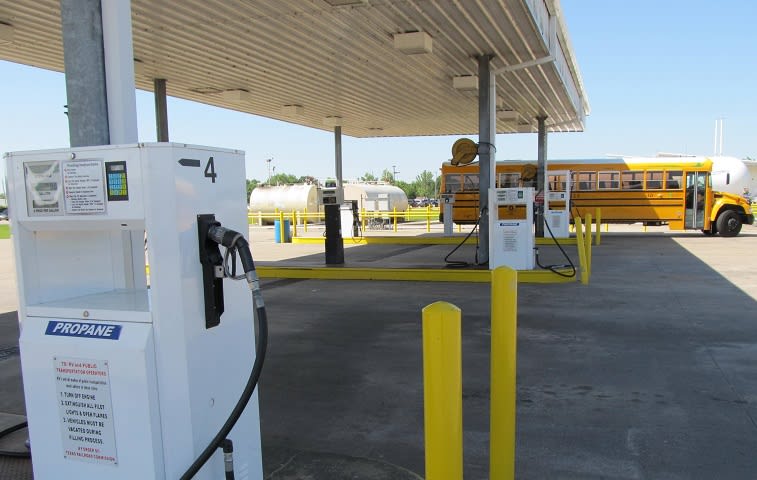
The U.S. Department of Energy’s Alternative Fueling Station Locator has been helping fleets locate alternative-fueling stations for more than 20 years.
The U.S. Department of Energy’s Alternative Fueling Station Locator has been helping fleets locate alternative-fueling stations for more than 20 years.
As part of the suite of tools on the U.S. Department of Energy’s (DOE’s) Alternative Fuels Data Center, the Alternative Fueling Station Locator (Station Locator) has been helping fleets locate alternative-fueling stations for more than 20 years. Fleet managers can use this resource to find locations to fuel their alternative-fuel school buses or to help choose an alternative fuel for their fleet.
What is the Station Locator? What information is included?
The Station Locator is a comprehensive database of more than 30,000 public and private access alternative-fueling stations, including biodiesel, compressed natural gas (CNG), electric, propane, and E85 (51% to 83% ethanol) locations.
Whether your buses run on propane, CNG, biodiesel, or electricity, the Station Locator has the necessary information for finding a fueling station that meets your fleet’s needs.
For example, public propane stations are categorized as “primary” or “secondary” based on their fueling capabilities. “Primary” stations must meet fill rate requirements, accept credit or fleet cards, and maintain normal business hours.
For CNG stations, the Station Locator details which vehicle classes can access the fueling infrastructure (e.g., Class 6 to 8), as well as the station’s fill type and the fill pressure.
Further, the Station Locator tracks the charging levels, connector types, and number of charging ports at each electric vehicle supply equipment (EVSE) location.
Find additional information about Station Locator data here.
How can I search for stations?
To locate a station, select the Public Stations tab, choose the fuel type, and enter the location near where you would like to find a station. The Station Locator will then display the available stations in that area. Click on an individual station to view more details.
If you’re traveling a new or extended route, you may search for alternative-fueling stations along the way using the “Map a Route” feature on the right-hand side of the Public Stations tab.
To view private access stations, including private fleet locations, use the Advanced Filters tab, select the “Station” menu, and check “Private” from the access options.
How can I submit information about my fleet’s alternative-fueling station to the Station Locator?
Fleet managers are encouraged to submit their alternative-fueling stations — public or private access — for inclusion in the Station Locator. To do so, use the Submit New Station form located at the bottom of the Station Locator. Alternatively, you may email the Technical Response Service at technicalresponse@icf.com with the station details. Note that private access fleet fueling stations will not appear in the main search interface of the Station Locator, as you must use the Advanced Filters tab to locate them.

Bonnie Trowbridge is the executive director of the Denver Metro Clean Cities Coalition.
My fleet’s alternative-fueling station is private. Why should I share the information with the Station Locator?
The Station Locator supports the alternative fuels industry by tracking fueling infrastructure development to help fleet managers select which alternative fuels may be best for their fleet based on local availability, assist decision makers in determining where to make investments in alternative fuels, and share valuable data. By adding your station to the Station Locator, you can improve the accuracy of Station Locator data, help show the growth in alternative-fueling infrastructure, and ultimately encourage future investment in alternative fuels.
Need general information or assistance implementing alternative fuels in your fleet? Contact your local Clean Cities coalition here.
More Alternative Fuels
Alt-Fuel Moves: Electric Bus Rollouts, Bidirectional Charging & Propane Growth
See which fleets are adding electric and propane school buses as districts and operators invest in charging infrastructure, bidirectional technology, and alternative-fuel expansion.
Read More →
Nobody Told Diesel Prices They Were Supposed to Come Down
With diesel prices surging, school bus fleets have new reason to stress-test fuel costs, consider diversification, and calculate what each route really costs to operate.
Read More →
Why Gasoline School Buses Are Making a Comeback
Gasoline is gaining ground in full-size school buses. See how today’s options stack up against diesel on cost, maintenance, emissions, performance, and more.
Read More →
EPA Opens $180M DERA Funding Round for Diesel Upgrades
The 2026 Diesel Emissions Reduction Act program seeks applications from eligible organizations to accelerate the retirement of legacy diesel vehicles.
Read More →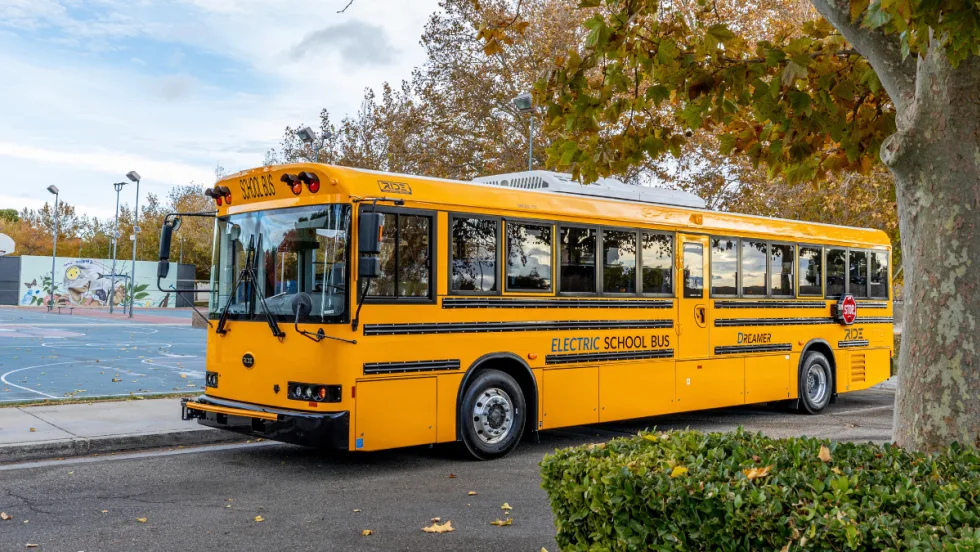
The Secret Life of an Electric School Bus Battery
Batteries change throughout years of daily routes, but degradation doesn’t necessarily mean the end. Here’s what operators should know about performance, safety, and second life.
Read More →
CALSTART and Forth Combine to Form Catalyst Mobility
The new name represents a renewed vision for the nonprofit focused on advancing clean, equitable, and affordable transportation solutions that move people and goods.
Read More →
Alt-Fuel Moves: New Buses, Charging Hubs & Real-World EV Testing
Propane and electric school bus deployments continue to grow as districts add new vehicles, expand charging infrastructure, and gather more real-world operating data.
Read More →
Fewer Electric School Bus Models Reshape the U.S. Market
WRI’s latest buyer’s guide points to a consolidating electric school bus market, but fewer options may reflect a maturing industry rather than fewer meaningful choices for school bus operators.
Read More →
The Fuel Budget You Can Actually Predict: How Propane Autogas Keeps Money in the Classroom
Learn how propane autogas helps school districts manage fuel costs with predictable pricing, lower maintenance, and reduced emissions from former transportation director Joel Stutheit.
Read More →
Hendrickson, Driventic Introduce New Electric Powertrain for School Buses
ELECTRAAX, the electrified, lightweight drive axle offers integrated ePowertrain efficiency and modular flexibility for Class 6–7 school bus use.
Read More →