




Pupil Transportation Experts Ponder the Yellow Bus’s Future Post-COVID
In this roundtable discussion, association leaders and manufacturers speculate on the pandemic’s long-term effects on training, driver responsibilities, health, shortage, and the bus itself.

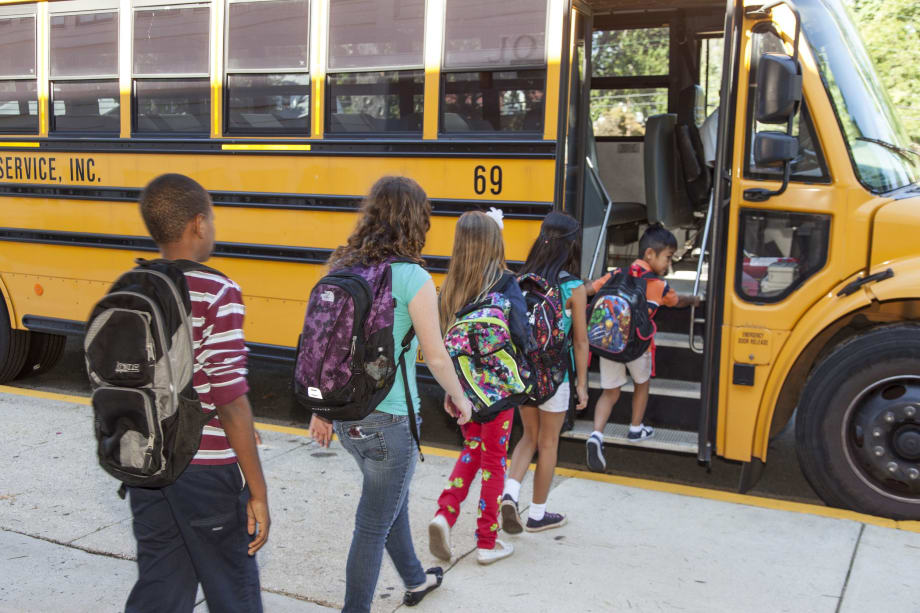
File photo courtesy National Highway Traffic Safety Administration
The COVID-19 pandemic has brought about significant changes to how students are transported, affecting routing, loading and unloading, cleaning, and other safety procedures. But what will taking students to and from school look like post-COVID?
Here, pupil transportation leaders weigh in on what they anticipate to be the long-term effects of the pandemic. Most agree that virtual training and events will remain prominent even as in-person events return, intensified cleaning and onboard Wi-Fi are here to stay, and health concerns may prolong the driver shortage, despite an economic downturn.
SBF: Will going virtual for training and conferences become the norm?
Macysyn: You are already seeing movement toward more video conferencing, and I don’t expect that to change, as long as virtual training proves viable. Once we see comfort with travel widely re-established, live conferences will once again be held.
LaRocco: We will see a much bigger push for virtual accommodation. I anticipate more emphasis on cost savings by limiting participation in live conferences, with emphasis on out-of-state travel, particularly for organizations that have publicly funded budgets. I see an opportunity to provide more training services as more organizations embrace distance learning and upgrade their technology to take full advantage of what virtual training can offer.
Hood: I see a permanent sea change in training delivery methods. Both telework, where appropriate, and virtual or online training are likely to remain prevalent well into the future, with the understanding that behind-the-wheel, real-world training will still be an important and required component for school bus drivers.
Simmons: A consoling aspect of this challenging situation – the silver lining of this cloud — is that we have seen an increase in the number of participants, and therefore the diversity of viewpoints, in broader industry conversations. I surely hope that lasts long-term.
What changes do you foresee COVID having on contracting? What have contractors learned from this experience?
Macysyn: The pandemic has been and continues to be a learning process with contracts. Perhaps we will see a “dynamic” pricing structure [for school closings]: At 180 days, the cost to the school district is “X.” At 150 days, it would be “Y,” or at 120 days, the cost would be “Z.” Another option would be tightening the language around “guaranteed days.”
Benish: One eye-opener for us was the risk we go through as a contractor. We pre-purchase the insurance and everything else ahead of time and go forward. If [districts] don’t go to school for an extended period of time, like now, there needs to be more shared risk.
What lasting impacts will COVID have on special-needs transportation? Will any extra duties be required of drivers and aides?
Benish: The need for a cleaner environment will probably continue. There might be some type of enforcement of immunizations for people in contact with these children, for instance, drivers getting flu shots on a yearly basis.
LaRocco: For drivers and aides you may see the need for more flexibility in the transportation being provided — more trips to other learning environments, possibly more short trips in a day if a student’s schedule is not the traditional 7:30 to 3:00 or 8:30 to 4:00 schedule.Virtual training will be an opportunity to get more training for those aides and drivers so that they are more comfortable and familiar with the challenges involved with transporting those most vulnerable students.
What about impacts on equity?
LaRocco: Now you have schools that are restricted to virtual learning and students that have difficulties in that type of learning environment. I think we shall see several years of push and pull to find the best balance possible for keeping everyone healthy and safe while still trying to provide a quality education.
Hood: I have been concerned about this issue for many years, and reductions in service only exacerbate the problem of potentially inequitable access to school programs. We have seen several recent examples of school districts encouraging parents to transport their own children to school due to the challenges posed by the pandemic. These include reduced bus capacity due to social distancing, the ongoing shortage of school bus drivers, and the reluctance of some drivers to return to work for perceived health reasons. Students for whom school bus service is reduced or eliminated are less likely to get to school reliably or on time when their parents can’t drive them due to work schedules or lack of personal transportation, both of which are often associated with lower family income.
How will the driver’s day-to-day duties be changed?
Macysyn: We are going to see more training with respect to cleaning/sanitizing protocols, social distancing requirements, etc. I think that drivers will have more training, which is never a bad thing, and that we may focus more attention on the overall health and wellness of drivers because of the pandemic.
Hood: All of us, including school bus drivers, have had a crash course in public health during 2020. We are much more aware of basic precautions like hand washing, sanitation of surfaces, the importance of face coverings, staying home when we are exhibiting [COVID] symptoms, etc. Such knowledge and associated duties are and will remain the new norm for drivers and others. The good news is that we have absorbed these changes, and most other aspects of successful school bus driving remain the same. Too, there have been some reports that existing diseases, like seasonal flu, will be reduced as a collateral benefit of our improved health measures.
Will we see a continued worsening of the driver shortage? Are there factors related to the pandemic that might mitigate it?
Benish: If unemployment stays high, we’ll see a bounce back but I think there is probably going to be six months to another year where it’s pretty severe, because right before the pandemic hit, it was probably the worst I have seen.
LaRocco: We will see the driver shortage worsen at least for the next year or two as the school transportation community struggles to adjust to the issues of changes in funding, which will then induce drivers to look for more stable employment options, although as we have seen, other employment sectors are struggling as well.
The one potential advantage of the increase in the use of the virtual space is that districts may be able to decrease costs on things like brick and mortar and adjust their budgets to handle those potential funding fluctuations more easily. The problem is that this may take a number of years to balance.
Simmons: We may certainly see a worsening of the driver shortage just due to the age of many of the current drivers, which may put them at risk. These drivers may be afraid to come to work fearing for their own health. On the other side of the equation, will parents in the short term " trust" their child on a bus full of other students, thus causing a decrease in total routes, thereby needing fewer drivers?
What lasting impacts could we see on routing, and loading and unloading students?
LaRocco: I see far more routing scenarios coming into use for every district as each tries to find a working solution, not only in restrictive times such as now, but afterwards as everyone tries to put operations in place to lessen the impact that future large-scale disruptions could cause. More hybrid schedules. More individualized transportation for vulnerable students when schools are in virtual mode. This is not just a COVID-19 issue. Look at the wildfires in large areas of the west coast and the ever-increasing impact of catastrophic weather events in the south and east; it is now not unusual for more communities to be affected by events that would have never have been thought of 30 to 50 years ago.
Simmons: If social distancing on buses continues for the near future, districts will be challenged to get all the students to school in a timely manner. Administrative buy-in must be part of the equation to meet the demands of added student load times as well as added student attendance on the bus with items such as multiple bells times for schools at all grade levels.
What impact will COVID have on the design of bus interiors?
Whisnant: We don’t see COVID-19 having a long-term effect on school bus interiors with regard to the numbers of seats and/or the spacing between them. School bus seats are required by federal law to be spaced at specific distances to protect the occupants. For that reason and to make less of a financial impact on the schools when COVID-19 is over, protection against the spread of the virus instead requires school buses to be used differently. Schools are accomplishing this now by blocking off rows of seats to create social distancing without affecting capacity in the long-term. The benefit is that after the pandemic is behind us, this method can easily be undone.
Barrington: It is too early to tell what specific long-term design items will be impacted by the pandemic. However, it will have an impact on how we evaluate interior materials and their durability. While we always review durability concerns, the interactions with cleaning chemicals and disinfectants has come into sharp focus for us.
Girardin: Should COVID persist beyond the average pandemic time lapse of two to three years, we may see a move to smaller buses to minimize passenger exposure to smaller groups.
What onboard features or technologies might become permanent?
Whisnant:Wi-Fi on school buses has brought the classroom to thousands of children who would not have had access to it otherwise, so we see this becoming more commonplace on new vehicles. Items related to sanitation and personal hygiene will most likely extend sometime beyond this pandemic as its effects remain in the minds of school transportation officials.
Barrington: We saw quite a few stories of school buses being utilized as hotspots for Wi-Fi service when students were required to work remotely. This is one technology that may see an increase in use.
More Management

How to Build a Better Driver Training Program
Ready to boost up your school bus instructor training? Here’s how to pick the right talent and improve recruitment, retention, and safety.
Read More →
CALSTART and Forth Combine to Form Catalyst Mobility
The new name represents a renewed vision for the nonprofit focused on advancing clean, equitable, and affordable transportation solutions that move people and goods.
Read More →
What Makes a Great School Bus Driver Trainer?
Choosing the right school bus driver trainer takes more than experience. Learn six keys to selecting and developing trainers and evaluating program effectiveness.
Read More →


School Bus Contractors Expand Through New Deals, Acquisitions & Partnerships
STA's Canadian division acquires Ontario-based G&L Stevenson Transport while Durham School Services adds a new district contract in California, First Student adds a New Jersey contract, and Minnesota Coaches acquires Halo Transportation.
Read More →
Logan Bus Company Rolls Out AI Phone System for NYC School Bus Families
A summer pilot found that AI agents could handle most routine calls, freeing up time for customer service staff to focus on emergencies and complex family concerns.
Read More →
From Intent to Impact: What I Learned About Leadership from TAPT
A Texas transportation supervisor shares lessons on self-awareness, accountability, managing stress and building trust — and why investing in leadership development matters at every stage of your career.
Read More →
NAPT Names 2026 Award Recipients, Hall of Fame Inductee
Who earned national recognition for their work in student transportation? This year, NAPT named five recipients of its 2026 awards for service, safety, and leadership, plus its newest Hall of Famer.
Read More →
2026 State of Student Transportation Report
Driver shortages. Rising costs. Growing safety expectations. More data, but not enough time to act on it. The 2026 State of Student Transportation Report reveals what transportation leaders say is putting the most pressure on their operations—and where they’re investing next. See how your priorities compare.
Read More →
How to De-Escalate an Angry Person: 5 Steps for Handling Workplace Conflict
What makes emotions run high, and how should you handle an angry colleague or parent? Follow these steps for staying calm, listening, showing empathy, and resolving conflict.
Read More →
What Readiness Looks Like This School Year
Learn about the challenges shaping the 2026–2027 school year, from persistent driver shortages and budget pressure to technology and readiness gaps. See how school districts are responding and adapting in Zonar’s 2026 Back-to-School Readiness Report.
Read More →