





The School Bus: Ensuring Student Safety, Accessibility, Community Building, and Education
Prioritizing Safety: Gaining Insights from School Transportation Officials
School Bus Fleet surveyed school transportation professionals from Colorado to New York to get a sense of what the most serious concerns are when it comes to school bus safety.
September 11, 2023
Respondents from across the United States shared their insights about safety in school transportation.
Image: Canva
2 min to read
In a recent survey by School Bus Fleet, school transportation professionals cited student behavior as the most significant factor affecting safety on the school bus and indicated that they felt great confidence in bus drivers carrying students to and from school each day.
Several respondents also called for requiring stop-arm cameras on all school buses to deter illegal passing by motorists and others urged the federal government to mandate seat belts.
Ahead of October’s National School Bus Safety Week, examine the results of this survey to gain insights into what’s happening in school transportation operations throughout the United States.
As a transportation professional, what do you consider to be the most significant safety concern related to school transportation?
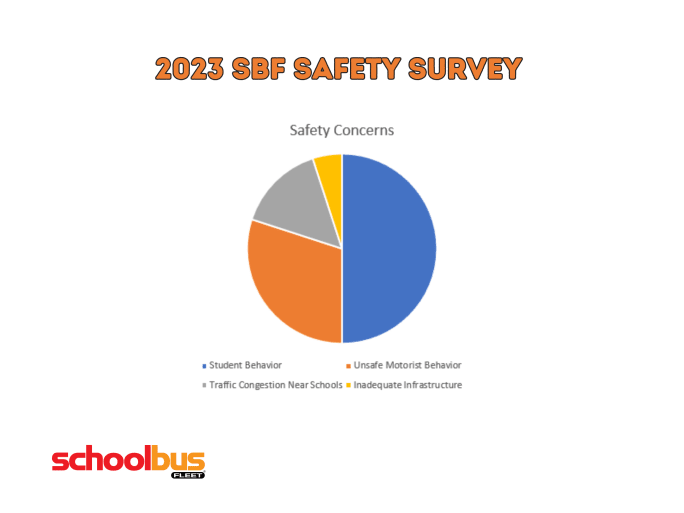
Half of our respondents ranked student behavior above other safety concerns, including illegal passing of school buses with their stop arms extended.
Image: Canva/SBF
On a scale of 1 to 5 (5 being excellent), how would you rate the overall safety of school transportation in your district/organization?
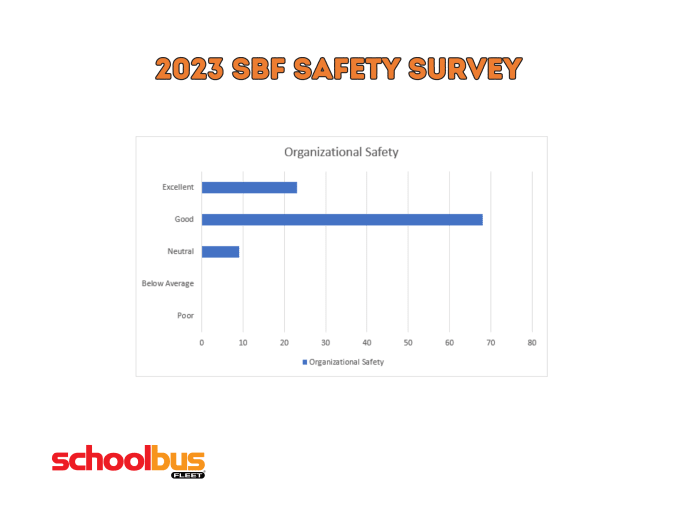
Most respondents (91%) gave their district high marks when it came to overall safety of their transportation operations.
Image: Canva/SBF
Have there been any significant incidents or accidents involving school transportation in your district/organizations in the past year?
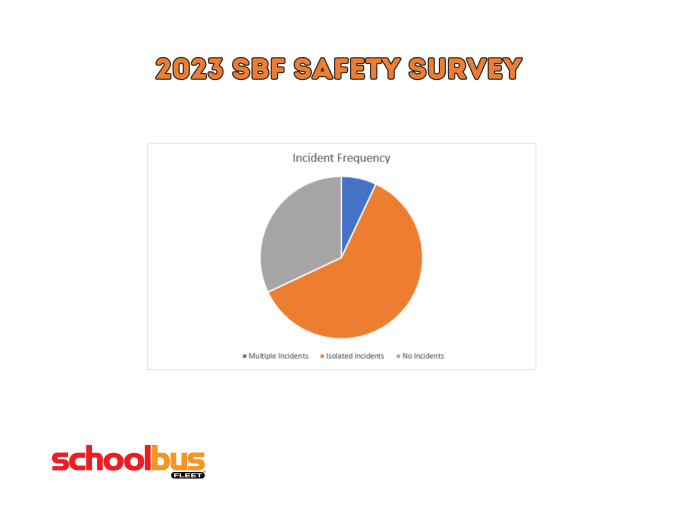
More than two-thirds of respondents (68%) indicated that their transportation operations saw at least a few isolated safety incidents during the past year.
Image: Canva/SBF
On a scale of 1 to 5 (5 being very satisfied), how satisfied are you with the communication and updates from your district/organizations regarding school transportation safety?
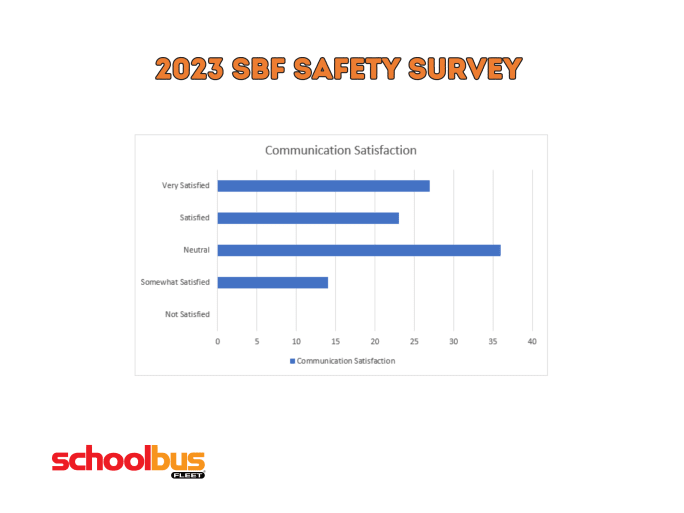
Respondents were split between high marks for communication and lower ratings, with 36% falling in the middle.
Image: Canva/SBF
How important do you believe it is for transportation professionals to collaborate with schools, parents, and local authorities to address safety concerns in school transportation?
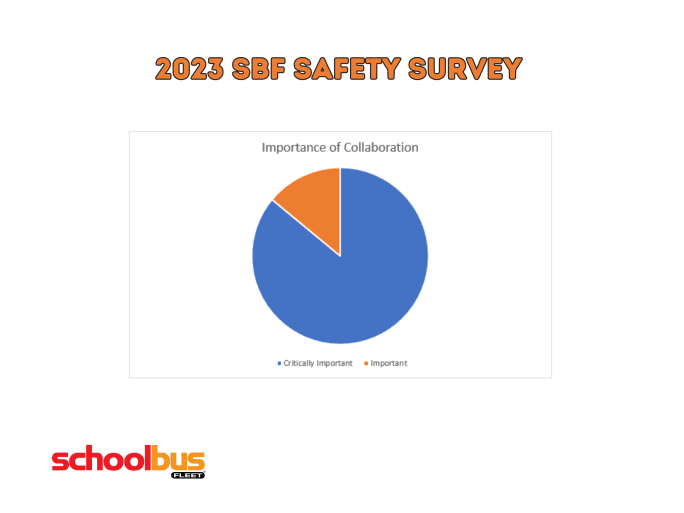
All respondents felt it was important – many critically so – to collaborate with schools, parents, and law enforcement to address safety concerns.
Image: Canva/SBF
Are there any specific areas or routes where you believe additional safety measures, such as crossing guards or traffic signals, are needed?
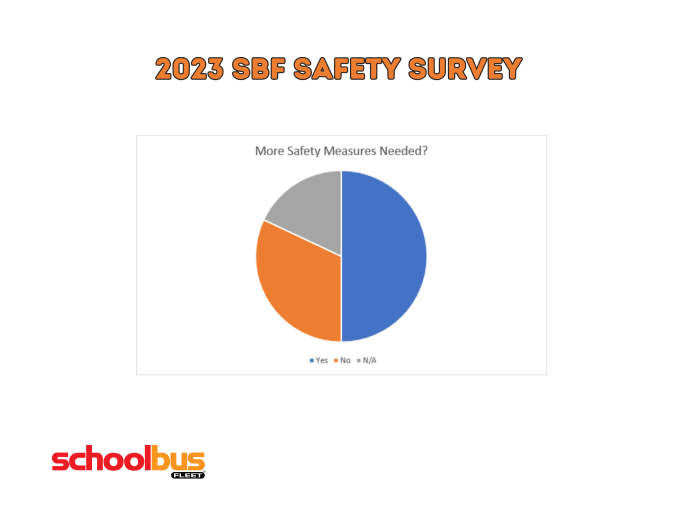
Half the respondents indicated that more safety measures could be helpful in certain areas or along specific routes.
Image: Canva/SBF
In your experience, what has been the most effective method for mitigating traffic congestion near schools during drop-off and pick-up times?
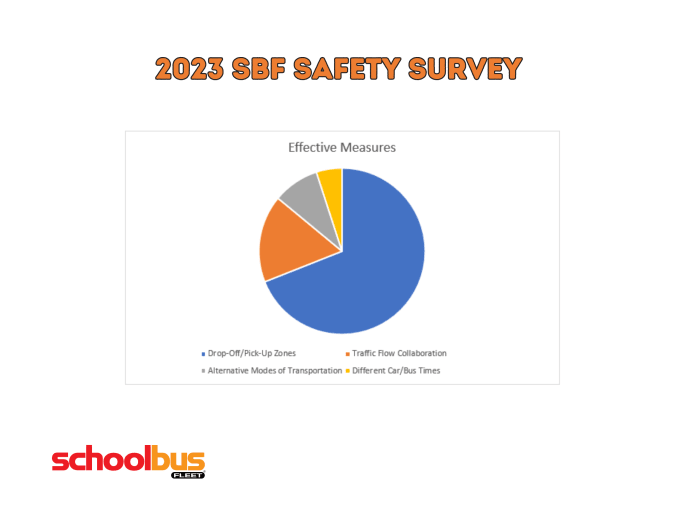
More than two-thirds of respondents (69%) indicated that setting up designated drop-off/pick-up zones is most effective at mitigating traffic congestion.
Image: Canva/SBF
On a scale of 1 to 5 (5 being very confident), how confident are you in the driving skills and behavior of school bus drivers in your district/organization?
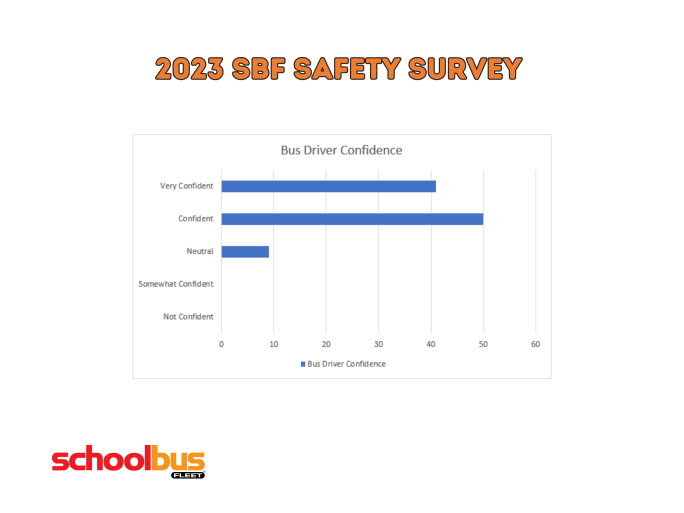
Most respondents (91%) expressed significant confidence in the skills of school bus drivers in their operations.
Image: Canva/SBF
In your opinion, what additional safety measures should be implemented on school buses?
Enhanced driver training and monitoring.
Cameras to monitor student behavior.
Improved emergency evacuation procedures.
Seat belts for all students.
Stop-arm cameras.
Respondents gave a wide variety of answers, but these were the top five suggestions.
Subscribe to Our Newsletter
More Safety

How to Build a Better School Bus Driver Training Program
Is it time to strengthen your driver training? Here’s how to pick the right talent and improve recruitment, retention, and safety. This video is brought to you by IC Bus.
Read More →
Recent School Bus Accidents Leave 2 Dead, 2 Injured
Four school bus crashes in Florida, Illinois, and Georgia highlight risks in transportation lots, at bus stops, and during student loading and unloading.
Read More →
Sponsored•September 8, 2026
When Every Second Matters, Clarity Keeps Routes Moving
From routine delays to urgent incidents, strong communication practices help drivers, dispatchers, schools, and families respond with confidence.
Read More →

What Happens When a School Bus Catches Fire — and What Can Help
School bus fires are rare but can be devastating. Learn how advances in fire suppression and asset protection help fleets detect fires earlier, reduce damage, and improve safety.
Read More →
Geotab Launches Tool to Help Fleets Investigate Road Incidents
Geotab Investigations combines telematics data, video, documents, and other evidence to help fleets reconstruct incidents, resolve claims, and determine what happened.
Read More →
Texas Sixth Grader Wins 2026 National School Bus Safety Poster Contest
Sai Darshana Yekolu of Moseley Middle School in Prosper, Texas, was named the newest winner for her artwork, bringing the theme of “Safe Rides, Everyday Heroes” to life.
Read More →
Sponsored•August 27, 2026
Doing More With Less: How Transportation Directors Can Prioritize Safety Amid Budget Uncertainty
With diesel prices soaring and nearly one-third of transportation directors expecting budget cuts, maintaining student safety has never been more challenging. Download this guide to learn how leading districts are prioritizing risk, funding critical safety technology, and building stronger budget cases with data.
Read More →
Walton County Schools Adds Gatekeeper Stop-Arm Enforcement System
The Florida district will deploy Gatekeeper’s updated Student Protector technology, which now incorporates AI to improve video evidence.
Read More →
How To Build a More Secure School Bus Yard During and After Hours
As thefts and overnight security threats continue, school transportation leaders are combining stronger operational practices with AI-enabled surveillance to better protect buses, facilities, and staff.
Read More →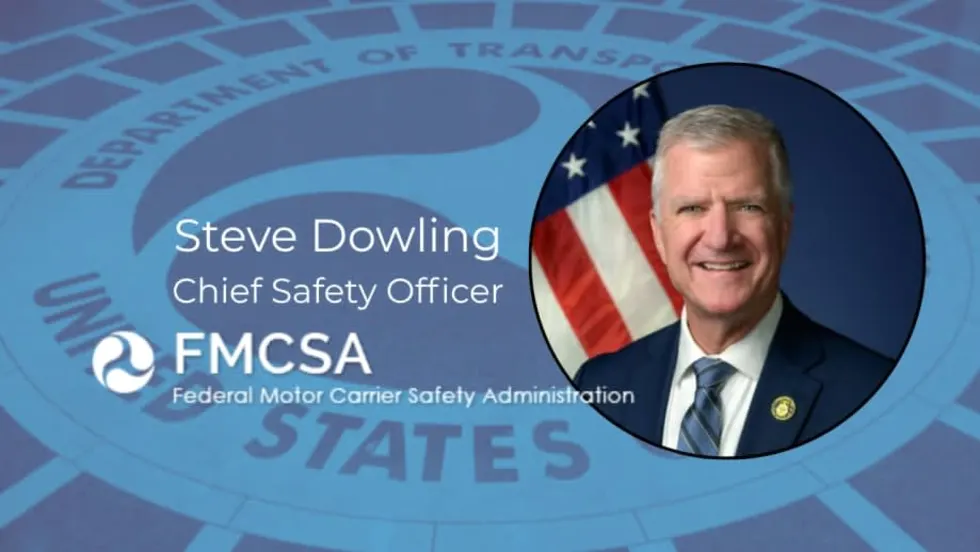
FMCSA Names New Chief Safety Officer: What School Bus Operators Should Know
Steve Dowling is set to lead the federal agency's efforts to advance commercial motor vehicle safety and reduce crashes, fatalities, and injuries on the nation's roadways.
Read More →