



Playing it safe
In school bus transportation, you often use phrases like “precious cargo” and “safety is our top priority.” These are apt descriptions of your passeng...
In school bus transportation, you often use phrases like “precious cargo” and “safety is our top priority.” These are apt descriptions of your passengers and your operational imperative. Frequent use of these phrases can help to remind you of the critical nature of what you do — but it can also lead to a dangerous complacency.
I’m not speaking in riddles here. What I’m trying to say is that we need to constantly freshen our perspectives. Yes, safety is important. I would hope that it’s the overriding responsibility of everyone who transports passengers. But playing it safe can also be dangerous.
Ah, now you see what I’m getting at. Or at least I hope you do. The danger lies not in striving for the highest level of safety in your transportation program, but in believing that your program is already as safe as it can be. Maintaining the status quo provides comfort because it feels safe. It isn’t.
Overcoming your fear
To attack this illusion requires the courage to confront one of your worst fears: that you’re not performing as well as you could; that you could do better.
Doing better is difficult. It means letting go of the notion that “good enough” is actually good enough. Half-hearted pre-trip inspections aren’t good enough; buses rolling out of the lot with brake flaws aren’t good enough; routes that require children to cross hazardous intersections aren’t good enough.
I could draw up a long list of my own “good enoughs,” but I don’t want to bore you with my problems. My job is important, but not as important as yours. I don’t transport 24 million children every school day. I don’t try to manage their behavior while navigating a 36,000-pound bus down the road with impatient motorists nipping at my rear end. I don’t deal with angry parents who want to know why the bus was late or why Junior is being picked on by the other kids. What you do for a living has a razor-thin margin of error. That’s why “good enough” isn’t.
Improvement is vital
Recognizing that improvement is essential is the first step. Even if your safety record is the envy of every school bus operation in the state, you’re always just one catastrophic accident away from a quick and merciless free fall to the bottom of the safety ladder.
The second step is to spread the message. Here’s what to tell anyone who’ll listen: “This year, we’re going to find ways to improve the operation. I want to hear your suggestions.”
The third step is to create a plan with measurable objectives. The key here is to come up with reasonable suggestions. Setting the bar too high can be demotivating and actually have a negative effect on performance levels. Also, you need to explain the positive consequences of meeting these objectives.
The fourth step is to challenge your people. Make it clear that they will need to commit themselves to the plan. Those who can’t abide by this need for commitment should be encouraged to look for another type of employment.
The fifth step, of course, is to execute the plan. And to reward those who help you reach your goals.
Let’s make improvement our top priority. That includes raising the bar on safety, efficiency, morale, innovation, training and hiring. Don’t try to be perfect. That’s a sure-fire way to ensure failure. Try to be a little better every day. I’ll do the same.
More Management

The Back-to-School Checklist Every Director Should Complete Before the First Bell
Help your transportation team start the school year strong with these tips for contingency planning, communication, fleet visibility, technology, and trip management.
Read More →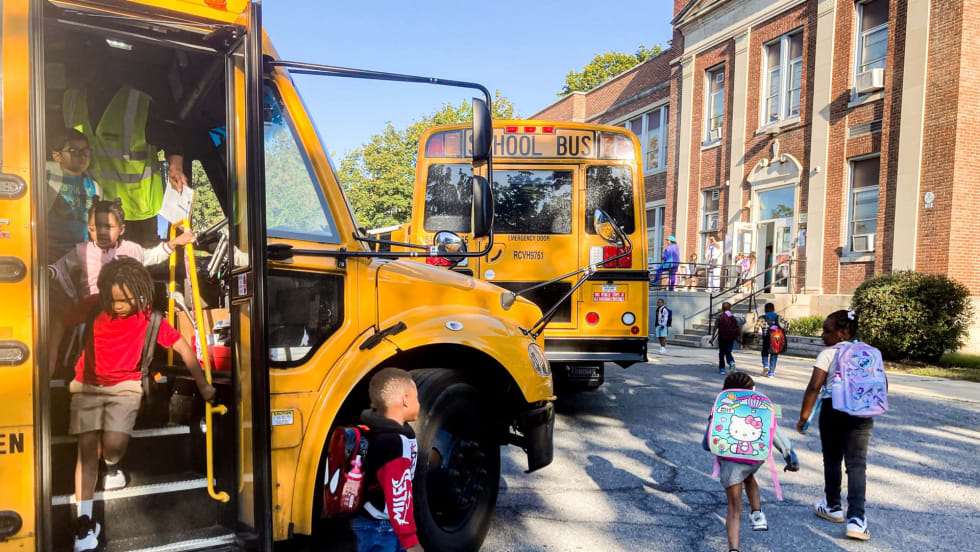
How a New York District Cut Nearly $1M in Transportation Costs While Expanding Bus Access
A data-driven overhaul with BusRight reduced Poughkeepsie City School District's planned routes from 26 to 17 while extending school bus service to about 1,200 additional students.
Read More →
Budgets Down, Enrollment Shifting: What the Data Says Districts Should Watch
School transportation departments face two converging challenges this year: tightening budgets and shifting enrollment. Most districts still address these issues separately, but the assumption that either trend will simplify operations is proving incorrect.
Read More →
These 8 School Transportation Companies Made the 2026 Inc. 5000 List
Find out which school transportation contractors, technology providers, and suppliers ranked among America’s fastest-growing private companies.
Read More →
The Link Between Emotional Intelligence and School Bus Safety
How can emotional intelligence help transportation pros navigate stress, manage change, and build stronger relationships? Listen to find out.
Read More →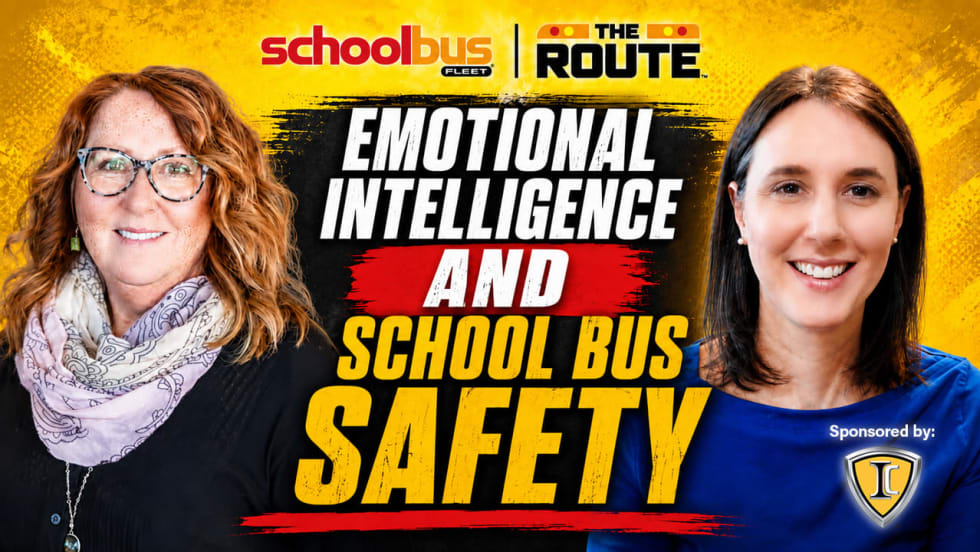
What Emotional Intelligence Has to Do With School Bus Safety
In this video, discover how emotional intelligence can help transportation leaders and drivers navigate stress, manage change, and build stronger relationships. The Route is sponsored by IC Bus.
Read More →
Beyond Two-Way Radios: School Bus Communications Evolve With Push-to-Talk Over Cellular
PRYME Radio and PositionPTT join forces to advance hands-free radio use and reduce distracted driving. See how PoC compares with traditional radios on range, cost, safety, and connectivity.
Read More →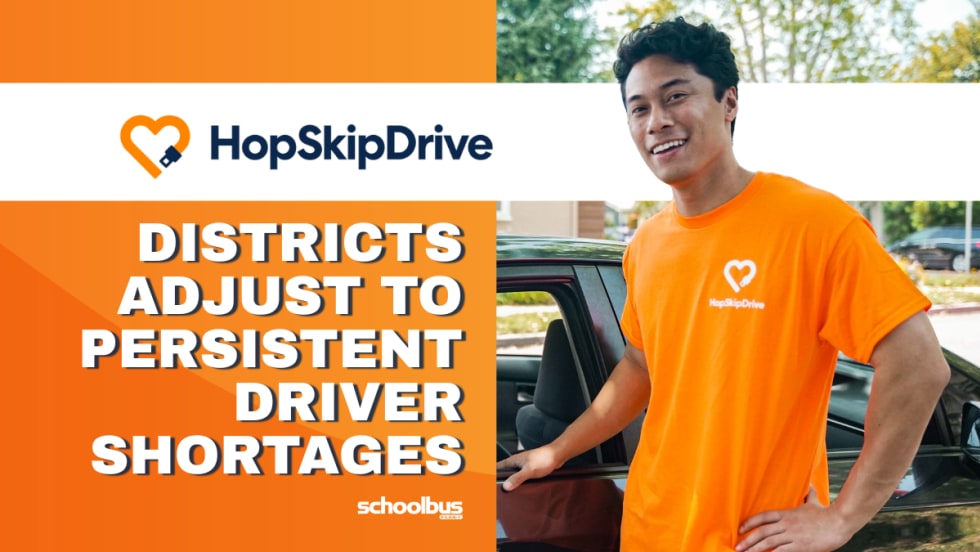
Have School Districts Adapted to Bus Driver Shortages or Simply Accepted Less Service?
According to a recent report from HopSkipDrive, many districts appear to have recalibrated what "normal" transportation service looks like.
Read More →
Reliable Transportation Linked to Better Student Outcomes, New EverDriven Study Finds
See why new research suggests transportation consistency improves student outcomes while influencing attendance, funding, IEP compliance, and family trust.
Read More →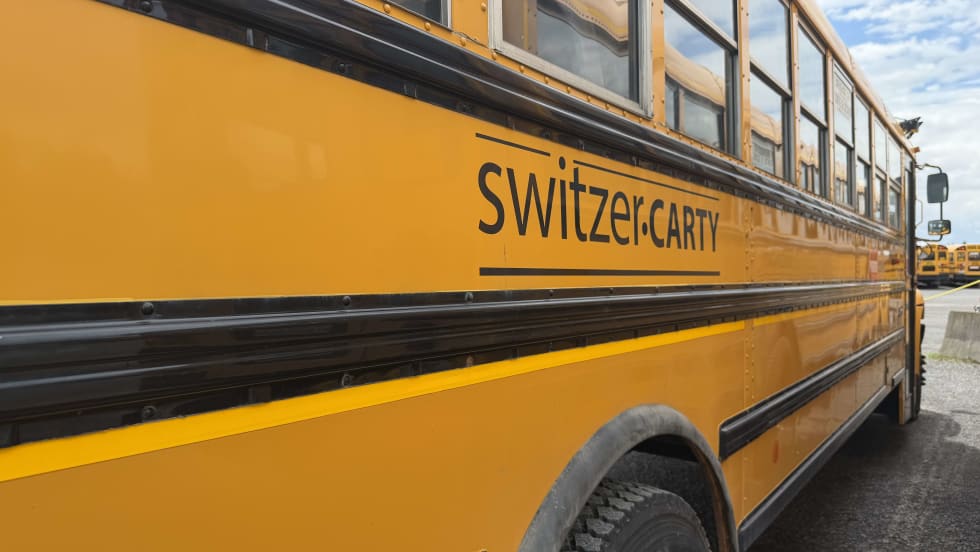
Switzer-CARTY Enters the U.S. with New Acquisition
The Canadian contractor’s acquisition of Minnesota-based Agnes Corporation marks its first cross-border expansion into the United States and adds 350 vehicles.
Read More →