




NSTA looks at Head Start, EPA funding at winter meeting
MAUI, Hawaii — The National School Transportation Association (NSTA) addressed a number of critical issues facing the pupil transportation industry at its mid-winter meeting in late January.

MAUI, Hawaii — The National School Transportation Association (NSTA) addressed a number of critical issues facing the pupil transportation industry at its mid-winter meeting in late January.
Discussion topics included revisions to Head Start transportation regulations, EPA funding for emission reductions, the School Bus Watch program and federal recognition of School Bus Safety Week.
In addition to NSTA members, the meeting was also attended by the presidents of the industry’s other national associations — the National Association for Pupil Transportation (NAPT) and the National Association of State Directors of Pupil Transportation Services (NASDPTS).
Both NAPT President Lenny Bernstein and NASDPTS President Pete Japikse confirmed that they are continuing to work with their association counterparts to more fully represent the industry where there are common goals.
The implementation of Head Start transportation regulations was a focal point. The final three provisions — the use of only school buses or multifunction school activity buses to transport students, the use of height- and weight-appropriate child safety restraint systems and the presence of an adult monitor on each bus — were originally to take effect on Jan. 28 but were postponed until June 30. In the interim, Congress is reconsidering the transportation regulations in the wake of complaints from Head Start grantees that they are too costly and operationally restrictive.
Robin Leeds, the NSTA’s industry specialist, said the association is preparing a position paper in conjunction with the NAPT and NASDPTS that will be sent to Congress. “The paper will support the requirements as they currently stand,” she said.
EPA funding for retrofitting emission-reducing equipment under the Clean School Bus USA program was discussed. In particular, the NSTA expressed concern about how the EPA was going to administer the grant program for 2006. “One concern is that they might draw from the 2005 applicants [who weren’t selected to receive a grant] rather than recompeting,” Leeds said. Because the 2005 grant eligibility rules were more restrictive than they are for 2006, especially in regard to private bus operators, the NSTA is pushing for the EPA to use a fresh-start competition.
Meanwhile, the NSTA was an active participant in a broad coalition of more than 200 industry, environmental and labor representatives that worked with Senators George V. Voinovich (R-Ohio), Thomas Carper (D-Del.), Johnny Isakson (R-Ga.), and Hillary Clinton (D-N.Y.) to support full funding for the Diesel Emission Reduction Act (DERA), which was included in the comprehensive energy legislation enacted last year by Congress.
In the White House’s budget request released on Feb. 6, President Bush included $49.5 million to fund DERA, passed by Congress in August. This represents almost four times the amount appropriated for clean diesel programs in the current fiscal year.
Bush’s budget request combines all diesel reduction programs — including the Clean School Bus USA Program, the Diesel Truck Retrofit and Fleet Modernization Program and the Engine Idling Reduction Program — under the DERA umbrella.
“As pioneers in the effort to reduce diesel exhaust and protect the health and safety of the children we transport every day, we welcome this new funding to help us continue our work and to expand clean air efforts to other diesel users,” said NSTA President John Corr. “While $50 million is a good start, we will continue to push for the full $200 million authorized by DERA.”
Also discussed at the meeting was the status of the industry’s attempt to get Congress to recognize School Bus Safety Week. As of early February, 16 members of the House of Representatives had signed up to co-sponsor the resolution, HR 498. The required number is 50, so the NSTA is urging all members of the pupil transportation community to lobby their House representatives to sponsor the measure. For more information on this legislative effort, visit www.yellowbuses.org.
More Management

EverDriven Launches Route Consolidation Calculator to Estimate Diesel Savings
As diesel prices hit record highs, the largest alternative transportation provider says a 10% route consolidation could save a 120-route district more than $78,000 a year in fuel alone.
Read More →
Zum Secures Continued Financing Support for School Bus Expansion
Generate Private Credit has financed approximately $75 million in school bus deployments across three states, supporting more than 500 buses as Zum expands across the county.
Read More →
Beyond Discipline: A Different Approach to Student Behavior on the Bus
After implementing a dean of students program in Oregon, North Clackamas is seeing positive improvements. Here’s how it worked. The Route is brought to you by IC Bus.
Read More →
A Dean of Transportation's Different Approach to Student Behavior on the School Bus
After implementing a dean of students program in Oregon, North Clackamas is seeing positive improvements on the bus. Here’s how it worked.
Read More →
Inside NAPT ACTS 2026: Highlights from Louisville
From federal updates and student behavior strategies to new school bus technology and industry awards, see highlights from NAPT ACTS 2026 in Louisville.
Read More →
Meet the 2025 School Bus Driver Hero Winner: Annette Brown
We caught up with Wa-Nee Community Schools' Annette Brown on site at SBFX, where she was named the 2026 School Bus Driver Hero Award winner. Hear about her reaction, what she loves most about being a school bus driver, and more!
Read More →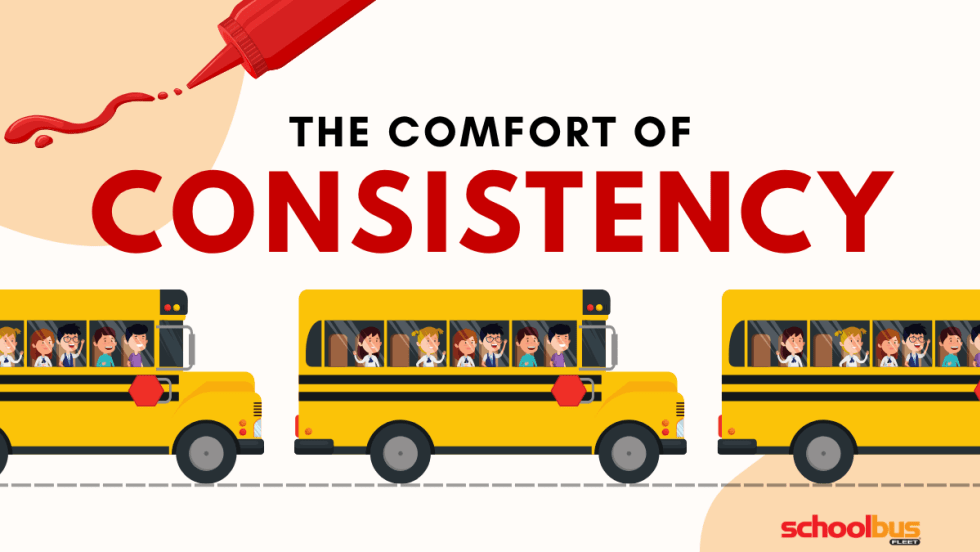
Predictability Is Like Ketchup (According to 6-Year-Olds)
To students, a different school bus can feel like a full-blown crisis. One driver reflects on why familiar routines, showing up on time, and being reliably boring matter more than we think.
Read More →
Samsara Launches Free Driver Rewards Program
The new Driver Perks program gives eligible professional drivers access to discounts and offers without adding a cost for participating fleets.
Read More →
How Tax-Exempt Municipal Leases Can Help Finance School Buses
Let’s explore school bus financing options, including municipal leases, vendor payable accounts, and balloon payments, and how they can help stretch fleet budgets.
Read More →
Nominate Rising School Transportation Pros Under 40!
We’re searching for the next generation of leaders making an impact across the K-12 student transportation industry to recognize as SBF’s 2027 Trailblazers. Nominations are open now!
Read More →