




NSTA Advocacy in Action — Why CSA scores are flawed
The goal of the Safety Measurement Scores, within CSA (Compliance, Safety, Accountability), is to allow the public to review a carrier’s safety record and relevant data by searching its Department of Transportation number. While this is a great idea in concept, the reality is very different.
In 2010, the Federal Motor Carrier Safety Administration (FMCSA) launched a program to identify commercial motor vehicle safety deficiencies and prioritize intervention efforts with carriers demonstrating a greater crash risk.
The goal of the Safety Measurement Scores (SMS), within CSA (Compliance, Safety, Accountability), is to allow the public to review a carrier’s safety record and relevant data by searching its Department of Transportation number. While this is a great idea in concept, the reality is very different.
There are four main concerns with the current SMS, but this is by no means a complete list of concerns:
• First, data is not available for every carrier, because not every carrier is inspected. FMCSA’s ability to inspect is limited by its resources, so not every carrier (good or bad) is inspected and therefore rated. Obviously, accidents are captured, but what if a bad carrier has just been lucky?
• Second, the system compares all rated companies against all other rated companies rather than comparing small companies with small companies and large companies with large companies. Carriers, both large and small, should be compared with similarly sized carriers. How else could any effort to compare actually be accurate?
• Third, reportable accidents include accidents that are of no fault of the carrier, and there is no context included to alert the consumer to this. This is incredibly problematic. If a school bus is standing still and is struck from behind by another vehicle, why should that school bus company be penalized for an “accident” with no context that they were not at fault? What if a family is looking at this and believes the information is reflective of the driver taking their child to and from school, even if it isn’t?
• Finally, the SMS includes raw data and very little context for the consumer to actually and accurately understand the information provided. If the goal of this product is to enhance safety, then shouldn’t the information be presented in a clear and easily understood manner?
In February 2014, the Government Accountability Office (GAO) released a study on CSA and concluded that many changes were needed to improve the system’s ability to in fact identify high-risk carriers. GAO cautioned that any violations included in the score should be limited to those that have a strong predictive crash relationship and that most violations used by FMCSA to calculate this score are not violated enough to strongly associate them with crash risk for individual carriers.
For example, if a driver does not have their medical card in their possession at the time of a roadside inspection, this is considered a violation and would be captured in the CSA score. Obviously, this type of violation does not have a strong predictive relationship with crashes.
In addition, GAO noted that “most carriers lack sufficient safety performance data to ensure that FMCSA can reliably compare them with other carriers.” Further, in recent testimony before the Senate Commerce, Science and Transportation Committee, U.S. GAO Comptroller General Gene Dodaro noted that SMS scores are so flawed that they should be removed from public view.
The National School Transportation Association (NSTA) has voiced its concerns to FMCSA and U.S. Secretary of Transportation Anthony Foxx, but they have declined to take action to address them. Therefore, NSTA turned to Congress for assistance, and Congressman Lou Barletta (R-Penn.) has led the charge.
Barletta has introduced the Safer Trucks and Buses Act of 2015 (HR 1371), which would halt the publication of CSA/SMS scores for commercial carriers until FMCSA makes specific changes to the program. NSTA is also working with Sen. John Thune (R-S.D.), who plans to introduce a comprehensive CSA reform bill soon.
NSTA fully supports initiatives to improve safety as long as those initiatives really do improve safety and they make sense. The intent of this scoring system would be beneficial, but the current result is flawed.
Simply put, if the public is to use this tool, then it should be an honest and accurate depiction of the motor carriers across the country. The CSA system, as it currently stands, does not give reliable and accurate depictions of carriers, and good, safe companies are losing business because scores are being misinterpreted.
NSTA supports HR 1371, the Safer Trucks and Buses Act of 2015, and we encourage you to contact your member of Congress and urge them to cosponsor the bill.
Together, we can help each other while also ensuring that the nation’s children continue to travel in the safest vehicles possible.
More Safety
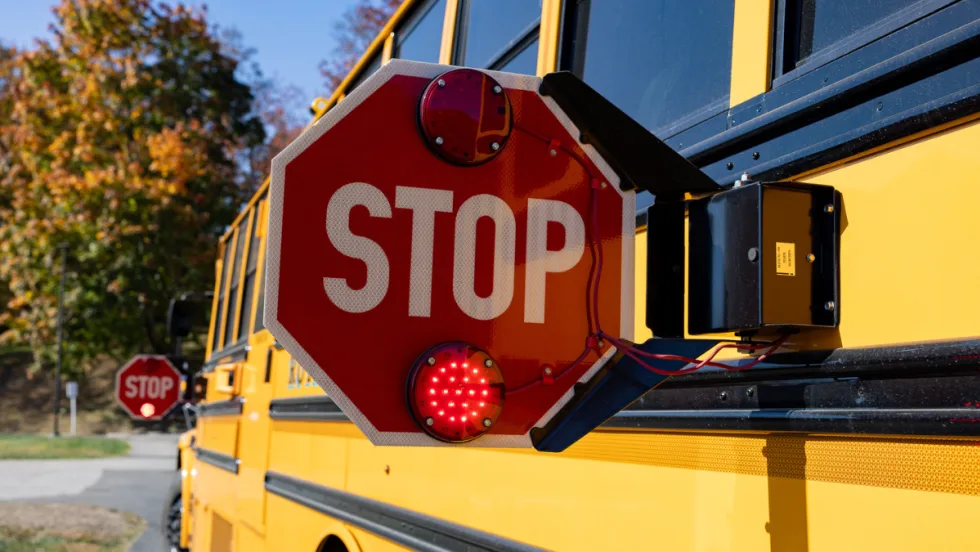
Illegal School Bus Passing Drops 24% in New York Districts
With fewer than 5% of citations involving repeat offenders, Westchester County officials said enforcement, education, and community partnerships are helping change driver behavior.
Read More →
School's Back. Here's What Happened to Traffic, Speeding & Distraction
What happens to traffic when school resumes? New data analysis examines changes in distracted driving, congestion, and speeding around schools.
Read More →
Geotab Expands Fleet Safety Tools With Video Coaching, Risk Insights
New safety and video capabilities aim to help fleet managers assess risk, support drivers, and take targeted action through video coaching, red-light violation detection, and more.
Read More →

How to Build a Better School Bus Driver Training Program
Is it time to strengthen your driver training? Here’s how to pick the right talent and improve recruitment, retention, and safety. This video is brought to you by IC Bus.
Read More →
Recent School Bus Accidents Leave 2 Dead, 2 Injured
Four school bus crashes in Florida, Illinois, and Georgia highlight risks in transportation lots, at bus stops, and during student loading and unloading.
Read More →
When Every Second Matters, Clarity Keeps Routes Moving
From routine delays to urgent incidents, strong communication practices help drivers, dispatchers, schools, and families respond with confidence.
Read More →
What Happens When a School Bus Catches Fire — and What Can Help
School bus fires are rare but can be devastating. Learn how advances in fire suppression and asset protection help fleets detect fires earlier, reduce damage, and improve safety.
Read More →
Geotab Launches Tool to Help Fleets Investigate Road Incidents
Geotab Investigations combines telematics data, video, documents, and other evidence to help fleets reconstruct incidents, resolve claims, and determine what happened.
Read More →
Texas Sixth Grader Wins 2026 National School Bus Safety Poster Contest
Sai Darshana Yekolu of Moseley Middle School in Prosper, Texas, was named the newest winner for her artwork, bringing the theme of “Safe Rides, Everyday Heroes” to life.
Read More →
Doing More With Less: How Transportation Directors Can Prioritize Safety Amid Budget Uncertainty
With diesel prices soaring and nearly one-third of transportation directors expecting budget cuts, maintaining student safety has never been more challenging. Download this guide to learn how leading districts are prioritizing risk, funding critical safety technology, and building stronger budget cases with data.
Read More →