



NSTA Advocacy in Action — The Power of the Purse
Appropriations bills are often the most politically charged bills of the year, and — more importantly — they are “must pass” bills in order to avoid government shutdowns, so they become very attractive vehicles for other legislative priorities.
Currently operating under a continuing resolution and following the Nov. 8 elections, Congress will return for a lame duck session.
Currently operating under a continuing resolution and following the Nov. 8 elections, Congress will return for a lame duck session.
One of the basic responsibilities of Congress is to pass annual appropriations legislation to keep government agencies and programs funded.
Under the Origination Clause of the U.S. Constitution, all bills raising revenue (or spending the government’s money) must begin in the House of Representatives. This clause gives the power of originating spending bills to the body of Congress that the Founding Fathers viewed as the most closely linked to the people: the House of Representatives.
Annual federal spending totaled $4 trillion in fiscal year 2015 — 64.63% of that for mandatory spending programs (Social Security, Medicare, etc.); 29.34% for domestic discretionary spending programs (defense, transportation, environment, education, etc.); and 6.03% for interest on the national debt.
In House and Senate appropriations committees, the funding responsibilities are divided up among 12 subcommittees that cover all the executive branch departments and agencies within the federal government.
Each subcommittee is responsible for an annual appropriations bill, which provides the year’s funding for those agencies and departments. For example, funding for the Federal Motor Carrier Safety Administration (FMCSA) is found in the Transportation, Housing and Urban Development, and Related Agencies bill.
Appropriations bills are often the most politically charged bills of the year, and — more importantly — they are “must pass” bills in order to avoid government shutdowns, so they become very attractive vehicles for other legislative priorities.
While appropriations bills are only permitted by congressional rules to designate funding levels for agencies and programs, policy provisions are often addressed through provisions known as “limitations” or “riders.” These can be actions to stop agency regulations from going forward, such as was included last year to prevent FMCSA from moving forward with a regulation to significantly increase minimum insurance limits.

Ronna Weber is executive director of the National School Transportation Association (NSTA).
Congress is supposed to approve a budget by April, and appropriations bills, written to that budget, are supposed to be enacted by the start of the government fiscal year, which is Oct. 1. Unfortunately, in the 21st century Congress, this rarely happens.
What Congress usually does in these situations is pass what are called “continuing resolutions” to keep the government running past the start of the fiscal year until the bills can pass. Sometimes different strategies are needed, and a series of bills can be combined into a “minibus,” or all outstanding appropriations can be combined into an “omnibus” bill.
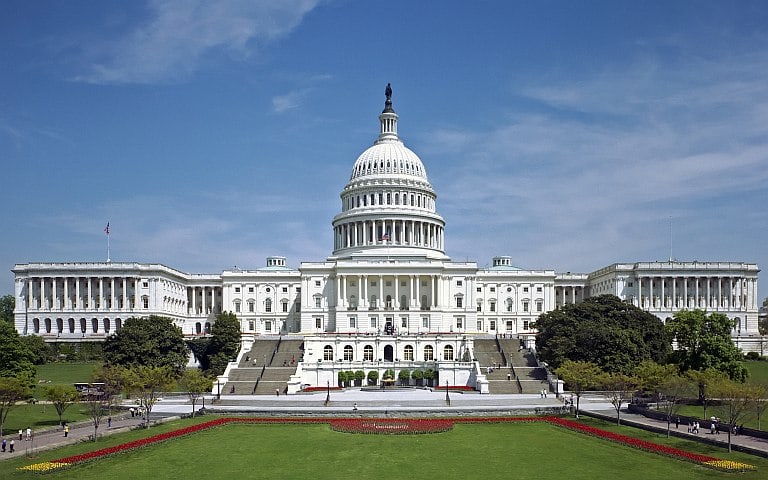
Currently operating under a continuing resolution and following the Nov. 8 elections, Congress will return for a lame duck session and hopefully finish this important work in November and December.
A few times in the past 20 years, Congress has not passed a continuing resolution or appropriations bills in time, and the government has shut down for a few days or even up to several weeks.
When this happens, nonessential government employees of an agency or department without an appropriation are furloughed, and there is no guarantee that workers will be paid for their time out of work. (However, in past shutdowns, Congress has enacted legislation to ensure that federal employees received their full pay.)
In addition, government-controlled buildings and services of the affected agencies and departments are closed. Government shutdowns have been utilized as an effort to exert leverage to get agreement on controversial issues, but history shows that because shutdowns are so unpopular with the public, the method usually does not produce the desired result.
More Management
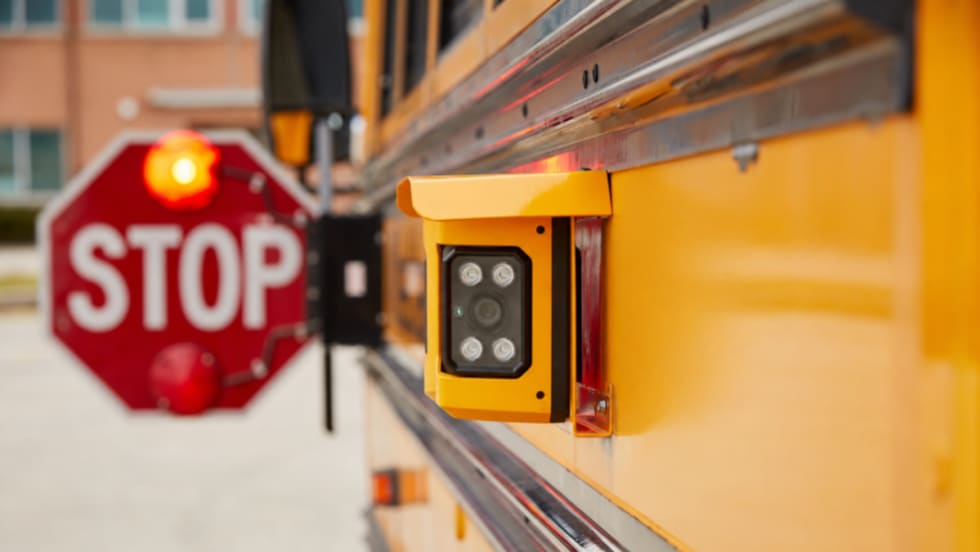
Walton County Schools Adds Gatekeeper Stop-Arm Enforcement System
The Florida district will deploy Gatekeeper’s updated Student Protector technology, which now incorporates AI to improve video evidence.
Read More →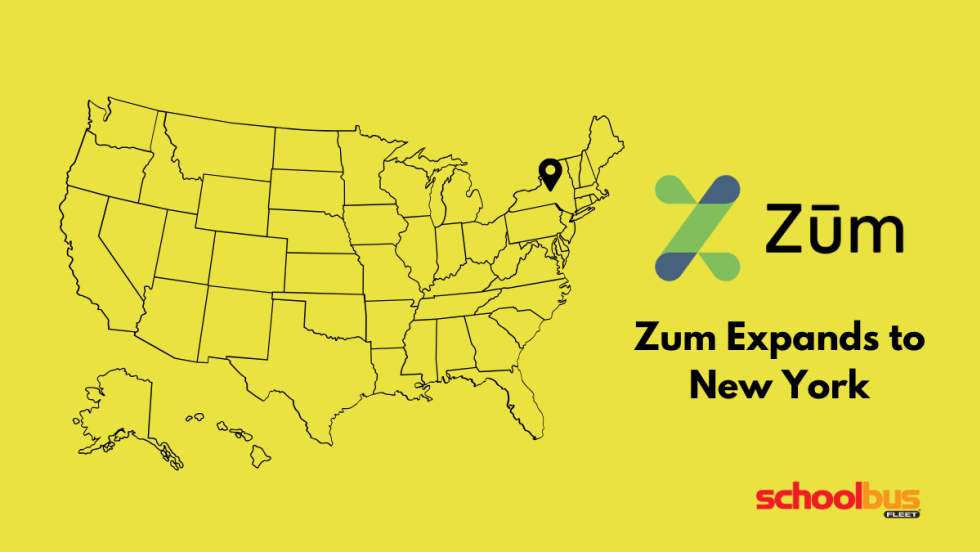
Zum Reaches 19 States With New York Expansion
The addition of the Empire State to the student transportation company's roster marks a growing expansion in the Northeast as it scales its tech and school bus services.
Read More →
First Student Updates Its Parent App
First View connects both yellow bus and alternative transportation, giving families one platform to track student trips for the new school year, with 15 languages supported.
Read More →
The Back-to-School Checklist Every Director Should Complete Before the First Bell
Help your transportation team start the school year strong with these tips for contingency planning, communication, fleet visibility, technology, and trip management.
Read More →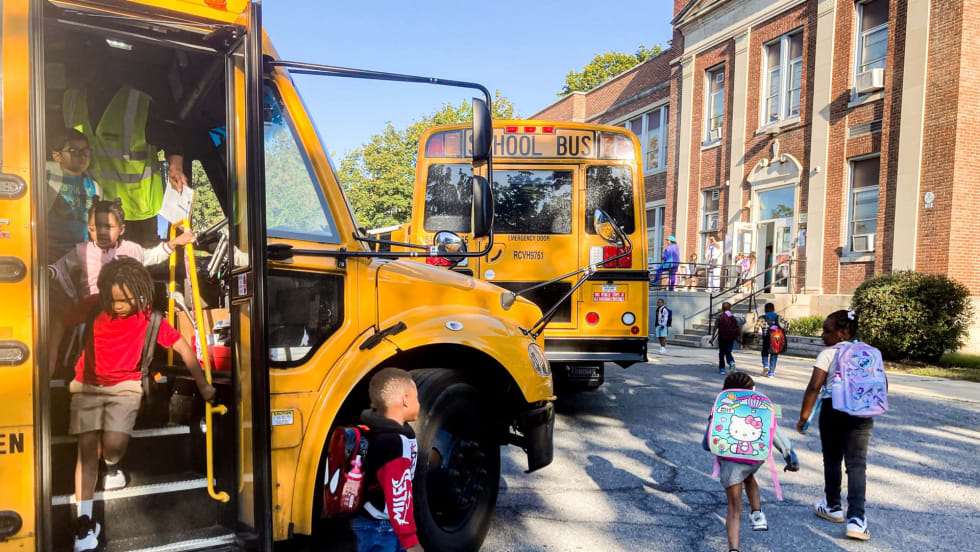
How a New York District Cut Nearly $1M in Transportation Costs While Expanding Bus Access
A data-driven overhaul with BusRight reduced Poughkeepsie City School District's planned routes from 26 to 17 while extending school bus service to about 1,200 additional students.
Read More →
Budgets Down, Enrollment Shifting: What the Data Says Districts Should Watch
School transportation departments face two converging challenges this year: tightening budgets and shifting enrollment. Most districts still address these issues separately, but the assumption that either trend will simplify operations is proving incorrect.
Read More →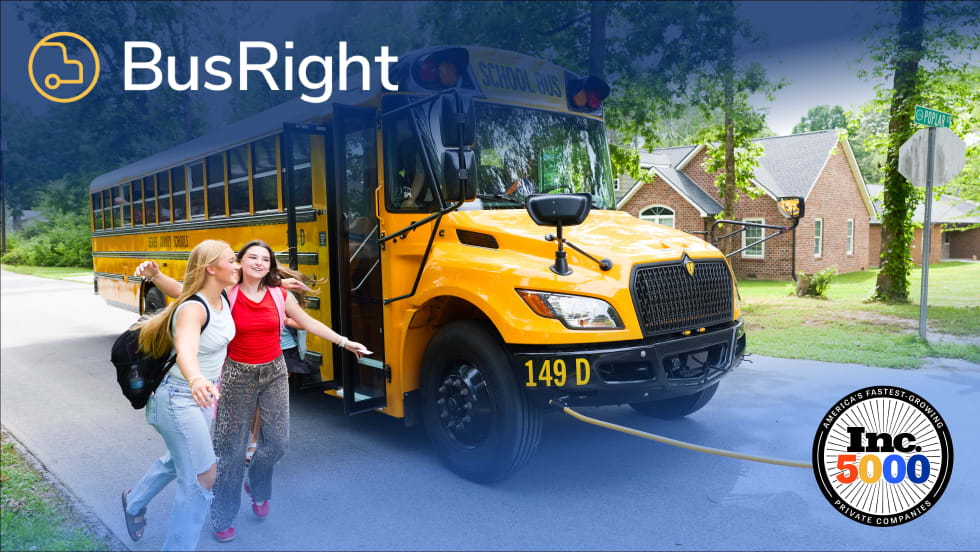
These 8 School Transportation Companies Made the 2026 Inc. 5000 List
Find out which school transportation contractors, technology providers, and suppliers ranked among America’s fastest-growing private companies.
Read More →
The Link Between Emotional Intelligence and School Bus Safety
How can emotional intelligence help transportation pros navigate stress, manage change, and build stronger relationships? Listen to find out.
Read More →
What Emotional Intelligence Has to Do With School Bus Safety
In this video, discover how emotional intelligence can help transportation leaders and drivers navigate stress, manage change, and build stronger relationships. The Route is sponsored by IC Bus.
Read More →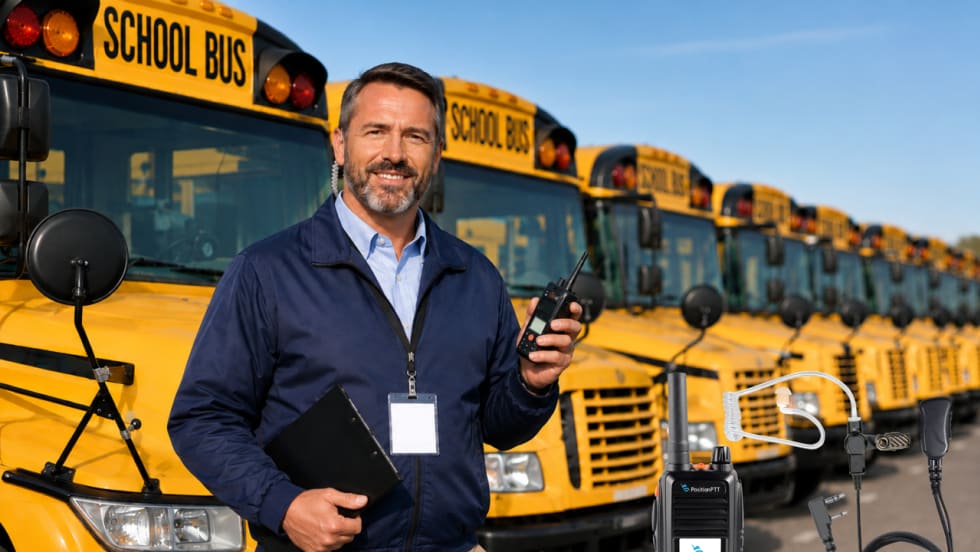
Beyond Two-Way Radios: School Bus Communications Evolve With Push-to-Talk Over Cellular
PRYME Radio and PositionPTT join forces to advance hands-free radio use and reduce distracted driving. See how PoC compares with traditional radios on range, cost, safety, and connectivity.
Read More →