




NSTA Advocacy in Action — Midterm Election Results Will Impact NSTA's Agenda
The midterm election results will produce shifts in leadership on key transportation committees, where most NSTA priorities are considered, and on key tax-writing committees.
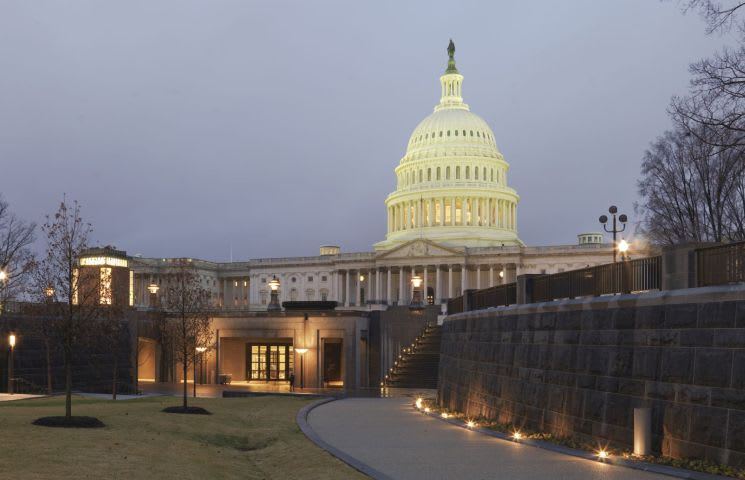
The midterm election results will produce shifts in leadership on key transportation committees, where most NSTA priorities are considered, and on key tax-writing committees. File photo of the U.S. Capitol
The midterm election results will produce shifts in leadership on key transportation committees, where most NSTA priorities are considered, and on key tax-writing committees. File photo of the U.S. Capitol
At the national level, the 2018 midterm elections played out largely as expected: not quite the “Blue Wave” that some Republicans privately feared, but certainly not a disappointment for Democrats, either. Democrats won control of the House of Representatives, but Republicans increased their majority in the Senate.
Here is a breakdown of the 116th Congress as of January 2019:
HOUSE: 235 Democrats | 200 Republicans
Democrats needed 23 seats to take control, and they gained 40.
SENATE: 53 Republicans | 447 Democrats
Republicans increased their majority by 2 seats.
Key Committee Leadership Changes
The midterm election results will produce shifts in leadership on key transportation committees, where most NSTA priorities are considered. The likely next Chairman of the House Transportation and Infrastructure Committee will be Congressman Pete DeFazio (D-OR), its current ranking member. The ranking member will likely be Congressman Sam Graves (R-MO), current Chairman of the Subcommittee on Highways and Transit. There will also be a change in leadership on both sides of the Senate Commerce, Science, and Transportation Committee. Current Chair John Thune (R-SD) was elected Majority Whip, so the next likely chairman is Sen. Roger Wicker (R-MS). The defeat of Sen. Bill Nelson (D-FL), its current ranking member, will likely result in that seat being filled by Sen. Maria Cantwell (D-WA).
There will also be leadership changes on key tax-writing committees in both the House and Senate. On the House side, Congressman Richie Neal (D-MA), the current ranking member of the House Ways and Means Committee, will become its Chairman. Committee member Congressman Earl Blumenauer (D-OR) is also pushing for creation of a new subcommittee to focus on infrastructure revenue. On the Senate Finance Committee, Sen. Chuck Grassley (R-IA) is expected to move from chairing the Judiciary Committee to chairing the Finance Committee.
NSTA will stay fully engaged with the new Congress to maximize opportunities to enhance the private school bus industry and push back on proposals that would be detrimental to the industry.
Impacts on NSTA Priorities
The flip to a Democratic majority in the House will mean increased oversight of the Department of Transportation (DOT), especially in terms of grants, safety regulation, and rollback of regulations. DOT has rolled back more regulations in the last two years than any other federal agency, which could be reviewed in oversight hearings. House Democrats are vigorous supporters of public transit and are generally less supportive of the charter and school bus protections than Republicans.
The shift will also likely translate into more proposals for regulation and mandates affecting the school bus and motor carrier industry. We can expect issues like obstructive sleep apnea, insurance limits, seat belts, and other equipment mandates to potentially be back on the table this upcoming legislative session.

Maria Battista is association director of the National School Transportation Association.
Congressman DeFazio has said an infrastructure bill with strong public funding will be a top priority. He has already spoken to the White House about it and President Donald Trump has expressed interest in continuing to work on this issue. Likely Speaker of the House Nancy Pelosi (D-CA) and Senate Minority Leader Chuck Schumer (D-NY) have also voiced support for pursuing infrastructure.
In addition, the Fixing America’s Surface Transportation Act (FAST Act) is due to expire in October of 2020 and the Highway Trust Fund is expected to be bankrupt nearly at the same time, so both of these triggers could provide the engine for an infrastructure bill. NSTA will continue to be vigilant in protecting the federal fuel tax exemption for school bus transportation and obtain comparable treatment for any new revenue mechanism that might be agreed to, such as a vehicle miles traveled (VMT) system. Fortunately, the next Chair of the House tax-writing committee supports the exemption.
Overall, there will be less impact to NSTA on the Senate side, but Sen. Cantwell is more likely to be inclined to support regulation and mandates than Sen. Nelson.
As always, NSTA will stay fully engaged with the new Congress to maximize opportunities to enhance the private school bus industry and push back on proposals that would be detrimental to the industry.
More Management

Zum Secures Continued Financing Support for School Bus Expansion
Generate Private Credit has financed approximately $75 million in school bus deployments across three states, supporting more than 500 buses as Zum expands across the county.
Read More →
Beyond Discipline: A Different Approach to Student Behavior on the Bus
After implementing a dean of students program in Oregon, North Clackamas is seeing positive improvements. Here’s how it worked. The Route is brought to you by IC Bus.
Read More →
A Dean of Transportation's Different Approach to Student Behavior on the School Bus
After implementing a dean of students program in Oregon, North Clackamas is seeing positive improvements on the bus. Here’s how it worked.
Read More →

Inside NAPT ACTS 2026: Highlights from Louisville
From federal updates and student behavior strategies to new school bus technology and industry awards, see highlights from NAPT ACTS 2026 in Louisville.
Read More →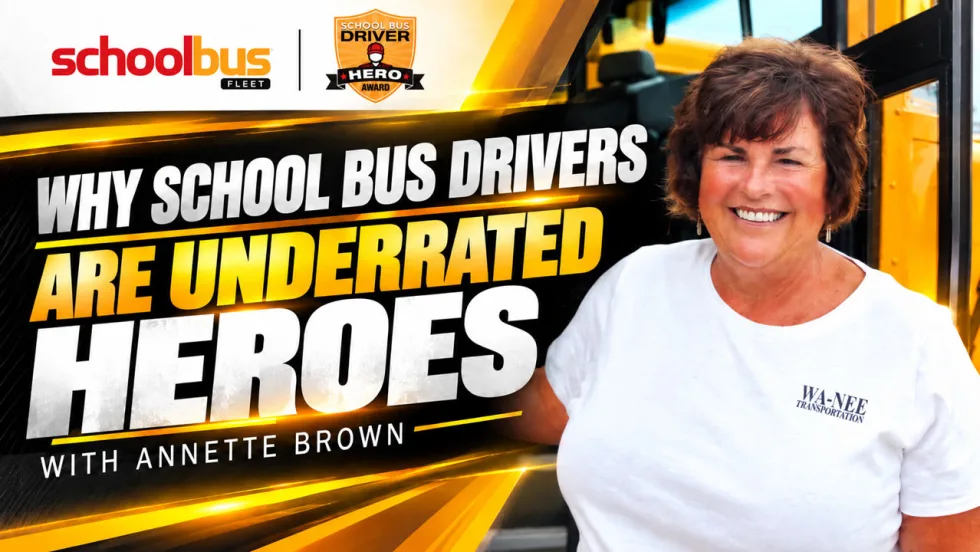
Meet the 2025 School Bus Driver Hero Winner: Annette Brown
We caught up with Wa-Nee Community Schools' Annette Brown on site at SBFX, where she was named the 2026 School Bus Driver Hero Award winner. Hear about her reaction, what she loves most about being a school bus driver, and more!
Read More →
Predictability Is Like Ketchup (According to 6-Year-Olds)
To students, a different school bus can feel like a full-blown crisis. One driver reflects on why familiar routines, showing up on time, and being reliably boring matter more than we think.
Read More →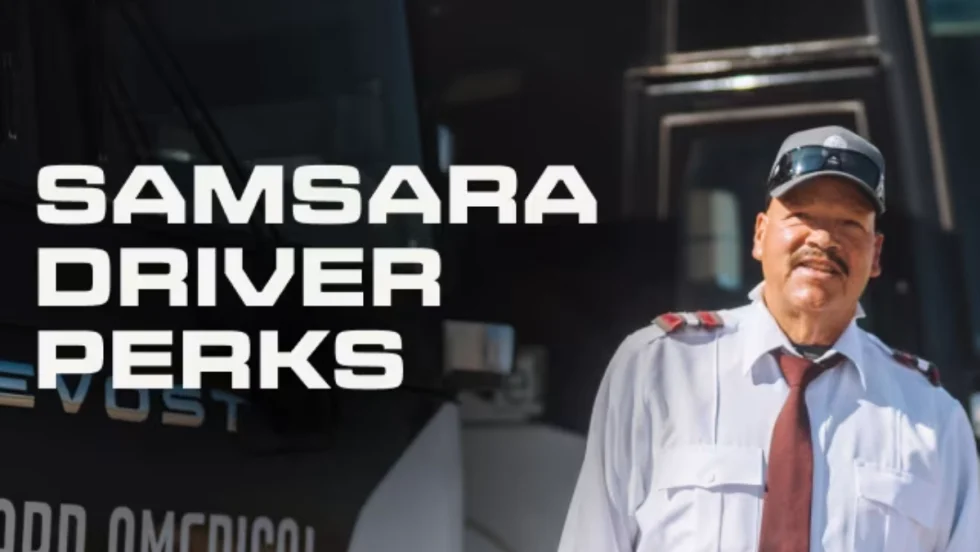
Samsara Launches Free Driver Rewards Program
The new Driver Perks program gives eligible professional drivers access to discounts and offers without adding a cost for participating fleets.
Read More →
How Tax-Exempt Municipal Leases Can Help Finance School Buses
Let’s explore school bus financing options, including municipal leases, vendor payable accounts, and balloon payments, and how they can help stretch fleet budgets.
Read More →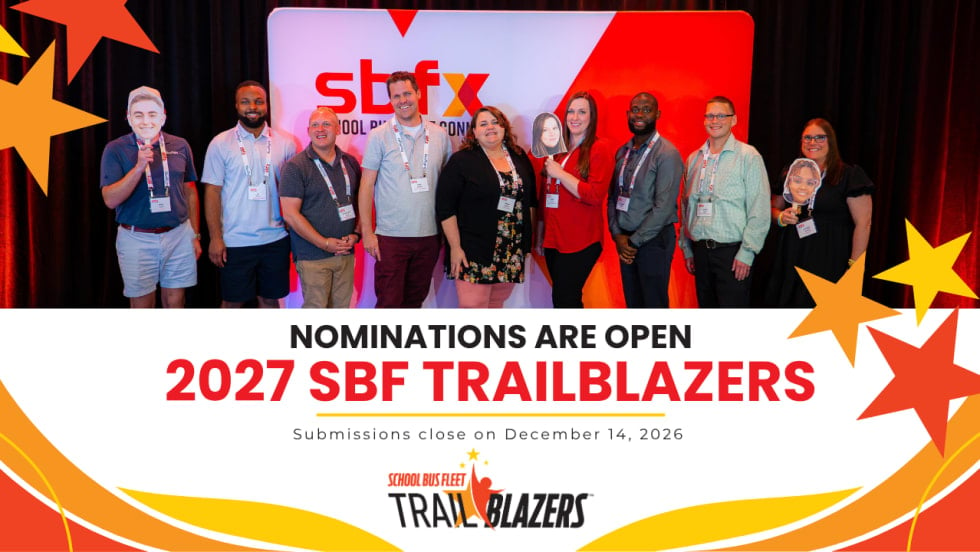
Nominate Rising School Transportation Pros Under 40!
We’re searching for the next generation of leaders making an impact across the K-12 student transportation industry to recognize as SBF’s 2027 Trailblazers. Nominations are open now!
Read More →
Changing Lanes: BusWhere, EverDriven, InterMotive, Summit School Services, Switzer-Carty & Thomas Built Buses
Check out who's been hired, promoted, and appointed to leadership positions at various school transportation suppliers, contractors, and manufacturers.
Read More →