




NSTA Advocacy in Action — How the Balance of Power Protects Our Industry
In the heavily regulated school transportation industry, it often feels like the governmental agencies have all the power. However, the legislative and judicial branches of government provide options for checks and balances.
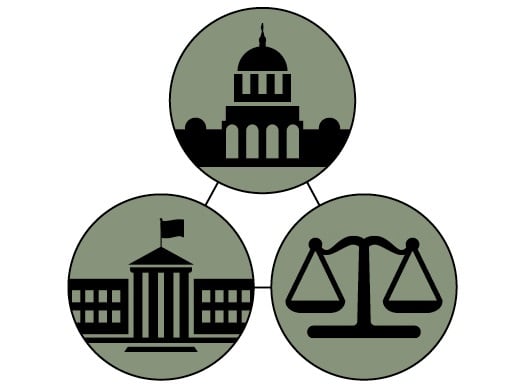
The legislative and judicial branches of government provide options for checks and balances in the heavily regulated school transportation industry.
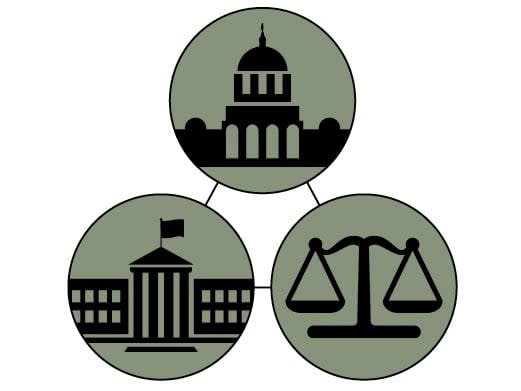
The legislative and judicial branches of government provide options for checks and balances in the heavily regulated school transportation industry.
In the heavily regulated school transportation industry, it often feels like the governmental agencies have all the power.
As we should all remember from our civics classes, however, our Founding Fathers had great forethought to ensure that each of the three branches of the federal government have equal powers, and that they each have checks and balances on the other branches so that no one branch has too much power.
So what can the legislative branch (Congress) or the judicial branch (federal court) do when it seems like the executive branch (the president and the agencies) is wielding too much power? In short, there is a lot they can do.
The legislative branch has many options at its disposal. Constituents and the industry bring issues of concern to members of Congress, which prompts a member to become engaged, but members also proactively engage on issues by themselves.
For example, a member of Congress can write a letter to the head of an agency in an effort to seek clarification or additional information on an issue of concern. This is helpful and effective because Congress has oversight responsibility over agencies and the agency has to respond to the letter in writing.
If the member is on a committee of jurisdiction, questions can be asked at relevant hearings about the issue. If the issue is large enough and the member of Congress is either senior enough or has enough support from the committee leadership, a hearing can be called to explore the issue more fully.
Members of Congress can also seek legislation as stand-alone bills or, with enough support, they can seek to add a provision into a bill that is likely headed for a vote. Policy issues can be addressed in either authorization bills or appropriations bills.
Our Founding Fathers had great forethought to ensure that each of the three branches of the federal government have equal powers, and that they each have checks and balances on the other branches so that no one branch has too much power.
A very short provision ensuring that an agency may not use funds to promulgate a rulemaking (or not use operating funds to advance an issue) unless it meets certain criteria is sometimes enough to delay or stop regulatory action by an agency. NSTA has been successful in achieving legislation to delay and stop adverse regulatory actions relating to issues of obstructive sleep apnea, minimum insurance increases, and reform of the Compliance, Safety, Accountability program, just to name a few.

Ronna Weber is executive director of the National School Transportation Association.
The judicial branch is an option for the industry as well because any party can bring suit in federal court against a federal agency on a regulatory proceeding believed to be unjustified. This is generally an option pursued when all others fail. It is not a quick or inexpensive solution, but it can be effective with the benefit of time and resources to endure what may be a lengthy court battle.
Is the industry out of options if an agency manages to issue a Final Rule before Congress or the courts are able to stop it? In short, no. Affected stakeholders can petition the agency for reconsideration.
There is also the Congressional Review Act, passed by Congress several years ago. This legislation allows Congress to overturn a Final Rule within very specific parameters. The law requires enough support within Congress, and action must occur within a very short window after issuance of a Final Rule. This option was used successfully to overturn the Occupational Safety and Health Administration’s ergonomics rule several years ago.
As another option, lawsuits can be filed.
Finally, a new administration can overturn regulatory actions taken by the previous administration — which often happens during a change in the party of the president.
The bottom line is that it is incumbent on the industry to know and exercise its best available options when necessary.
More Management
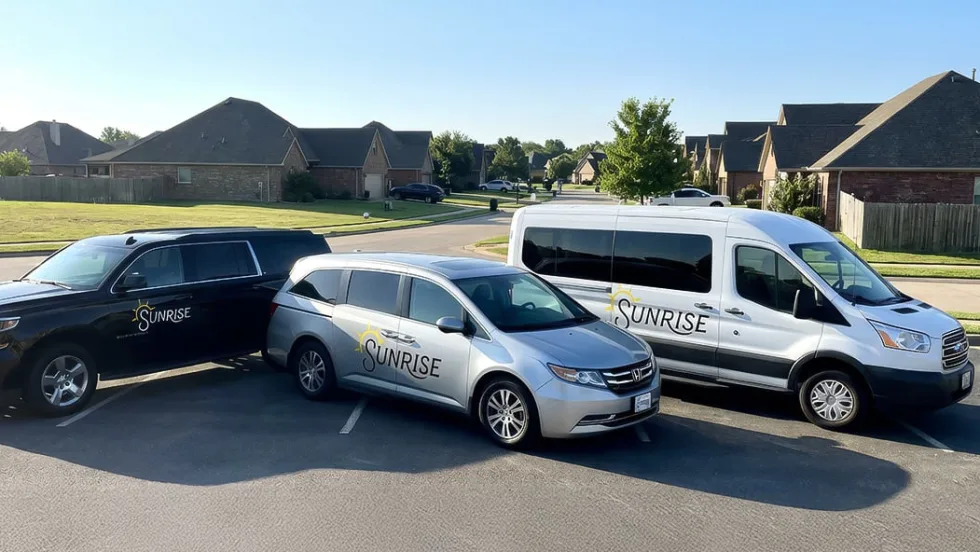
STA Acquires Sunrise Transportation
Student Transportation of America expands in Illinois and Connecticut through Sunrise's fleet of nearly 1,000 vehicles.
Read More →
EPA Opens $180M DERA Funding Round for Diesel Upgrades
The 2026 Diesel Emissions Reduction Act program seeks applications from eligible organizations to accelerate the retirement of legacy diesel vehicles.
Read More →
HopSkipDrive’s CareEngine Targets the ‘Exceptions’ in Student Transportation
The new platform works alongside districts’ existing transportation management systems to coordinate specialized rides, automate last-minute changes, and turn ride data into operational improvements.
Read More →


The Right Ride for Every Student: Navigating the New Student Transportation Ecosystem
How should districts blend school buses with small-vehicle transportation and other options? EverDriven CEO Mitch Bowling discusses safety, costs, partnerships, and strategy.
Read More →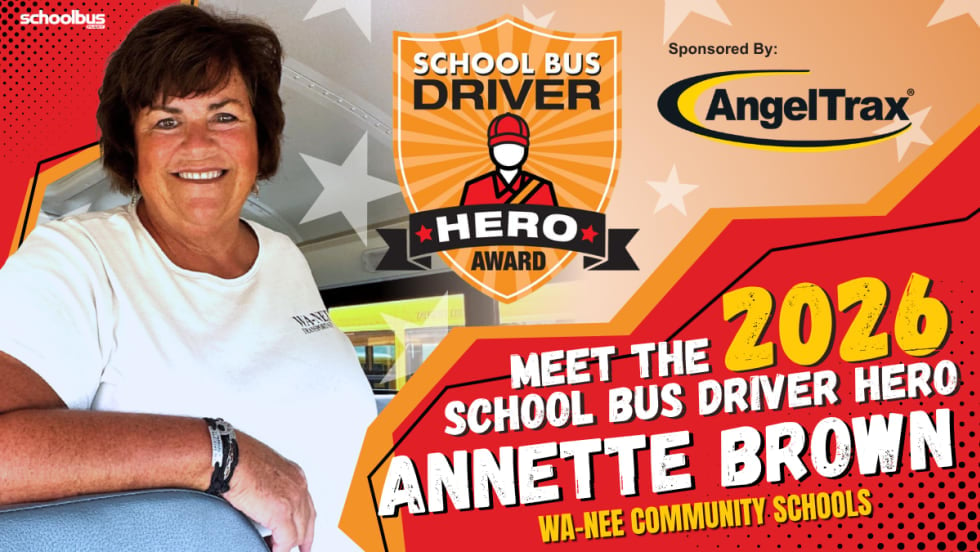
Annette Brown Always Takes the Extra Time: Meet Our 2026 School Bus Driver Hero
For more than 30 years, the Wa-Nee Community Schools driver has treated students like family, combining safety, compassion, and servant leadership to make a lasting difference on and beyond the school bus.
Read More →
How to Build a Better Driver Training Program
Ready to boost up your school bus instructor training? Here’s how to pick the right talent and improve recruitment, retention, and safety.
Read More →
CALSTART and Forth Combine to Form Catalyst Mobility
The new name represents a renewed vision for the nonprofit focused on advancing clean, equitable, and affordable transportation solutions that move people and goods.
Read More →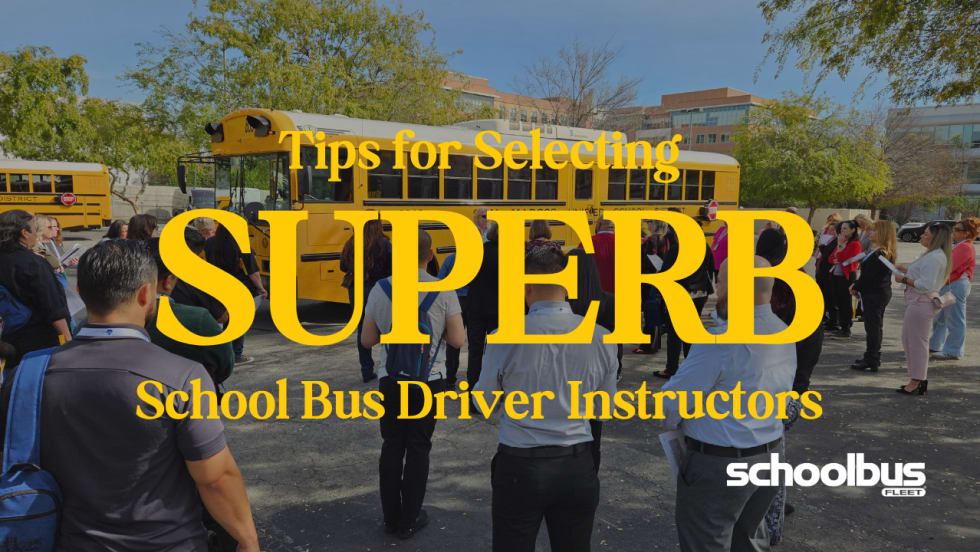
What Makes a Great School Bus Driver Trainer?
Choosing the right school bus driver trainer takes more than experience. Learn six keys to selecting and developing trainers and evaluating program effectiveness.
Read More →
School Bus Contractors Expand Through New Deals, Acquisitions & Partnerships
STA's Canadian division acquires Ontario-based G&L Stevenson Transport; Durham School Services adds a new district in California; First Student expands in New Jersey; and Minnesota Coaches rebrands and acquires Halo Transportation.
Read More →
Logan Bus Company Rolls Out AI Phone System for NYC School Bus Families
A summer pilot found that AI agents could handle most routine calls, freeing up time for customer service staff to focus on emergencies and complex family concerns.
Read More →