




NSTA Advocacy in Action — Going (Above and) Beyond the Numbers for School Bus Safety
The NSTA president discusses how statistics reflect the degree to which school bus operators go above and beyond to provide safe student transportation.

File photo

File photo
In your recent industry-related reading, research, and travels, you have, no doubt, encountered statistics associated with the school transportation industry.
Our industry is one of many that are taking part in a greater trend: the increased use of analytics. Part of the reason for greater reliance on these numbers in the business world, as well as in the school bus industry, is that they are supposed to give an unbiased explanation of why something does or does not occur.
At the National School Transportation Association (NSTA), we are as guilty as any other industry in relying upon data to tell our story. But can you blame us? When we testify in front of regulators, or meet with members of Congress (as I did on July 25, to the House Transportation Infrastructure Committee, Subcommittee on Highways and Transit, at its hearing, “Examining the Federal Role in Improving School Bus Safety”), we try to stay on message.
We usually lead with a simple but powerful statement: “Riding a school bus is already the safest way to transport students to and from school.” As you can see, our message continues to be a solid representation of what our industry does. Keep in mind that this is a fact-driven statement, and our industry would lose credibility if these words could not be supported by data.
To that end, according to U.S. Department of Transportation statistics, “a child is 70 times more likely to get to and from school safely when riding a school bus compared to other modes of transportation — safer than a parent driving their child to school, walking, biking, or students driving themselves.” This is, once again, a powerful sentiment that is supported by the numbers. Yet, even though these statistics highlight the incredible safety record of school transportation, many of us get lost in the numbers.
So while the “stats” paint a great picture, let’s be mindful of how we got to this place. This data did not come about by luck or happenstance. School bus operators go above and beyond the call of duty in providing safe and secure student transportation. Safety remains of paramount importance, but not just as an aspiration; it is also ingrained in our culture and the service we provide to our communities.
Keep in mind that federal and state laws and regulations give a mere baseline for providing safe and efficient school transportation, but school bus contractor commitment goes far beyond these edicts. And I would be remiss if I failed to mention the dedicated and hard-working men and women who are professional school bus drivers. These individuals deserve our respect and support; without them, school bus transportation does not exist.

John Benish Jr. is the president of the National School Transportation Association.
Even though I said earlier that statistics don’t tell the entire story, I am going to leave you with one final (statistically driven) thought. During a school year, nearly 500,000 school buses are on our nation’s roads each day, carrying over 26 million students, according to the American School Bus Council. Wrap your head around those numbers, as you ponder the importance of the school transportation industry. We are and will continue to be an integral part of the educational experience for students, and I am proud to be associated with an industry that is as dedicated as school transportation.
We are looking forward to advancing school transportation endeavors through the continued efforts of this dynamic team. Come join us. With NSTA, you never travel alone.
More Safety
Illegal School Bus Passing Drops 24% in New York Districts
With fewer than 5% of citations involving repeat offenders, Westchester County officials said enforcement, education, and community partnerships are helping change driver behavior.
Read More →
School's Back. Here's What Happened to Traffic, Speeding & Distraction
What happens to traffic when school resumes? New data analysis examines changes in distracted driving, congestion, and speeding around schools.
Read More →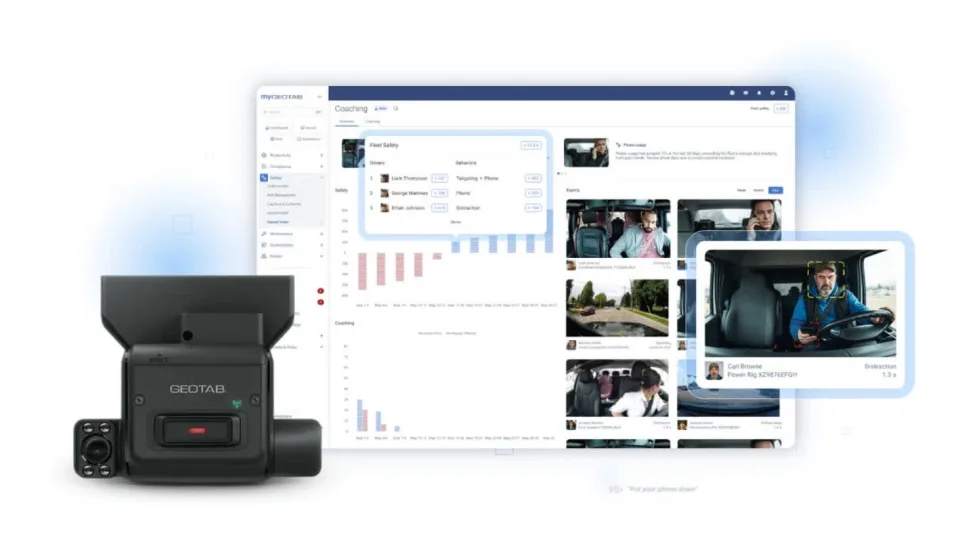
Geotab Expands Fleet Safety Tools With Video Coaching, Risk Insights
New safety and video capabilities aim to help fleet managers assess risk, support drivers, and take targeted action through video coaching, red-light violation detection, and more.
Read More →

How to Build a Better School Bus Driver Training Program
Is it time to strengthen your driver training? Here’s how to pick the right talent and improve recruitment, retention, and safety. This video is brought to you by IC Bus.
Read More →
Recent School Bus Accidents Leave 2 Dead, 2 Injured
Four school bus crashes in Florida, Illinois, and Georgia highlight risks in transportation lots, at bus stops, and during student loading and unloading.
Read More →
When Every Second Matters, Clarity Keeps Routes Moving
From routine delays to urgent incidents, strong communication practices help drivers, dispatchers, schools, and families respond with confidence.
Read More →
What Happens When a School Bus Catches Fire — and What Can Help
School bus fires are rare but can be devastating. Learn how advances in fire suppression and asset protection help fleets detect fires earlier, reduce damage, and improve safety.
Read More →
Geotab Launches Tool to Help Fleets Investigate Road Incidents
Geotab Investigations combines telematics data, video, documents, and other evidence to help fleets reconstruct incidents, resolve claims, and determine what happened.
Read More →
Texas Sixth Grader Wins 2026 National School Bus Safety Poster Contest
Sai Darshana Yekolu of Moseley Middle School in Prosper, Texas, was named the newest winner for her artwork, bringing the theme of “Safe Rides, Everyday Heroes” to life.
Read More →
Doing More With Less: How Transportation Directors Can Prioritize Safety Amid Budget Uncertainty
With diesel prices soaring and nearly one-third of transportation directors expecting budget cuts, maintaining student safety has never been more challenging. Download this guide to learn how leading districts are prioritizing risk, funding critical safety technology, and building stronger budget cases with data.
Read More →