




News from the World of Pupil Transportation
Driver weathers aftermath of attack ATLANTA — On Nov. 7, 2001, Lynda Clanton, school bus driver for Fulton County Schools in Fairburn, ...

Driver weathers aftermath of attack
ATLANTA — On Nov. 7, 2001, Lynda Clanton, school bus driver for Fulton County Schools in Fairburn, Ga., was forever changed, both physically and mentally, after being viciously attacked during her afternoon bus route by a 14-year-old student. The boy had only been on her route for about a week, and when he started misbehaving, Clanton promptly told him to sit down and be quiet. What she didn't know, however, was that the student had been involved in eight different attacks since 1995 and that it had not been long since he was released from reform school and mental care facilities. "I might have done things differently if I would have known about his history," said Clanton. "I probably would have seated him where I could see him better instead of right behind me." Unfortunately, Clanton was not forewarned about the boy's tendency toward violent behavior, despite the fact that he was taking part in a Fulton County bus program that involved ride times of up to two hours a day. His attack came suddenly and unexpectedly. "It never dawned on me that he would do something like that," said Clanton. As a result of the attack, Clanton underwent a number of surgeries, leaving her with 17 stitches, hearing loss, dizziness, permanent nerve and ear damage and other facial and bodily injuries. Doctors still won't allow her to get behind the wheel of a school bus, nor can she drive any other vehicle, because of balance problems associated with her injuries. "You don't realize the things that you took for granted until you can't do them anymore, like jumping in the car and going to the grocery store," said Clanton. A great deal of publicity surrounded the attack, Clanton's recovery and the susequent trial of the boy. In February, the court sentenced the youth to two to five years in a secured juvenile facility. Clanton said that the boy never apologized to her, but that she felt sorry for him when it was discovered that he had been severely abused. "I'm just happy that he is going to receive treatment," she said. If there is a positive result of the attack, it's that there is a greater awareness about the potential for violence on the school bus. "There has been keener attention so that students do not get as much leeway as what was previously the case; there are more prompt responses and discipline is a higher priority in the school district agenda," said Roger Mohlenhoff, transportation supervisor for the district. Mohlenhoff says that good communication helped the school district overcome the widespread concern surrounding the incident. "A number of my drivers were very close to [Clanton] and to the whole situation, so I encouraged them to speak through the proper channels, voice opinions and make suggestions," he said. Clanton took part as well, writing and presenting a speech before the Georgia Association of Educators addressing the issue. Mohlenhoff added that bus drivers' concerns were addressed by the highest level of administrative authority for Fulton County Schools.
Utah school buses go for the gold
SALT LAKE CITY — Although the Utah Transit Authority, supported by equipment and drivers provided by its transit counterparts across the country, has claimed bragging rights for its superlative light rail and bus service during February’s XIX Winter Olympiad in Salt Lake City, school buses also played a significant role in the timely delivery of passengers. Several school districts in Utah ferried thousands of students to and from Olympic venues for the two-week span of the event. Brent Palmer, transportation director for Jordan School District in Sandy, located in the southern Salt Lake valley, operated about 30 buses daily to transport approximately 6,000 students from 82 schools to various Olympic venues. The Salt Lake Olympic Committee gave Utah schools thousands of free student tickets, paid for with proceeds from special Olympic license plates sold in Utah over the past six years. Each school selected the students who would attend by various methods, including lotteries and academic achievement. “The board of education for the district decided to pick up the cost of the Olympic busing as a once-in-a-lifetime experience for the students,” said Palmer, who estimates the extra cost at $25,000. The largest of Utah’s 40 districts, Jordan’s transportation department carries some 19,000 students to school on 226 buses each day. As director of this operation, Palmer and his team successfully met the challenges of a brief, but major priority shift in their department. “During those 17 days, our first priority became getting these kids to the Olympics, versus getting them to school,” said Palmer, who added that scheduling his 216 drivers was one of the major challenges. On average, 30 buses ran each day from the Jordan district to Olympic venues some 18 to 60 miles away. Manpower challenges
“Those 30 drivers could not be regular contract drivers unless it was a night event, like the opening or closing ceremonies, or a weekend,” noted Palmer. “Normally, a daytime field trip can be done between a morning run and an afternoon run, but due to the nature of the Olympics, these runs took all day. A good portion of our runs had to be covered by substitute drivers.” The Jordan district keeps 70 substitute drivers on call. Of these drivers, approximately 40 helm “pocket runs” (short runs that don’t require a contract), leaving 30 to be substitutes for illness or emergencies. During the winter games, these substitutes were used as Olympic drivers. “Most of our office staff and mechanics are former drivers with CDLs, so we were relying on an average of 10 to 15 support staff per day to cover pocket runs, sending those drivers to the Olympic venues,” Palmer said. Though contingency plans had been drawn up in case of a personnel crunch, these plans never had to be implemented. “By using emergency back-ups at the office and shop, we were able to handle it,” said Palmer. Security issues
Due to the heightened security surrounding these games, the buses arrived at the venues three hours before the event was scheduled to begin. Other security measures included sending the names of all students and chaperones to the Olympic committee prior to attendance, as well as actual procedural changes in the buildings operated by the district’s transportation department. “Our facilities and bus garages were on lock-down status,” explained Palmer. “We only had one entrance in and out of our buildings, and we had to have people monitor the gates. We also had a workshop with our drivers where we heavily stressed the need for very thorough pre- and post-trip inspections, including inspecting the undercarriages for possible explosives.” While Palmer sensed some early reluctance on the part of a few parents to allow their children to attend the Olympics because of concerns about terrorism, these jitters soon dissipated. “As the Olympics got closer, everyone saw the effort being made to take precautions by the government and the Olympic committee. In the end there was very high satisfaction,” Palmer said. An additional challenge, Palmer pointed out, was the transportation of special- needs students to the games. “We transported a number of special-needs students to the Olympics,” said Palmer, “including approximately two-dozen wheelchair students.” In the end, the hard work paid off, not only for the students, but for the drivers as well. Palmer was excited that an arrangement was made that allowed those driving to and from the Olympic venues to be counted as chaperones for the event. “At least 70 of our drivers got to go to events,” said Palmer. “It was very exciting because some were able to attend the opening and closing ceremonies, which was a $600 ticket. We were very pleased that our drivers got to have that experience as well.” Weather concerns
The heat was on during Olympic games, not only on the slopes and ice where the competition was taking place, but also on the school buses from the Washington County School District (WCSD). Based in St. George, Utah, near the borders of Arizona and Nevada, WCSD transported between 250 and 500 children to the games daily. Recipients of free tickets distributed by the Olympics Committee to Utah schools, these students were able to escape the freezing temperatures to and from the games thanks to auxiliary heating units by Webasto. “We might not seem to fit the profile of a school bus fleet that would choose auxiliary heaters since we are only about 120 miles from Las Vegas,” said WCSD Transportation Director Bill Lundin. “Yet we have a number of areas in Washington County where it gets below zero degrees Fahrenheit.” The activity buses equipped with these auxiliary heaters are part of WCSD’s fleet of 110 85-passenger Blue Bird models, which serves 18 elementary schools and 11 secondary schools in a 150-square-mile area each day. Fuel savings noted
“The heaters help our diesel engines warm up quickly, they eliminate fuel waste from unnecessary idling and they keep the bus interior warm and consistently comfortable,” said Lundin. He also noted that the athletes weren’t the only winners at these Olympic games. “The district wins too because we reduce fuel, payroll and maintenance costs.” —AARON HARTZLER
School districts look to cleaner diesel buses
ONTARIO, Calif. — Interest in improving air quality has spurred several California school districts to order buses that are equipped with technology that reduces tailpipe emissions when combined with use of low-sulfur diesel fuel. On Feb. 20, officials from International Truck and Engine Corp. presented seven school buses equipped with Green Diesel technology to Ontario-Montclair Unified School District. The superintendent of schools, the mayor of Ontario and a U.S. congressman attended the presentation. As many as 40 buses with Green Diesel technology have already been delivered to California districts this year. Diesel school buses have come under fire in the past year after three major studies claimed that they are polluting the air and endangering the health of children. The most recent of the studies, conducted by the Union of Concerned Scientists (UCS), was the first of the three to recognize low-emission diesel fuel as a viable clean-air alternative. Still, all three studies have endorsed compressed natural gas (CNG) as the best solution. Tom Trueblood, manager of public affairs for International Truck and Engine Corp., says that the California Low Emissions School Bus Program, which involves equipping fleets with Green Diesel buses, is the perfect answer to the questions posed by the controversial studies. “We applaud the UCS for pointing out that there are old, dirty buses on the road, but the problem is that there isn’t enough funding for CNG,” he said. Officials for International have maintained that, when factoring in the cost of facility upgrades, CNG bus fleets are more expensive than Green Diesel fleets. Green Diesel technology utilizes the benefits of a catalyzed diesel particulate filter and low-sulfur fuel to significantly lower the emissions and odor of diesel-powered buses and trucks. The fuel meets clean air standards set by the U.S. Environmental Protection Agency and the California Air Resources Board.
Baltimore City Schools gets tough on older buses, sets a 10-year age limit
BALTIMORE - Beginning in the 2002-03 school year, Baltimore City Schools will not allow buses 10 years or older to transport the city’s children to and from schools. As part of the district’s new procedures, buses with 10 or more years under their belt will be inspected once a month for the remainder of the school year and then retired from service. “This is to make sure that vehicles transporting our children are safe,” said Vanessa Pyatt, spokesperson for Baltimore City Schools. She explained that the decision has been in development for some time. The district has issued its request for proposals for the 2002-2003 school year, in which it solicits two-year contracts from vendors to transport students to Baltimore City Schools. Pyatt explains that if vendors accept a two-year contract, they need to be prepared to accommodate the new restrictions, retiring their buses before they turn 10 years old. “This is a two-year contract, so if vendors expect to secure a contract and compete for a third-year contract, they need to begin planning for the replacement of those vehicles,” Pyatt said. The new restrictions are being introduced to limit the number of aging vehicles in service, and not in reaction to the recent wave of diesel emissions concerns. “This has to do strictly with the increasing number of aging vehicles in the fleet of approximately 400 buses that we use to transport students,” Pyatt said. The Baltimore Sun reported that more than 25 percent of the city’s buses failed safety inspections in the past three years. “The vast majority of those buses that were cited for violations are those that exceed 10 years in age,” said Pyatt. The district met with contractors to discuss the changes. Twenty private bus companies transport most of the city’s students, but the new policy will likely reduce the number of contractors able to provide transportation services to the district. Nonetheless, Pyatt says the new operating procedures have not been met with resistance. “We believe they [the contractors] feel as we do,” explained Pyatt. “This is all being done to ensure that we have taken every possible measure to ensure the safety of our students.” —AMY CARTER
More Safety
Illegal School Bus Passing Drops 24% in New York Districts
With fewer than 5% of citations involving repeat offenders, Westchester County officials said enforcement, education, and community partnerships are helping change driver behavior.
Read More →
School's Back. Here's What Happened to Traffic, Speeding & Distraction
What happens to traffic when school resumes? New data analysis examines changes in distracted driving, congestion, and speeding around schools.
Read More →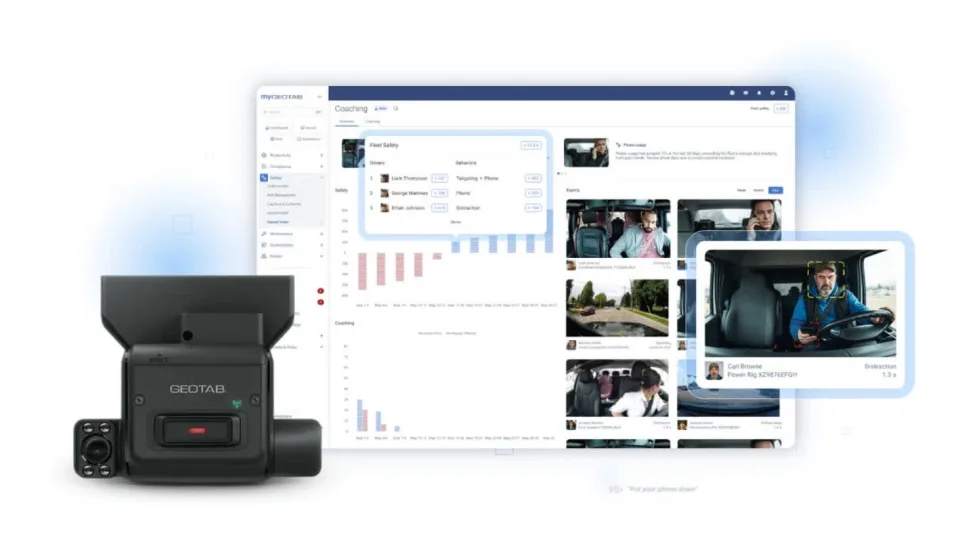
Geotab Expands Fleet Safety Tools With Video Coaching, Risk Insights
New safety and video capabilities aim to help fleet managers assess risk, support drivers, and take targeted action through video coaching, red-light violation detection, and more.
Read More →

How to Build a Better School Bus Driver Training Program
Is it time to strengthen your driver training? Here’s how to pick the right talent and improve recruitment, retention, and safety. This video is brought to you by IC Bus.
Read More →
Recent School Bus Accidents Leave 2 Dead, 2 Injured
Four school bus crashes in Florida, Illinois, and Georgia highlight risks in transportation lots, at bus stops, and during student loading and unloading.
Read More →
When Every Second Matters, Clarity Keeps Routes Moving
From routine delays to urgent incidents, strong communication practices help drivers, dispatchers, schools, and families respond with confidence.
Read More →
What Happens When a School Bus Catches Fire — and What Can Help
School bus fires are rare but can be devastating. Learn how advances in fire suppression and asset protection help fleets detect fires earlier, reduce damage, and improve safety.
Read More →
Geotab Launches Tool to Help Fleets Investigate Road Incidents
Geotab Investigations combines telematics data, video, documents, and other evidence to help fleets reconstruct incidents, resolve claims, and determine what happened.
Read More →
Texas Sixth Grader Wins 2026 National School Bus Safety Poster Contest
Sai Darshana Yekolu of Moseley Middle School in Prosper, Texas, was named the newest winner for her artwork, bringing the theme of “Safe Rides, Everyday Heroes” to life.
Read More →
Doing More With Less: How Transportation Directors Can Prioritize Safety Amid Budget Uncertainty
With diesel prices soaring and nearly one-third of transportation directors expecting budget cuts, maintaining student safety has never been more challenging. Download this guide to learn how leading districts are prioritizing risk, funding critical safety technology, and building stronger budget cases with data.
Read More →