




NAPT News & Views — The Washington scene: change in the air
To say that “change” is now the en vogue buzzword in Washington, D.C., would be the understatement of the millennium!

To say that “change” is now the en vogue buzzword in Washington, D.C., would be the understatement of the millennium!
Despite the colossal emphasis on that word in the recent presidential campaign, the reality is that all political elections are about making changes. That’s how our system of government works. Don’t like the status quo? Vote for the person or party committed to changing it!
On Jan. 20 at high noon, Barack Obama got his chance to make changes.
But those expecting drastic new directions may be disappointed. The U.S. remains the world leader precisely because, unlike many other nations, we remain relatively consistent and stable through political shifts. Moreover, most of our international and domestic issues are very difficult to solve, and there are no quick or inexpensive solutions waiting in the wings. “Change” rhetoric of political campaigns invariably gets replaced with the daunting realities of actually governing.
Because there is an entrenched bureaucracy and myriad interest groups that influence the process, Washington changes very, very slowly. So, most of the new president’s senior political nominations are seasoned Washington hands that know the ropes, rather than change agents who would face a steep learning curve.
That said, there will be many gradual adjustments (call them “changes”) in policies as the new team gets the opportunity to move the levers of government.
Focusing in to our interest — pupil transportation — what’s ahead? What are the opportunities and challenges?
The short answer is that there probably will be little, if any, significant “change” for pupil transportation. This is for many reasons, not the least of which is that school transportation is a state matter rather than a federal prerogative. The feds have regulatory authority for the safety and emissions of school buses, but not for their operation.
On the safety front, it remains to be seen whether the National Highway Traffic Safety Administration (NHTSA) will reopen its recent final rule regarding occupant protection in school buses. The inside track from NHTSA is that the matter is considered settled. Nonetheless, interest group Public Citizen petitioned the agency to reconsider vagaries in the rule, questioning NHTSA’s “inability to resolve the question of whether seat belts should be installed in large school buses.”
NHTSA’s priorities are set by the Secretary of Transportation (Illinois Congressman Ray LaHood nominated), agency administrator (no nomination as of this writing) and congressional committees. Job 1 certainly will be automotive fuel economy — that will remain the top issue for the foreseeable future. New safety requirements for school buses are unlikely.
Our biggest challenge is a permanent one: Because school buses are an iconic tradition in the U.S. with a stellar performance record, we tend to be taken for granted. That reality is connected directly to our second big challenge: funding. No surprise here — funding problems are likely to get much worse as states struggle with horrendous economic conditions that are depressing tax revenues.
So what are the opportunities? One is to be more visible touting what we do every day to contribute to the community good. For example, the Obama administration is likely to be very intent on promoting the attributes of utilizing mass transit. School buses are mass transit, so we should be emphasizing that in a big way.
This article is titled “Change in the air,” and that’s very apropos to school buses since cleaner emissions (and better fuel economy) for all forms of transportation also will be a major thrust of the Obama administration. Look for additional EPA emissions requirements and efforts to regulate carbon dioxide, as well as California clean air mandates that other states may also adopt.
Our industry has voluntarily done much to promote responsible idling policies, emissions retrofit equipment and replacing older buses with clean diesel or CNG. We should continue to emphasize this but also initiate contacts to collaborate with the Obama administration appointees at the White House, EPA and Department of Energy to expand these activities and encourage more federal financial support for states. The climate (pun not intended) may never be better for our industry to get an interested ear in Washington.
Finally, 2009 marks the expiration of the current federal surface transportation authorization (read: funding), known as “the highway bill.” Traditionally, this reauthorization process is a battle between interests that want to build more roads and bridges versus those who favor transit.
Expect this reauthorization to chart a new course involving financing sources, how to move cargo, traffic congestion relief, road building, transit and more. And all of this is likely to be tied to the Obama administration’s plan for a federal “New New Deal” jobs program that would include work to reinforce transportation infrastructure.
Yellow needs to be engaged in all the changes, large and small!
More Management

Industry Moves: Companies Expand Fleet Service & EV Infrastructure Footprints
The new facilities and regional hubs could mean faster access to shop equipment, charging support, and transportation technology for fleet operators.
Read More →
Doing More With Less: How Transportation Directors Can Prioritize Safety Amid Budget Uncertainty
With diesel prices soaring and nearly one-third of transportation directors expecting budget cuts, maintaining student safety has never been more challenging. Download this guide to learn how leading districts are prioritizing risk, funding critical safety technology, and building stronger budget cases with data.
Read More →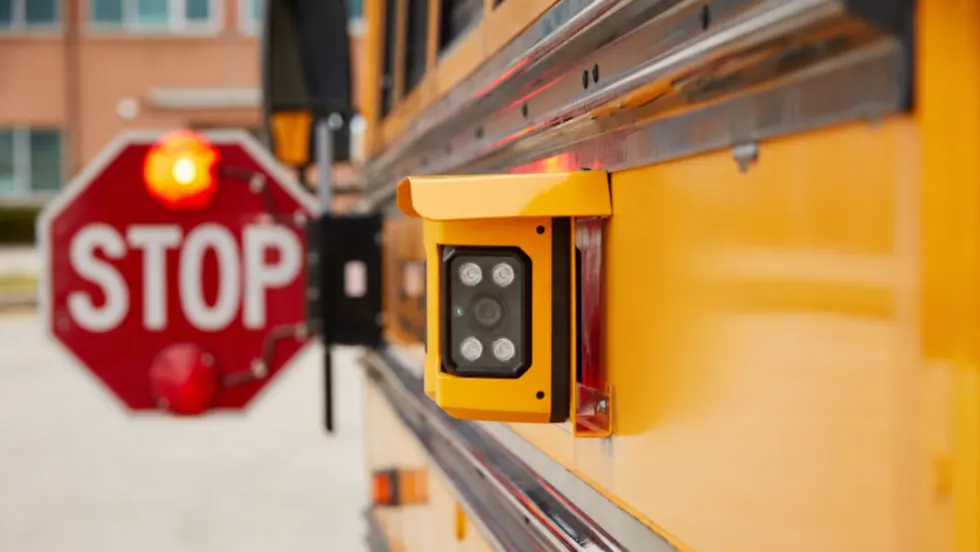
Walton County Schools Adds Gatekeeper Stop-Arm Enforcement System
The Florida district will deploy Gatekeeper’s updated Student Protector technology, which now incorporates AI to improve video evidence.
Read More →
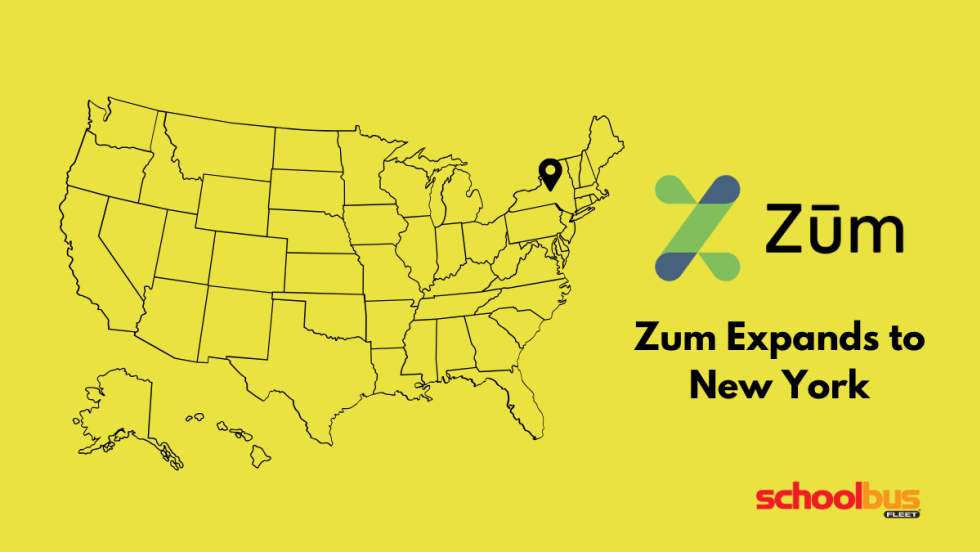
Zum Reaches 19 States With New York Expansion
The addition of the Empire State to the student transportation company's roster marks a growing expansion in the Northeast as it scales its tech and school bus services.
Read More →
First Student Updates Its Parent App
First View connects both yellow bus and alternative transportation, giving families one platform to track student trips for the new school year, with 15 languages supported.
Read More →
The Back-to-School Checklist Every Director Should Complete Before the First Bell
Help your transportation team start the school year strong with these tips for contingency planning, communication, fleet visibility, technology, and trip management.
Read More →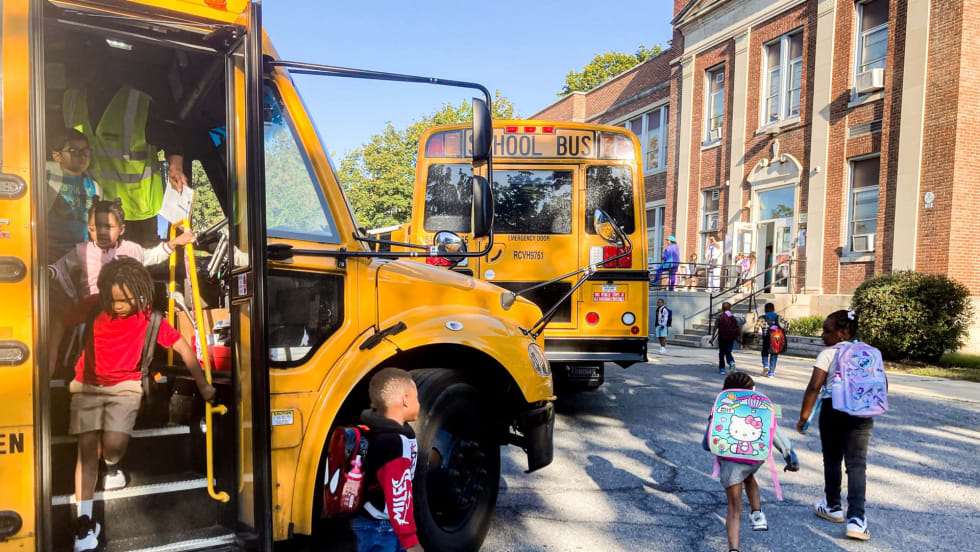
How a New York District Cut Nearly $1M in Transportation Costs While Expanding Bus Access
A data-driven overhaul with BusRight reduced Poughkeepsie City School District's planned routes from 26 to 17 while extending school bus service to about 1,200 additional students.
Read More →
Budgets Down, Enrollment Shifting: What the Data Says Districts Should Watch
School transportation departments face two converging challenges this year: tightening budgets and shifting enrollment. Most districts still address these issues separately, but the assumption that either trend will simplify operations is proving incorrect.
Read More →
These 8 School Transportation Companies Made the 2026 Inc. 5000 List
Find out which school transportation contractors, technology providers, and suppliers ranked among America’s fastest-growing private companies.
Read More →
The Link Between Emotional Intelligence and School Bus Safety
How can emotional intelligence help transportation pros navigate stress, manage change, and build stronger relationships? Listen to find out.
Read More →