




NAPT News & Views — The School Transportation Marketplace Is Changing, Quickly
With many districts expanding walking distances as a cost-savings measure, it’s time we come to grips with the reality that if no yellow bus is available, someone else will fill the void.
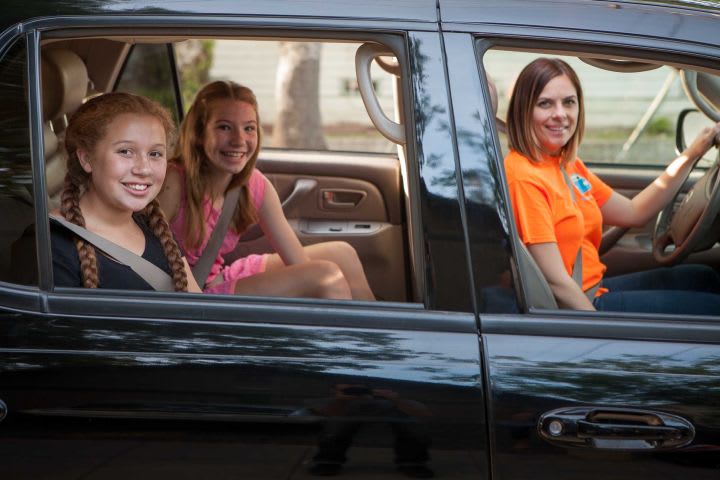
Photo courtesy HopSkipDrive
Photo courtesy HopSkipDrive
There’s a lot of creative, innovative thinking going on in the world, a sign of the fast-moving, technology-driven time we live in, which means most of us have to work harder than ever just to keep pace these days.
I discussed this in a previous article (see August 2015 issue, pg. 38), referring to societal trends that are potential “market disrupters” for us professionally, not to be dismissed, but anticipated and contemplated so we can have a role in shaping our future rather than reacting.
I specifically mentioned how the taxicab business was stunned by Uber and similar services that are redefining mobility in many cities, pointing out the direct potential impact to our industry. Chicago and Detroit, for example, have for at least a decade been using taxis to provide transportation for special-needs students.
Well, the story continues to unfold.
Research released recently by University of California Santa Barbara professor Michael Gottfried looked at U.S. Department of Education data from the 2010-11 school year and found that school bus ridership reduces chronic absenteeism by about 2%.
While this gap may seem small, the actual impact could be significant — it is estimated that some 5 million to 7.5 million children in grades K-12 miss a month or more of school every year.
The study should provide food for serious thought in school districts that are considering cutting or reducing bus service as a cost-savings step.
Given this overlay, it should come as no surprise that new thinking is coming to the fore for discussion. The July issue of Reason had an interesting article by Tyler Koteskey called “Uber, But for School Buses.” Koteskey poses the question, “Could ride-sharing become a widespread replacement for traditional modes of school transportation?”

Mike Martin is executive director of NAPT.
He cites Secretary of Education Betsy DeVos’ praise for Denver’s school district providing transportation to underserved students attending public and charter schools. Called “Success Express,” it transports students to schools outside their residential assignments, helping them have more choices in schools to attend.
The article cites an Urban Institute report that found that even in cities with the most educational choice (including Denver), there are gaps in transportation infrastructure that cause programs like Success Express to run into problems coordinating with education and transportation officials, and some school districts are reluctant to let their resources benefit schools of choice. Koteskey points to ride-sharing services as a possible solution for parents.
“Startups like HopSkipDrive in Los Angeles, Zum in San Francisco, and Zemcar in Boston already cater to busy parents who need someone to bring their kids to and from school and other activities,” Koteskey writes. “These companies put a premium on safety and trust, typically hiring drivers who have experience working with kids and subjecting them to extensive background checks.”
Stepping aside from the broader discussion of school choice, what about children who need transportation to their assigned public school but are outside the service area for a yellow school bus? These parents currently have no choice but to carpool, drive children themselves, or let their children walk or ride bicycles to school. I’d bet they would be very receptive to Uber and similar services.
And, with many districts expanding walking distances as a cost-savings measure, it’s time we come to grips with the reality that if no yellow bus is available, someone else will fill the void. Unfortunately, the reality is that we as school transportation leaders don’t usually have much, if any, control over these decisions. Yes, we can make the compelling safety and efficiency arguments. But funding is funding, and when there’s not enough to go around, then alternate solutions are going to arise — especially when it comes to access for school choice.
“The conversation no longer needs to be centered on cities fixing the problem from the top down by buying and operating more school buses,” Koteskey writes. “Why not give families the option to use a portion of their students’ individual education funding to take advantage of market-based transportation alternatives?”
This marketplace conversation should serve as a strong reminder that it is time to become better informed about the alternatives to traditional school transportation and get engaged in the conversation.
More Management

EverDriven Launches Route Consolidation Calculator to Estimate Diesel Savings
As diesel prices hit record highs, the largest alternative transportation provider says a 10% route consolidation could save a 120-route district more than $78,000 a year in fuel alone.
Read More →
Zum Secures Continued Financing Support for School Bus Expansion
Generate Private Credit has financed approximately $75 million in school bus deployments across three states, supporting more than 500 buses as Zum expands across the county.
Read More →
Beyond Discipline: A Different Approach to Student Behavior on the Bus
After implementing a dean of students program in Oregon, North Clackamas is seeing positive improvements. Here’s how it worked. The Route is brought to you by IC Bus.
Read More →
A Dean of Transportation's Different Approach to Student Behavior on the School Bus
After implementing a dean of students program in Oregon, North Clackamas is seeing positive improvements on the bus. Here’s how it worked.
Read More →
Inside NAPT ACTS 2026: Highlights from Louisville
From federal updates and student behavior strategies to new school bus technology and industry awards, see highlights from NAPT ACTS 2026 in Louisville.
Read More →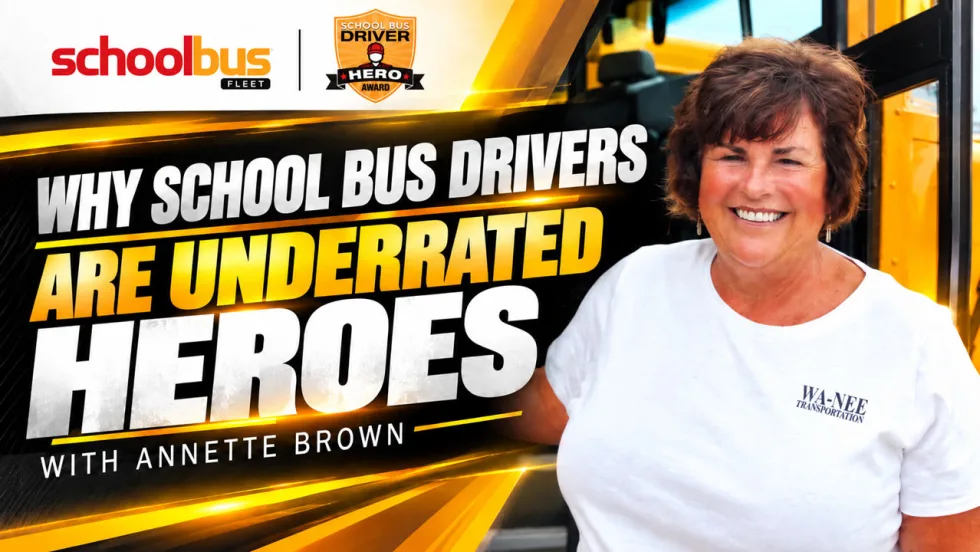
Meet the 2025 School Bus Driver Hero Winner: Annette Brown
We caught up with Wa-Nee Community Schools' Annette Brown on site at SBFX, where she was named the 2026 School Bus Driver Hero Award winner. Hear about her reaction, what she loves most about being a school bus driver, and more!
Read More →
Predictability Is Like Ketchup (According to 6-Year-Olds)
To students, a different school bus can feel like a full-blown crisis. One driver reflects on why familiar routines, showing up on time, and being reliably boring matter more than we think.
Read More →
Samsara Launches Free Driver Rewards Program
The new Driver Perks program gives eligible professional drivers access to discounts and offers without adding a cost for participating fleets.
Read More →
How Tax-Exempt Municipal Leases Can Help Finance School Buses
Let’s explore school bus financing options, including municipal leases, vendor payable accounts, and balloon payments, and how they can help stretch fleet budgets.
Read More →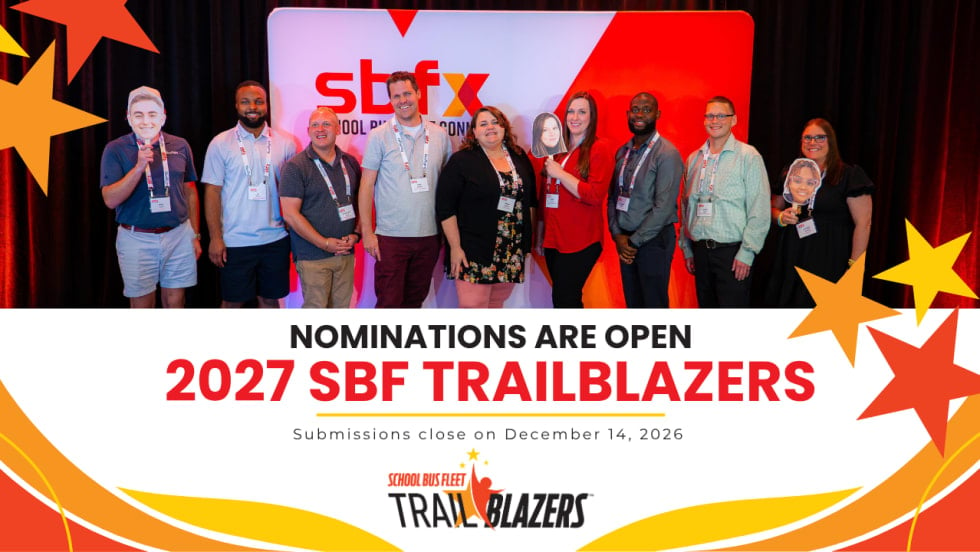
Nominate Rising School Transportation Pros Under 40!
We’re searching for the next generation of leaders making an impact across the K-12 student transportation industry to recognize as SBF’s 2027 Trailblazers. Nominations are open now!
Read More →