




NAPT News & Views — Safety Proposals Should Be Based on Sound Science
If FMCSA decides to include the “S” endorsement requirements in a new federal mandate for entry-level commercial drivers, NAPT asks that states already meeting or exceeding the proposed requirements be exempt.
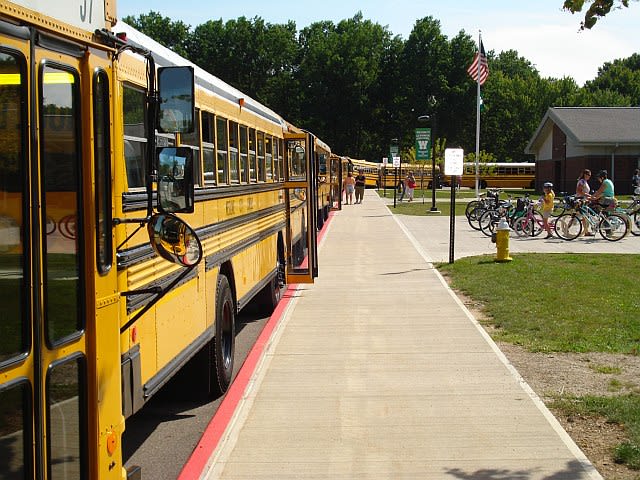
The Federal Motor Carrier Safety Administration and selected stakeholder groups recently finalized a negotiated rulemaking to shape a new federal mandate for entry-level commercial drivers. The school bus CDL “S” endorsement was not mentioned in the congressional requirement. Photo by Gavin Berwald
The Federal Motor Carrier Safety Administration and selected stakeholder groups recently finalized a negotiated rulemaking to shape a new federal mandate for entry-level commercial drivers. The school bus CDL “S” endorsement was not mentioned in the congressional requirement. Photo by Gavin Berwald
When a reporter called recently and asked me, “What are the biggest challenges facing your members right now?” my answer was, “Our biggest challenge is the shortage of qualified school bus drivers — and it has been among our top 3 or 4 biggest challenges for the last 20 years.”
As you might expect, the follow-up question was, “Why?” My answer to that was, “Well … .”
School bus drivers wear many hats. First and foremost, they are professional drivers. They operate a vehicle that is up to 40 feet long, 7 feet wide, and 12 feet tall, which for some unknown reason seems to make them invisible to a lot of other drivers. And by a lot, I mean like a million of them, every day, which seems unbelievable, right? But it’s true.
Cars that illegally pass a stopped school bus are a very real job hazard that school bus drivers handle magnificently, though it surely makes a difficult job even more difficult and stressful.
In addition to being exceptional drivers, school bus drivers also have a long list of “other duties as assigned.” Among them are:
• making sure that children are seated properly, that they do not bully one another, and that they are respectful of personal space;
• watching for — and dealing with — misbehavior;
• looking for suspicious conduct at bus stops and along routes; and
• ensuring the safety of children getting on and off buses, especially with the aforementioned epidemic of drivers who illegally pass stopped school buses.
And, the National Highway Traffic Safety Administration (NHTSA) now is urging states to equip school buses with lap-shoulder seat belts, creating an additional responsibility that would fall on drivers to ensure children are not just buckled up but buckled up correctly.
Suffice it to say, the job requirements are demanding too. A school bus driver must have a commercial driver’s license (CDL) that is more difficult to obtain and more expensive than a regular driver’s license. It requires them to be fingerprinted and subject to random drug and alcohol testing. They must be able to lift and carry at least 50 pounds, and a physician can sideline them at any time for physical and mental ailments.
Even with the many extra duties, school bus drivers have a record that is clear and compelling: According to NHTSA, school buses are the safest form of transportation in America. It should go without saying, though I will say it anyway, that school buses are the safest form of transportation in America — and have been for years — largely because of their drivers. They are the best in the transportation industry.
In order to be a school bus driver for very long, you have to be exceptional. It takes commitment, dedication, determination, and fortitude to be a good school bus driver. There are no one-hit wonders in this field of endeavor.
And therein lies the rub.
In spite of their excellence, school bus drivers are like Rodney Dangerfield: they “get no respect.”
For example, the Federal Motor Carrier Safety Administration (FMCSA) and selected stakeholder groups (including some representatives of our industry) recently finalized a “negotiated” rulemaking to shape a new federal mandate for entry-level commercial drivers, even though the school bus CDL “S” endorsement was not mentioned in the congressional requirement.
Ignoring the old dictum, “If it ain’t broke, don’t fix it,” FMCSA and the “stakeholders” opted to voluntarily include school bus drivers in the proposed requirement. Seriously, they said, “Although no empirical evidence linking safety to training was identified in this process, there remains a strongly held belief among stakeholders — including all who participated in the negotiated rulemaking — and the Agency that safety-oriented training does improve safety outcomes.”
“Managers must divide scarce resources into managing more and more regulations even though not all regulations actually reduce risk. Risk is always present, but regulations, particularly those that are unnecessary, force managers to make unwise trade-offs.”Dr. Richard Williams and Patrick McLaughlin
Mercatus Center, George Mason University
You should also know that FMCSA admits, “The lack of data directly linking training to improvements in safety outcomes, such as reduced crash frequency or severity, posed a challenge to the Agency.”
As justification for including school bus drivers, FMCSA theorized about the potential “devastating consequences” of a school bus crash (alluding that “unsafe” training could be the reason).
Do school bus drivers sometimes make bad decisions that result in accidents and even tragedies? Of course, and this is true in all human enterprises. Fortunately, such incidents are exceedingly rare. School districts work diligently every day to keep their safety edge sharp.
Which is why many school bus operations, if not most, already involve training as an operational fundamental. Even if FMCSA decides to include the “S” endorsement requirements in the Final Rule, we believe — and asked — that states already meeting or exceeding the proposed requirements should be exempt.

Mike Martin is executive director of NAPT.
Some may think “strongly held beliefs” is sufficient justification for another strand of red tape in the Code of Federal Regulations, now more than 81,000 pages long. NAPT does not.
Command and control mandates from Washington, D.C., should not replace local control of an enterprise that is different from other commercial driving and has an exemplary safety record.
According to Dr. Richard Williams and Patrick McLaughlin at the Mercatus Center at George Mason University, “Some regulators dangerously assume that more rules translate to more safety. Managers must divide scarce resources into managing more and more regulations even though not all regulations actually reduce risk. Risk is always present, but regulations, particularly those that are unnecessary, force managers to make unwise trade-offs.”
This proposed regulatory mandate (along with NHTSA’s push to put seat belts on all new school buses) come at a time when there are serious budget challenges in many states, forcing reductions in educational spending and other resource compromises affecting school bus service. This reality is not mentioned in the regulatory proposal that predicts the cost to our industry of “only” $2 million a year.
A recent article in Governing magazine, “A Recession is Coming. Is Your State Ready?” pointed out, “There’s a lot that state governments should be doing now to prepare for the next downturn.”
Next downturn? Many states are struggling with existing fiscal circumstances. An additional burden that’s based on “beliefs” rather than empirical evidence strikes me as an easy one not to impose, and especially so if more tough times are on the horizon.
More Management
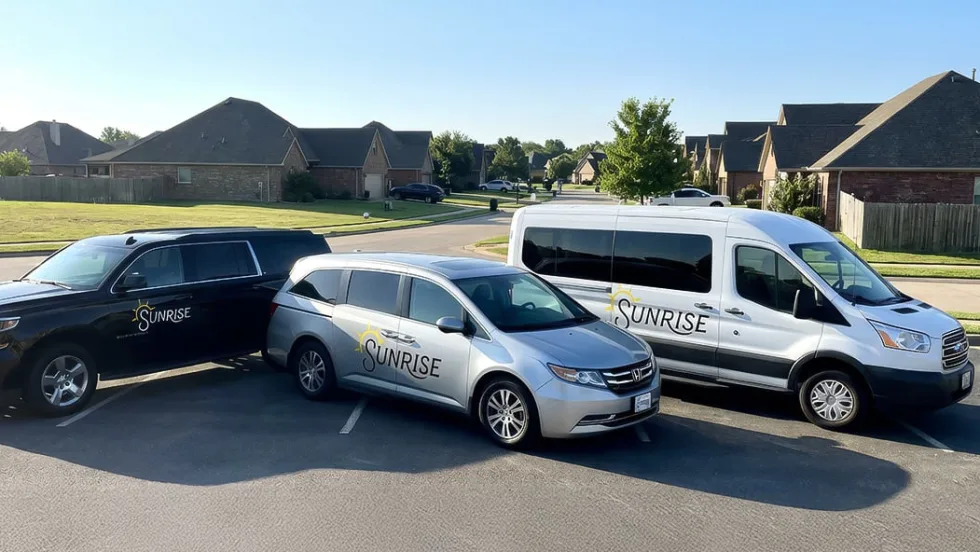
STA Acquires Sunrise Transportation
Student Transportation of America expands in Illinois and Connecticut through Sunrise's fleet of nearly 1,000 vehicles.
Read More →
EPA Opens $180M DERA Funding Round for Diesel Upgrades
The 2026 Diesel Emissions Reduction Act program seeks applications from eligible organizations to accelerate the retirement of legacy diesel vehicles.
Read More →
HopSkipDrive’s CareEngine Targets the ‘Exceptions’ in Student Transportation
The new platform works alongside districts’ existing transportation management systems to coordinate specialized rides, automate last-minute changes, and turn ride data into operational improvements.
Read More →


The Right Ride for Every Student: Navigating the New Student Transportation Ecosystem
How should districts blend school buses with small-vehicle transportation and other options? EverDriven CEO Mitch Bowling discusses safety, costs, partnerships, and strategy.
Read More →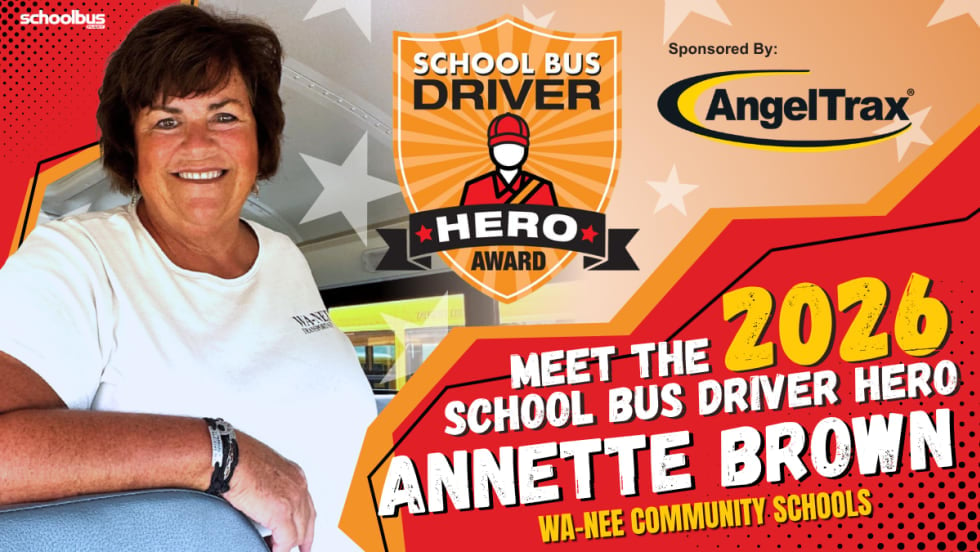
Annette Brown Always Takes the Extra Time: Meet Our 2026 School Bus Driver Hero
For more than 30 years, the Wa-Nee Community Schools driver has treated students like family, combining safety, compassion, and servant leadership to make a lasting difference on and beyond the school bus.
Read More →
How to Build a Better Driver Training Program
Ready to boost up your school bus instructor training? Here’s how to pick the right talent and improve recruitment, retention, and safety.
Read More →
CALSTART and Forth Combine to Form Catalyst Mobility
The new name represents a renewed vision for the nonprofit focused on advancing clean, equitable, and affordable transportation solutions that move people and goods.
Read More →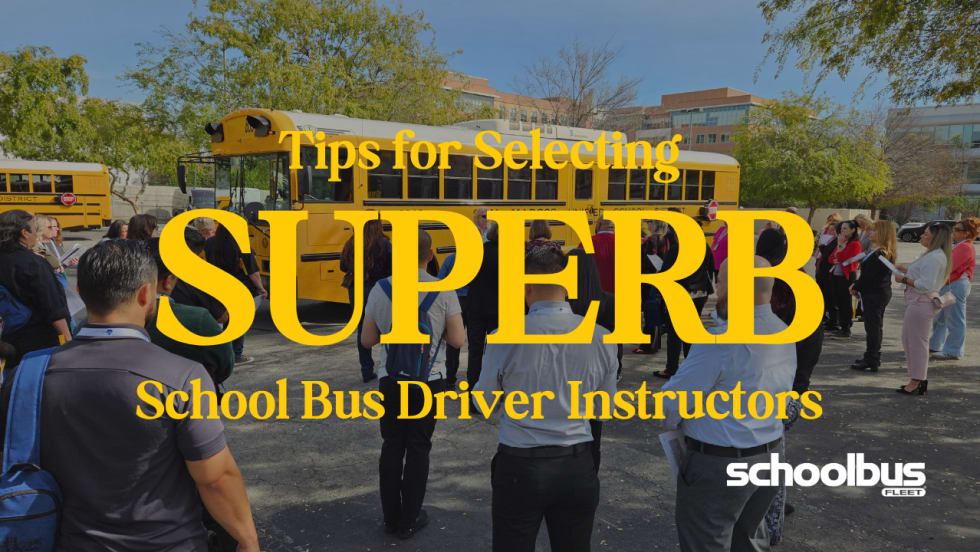
What Makes a Great School Bus Driver Trainer?
Choosing the right school bus driver trainer takes more than experience. Learn six keys to selecting and developing trainers and evaluating program effectiveness.
Read More →
School Bus Contractors Expand Through New Deals, Acquisitions & Partnerships
STA's Canadian division acquires Ontario-based G&L Stevenson Transport; Durham School Services adds a new district in California; First Student expands in New Jersey; and Minnesota Coaches rebrands and acquires Halo Transportation.
Read More →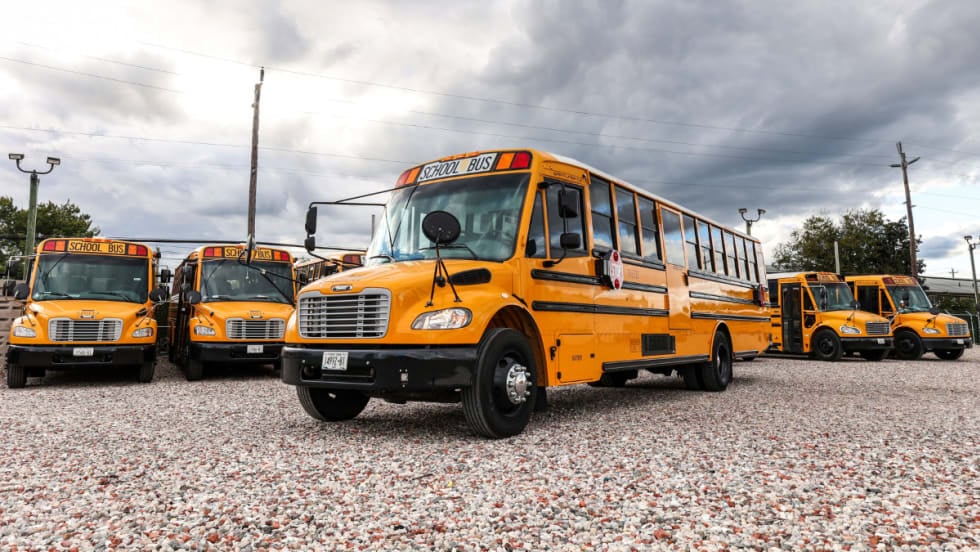
Logan Bus Company Rolls Out AI Phone System for NYC School Bus Families
A summer pilot found that AI agents could handle most routine calls, freeing up time for customer service staff to focus on emergencies and complex family concerns.
Read More →