




NAPT News & Views
Try to interest reporters in the hard news that affects our industry during the school year.
Back-to-school time is behind us — now let’s make some real news
You can tell when it’s time for kids to go back to school by virtue of the prominent displays in many stores, and hordes of parents and kids filling shopping carts with the school supplies they will need in the coming year.
The media also tends to focus on back-to-school stories this time of year. Reporters keep calendars of annual events to provide filler news, and the opening of schools invariably is one of them.
But most such stories tend to be very routine and predictable: shopping for school supplies, moms walking kids to the bus stop, etc. And that’s unfortunate, because there are important stories to be told at the time of year when the media and community are focused on another school year.
When I headed the communications operation at the National Highway Traffic Safety Administration (NHTSA), we were always pushing some sort of safety awareness week. To a certain degree, this is a necessary part of the federal effort to inform and influence. But how it’s done is important in the world of fast-paced media outlets slammed with breaking news almost every minute.
I often argued internally that “theme weeks,” by virtue of their annual repetition and nothing very new in content, were losing their appeal with reporters and the public alike with every passing year. By routinely fanning out canned informational materials, we were missing the opportunity to communicate more and better “hard” information on the topics at hand.
Just for background, reporters generally classify news as “hard” (breaking news of significance) and “soft” (stories that may be nice to do but not critical). Back to school and safety theme weeks fall into the latter category.
Privately, reporters will tell you they do soft stories because they have to do some of it but that what they really want are hard news stories about the conflicts and controversies that make the news headlines.
Reporters may be more captive during the back-to-school cycle, but you should be thinking about media opportunities all year. Try to interest reporters in the hard news that affects our industry during the school year. If they’re going to do some story, why not make it a story about something that’s important to you and your school district, rather than something they dredged up on their own that’s not?
Four hard news stories about pupil transportation come to mind that could be done either in print Q&A format or as radio or TV special segments:
Safety belts on school buses
What are the facts? This is a major issue now in many communities. Why not talk about the facts at a time when no child has been injured? Typically the only time belts are discussed is after a serious crash or when state legislators are considering bills to require belts. In these stories, emotions run high, and the facts seldom get told. Most focus solely on the costs of belts and don’t present factual information about potential benefits.
Story idea: Encourage reporters to get all the facts and do a feature story. They should interview experts rather than just those with an opinion.
Since 1977, school buses have had well-padded “compartmentalized” interiors intended to protect children. The safety record of this is impressive, so why not a story on how it works and the results after 30-plus years of experience?
Do reporters in your area know that despite requests from the school bus industry, the federal government (NHTSA) has not crash-tested school buses in the kinds of crashes that, while relatively rare, are most likely to injure a child to see if seat belts would provide benefits — and cause no unintended injuries?
Or do they know that there has been no situational testing to see if safety belt use in a school bus might delay evacuation in cases of fires and other emergency circumstances? Shouldn’t parents and legislators have this information to make sound decisions if a decision on this is in play?
[PAGEBREAK]Just say no to bullying
Bullying at school, on school buses and at school bus stops is a significant problem in many communities. (Actually, it’s a broader social problem that manifests itself at school settings.) But, like seat belts, it typically gets covered only when an incident happens and emotions are running high.
Instead, why not engage experts in the community to discuss steps that could be taken to minimize bullying in the first place? Why not start the school year with strong community resolve to not tolerate bullying?
Story idea: Reporters can feature the impact of bullying and how to prevent it by interviewing prominent local educators, law enforcement and a local child psychologist to give children the tools they need to deal with it if it happens, and parents information on behaviors they should look out for in their children. Bullying is a community problem that demands community solutions.
Bus passing won’t be tolerated
This is a problem in every community and arguably the largest risk to children riding on school buses. Many more children are injured and killed getting on and off buses than as passengers inside the bus.
Story idea: Drivers that get caught illegally passing a stopped school bus are like the tip of an iceberg. This is a huge problem for the school transportation industry — it happens millions of times every day — and very few people outside the industry even know about it.
How about a story on the variety of ways local law enforcement and local school transportation service providers can work together to solve this problem? Or, if your community doesn’t have a “safe stop” program, start one this year.
Can we really afford route cuts?
Let’s face it: The economy is in bad shape, and communities everywhere are making cuts to government programs. School bus routes are on the chopping block. Most stories talk only of the budget dollars involved, not the human impact.
There is a mostly untold story about the effect this has on education. The school bus is vital for learning to occur because it ensures that children are delivered to school predictably, and it provides parents with unprecedented convenience.
Story idea: Reporters can interview a parent who no longer has school bus transportation available. Focus on how elimination of a school bus route affects not just children but their parents. Convey how the absence of a school bus impacts traffic congestion in the community. Point out the safety benefits of a school bus versus parents driving children to school, or even children walking and bicycling.
Ask employers if they have adopted policies so parents can come in later and leave earlier because they need to drive their children to and from school. Ask local police about the impact of additional traffic with more parents on the roads driving children during busy times of the day. These and more impacts seldom get discussed when budgets need to be slashed.
In summary, there are plenty of “hard” news stories to tell about pupil transportation. Some of the suggested topics above may fit in your community and some may not, but there are many other possible stories and story angles to explore.
Barry McCahill is communications consultant for NAPT.
More Management
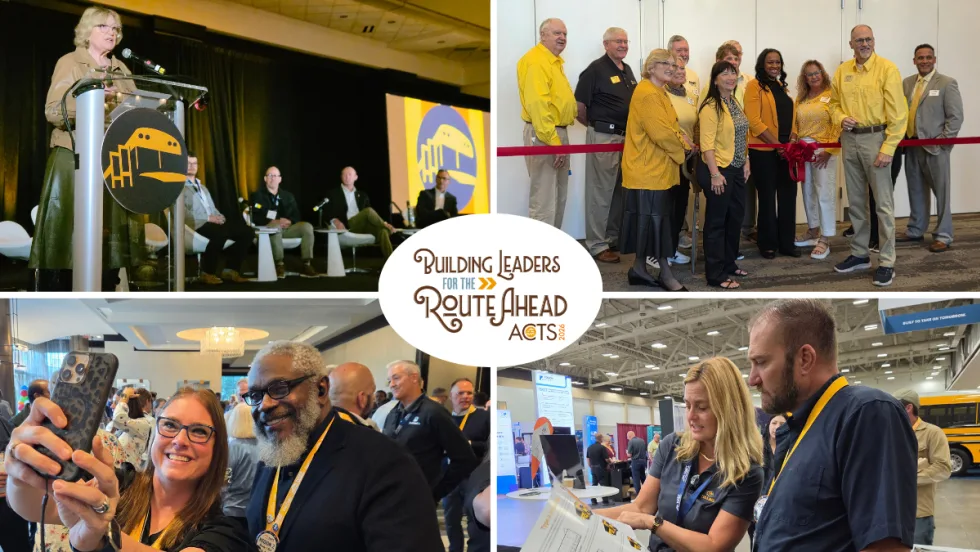
Inside NAPT ACTS 2026: Highlights from Louisville
From federal updates and student behavior strategies to new school bus technology and industry awards, see highlights from NAPT ACTS 2026 in Louisville.
Read More →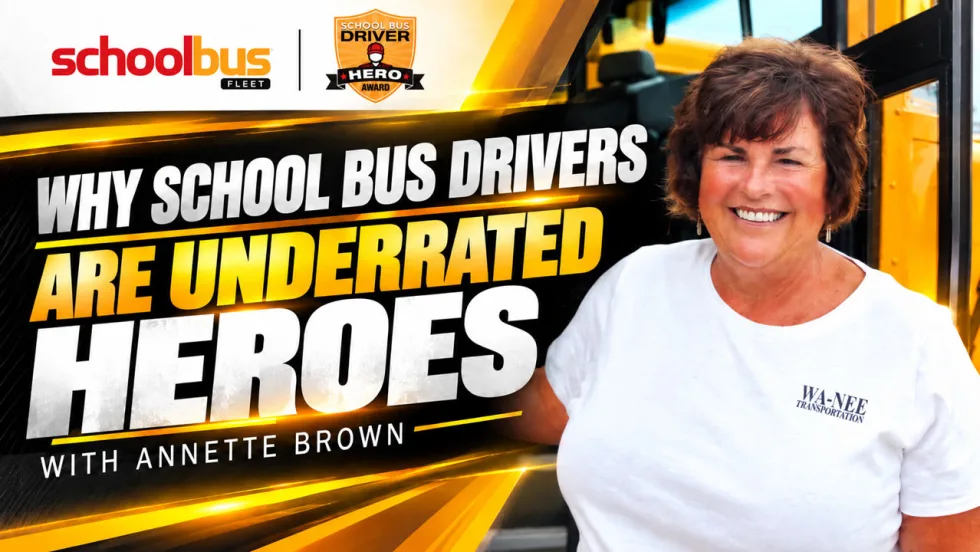
Meet the 2025 School Bus Driver Hero Winner: Annette Brown
We caught up with Wa-Nee Community Schools' Annette Brown on site at SBFX, where she was named the 2026 School Bus Driver Hero Award winner. Hear about her reaction, what she loves most about being a school bus driver, and more!
Read More →
Predictability Is Like Ketchup (According to 6-Year-Olds)
To students, a different school bus can feel like a full-blown crisis. One driver reflects on why familiar routines, showing up on time, and being reliably boring matter more than we think.
Read More →

Samsara Launches Free Driver Rewards Program
The new Driver Perks program gives eligible professional drivers access to discounts and offers without adding a cost for participating fleets.
Read More →
How Tax-Exempt Municipal Leases Can Help Finance School Buses
Let’s explore school bus financing options, including municipal leases, vendor payable accounts, and balloon payments, and how they can help stretch fleet budgets.
Read More →
Nominate Rising School Transportation Pros Under 40!
We’re searching for the next generation of leaders making an impact across the K-12 student transportation industry to recognize as SBF’s 2027 Trailblazers. Nominations are open now!
Read More →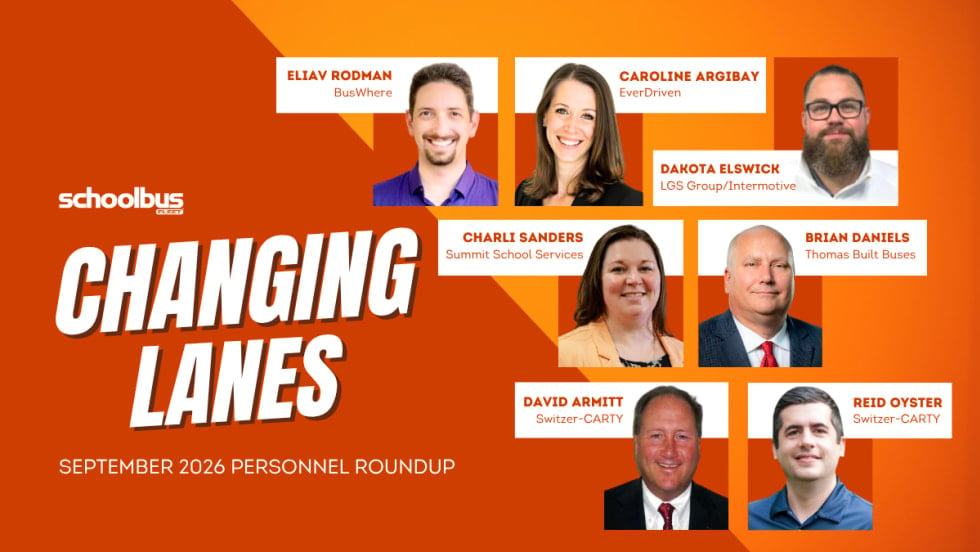
Changing Lanes: BusWhere, EverDriven, InterMotive, Summit School Services, Switzer-Carty & Thomas Built Buses
Check out who's been hired, promoted, and appointed to leadership positions at various school transportation suppliers, contractors, and manufacturers.
Read More →
The Most Expensive Thing You Do Before Selling a School Bus: Wait
When should you sell an aging school bus? Learn how maintenance, mileage, corrosion, specifications, and timing can affect resale value long before the auction.
Read More →
American Student Transportation Partners Acquires AJ Myers and Sons
A new deal brings a 75-year Pennsylvania student transportation provider into one of the nation’s largest private school bus contracting groups.
Read More →
What I Brought Home From SBFX: Relationships, Leadership, and Preparing What's Next
Who could lead your transportation operation tomorrow if you couldn't? Bernando Brown explores succession planning, mentorship, and preparing emerging leaders to step up.
Read More →