




NAPT News & Views
We were all shocked on Nov. 20, 2006, when a school bus plowed off an interstate overpass in Huntsville, Ala., and plunged head first into the pavement below from more than 35 feet in the air.


NAPT President Lenny Bernstein says that one of the biggest advantages of the association's annual conference is the opportunity for face-to-face networking.
An open letter to advocates for improved school bus safety
The following letter was written by NAPT Executive Director Mike Martin on behalf of the association’s board of directors.
We were all shocked on Nov. 20, 2006, when a school bus plowed off an interstate overpass in Huntsville, Ala., and plunged head first into the pavement below from more than 35 feet in the air.
We all were — and still are — grief-stricken by the fact that four young women died in this horrific crash and many others were seriously injured.
Almost instantly, major media outlets began reporting that the school bus did not have seat belts, seizing the chance to stoke smoldering embers surrounding a controversial topic that has been the subject of public debate for nearly 40 years. These transparent attempts to encourage people to deduce that seat belts would have saved lives in the Huntsville crash were, in our view, appalling. No one could have known for sure that day if seat belts would have prevented anyone from dying in that crash.
This letter, therefore, is not addressed to people who can be easily persuaded, especially by the media. It is intended for anyone and everyone who is genuinely interested in making and keeping children as safe as possible in a school bus.
Many of you believe to your core that children are always safer when they wear seat belts, whether it is in a car, a plane or a school bus. Although you embrace hard data when it is available, you do not necessarily need hard data to support your belief on this issue; you know it in your bones. Your commitment to child passenger safety in this respect is not only honorable — it is admirable, and we respect you for it.
Yet while we respect the intensity of your passion, we assure you that ours is equally steadfast. Perhaps, then, we should consider using our collective willpower to move a mountain. Together. The paragraphs that follow explain how.
The National Highway Traffic Safety Administration (NHTSA), a branch of the U.S. Department of Transportation that is responsible for reducing deaths, injuries and economic losses resulting from motor vehicle crashes, is the federal regulatory body that NAPT and the vast majority of its membership look to for clear guidance and definitive recommendations on school bus safety issues in general and passenger crash protection in particular.
NHTSA and an overwhelming majority of vehicle safety experts consider a yellow school bus the safest form of ground transportation in America — even without seat belts. These same experts also acknowledge that this is due in large part to the current passenger crash protection system integrated in the design of every school bus built since 1977, called “compartmentalization,” as well as other federal motor vehicle safety standards (FMVSS) that apply to school bus design and construction.
In April 2002, NHTSA completed an extensive evaluation of school bus passenger crash protection and sent a report on its work to Congress. We, like you, were expecting them to settle the issue of whether or not lap/shoulder belts should be integrated into the passenger crash protection system of school buses. We, like you, were disappointed that we didn’t get a definitive answer. Whether NHTSA was unable or unwilling to settle the matter is, at this point, irrelevant; the outcome is the same in either case — everyone who wanted and needed a clear answer from NHTSA is currently frustrated and perplexed.
As a consequence of NHTSA’s research and reporting, we believe modifications to the current system of school bus passenger crash protection should only occur when we can be sure beyond a reasonable doubt that those modifications will improve the safety of each and every child in a school bus. In other words, we will only support changes to compartmentalization when we are sure that those changes will not compromise student safety.
We fully understand the national resolve to increase belt use in traditional passenger vehicles, and the common opinion that, “If my car has seat belts, so should my child’s school bus.” It is one of the reasons that calls for seat belts in school buses make headlines after every serious crash. In these situations, we wish NHTSA would, at the very least, remind parents and the news media that school buses and the family car are very different vehicles from a crashworthiness perspective and, therefore, do not necessarily utilize the same safety strategies. But they don’t, so we do it, even when it’s not the popular thing to do.
In order to help everyone interested in and affected by the seat-belts-on-school-buses debate, we have called upon NHTSA to re-evaluate, on a priority basis, FMVSS 222, “School Bus Passenger Seating and Crash Protection,” with the goal of establishing a safety system that will definitively enhance the current passenger crash protection for all children who ride a school bus. Moreover, we have also called upon NHTSA to make an active effort to educate the American public about the importance of safe school bus transportation as a logical way to reduce deaths, injuries and economic losses resulting from motor vehicle crashes. We have also called upon Congress to provide, if necessary and in the most expeditious timeframe possible, a mandate and complete funding for this work as well as any necessary changes substantiated by the research.
We invite you to join us in this effort. We, like you, believe it is vitally important to constantly reassess existing safety measures no matter how safe our children currently are on school buses. It has been 30 years since the initiation of compartmentalization, and over that time, there certainly have been advances in materials and information from crash investigations that would merit consideration of an upgrade.
Although we have differences of opinion, on the bottom line, we want what you want: safer school bus transportation. We believe we can work together to ensure that students riding in a school bus are as safe as humanly possible and to ensure that the public is better informed about school bus safety issues generally. We hope you agree.
After all, our children ride the school bus with your children, and we want them all to be as safe as possible.
More Safety

Doing More With Less: How Transportation Directors Can Prioritize Safety Amid Budget Uncertainty
With diesel prices soaring and nearly one-third of transportation directors expecting budget cuts, maintaining student safety has never been more challenging. Download this guide to learn how leading districts are prioritizing risk, funding critical safety technology, and building stronger budget cases with data.
Read More →
How To Build a More Secure School Bus Yard During and After Hours
As thefts and overnight security threats continue, school transportation leaders are combining stronger operational practices with AI-enabled surveillance to better protect buses, facilities, and staff.
Read More →
FMCSA Names New Chief Safety Officer: What School Bus Operators Should Know
Steve Dowling is set to lead the federal agency's efforts to advance commercial motor vehicle safety and reduce crashes, fatalities, and injuries on the nation's roadways.
Read More →
New Study Finds School Zone Speed Safety Cameras Cut Speeding Violations 97%
A Florida university's research demonstrates that Verra Mobility's automated enforcement changes driver behavior and significantly improves school zone safety.
Read More →
What Changed in DOT’s New National Roadway Safety Strategy?
The federal agency's new plan shifts its focus to safer people, roads and vehicles, with a new three-pronged approach instead of five. One outlined action even addresses a key industry concern around illegal school bus passing.
Read More →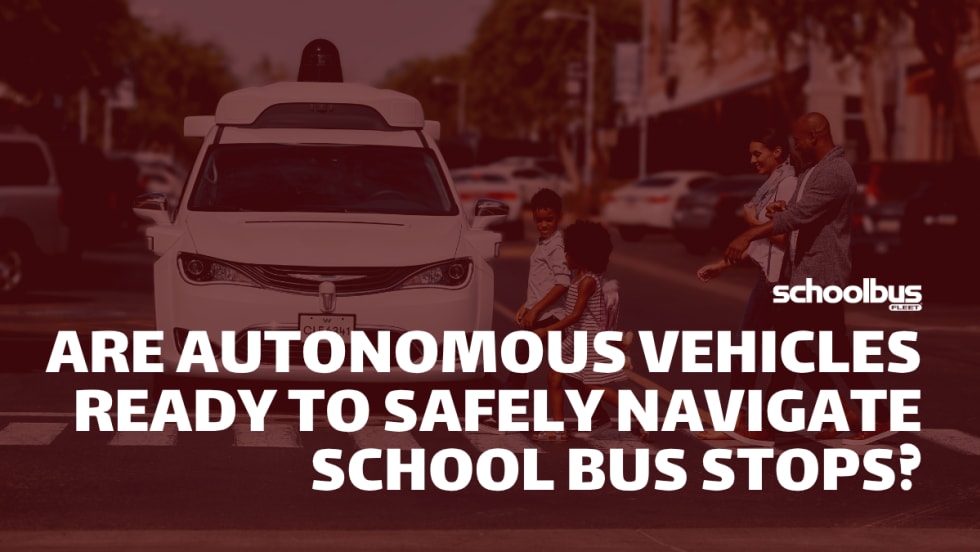
Are Autonomous Vehicles Ready to Safely Navigate School Bus Stops?
NHTSA is accelerating autonomous vehicle deployment through new safety standards and commercial approvals. See why school transportation leaders are watching.
Read More →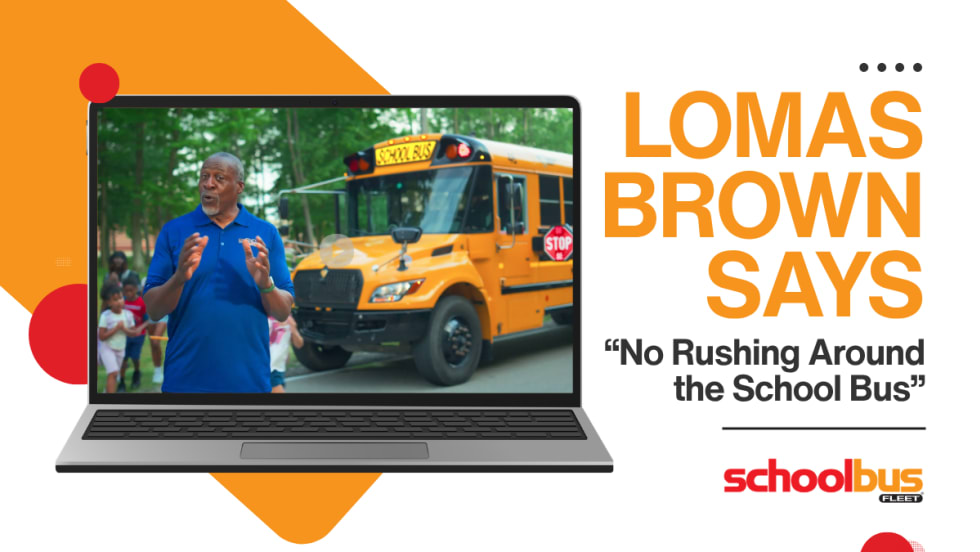
NFL Star Lomas Brown Kicks Off New Illegal School Bus Passing PSA
Just in time for the back-to-school season, the former Detroit Lions offensive tackle took time to record a video encouraging motorists to slow down around school buses.
Read More →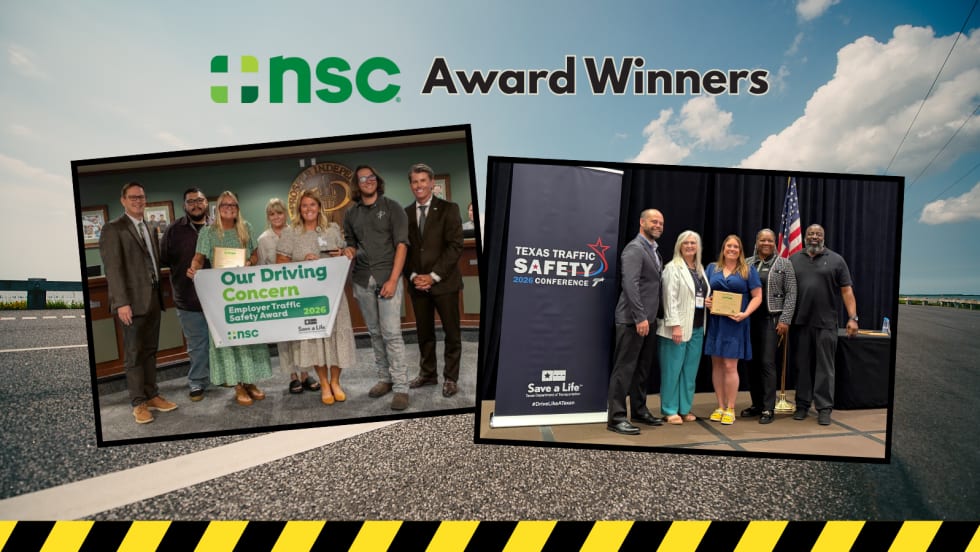
How Two Texas Districts Built Award-Winning Safety Programs
Learn how Prosper ISD and Rockwall ISD earned National Safety Council honors through hands-on training, safety culture, and strategies that reduced transportation incidents.
Read More →
NHTSA Releases 10-Year Review of Fatal School Bus Crashes
The latest federal analysis reinforces the safety of school buses while identifying where school-age pedestrians and other motorists remain most at risk.
Read More →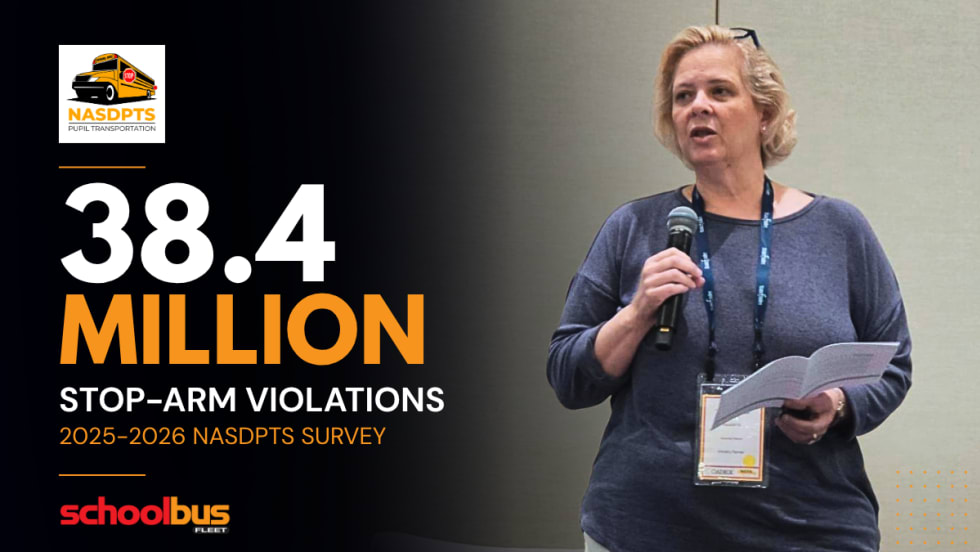
2026 NASDPTS Survey: Data Shows Further Reduction of Illegal Passing
New data is in! School bus stop-arm passings are down to 38.4 million violations per year, about a 2.3% decrease from last school year — but passings on the right side of the bus are higher than ever.
Read More →