




NAPT News & Views
It's all about the numbers...or is it? Numbers. They are everywhere in our lives. They may not always dictate what we do, necessarily, but...
It's all about the numbers...or is it?
Numbers. They are everywhere in our lives. They may not always dictate what we do, necessarily, but their impact is undeniably significant.
For example, we can’t help but notice the cost of a gallon of gas — $3.29 per gallon here in New York — as we fill our car on the way to work. As a result, we closely monitor our vehicle miles per gallon as we drive down the road, wondering if we should make the jump to an alternative fuel or even a hybrid vehicle. At the same time we are thinking about these options, we are also wondering how we will manage the increased cost of fuel in the future, because the options are not cheaper — at least not yet.
In the pupil transportation field, there are a variety of numbers at every turn. There are students to count and track, buses to route and schedule, drivers to recruit, hire and train, budget restraints to abide by…an endless array of combinations. NAPT is no different.
After the NAPT annual conference each year, we analyze a wide variety of numbers in depth. Where did people come from and how did they travel? Were there empty seats at any general session or uneaten meals at a banquet? If so, how many more or less than last year? Who took professional development classes, and in what classes did they enroll? What was the approval rating of the speakers we selected? The answers to these questions can assist in the planning for next year as we strive to improve the experience for learning, networking and fun.
Collecting and evaluating all of the numbers can be a nuisance, to be sure. But we must work with them because they help us establish standards, benchmarks, or as they say in today’s lexicon, the “metrics” we use to justify our decisions. These figures are valuable, because they help us measure what we do. They aid in our ability to assess how well we do. Their interconnectedness is important, and our ability to interpret and manage them is vital to our success. But the quantitative measure is only one part of the equation.
The numbers, while vital, only tell us where to start if we want to improve. For example, our conference this year had its largest attendance since Sept. 11, 2001. Why? Was it due to the increased media attention on many issues relating to the school bus industry? Was it an issue in particular, such as passenger crash protection? Or the focus on possible terrorist connections to school bus thefts? Could it be heightened interest in greener technologies as hybrid buses have made their appearance along with ULSD fuels, due to EPA emission regulations? It may be all of that and then some. Time will tell as we look further at the numbers.
The reality is that the things we do to improve our work are really no different than the things our members do on a regular basis. If there is a driver shortage, for example, you have to know why it exists before you can remedy it. If you want to retain your drivers, how do you go about that? How does a district attract dedicated individuals who will enjoy what they do, remain on the job, treat others with dignity and respect, and conduct themselves in a professional manner? How do you measure that? The numbers won’t tell you where the flaws might be or where the solution can be found. But they are certainly a good place to start.
I encourage all of you to focus not only on the numbers but also, more importantly, on what you do with them. In my profession — marketing — they say you establish a brand with 1,000 tiny gestures. The thought reinforces the importance of focusing on what is most important and following through with that in everything you do. Each time.
For example, people are surprised to know that we read each and every evaluation form we receive about our conference. Afterwards, we discuss them as a staff, oftentimes following up with a phone call or e-mail to the person who offered the opinion or information. Why? Because we want to ensure that we are creating value for our members.
Regardless of whether you quantify all of the feedback you receive on a daily basis, in the final analysis, the numbers themselves do not matter as much as what you do with them.
More Management

Industry Moves: Companies Expand Fleet Service & EV Infrastructure Footprints
The new facilities and regional hubs could mean faster access to shop equipment, charging support, and transportation technology for fleet operators.
Read More →
Doing More With Less: How Transportation Directors Can Prioritize Safety Amid Budget Uncertainty
With diesel prices soaring and nearly one-third of transportation directors expecting budget cuts, maintaining student safety has never been more challenging. Download this guide to learn how leading districts are prioritizing risk, funding critical safety technology, and building stronger budget cases with data.
Read More →
Walton County Schools Adds Gatekeeper Stop-Arm Enforcement System
The Florida district will deploy Gatekeeper’s updated Student Protector technology, which now incorporates AI to improve video evidence.
Read More →

Zum Reaches 19 States With New York Expansion
The addition of the Empire State to the student transportation company's roster marks a growing expansion in the Northeast as it scales its tech and school bus services.
Read More →
First Student Updates Its Parent App
First View connects both yellow bus and alternative transportation, giving families one platform to track student trips for the new school year, with 15 languages supported.
Read More →
The Back-to-School Checklist Every Director Should Complete Before the First Bell
Help your transportation team start the school year strong with these tips for contingency planning, communication, fleet visibility, technology, and trip management.
Read More →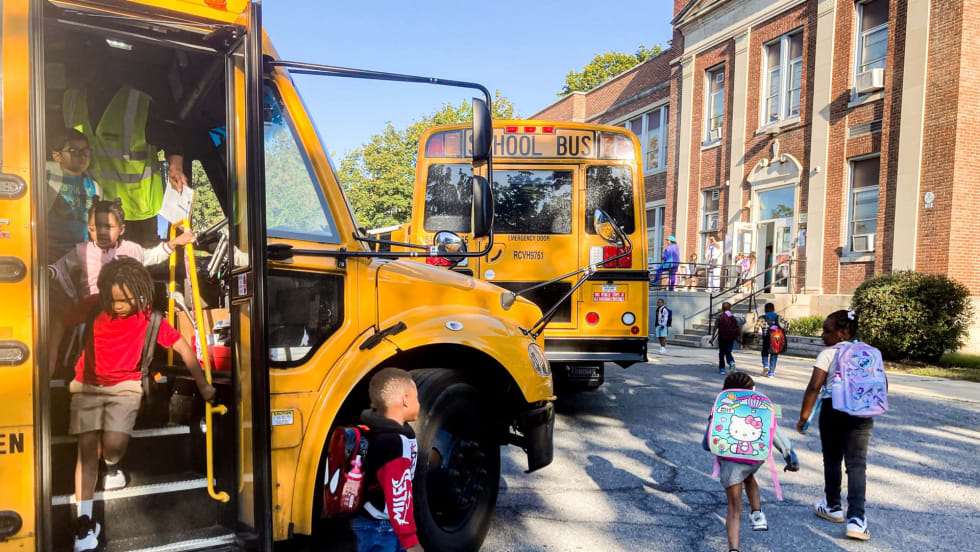
How a New York District Cut Nearly $1M in Transportation Costs While Expanding Bus Access
A data-driven overhaul with BusRight reduced Poughkeepsie City School District's planned routes from 26 to 17 while extending school bus service to about 1,200 additional students.
Read More →
Budgets Down, Enrollment Shifting: What the Data Says Districts Should Watch
School transportation departments face two converging challenges this year: tightening budgets and shifting enrollment. Most districts still address these issues separately, but the assumption that either trend will simplify operations is proving incorrect.
Read More →
These 8 School Transportation Companies Made the 2026 Inc. 5000 List
Find out which school transportation contractors, technology providers, and suppliers ranked among America’s fastest-growing private companies.
Read More →
The Link Between Emotional Intelligence and School Bus Safety
How can emotional intelligence help transportation pros navigate stress, manage change, and build stronger relationships? Listen to find out.
Read More →