



NAPT Fuels Up in Austin
Pupil transportation professionals convene to fill up on solutions for key challenges in safety, special needs and — most evidently — fuel concerns.

During a week when many of Austin’s weirdest donned shocking Halloween costumes in which to roam the streets, the school bus industry took on even scarier fare.
At the National Association for Pupil Transportation’s 31st Annual Conference and Trade Show — held Oct. 29 through Nov. 3 in the Texas capital — workshops covered a wide range of topics. But frightening fuel prices was the standout, as speakers offered tips for reducing diesel consumption, including alternative methods of powering buses.
One session conjured chilling scenarios involving safety and liability threats in special-needs transportation. And then there was the case of the “alien” wheelchairs ...
Fuel supply interruptions
The blockbuster workshop titled “Pain at the Pump” quickly filled to capacity with interested conference attendees concerned about the escalating cost of fuel.
The workshop, facilitated by James “Red” Roberts of United Energy Distributors Inc. and Donald Tudor and Marshall Casey of the South Carolina Department of Education, aimed to demystify the hierarchy of fuel supply — who gets gas first during a supply crunch and why. The facilitators also discussed how natural disasters disrupt the supply chain and what a pupil transportation operation can do to ensure that it has fuel when needed.
Some conference goers were surprised to learn of the many incidences that can occur at any given time and disrupt the normal operations of a pipeline.
Power outages, unplanned downtime at refineries and construction accidents can shut down a pipeline for several weeks at a time, Roberts said. Historically, natural disasters such as flooding and hurricanes have caused considerable damage to pipelines. “Flooding has been a greater issue to refineries than the high winds of hurricanes,” he added.
Political unrest in countries such as Venezuela, which supplies the United States with 9 to 10 percent of its oil, can also contribute to a major disruption. In fact, Roberts pointed out that strained relations with the South American country can have more of an impact on the importing of oil to the United States than the interference caused by the war with Iraq. Moreover, competition from foreign demand growth, especially with a large energy consumer like China, creates a crabs-in-a-barrel effect with energy products.
“As long as we’re dependent on the Middle East, we will have that ill feeling in our stomachs that we’re not doing enough at home,” said Roberts.
Hurricanes Katrina and Rita shut off nearly 6 million barrels of oil per day of the Gulf Coast’s capacity, about 37 percent of the U.S. capacity. “Natural disasters exacerbated already tight markets in oil, petroleum products and natural gas,” Roberts said. Many U.S. refineries damaged by the storms were not expected to return to normal operations until early next year.
Who’s on first?
The most arresting part of the session set off low grumbles from attendees. It pertained to the allocation of oil domestically during crises such as the recent natural disasters and the war in Iraq.
According to Roberts, major oil companies take counts daily during situations like those named above and determine who should get fuel first. Allocations are based on the company’s own assessments and situations, and of course they impact customers.
Branded customers and locations get gas first, said Roberts, while unbranded customers such as industrial and commercial businesses are cut off. Contracted customers such as major airlines receive second priority.
Next in line are emergency responders and essential or governmental services. Finally, after the big guys have quenched their mighty thirsts, transportation operations can get their share.
What you can do
After stunning attendees with the facts on fuel matters, Roberts offered a few suggestions on what can be done to assure that an operation has fuel during an unforeseen or unseasonable crunch. One suggestion was to make sure that suppliers have multiple options for supplying an operation with fuel.
Fixed-price contracts are another option, Roberts suggested, but with a caveat.
“Consider fixed-price contracts only when you can do it comfortably,” he said. “Never lock in a price under a panic.”
Roberts suggested also that transportation coordinators get to know their suppliers and consider alternative fuels such as biodiesel and E85. Bulk storage was recommended as well.
Roberts ended the session with a list of options to help minimize the impact of a choked fuel-supply situation. Operations should:
Plan for a higher price environment.
Evaluate fixed-price and hedging opportunities.
Lobby for elimination of “boutique fuels.”
Buy/run more fuel-efficient vehicles.
Consolidate pick-up points.
Seek exemptions from state and federal fuel taxes (15 to 18 percent of the cost of fuel).
Hope for lower crude prices and warmer weather.
Hybrid-electric emergence
Among the discussions of fuel matters was a workshop on the potential for hybrid-electric school buses. Ewan Pritchard of the nonprofit group Advanced Energy explained the efforts that are underway to make this type of vehicle a reality.Advanced Energy has been working with representatives of the pupil transportation industry on a four-phase project spanning a 10-year period (2003 to 2013). The goal of the Hybrid Electric School Bus project is to encourage the use of plug-in hybrid electric technology in school buses.
Hybrid-electric technology in school buses would use an electric motor and an onboard battery in conjunction with the diesel engine, and a plug-in system would enable recharging of batteries through an electrical grid.
The first phase of the project has consisted of a study to determine the feasibility — technically and financially — of hybrid-electric school buses.
The next phase focuses on testing pre-production vehicles. The group hopes to work with one of the major school bus manufacturers to design the vehicle. A buyers consortium, which includes pupil transportation operations from across the country, plans to purchase about 20 of the hybrid-electric school buses to put in use and test.
Pritchard said the cost is expected to be around $200,000 per bus for the pilot project. However, if the buses were to become widely available on the market, the estimated cost would be about $80,000.
While initial costs for hybrid-electric school buses would be higher, Pritchard said that the vehicles would use less fuel and reduce engine maintenance. One of the biggest benefits of using hybrid-electric technology would be the significant reduction in emissions.
Attendees in the workshop showed a great deal of interest in the topic. One transportation official, expressing the detriment that high fuel costs have caused his district, said of the hybrid-electric project, “We’re ready to get this rolling. Our superintendents are breathing down our necks.”
Ventures in biodiesel
Also factoring into the fuel coverage was biodiesel. Mike Clark, director of transportation at Monroe County Community School Corp. in Bloomington, Ind., talked about his operation’s implementation of biodiesel.In the fall of 2003, the district began a B20 (20 percent biodiesel, 80 percent petroleum diesel) pilot program, which Clark said he “reluctantly agreed to.” Worried about the fuel’s effect on his buses’ operation, especially in cold weather, Clark chose older buses for the program.
Despite his concerns, Clark said the buses running on biodiesel had no trouble during the winter — even in below-zero temperatures. In the summer of 2004, Clark added about 30 more buses to the project.
The results were so positive — less diesel use, reduced emissions, etc. — that by that fall, all 110 district-owned school buses had been switched over to B20 use.
[PAGEBREAK]
Clark named other benefits of bio-diesel that result from it burning cleaner, such as longer oil-change intervals, cleaner fuel filters and a cleaner garage. Additionally, he said biodiesel use avoids the haze that had been created each morning when the buses were turned on.
“I’m sure the people in the nursing home across the street appreciate that,” Clark said.
The project appears to have been a complete success, as Clark said his operation has found no problems that can be attributed to use of biodiesel. To avoid problems with freezing, the operation asks that its B20 be delivered to meet certain CFPPs during winter months.
“We begin to take our fuel down in 10-degree increments starting in mid-October,” Clark said. “We try to have it at -20 by winter break.”
Tracking technology
With the increasing availability and use of transportation technologies such as GPS, automated vehicle location and onboard student tracking, bus operators at school districts and contractor companies should have a methodology to determine their needs, test product offerings and evaluate vendors.Grant Reppert, transportation director at Gwinnett County Public Schools in Lawrenceville, Ga., addressed this issue in a presentation called “Emerging Trends in Technology.”
The needs assessment, Reppert said, is the critical first step. It begins with the following questions: Do I need it now? Would I like to have it? Who cares? “The key is determining if it’s the right fit for your needs,” he said.
As an example, Reppert discussed the possible implementation of automated vehicle and student tracking. The needs assessment would consider the following areas: functional requirement, reason/goal, rationale and possible affected areas.
Under this scenario, a functional requirement might be “ability to alert the driver if the student gets on the wrong bus or gets off at the wrong stop or unassigned stop.” The reason/goal would be safety; the rationale would be to prevent lost students; and the affected area would be operations.
This assessment would need to be made for each functional requirement, which might number more than two dozen. Each requirement would also be subjected to the three questions mentioned earlier.
Once a product need is identified and rationalized, it then requires evaluation and testing. Some of the questions that need to be answered: Can the product satisfy initial functional requirements? Can it satisfy future phase requirements? Will it perform as advertised? Will it work on different bus types in the fleet? Is it compliant with school standards?
The final step is the evaluation of the vendors. Assuming that each vendor offers a product that will satisfy functional requirements, the assessment would follow up with questions such as: How quickly can installations be made? Does the vendor have documented installation procedures? Does the vendor provide effective and responsive technical support? How long has the vendor been in business? “Assess the vendors’ ability to meet your needs, not their marketing,” Reppert said.
The vendor’s history and financial stability are important. Reppert discussed his district’s initial experience with bus tracking technologies five years ago. Many of the companies offering the systems were fledgling at the time and have since gone out of business. Gwinnett was left without any support. “We were alone in the desert,” he said.
Reppert said that although there’s still no guarantee that a vendor will stay in business, today’s technology companies are generally much more solid than those in existence five years ago. The key to evaluating emerging technologies is to have a methodology — and prudence. “If you don’t need it, don’t buy it,” he said.
Alien wheelchairs
Transporting students in wheelchairs that aren’t designed for school bus transport can be a frustrating and challenging experience. It also can test the ingenuity and imagination of all concerned.“Sometimes the greatest hurdle is our own thinking,” said Jean Zimmerman, who along with Kathy Furneaux, discussed these challenges in a session called “Close Encounters With Alien Wheelchair Securements.”
Zimmerman, supervisor of occupational/physical therapy at the School District of Palm Beach County (Fla.), and Furneaux, executive director of the Pupil Transportation Safety Institute in Syracuse, N.Y., defined four “alien issues”: lap-shoulder belt use, four-point securement where there are no places or difficult places to connect, transporting mobility systems/scooters and wheelchairs transported in the reclined position.
Lap-shoulder belts are problematic when used with wheelchairs. They can interfere with support equipment, be difficult to adjust and prompt resistance from students in wheelchairs.
Students who resist their use must be educated on the necessity of these restraints. “Transportation does not take orders from students,” Zimmerman said. “The belts must be used.” To educate parents on the use of the lap-shoulder belts, she said it’s helpful to demonstrate the restraint system at a PTA meeting.
When possible, the belt system should be placed between the body and any support equipment, such as trays (although it’s best to remove trays if that’s allowed under the student’s individualized education program [IEP]). Also, belts should be adjusted so that they’re loose enough not to interfere with the function of any support equipment. “The best we can do is better than nothing,” Furneaux said.
In regard to wheelchairs with difficult securement points, Zimmerman said she sees several problems: the seat base is sitting directly on the main frame of the wheelchair; the wheelchair is designed so low that securement belts can adjust short; newer chairs create slippage at securement points; and securement is underneath the seat.
Zimmerman and Furneaux offered some possible solutions: Use quick straps or web loops to slide into very tight openings; transfer the student out of the chair if possible; and look for the best, if not perfect, securement point.
Wheelchairs have their own challenges, but special-needs transporters should also be looking at scooters. “They’re going to be in our future,” Zimmerman said.
Scooters and other mobility systems sometimes have securement points that are difficult to reach and have different dynamics. Adding to the problem is that scooters have not been crash-tested.
If possible, students should be taken out of the scooter and transferred to a seat. If that’s not possible, quick straps and web loops are helpful in securing the scooter. Zimmerman said the industry should begin working with scooter manufacturers to seek a solution to bus transportation challenges.
The fourth issue covered was transporting children in reclining positions. Zimmerman said the initial reaction by many school bus operators is to refuse to transport these systems. “But don’t be too quick to say no,” she added. “Try something first.”
Preventing slippage from the wheelchair is the key challenge. Sometimes a crotch-strap system can be used. In addition, tilt-in-space wheelchairs offer more versatility in securing the child.
Furneaux said the four scenarios can necessitate input from professionals outside the bus compound. “We have to look at doing some creative things, but not in a vacuum,” she said. “Don’t be afraid to bring in special-needs professionals, therapists and other resources.”
Problems and solutions
Also on the topic of special needs, Peggy Burns and Pauline Gervais, both of Adams 12 Five Star Schools in Thornton, Colo., led a lively session titled “Creative Problem Solving in Special-Needs Transportation.”Burns and Gervais presented challenging scenarios that required crucial decisions to ensure safety and avoid legal ramifications.
In one case, a 16-year-old who has epilepsy refuses to ride with an aide on the bus. The student’s seizures are becoming more frequent, but she says it is stigmatizing to have a shadow. Her mom says that she will sign a waiver so the district doesn’t have to worry about it.
With the participation of workshop attendees, Burns and Gervais discussed the risks associated with this situation and suggested reasonable ways to handle it.
It was quickly noted that the transportation department should consult the student’s IEP.
“If the IEP speaks to having a monitor on the bus, that is your guiding light,” Burns said.
One audience member offered this possible solution: Put an aide on the bus, but don’t say that the aide is specifically for that student. Training for the aide would hinge on not shadowing the student, yet knowing the signs of seizure to be on the lookout for.
The consensus in the room was that the waiver would not be a wise option. Burns pointed out that in many states, such a waiver may cancel the parents’ right to sue, but it wouldn’t do the same for the child’s right.
[PAGEBREAK]
Inspection strategies
An effective fleet preventive maintenance program is even more critical these days because of high fuel prices and tight school budgets. But it’s also an important element in preparing the fleet for state maintenance inspections.Joe Scesny of the New York State Department of Transportation, which inspects the state’s 50,000 school buses, offered his insights into this process. His presentation, “12 Ways to Ensure a Passed Inspection,” outlined the following keys to a successful maintenance program:
1. Lighting
2. Noise
3. Cleanliness and efficiency
4. Preventive maintenance
5. Driver vehicle inspection
6. Forms
7. Interior
8. Exterior
9. Undercarriage
10. Road Test
11. Training
12. Accountability
The state of the bus shop itself plays an integral role in the maintenance program’s success. Scesny said the garage needs to be well lighted, not unduly noisy, clean and organized. He likens the bus shop to the operating room for surgery.
In addition to a clean, well-lighted area, shop personnel need to have a top-notch preventive maintenance program in place. Scesny said the long-term benefits of such a program include improved system reliability, decreased cost of replacement, decreased system downtime, better inventory management and a passed school bus inspection.
Scesny said the New York State Department of Transportation’s school bus inspections cover approximately 210 points with three defect categories: A, B and C. Over the past three years, state inspectors have performed more than 300,000 inspections.
Maintenance programs should monitor the following performance indicators:
Preventive maintenance compliance
Frequency of unscheduled maintenance
Employee work performance
Ability to meet equipment demand
Road failure history
Equipment performance
Inspection results
In New York state, inspection results for school bus fleets are tracked in a system called Bus Safety Information Network (BUSNET). All inspections conducted are recorded on an inspection form, a copy of which is provided to the operator at the conclusion of the inspection or reinspection. The information from each inspection is also entered into the BUSNET computer system.
The BUSNET system can generate an operator profile report, which is a summary of an operator’s inspection record with the state over a specified period and includes information such as number of inspections, number of inspections passed, average defects per inspection and average out-of-service defects per inspection.
Getting down to business
Regardless of the skill level one has with juggling the more technical undertakings at a transportation operation, written communication is essential in imparting messages to parents, supervisors, staff and school boards.One of the NAPT’s offerings in its Professional Development Series was a course on effective business writing strategies.
Transportation consultant George Horne, who is president of Horne Enterprises and a former English teacher, was on deck to facilitate the four-hour, hands-on workshop.
Horne began by defining the four elements of written communication: the writer, the message or contents of the document, the form of the document and the reader — the intended audience for which the document is written. Horne said that the writer must know which types of messages should be delivered face-to-face and which can be e-mailed in a casual style or written in a formal letter.
“Prepare yourself with knowledge of the topic and with information about the intended reader,” Horne said. “Recognize the ability of the intended reader to react to the message in the desired manner.”
Manage risk or risk loss
“Slips and falls are by far the most expensive of overall workers’ compensation claims,” said Charles Kennedy, senior loss control consultant with the Texas Association of School Boards.Kennedy’s session was aimed at assisting the pupil transportation community in cutting down on workers’ compensation payouts through preventive measures.
Kennedy suggested that every transportation operation have an accident-prevention plan. The plan should be written with individuals assigned to various responsibilities to help enforce the policies.
Any workers’ compensation claim should be analyzed for effectiveness of the current safety plan and for prevention of future incidents. There should be monthly safety and health training for every employee and a scheduled evaluation to determine objectives for the upcoming year’s safety plan.
A formal plan to check for substances or work practices that may lead to occupational illness or injury can help reduce the number of workers’ compensation claims and minimize the risk of huge payouts.
See you next year
The NAPT’s 32nd Annual Conference and Trade Show will be held in Kansas City, Mo. from Nov. 5 to 9, 2006.For more information and photos from this year’s event, visit the association’s Website, www.napt.org.
Hidden Hazards
Bob Hodges of the Danielle Dawn Smalley Foundation led a workshop on hidden hazardous material accidents along roads. Hodges told the story of the untimely death of Smalley, who drove her truck into a highly explosive butane vapor cloud near her house.
“This tragedy happened on a Saturday; had it been on a weekday, it could have been a school bus,” Hodges said, explaining the topic’s relevance to pupil transporters.
In the United States, there are more than 2 million miles of pipeline, carrying materials such as natural gas, crude oil and liquified petroleum gas. Hodges emphasized the importance of knowing locations of local pipeline easements — which are marked with colored posts on each side of roadways — and of being able to identify signs of a rupture. These could include dead vegetation around a pipeline, a hissing or roaring sound and an odor of petroleum.
For more information on pipeline safety, visit www.smalleyfnd.org.
Heard in the Aisles
At this year’s NAPT Conference and Trade Show, we asked attendees the following questions:
What is the strangest thing that has happened at your operation?
One of our drivers, David Caslin, told me about a little girl who got on the bus and sat down. Another little child tried to sit down next to her. She said, “No, you can’t sit there.” And the driver said, “Yes, they can sit there.” Then she said, “No, Tommy is sitting there.” This was her imaginary friend. So the driver said, “Well, can a third person sit with you and Tommy?” And the girl said, “Well, I guess so.” So the driver delivered most of the kids, and, as it would be, she was one of the last to get off the bus. As she got off, the driver said, “Now, you know the rules — tomorrow, if Tommy rides, he has to have a note.” The next morning, she got on the bus, and the driver was kind of looking around. He said, “Is Tommy with you today?” And she said, “Well, no. I don’t have a note.”
MARISA WEISINGER
Director of Transportation
Columbia-Brazoria Independent School District
West Columbia, TexasI found a bag of Cheetos hanging from the roof vent in a bus. When I asked the driver what they were doing there, he said he was trying to keep raccoons from getting to them. The Cheetos were required by a student’s IEP to reward good behavior.
MICHAEL REDFERN
Regional Bus Driver Coordinator
Medina County (Ohio) Schools’ Educational Services CenterHow are you trying to keep your fuel costs down?
We’ve had an anti-idling policy for the past four years. And any engine that can be programmed by computer will shut down automatically after 15 minutes. Also, we’re out and about looking, and our principals help out, too.
JEANNE ASCH
Transportation Manager
Birmingham (Mich.) Public Schools
More Management

The Back-to-School Checklist Every Director Should Complete Before the First Bell
Help your transportation team start the school year strong with these tips for contingency planning, communication, fleet visibility, technology, and trip management.
Read More →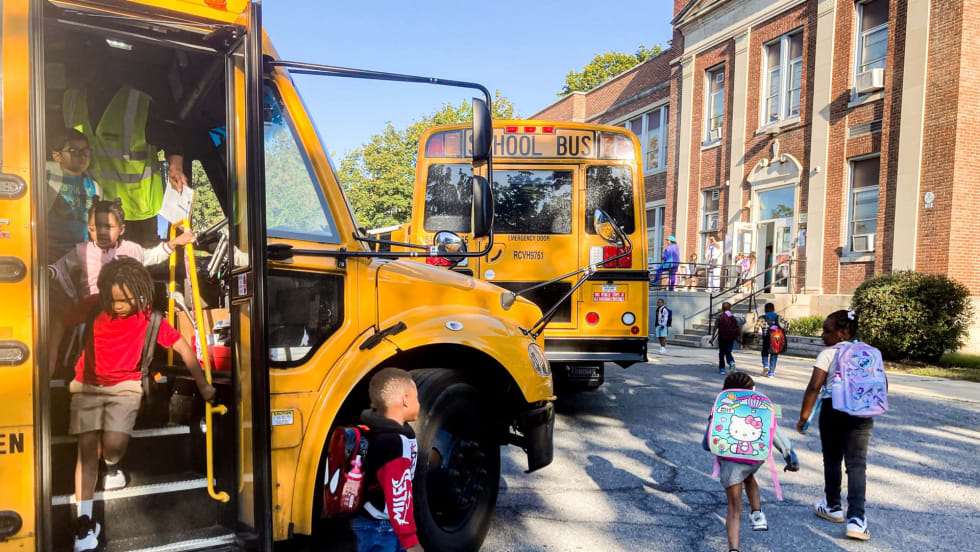
How a New York District Cut Nearly $1M in Transportation Costs While Expanding Bus Access
A data-driven overhaul with BusRight reduced Poughkeepsie City School District's planned routes from 26 to 17 while extending school bus service to about 1,200 additional students.
Read More →
Budgets Down, Enrollment Shifting: What the Data Says Districts Should Watch
School transportation departments face two converging challenges this year: tightening budgets and shifting enrollment. Most districts still address these issues separately, but the assumption that either trend will simplify operations is proving incorrect.
Read More →
These 8 School Transportation Companies Made the 2026 Inc. 5000 List
Find out which school transportation contractors, technology providers, and suppliers ranked among America’s fastest-growing private companies.
Read More →
The Link Between Emotional Intelligence and School Bus Safety
How can emotional intelligence help transportation pros navigate stress, manage change, and build stronger relationships? Listen to find out.
Read More →
What Emotional Intelligence Has to Do With School Bus Safety
In this video, discover how emotional intelligence can help transportation leaders and drivers navigate stress, manage change, and build stronger relationships. The Route is sponsored by IC Bus.
Read More →
Beyond Two-Way Radios: School Bus Communications Evolve With Push-to-Talk Over Cellular
PRYME Radio and PositionPTT join forces to advance hands-free radio use and reduce distracted driving. See how PoC compares with traditional radios on range, cost, safety, and connectivity.
Read More →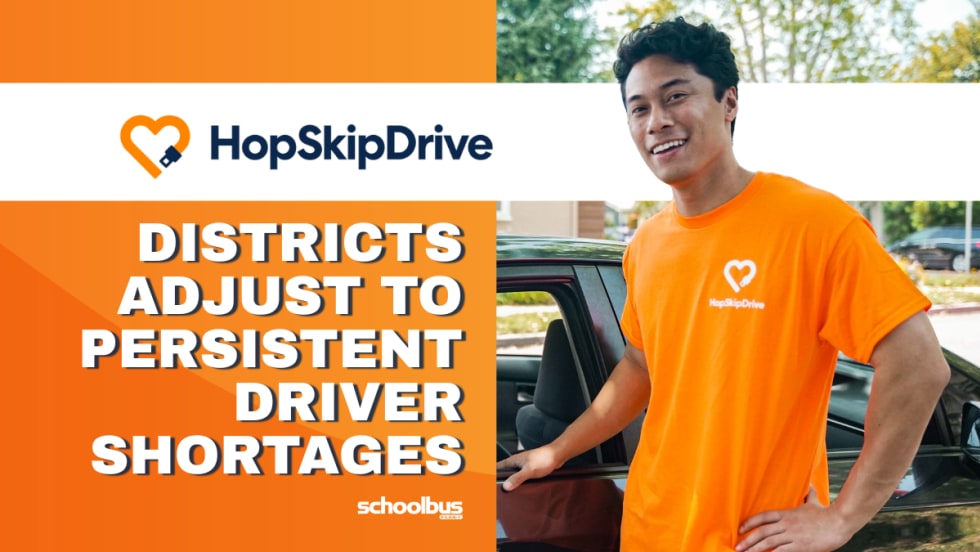
Have School Districts Adapted to Bus Driver Shortages or Simply Accepted Less Service?
According to a recent report from HopSkipDrive, many districts appear to have recalibrated what "normal" transportation service looks like.
Read More →
Reliable Transportation Linked to Better Student Outcomes, New EverDriven Study Finds
See why new research suggests transportation consistency improves student outcomes while influencing attendance, funding, IEP compliance, and family trust.
Read More →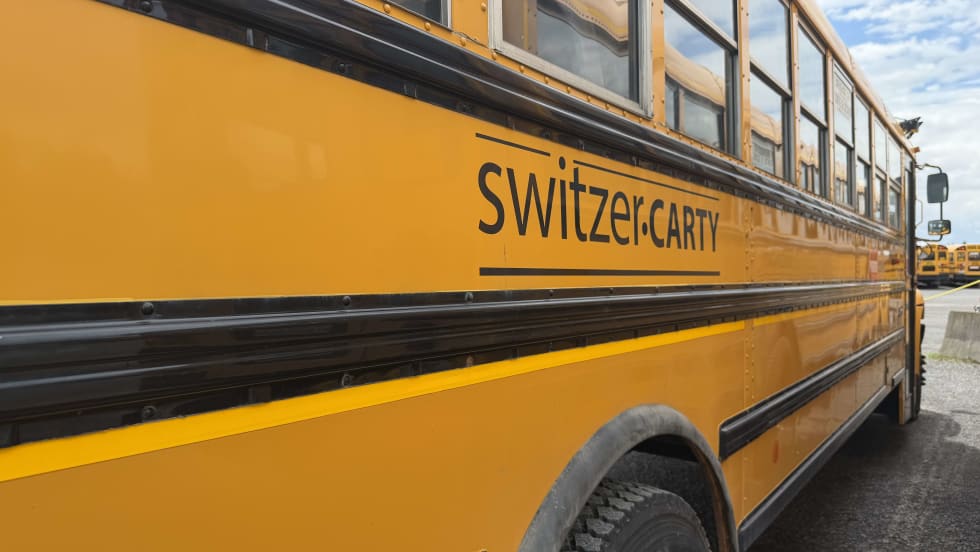
Switzer-CARTY Enters the U.S. with New Acquisition
The Canadian contractor’s acquisition of Minnesota-based Agnes Corporation marks its first cross-border expansion into the United States and adds 350 vehicles.
Read More →