




‘Making a List and Checking It Twice’: Subjecting Cost-Cutting Strategies to a Second Look
By the time you’re reading this issue of SCHOOL BUS FLEET, you’ve either been “living” change or anticipating it. The comments I’ve heard at su...

By the time you’re reading this issue of SCHOOL BUS FLEET, you’ve either been “living” change or anticipating it. The comments I’ve heard at summer conferences, the stories in newspaper and trade journals, and media and personal reports from all over the country testify to budget cuts that school transportation professionals have already experienced, or that loom large in an uncertain economy.
The irony of my article’s title — unless you regard stimulus money as evidence that there is a Santa Claus who will be operating as usual come December — may be subtle. But I’m writing to offer straight-forward advice. Thoughtful analysis now can diminish the likelihood that adjustments you’re making to cut, cut, cut will result in even more reduction in resources — both in terms of time and money — and, worse yet, in a negative impact on student safety and achievement. If the slicing and dicing that’s been part of the last several months has given way to a somewhat calmer October, it’s time to examine those changes, assess the potential for trouble and make adjustments where you can.
The potential for legal challenges is likely to be most significant in the areas of people changes, training gaps, operational and service level reductions, and special-needs transportation adjustments.
Thinking twice about people and training
Where you’ve already participated in layoff or other tough employment decisions, a sound process that uses objective criteria for these moves should serve you well. Other “people issues” on the list — reduction of staff members’ hours (or, in some cases, drastic elimination of attendants), combining of positions, training challenges — should be reviewed: adjustments are still possible if your self-audit causes you concern. Here are some areas to double-check:
Have essential functions been retained despite reductions? If they haven’t been, perhaps they were not essential. But if they really are — because they’re a component of safe transportation — your compromises must be made elsewhere. The personnel position responsible for performance of an essential function might not be on the organizational chart right now, but that function must, nevertheless, be assigned to someone.
Are the people who are performing the essential functions adequately trained to do so? If there wasn’t time for necessary cross-training before the school year began, follow up now. Training doesn’t have to be formal to be effective. Be sure you’ve reviewed the importance of such issues as following district and department policy, correct and consistent use of equipment, and student management issues that have cropped up in the past. At a minimum, identify and create a “Fast Facts” sheet that is widely distributed. You can easily list expectations like:
Report serious incidents that happen on the bus — don’t run the risk that they continue for an extended period of time without notification to parents or school administration.
Use seating assignments when student behavior or safety issues suggest separating one student from another, or younger students from older students.
Don’t respond to student conduct incidents by compromising emotional or physical safety ... but be sure you respond.
Ask questions — right away — if you’re not certain what’s expected of you or what you should do in a given situation.
These “Fast Facts” are basic, but they’re actually at the core of many of the recent challenges reported in case law.
Are you giving sufficient attention to handling complaints and other aspects of customer service? If start-of-school dramas or simple frustration kept you from having someone return a parent’s call, do it now — it’s “better late than never.” If students would benefit from better collaboration with schools and follow-up by school administrators, send a note that lets principals know that you’re here to support the educational process, and student success can best be achieved when you work together so that the transportation department can get students to school safely and ready to learn.
More than 76 percent of parents said that student performance will be likely to decline with a reduction in school bus service, and that absenteeism is likely to increase, according to an American School Bus Council survey released Aug. 13.
The school-transportation collaboration can lead to an accurate review of those results in your own district — before they become dire.
Is anyone working more than 40 hours in any given week because of new position combinations or more tasks that are connected to their work? If that’s the case, whether or not the extra hours are related to work for the same department — discuss with human resources professionals whether overtime pay or comp time is in order, and in what amount.
Are you complying with IEP mandates about assignment of attendants or provision of equipment? If you’re unsure, talk with your special-ed director. If you’re concerned that student or staff safety is compromised because an aide who has knowledge of a particular student’s needs and is adequately trained is not available to support a particular student, please speak up. Assign an appropriate staff member to explore the possibility of free training from manufacturers or distributors, or available sources of adequate loaner equipment when necessary.
Operational and service level reductions: checking them twice
A significant number of lawsuits have developed when bus routes are cut or altered without addressing foreseeable safety implications. I know you’ve debated pros and cons of various strategies to reduce numbers of buses and miles traveled. Be sure you’ve taken all available steps to reduce the problems associated with remaining “cons.” Here are some lessons from court cases and headlines that hint at the possibility of legal challenge:
You’re better off if you’ve followed a process to identify route and bus stop options. This process should consider safety; costs; equitable treatment for students in similar situations; actual conditions of roads, traffic and stops; and numbers and ages of students who would use the stop or follow the walk route if walk distances are increased or transportation is curtailed. If you weren’t able to document your rationale when you made changes, this is another area where it’s “better late than never” — collect and write down your thoughts while you remember them. Have you concluded in each instance that student safety is not compromised by the change?
Where there have been — or continue to be — objections or expressions of concern from the community, be sure each has been documented. Consider these steps:
Collect and evaluate data about the nature of the objection or concern.
Consider whether the district has made exceptions in the past, and whether any such exceptions can be distinguished from the situation before you.
Monitor the issue that has been raised, and make adjustments as necessary.
Double-check impacts of a different mix of students now riding the same bus, as well as lack of driver familiarity with a new route (and don’t forget — for relief or sub drivers, these new routes will be newer yet). Does this new mix suggest the need for different strategies for preventing or addressing behavior issues that might not have arisen before the change? What direction do you give to drivers if they’re unsure of precisely where the stop or student’s home is located?
Special-needs transportation: the ‘naughty and the nice’
Complaints about failure to provide a free appropriate public education are a likely outgrowth of budget cuts if districts fail to heed the basic principle that transportation may be necessary for students with special needs even where it’s not available to their non-disabled peers. Students with special needs must continue to receive a case-by-case determination typically made by the IEP team about the necessity for transportation as a related service. Of even more concern, however, is an already growing body of cases that demonstrate how real harm to students can result from failure to take necessary steps to prevent foreseeable harm. Here are some checkpoints to consider:
Has transportation been cut automatically for a student with disabilities who now lives within an extended walk distance? Suppose transportation eligibility policy has gone from one and a half miles to two miles. It’s dangerous to assume that a special-needs student without obvious mobility impairments who lives just under two miles from school can be treated just like his next-door neighbor who does not have a disability. This is a decision for the IEP team. Even if a mistake has been made, the harm to the student and the burden to the district will be less if remedied as soon as possible.
Have you realized that you’ve actually been doing more than you need to — or even should do — for a child with special needs? Don’t unilaterally change or reduce service. This, too, is an IEP team decision.
Has there been an increase in the number of arrangements for parental reimbursement in lieu of providing transportation? Be alert to loading and unloading issues at school if more family members arrive at the beginning and end of the school day. Watch for complaints about numbers of accessible parking spaces and the availability of accessible, equitable ways for the parent to bring the student into the building.
Have you consolidated routes taken by smaller-capacity vehicles without due consideration to the question of who is now riding with whom? Cases are proliferating about sexual harassment and molestation between students with disabilities when they are not physically separated in the vehicles. Other cases focus on the lack of involvement by an attendant and failure by a driver to intervene in dangerous student activity — even if it doesn’t “scream out” sexual harassment.
Do students who need special seating devices or other equipment have what they require for safe transportation? Improper selection and securement of assistive equipment plays an important role in many cases about transportation of students with special needs. Be sure staff members are trained well, and recognize the importance of doing it right, every time, to the welfare of a vulnerable student.
Are staff members who work with students with disabilities given sufficient information about the way in which a student’s particular needs and challenges will impact the ride? There’s a solid trend in the case law alluding to the inadequacy of training that does not address students’ individual deficits.
The need to rethink
Author Ram Charan recognized in his new book Leadership in the Era of Economic Uncertainty that, “You won’t always have time to answer every question and look at things from every angle.” Instead, “You may have to reverse earlier decisions that no longer make sense.” Just as your responsibilities, obligations and dilemmas are fluid in this time of change, so too you must be ready to review and respond accordingly as time goes on. The way to avoid unintended consequences of budget cuts is to monitor the decisions already made at every chance you get.Peggy Burns is an attorney and consultant, and owner of Education Compliance Group Inc. (www.educationcompliancegroup.com). She is the editor of Legal Routes and developer of four video training programs: “The Road to Compliance for Special Needs Drivers,” “Putting the Brakes on Harassment,” “Steering Clear of Liability,” and “Confidential Records.” Peggy can be reached at (888) 604-6141 orecginc@qwestoffice.net.
More Management
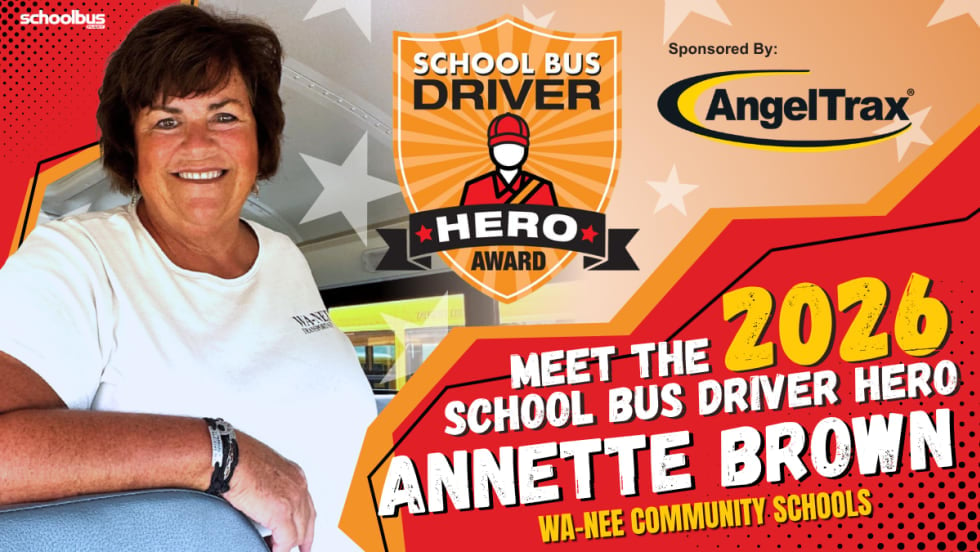
Annette Brown Always Takes the Extra Time: Meet Our 2026 School Bus Driver Hero
For more than 30 years, the Wa-Nee Community Schools driver has treated students like family, combining safety, compassion, and servant leadership to make a lasting difference on and beyond the school bus.
Read More →
How to Build a Better Driver Training Program
Ready to boost up your school bus instructor training? Here’s how to pick the right talent and improve recruitment, retention, and safety.
Read More →
CALSTART and Forth Combine to Form Catalyst Mobility
The new name represents a renewed vision for the nonprofit focused on advancing clean, equitable, and affordable transportation solutions that move people and goods.
Read More →

What Makes a Great School Bus Driver Trainer?
Choosing the right school bus driver trainer takes more than experience. Learn six keys to selecting and developing trainers and evaluating program effectiveness.
Read More →
School Bus Contractors Expand Through New Deals, Acquisitions & Partnerships
STA's Canadian division acquires Ontario-based G&L Stevenson Transport; Durham School Services adds a new district in California; First Student expands in New Jersey; and Minnesota Coaches rebrands and acquires Halo Transportation.
Read More →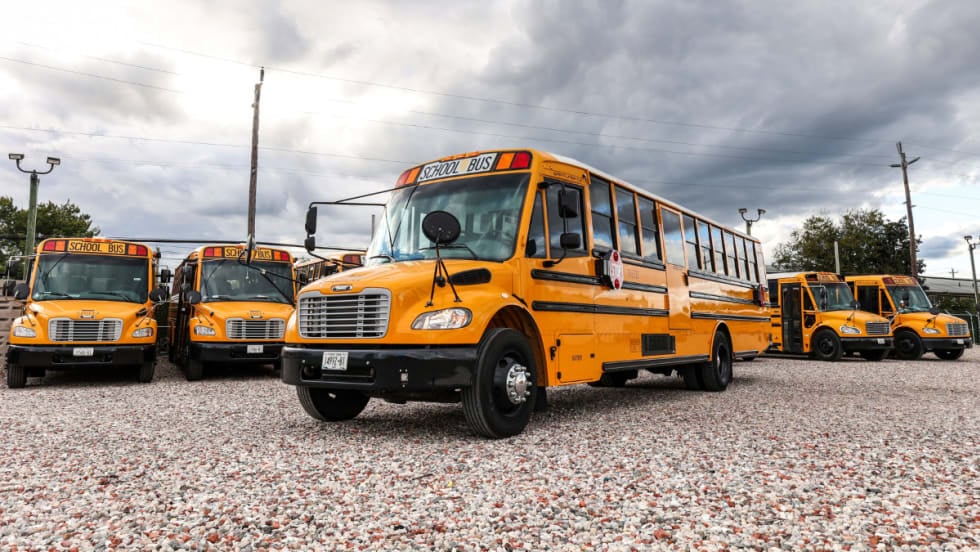
Logan Bus Company Rolls Out AI Phone System for NYC School Bus Families
A summer pilot found that AI agents could handle most routine calls, freeing up time for customer service staff to focus on emergencies and complex family concerns.
Read More →
From Intent to Impact: What I Learned About Leadership from TAPT
A Texas transportation supervisor shares lessons on self-awareness, accountability, managing stress and building trust — and why investing in leadership development matters at every stage of your career.
Read More →
NAPT Names 2026 Award Recipients, Hall of Fame Inductee
Who earned national recognition for their work in student transportation? This year, NAPT named five recipients of its 2026 awards for service, safety, and leadership, plus its newest Hall of Famer.
Read More →
2026 State of Student Transportation Report
Driver shortages. Rising costs. Growing safety expectations. More data, but not enough time to act on it. The 2026 State of Student Transportation Report reveals what transportation leaders say is putting the most pressure on their operations—and where they’re investing next. See how your priorities compare.
Read More →
How to De-Escalate an Angry Person: 5 Steps for Handling Workplace Conflict
What makes emotions run high, and how should you handle an angry colleague or parent? Follow these steps for staying calm, listening, showing empathy, and resolving conflict.
Read More →