




Leadership Program Provides Path for Advancement
A new initiative helps Jefferson County Public Schools attract, retain, and grow potential managers from within.
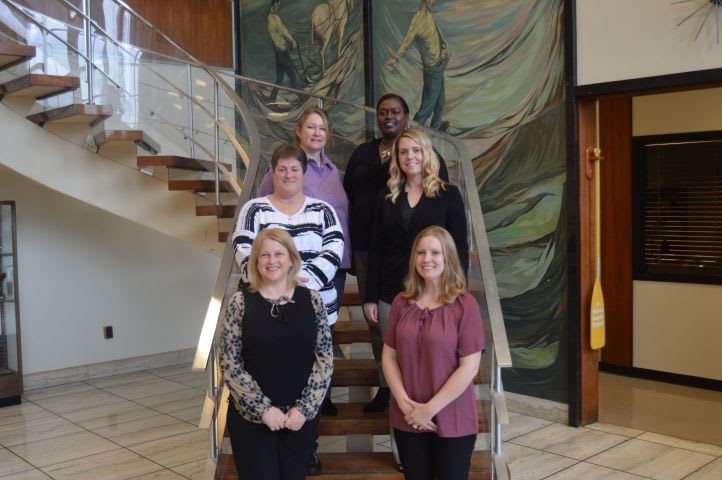
Program participants (clockwise from top left): Samantha Moore, Angelia Archie, Tiffany Pipes, Gina Limbrick, Ruth Boer, and Donna Roach.
Program participants (clockwise from top left): Samantha Moore, Angelia Archie, Tiffany Pipes, Gina Limbrick, Ruth Boer, and Donna Roach.
Jefferson County (Ky.) Public Schools has kicked off a new initiative with the goal of growing future leaders from within its own ranks.
The Transportation Management Leadership Program (TMLP), launched by the Louisville-based district in early 2017, is built around a 12-week curriculum that is designed to develop key skillsets for potential managers.
The idea for the program came from Randy Frantz, who became the director of transportation for Jefferson County Public Schools this past school year. He noticed that 41% of the district’s salaried employees in leadership positions had more than 20 years of service. And of that percentage, many were what Frantz refers to as “organically grown” — they rose to their positions from within the organization. Frantz became inspired to continue the trend.
Jefferson County Public Schools runs one of the largest publicly operated school bus operations in the nation. With a total of 1,200 buses in its fleet and 2,065 different routes, the district transports 70,000 students daily.
“It’s a large task,” Frantz says. “And it’s important we cultivate experts to ensure the safety of our students and operational efficiency of the district.”
Jefferson County Public Schools’ transportation department includes more than 40 management positions spread across 13 compounds and the central office, so there’s a great need to keep a full pipeline of leadership talent. That’s where TMLP comes in.
The program is a comprehensive blend of classroom-based learning and hands-on experiences in the field.
“The intent of the program is to create real-life leaders, and we want to think differently in our approach,” Frantz says. “Whether you’re public or private, it’s important for every organization to reinvest back into employees and grow leaders.”
Jefferson County Public Schools piloted the program with its first six participants — all of whom are school bus drivers for the district.
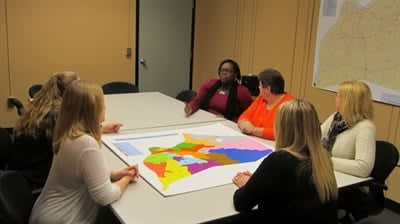
Jefferson County Public Schools recently piloted the Transportation Management Leadership Program with its first six participants — all of whom are school bus drivers.
Program structure
TMLP meets two to three hours per week over the course of 12 weeks. Participants are paid for the time they spend in the program.
Applying to take part in TMLP involves a thorough interview and vetting process, with only six participants selected at a time. This cap creates a smaller student-to-teacher ratio.
Any personnel contributing to the care of the district’s students, from school bus drivers to special-needs assistants, can apply.
“I’m looking for the best of the best,” Frantz said. “I want this program to carry validity and significance within our organization and help our employees move into positions of leadership.”
The program has a dedicated manager, Jeanne Giberson, whose sole job is to implement, hire, and train participants. Giberson was a school bus driver for Jefferson County Public Schools who organically worked her way to operations manager before retiring. She came back from retirement to run TMLP part time.
“The program can’t be second fiddle,” Frantz says. “Pulling managers aside from daily tasks to manage [TMLP] wouldn’t generate the same sense of value to the program. It was an important decision to hire someone to really invest time and energy into it, making it a priority.”
Subject matter experts from within the district also tutor participants on specific topics.
“As a leadership team, this is a total cost-functional way to create and offer content,” Frantz says.
When designing the curriculum, Frantz solicited feedback from the district’s current leadership team. He sought to address such questions as: What makes a good leader generally and within Jefferson County Public Schools? And what do trainees need to learn from an operational and tactical standpoint?
Current content covers a wide range of topics, including effective communication skills (verbal and written), situational awareness, emergency management, employee procedures and agreements, and operational know-how (routing, security, maintenance, and systems).
Within the curriculum, more nuanced topics are covered as well, such as foster care and state regulations.
“Transporting 24.5 million passengers annually is a big responsibility,” Frantz says, referring to the district’s total number of passenger trips in a 175-day school year. “We need to elevate people who can ensure safety and demonstrate an overall understanding every day.”
“We can teach anyone how to follow instructions, but we want to create thinkers with the aptitude to execute a mission.”Randy Frantz, director of transportation, Jefferson County (Ky.) Public Schools
Hands-on experience
Part of Frantz’s training philosophy is to provide employees with real-world skills and application to avoid “analysis paralysis.” This comes in the form of guest speakers, field trips, conversations, and time spent in an office environment. So far, participants have had an opportunity to meet both the chief operations officer and superintendent of Jefferson County Public Schools.
“We’re trying to get our participants out of their comfort zones,” Frantz says. “The only way to grow is to experience situations outside of what you’re used to. We can teach anyone how to follow instructions, but we want to create thinkers with the aptitude to execute a mission.”
Tiffany Pipes, a school bus driver for the district and a TMLP participant, comes into work an hour before her shift. She answers phones, helps employees with any issues, and explores the office and how it runs.
“It gives me an opportunity to take what I’ve learned in the classroom and apply it to the work force,” Pipes says. “I get to attend meetings and have face-to-face interactions with the school staff and parents, too.”
Pipes, who has been working for Jefferson County Public Schools for three years, says she appreciates the opportunity for advancement.
“This program will lead me into another position once some of our current leaders get promoted or need to retire,” she says.
Another outcome of the hands-on training style is that participants are actively building communication skills and problem-solving strategies in a professional manner. Those aptitudes are vital for carrying out the transportation department’s mission.
“At the end of the day, we’re a public safety entity,” Pipes explains. “We’re learning how to keep in mind that we’re dealing with children and concerned parents, and safety needs to be behind every decision or resolution.”
Retention benefits
Frantz says that he hopes the leadership program will aid in retention and recruitment of employees. By fostering and projecting the value of internal advancement, he says, Jefferson County Public Schools is creating a community of employees who can work toward long-term career goals. Also, knowing that opportunities can be found outside of one’s current assignment is a useful tool for motivation.
“We all have to make sure we can self-promote in order to attract, retain, and develop top talent,” Frantz says. “The bus driver shortage is not a Kentucky problem — it’s a national problem. I hope our program sparks ideas for other directors and operators out there.”
More Management
STA Acquires Sunrise Transportation
Student Transportation of America expands in Illinois and Connecticut through Sunrise's fleet of nearly 1,000 vehicles.
Read More →
EPA Opens $180M DERA Funding Round for Diesel Upgrades
The 2026 Diesel Emissions Reduction Act program seeks applications from eligible organizations to accelerate the retirement of legacy diesel vehicles.
Read More →
HopSkipDrive’s CareEngine Targets the ‘Exceptions’ in Student Transportation
The new platform works alongside districts’ existing transportation management systems to coordinate specialized rides, automate last-minute changes, and turn ride data into operational improvements.
Read More →


The Right Ride for Every Student: Navigating the New Student Transportation Ecosystem
How should districts blend school buses with small-vehicle transportation and other options? EverDriven CEO Mitch Bowling discusses safety, costs, partnerships, and strategy.
Read More →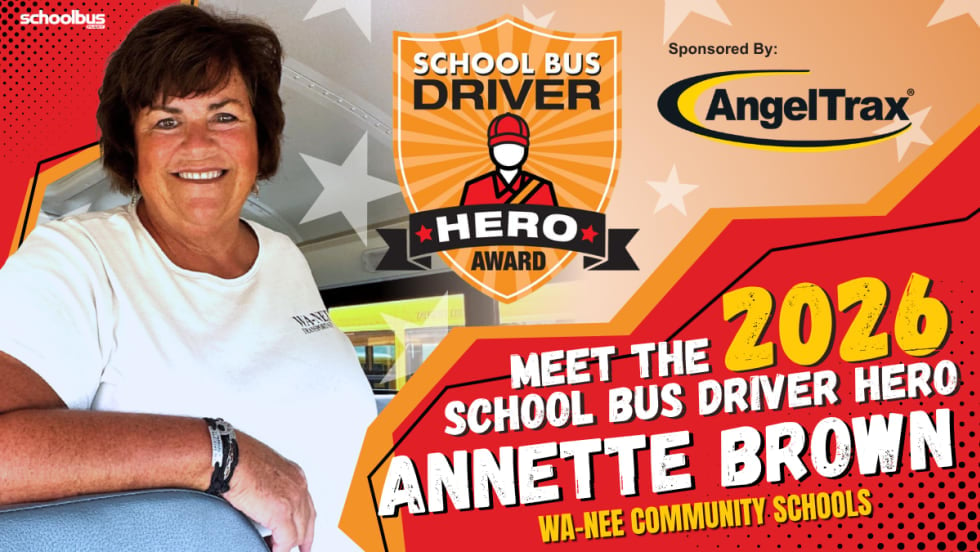
Annette Brown Always Takes the Extra Time: Meet Our 2026 School Bus Driver Hero
For more than 30 years, the Wa-Nee Community Schools driver has treated students like family, combining safety, compassion, and servant leadership to make a lasting difference on and beyond the school bus.
Read More →
How to Build a Better Driver Training Program
Ready to boost up your school bus instructor training? Here’s how to pick the right talent and improve recruitment, retention, and safety.
Read More →
CALSTART and Forth Combine to Form Catalyst Mobility
The new name represents a renewed vision for the nonprofit focused on advancing clean, equitable, and affordable transportation solutions that move people and goods.
Read More →
What Makes a Great School Bus Driver Trainer?
Choosing the right school bus driver trainer takes more than experience. Learn six keys to selecting and developing trainers and evaluating program effectiveness.
Read More →
School Bus Contractors Expand Through New Deals, Acquisitions & Partnerships
STA's Canadian division acquires Ontario-based G&L Stevenson Transport; Durham School Services adds a new district in California; First Student expands in New Jersey; and Minnesota Coaches rebrands and acquires Halo Transportation.
Read More →
Logan Bus Company Rolls Out AI Phone System for NYC School Bus Families
A summer pilot found that AI agents could handle most routine calls, freeing up time for customer service staff to focus on emergencies and complex family concerns.
Read More →