




Fast Facts
Fleet: 150 school buses
Staff: 160 drivers, 180 total employees
Students transported: 12,000
Annual mileage: 2.5 million
Kickert School Bus Hits 100-Year Milestone
Throughout its history, the Illinois-based contractor has been at the forefront of using alternative fuels for its vehicles — beginning with a horse and wagon powered by oats and hay.
by Lisa Hudson
June 12, 2015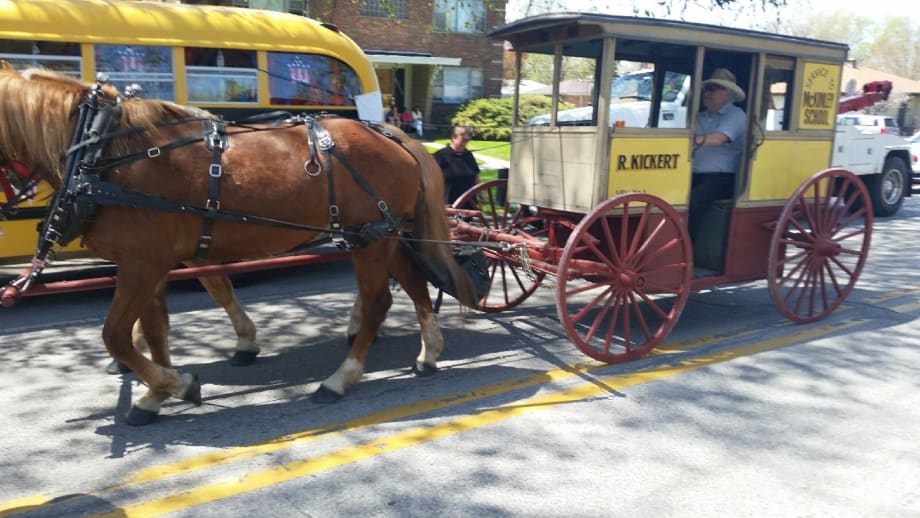
Kickert’s first “school bus” was a horse-drawn wagon fitted with board seats, as seen here in a parade in May.
3 min to read
It began with a horse-powered vehicle.
The time was 1915, and husband and wife Richard and Bessie Kickert, looking for a way to get seven neighborhood children (including theirs) to and from school, formed their own transportation company. The original “bio-fueled” vehicle was in service back then — in this case, a horse and wagon powered by oats and hay.
Over the next 10 decades, Lynwood, Illinois-based Kickert School Bus Line’s vehicles went from gasoline to propane, and then to biodiesel. The shop manager went from blacksmith to maintenance facility supervisor. And transportation went from seven to about 12,000 students.
Initially, the Kickerts transported to just one place and back: McKinley School in South Holland, Illinois. Today, Kickert is a subsidiary of Cook-Illinois Corp. and provides regular-education transportation services to more than 10 surrounding communities.
PHOTOS: Illinois school bus company turns 100
This year, Kickert is celebrating 100 years in service. To find out more about the major milestones in the company’s history, School Bus Fleet spoke with Tom O’Sullivan, vice president of contracts and bids, who has been with the company since 1992.
SBF: How did the vehicles, and the way they were powered, evolve over the years?
TOM O’SULLIVAN: It all started with a horse and buggy 100 years ago. From there, we converted a diesel truck to a school bus. Over the years, we have been at the forefront for trying alternative fuels. In the 1970s and ’80s, we had vehicles that ran on CNG [compressed natural gas] engines and propane engines. In the last 10 years, we have also been providing buses that run on biodiesel fuel. Just recently, in the last couple of years, we are again purchasing buses that use propane fuel. Kickert has also been at the forefront of safety with the vehicles. We have always ordered our buses with the flame retardant seat covers, and we have had employees who have participated in committees concerning the safety of school buses.
What about emerging technologies with each decade?
Kickert has been at the forefront in using technology with their school buses. In the 1970s, we were the first company to have a computerized routing program from IBM. Today, we use Versatrans, Transfinder, Edulog and others. In the early 1990s, we began using cameras in school buses. In those first days, we used Sony handheld 8mm cameras. Today, we use digital technology. Today’s vehicles also utilize GPS technology both for tracking the buses and students.
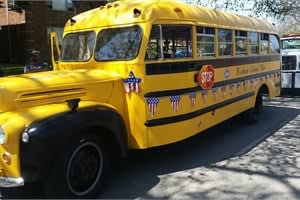
Kickert showed off this vintage school bus, a 1945 Ford with a Superior body, during the recent parade.
How has Kickert met the challenges of student transportation?
The challenges are many:
1. Competition: Illinois is a bid state, and approximately 50% of the districts contract versus running the buses themselves. This provides opportunities, but there are also many competitors.
2. Driver shortages: Retaining employees is our No. 1 goal. We try to create a family atmosphere at Kickert with our employees, and that includes being fair with pay and benefits, but also creating an environment where employees want to come to work.
3. School bus maintenance: Kickert has been fortunate to have excellent mechanics who can maintain all the different types of engines — gas, diesel, propane, etc. We also have a body shop that keeps our buses looking new.
4. Building customer relationships: Kickert has been fortunate to have developed long-standing relationships with many customers. Some of these relationships go back to the 1930s. Building relationships with district administrators is important, but our best salespersons are our drivers and their relationships with the students on the bus, the parents of the students and the school employees. This is our greatest asset.
In your opinion, are there any universal truths about how a transportation company stays in business and provides excellent service?
Hard work, customer relations and excellent employees.
Lisa J. Hudson is a freelance writer based in Raleigh, North Carolina.
Subscribe to Our Newsletter
More Management
STA Acquires Sunrise Transportation
Student Transportation of America expands in Illinois and Connecticut through Sunrise's fleet of nearly 1,000 vehicles.
Read More →
EPA Opens $180M DERA Funding Round for Diesel Upgrades
The 2026 Diesel Emissions Reduction Act program seeks applications from eligible organizations to accelerate the retirement of legacy diesel vehicles.
Read More →
HopSkipDrive’s CareEngine Targets the ‘Exceptions’ in Student Transportation
The new platform works alongside districts’ existing transportation management systems to coordinate specialized rides, automate last-minute changes, and turn ride data into operational improvements.
Read More →


The Right Ride for Every Student: Navigating the New Student Transportation Ecosystem
How should districts blend school buses with small-vehicle transportation and other options? EverDriven CEO Mitch Bowling discusses safety, costs, partnerships, and strategy.
Read More →
Annette Brown Always Takes the Extra Time: Meet Our 2026 School Bus Driver Hero
For more than 30 years, the Wa-Nee Community Schools driver has treated students like family, combining safety, compassion, and servant leadership to make a lasting difference on and beyond the school bus.
Read More →
How to Build a Better Driver Training Program
Ready to boost up your school bus instructor training? Here’s how to pick the right talent and improve recruitment, retention, and safety.
Read More →
CALSTART and Forth Combine to Form Catalyst Mobility
The new name represents a renewed vision for the nonprofit focused on advancing clean, equitable, and affordable transportation solutions that move people and goods.
Read More →
What Makes a Great School Bus Driver Trainer?
Choosing the right school bus driver trainer takes more than experience. Learn six keys to selecting and developing trainers and evaluating program effectiveness.
Read More →
School Bus Contractors Expand Through New Deals, Acquisitions & Partnerships
STA's Canadian division acquires Ontario-based G&L Stevenson Transport; Durham School Services adds a new district in California; First Student expands in New Jersey; and Minnesota Coaches rebrands and acquires Halo Transportation.
Read More →
Logan Bus Company Rolls Out AI Phone System for NYC School Bus Families
A summer pilot found that AI agents could handle most routine calls, freeing up time for customer service staff to focus on emergencies and complex family concerns.
Read More →