




Keeping Tabs on Sex Offenders Makes Busing Safer
Consulting the law enforcement list of registered sex offenders can help you avoid dangerous routing oversights.
Determining locations of school bus stops can be an arduous task, especially when you factor in demands of parents and logistical concerns such as flow and speed of traffic and street crossings. But there’s one potential hazard that can be easily overlooked — proximity to the homes of sex offenders. Such an oversight could have tragic consequences. "It’s dangerous for children who are in an unsupervised situation waiting for a bus if there are people around who have known histories of sexual abuse," warns Dr. Mike Kirk of the Child and Family Clinic in Bakersfield, Calif. "Schools should play it safe and do the research." But school districts don’t always succeed in steering clear of sex offenders’ residences. In Port Charlotte, Fla., a parent discovered that her child’s school bus stop was located in front of the home of Wayne Harborson, a registered sex offender on trial for allegedly killing a teenager and raping an adult and her 6-year-old child. After the parent presented her concerns to the school, the stop was moved 500 feet from Harborson’s home. Charlotte County School District spokesperson Roseann Samson says that locating the stop in front of Harborson’s house was clearly a mistake. "It was an error on our part, no doubt about it," says Samson, noting that the transportation staff routinely checks the sheriff’s department’s list of sex offenders before making routes. In fact, she says, six or seven bus stops were moved last summer because sex offenders lived nearby. A district of about 16,000 students, Charlotte County is home to 87 known sex offenders and one sexual predator (high risk). In Boone County, Ky., the process of checking registration lists was not so routine. "We have never encountered anything like this before," says Mason Boots, route supervisor of the Boone County School District, where a stop was also mistakenly located in front of a sex offender’s home. A public protest was waged when it was discovered that Brian Keith Frazer, convicted in 1996 of sodomizing a minor, lived in a home next to a bus stop. Boots says that the stop was moved before the first day of school. Without an official policy on how far to move a stop from such a residence, Boots says he used the same procedure as for hazardous turn-arounds, hazardous stops or railroad crossings.
Know your neighborhood
In these cases, the transportation provider was caught unaware, which led to acrimony and disruption. Parents were enraged, transportation personnel were forced to make last-minute changes and children were potentially endangered. What can be done to prevent such a situation from happening to you? The answer lies in being aware. As a result of Megan’s Law, police departments in every state keep a list of convicted sex offenders. These lists are available to the public, with varying guidelines for viewing, depending on the state. Several states, including Indiana, Kansas, Texas, Michigan and North Carolina, post the registry online. All entries include name and zip code, while some also provide a detailed criminal history, street address and photo. At Seneca Falls (N.Y.) Central School District, Transportation Supervisor Jim Ellis says a mugshot of a known sex offender was distributed to drivers and posted in the transportation office after the man moved into the district two years ago. It’s rare that a sex offender relocates to the upstate New York community — but not unnoticed. "You need to work with local police on this," Ellis says. In Florida, the state Department of Law Enforcement not only maintains a Website with photos and detailed information on every convicted sex offender, it also offers a toll-free number for inquiries on sex offenders and makes informational flyers and brochures available to the public. Other states, such as California, require individuals to go to the local police station and present identification and reasons for interest before viewing the list. Before being added to the registry, offenders are categorized based on what county officials determine to be their level of threat to society. They are deemed low, medium or high (predator) risk, with the medium- and high-risk offenders being guilty of more serious and violent crimes or repeat offenses. At the discretion of local officials, the communities in which medium- and high-risk offenders live may be notified of their presence. Low-risk offenders will not be subject to community notification, though they must still register.
Calculate the risk
Are convicted sex offenders likely to re-offend? According to the California law enforcement Website, studies show that 40 percent of sex offenders will commit another sex crime. Mental health professionals dealing with sex offenders, however, say frequency of re-offense ranges anywhere from 6 to 90 percent, depending on the age of the offender and the severity of his crime. Dr. Charlene Steen of the Napa Valley Sex Offender Program in California says that only about 6 percent of her patients commit another sex offense. "It is rare that we have anybody [in our program] who re-offends," she explains. "The vast percentage of sex offenders are never going to touch anybody again." Steen adds, however, that there are more violent sexual predators who stalk and abduct children. Though rare, these criminals have a 90 percent likelihood of re-offense. Though all convicted sex offenders must register, Steen maintains that only the predators pose a danger to society. Meanwhile, Kirk, of the Child and Family Clinic, says that without treatment, almost all sex offenders will re-offend. Even with treatment, he explains, adult sex offenders are extremely unlikely to change.
Use precaution in routing
Contact your local sheriff’s office to determine the means for viewing the list of registered sex offenders in your area. As a school official, you have the right to this information and may be given more details about local offenders than the general public is given. Keep in mind, however, that parents and community members also have access to the registration list. If you don’t check the registry, your community may be coming to you. In San Antonio, Texas, for example, parents are currently up in arms because 75 middle school students who have lost their bus riding privileges will have to walk to school through a neighborhood housing 24 registered sex offenders. The Northside Independent School District students, who are ineligible for services due to their proximity to the school, had mistakenly been allowed to ride the bus since September. The school board, in a controversial decision, ruled that the presence of the sex offenders did not qualify as a hazardous condition meriting exception to its two-mile radius policy. Parents are not pleased. Similarly, in 1996, a group of parents calling for the Englewood (N.J.) School District to move a bus stop located in front of the home of a convicted child molester and murderer, lost the battle. District officials said an alternate site could not be found and students were forced to wait for the bus in front of the offender’s home. Cases such as these, in which transportation providers cannot or will not reduce student exposure to sex offenders, are rare. In most instances, a stop can be moved or a policy can be changed to reduce any potential danger to the children. And it is in the best interest of all parties involved if problems are identified and solutions reached before routes are established in the first place.
More Safety

School's Back. Here's What Happened to Traffic, Speeding & Distraction
What happens to traffic when school resumes? New data analysis examines changes in distracted driving, congestion, and speeding around schools.
Read More →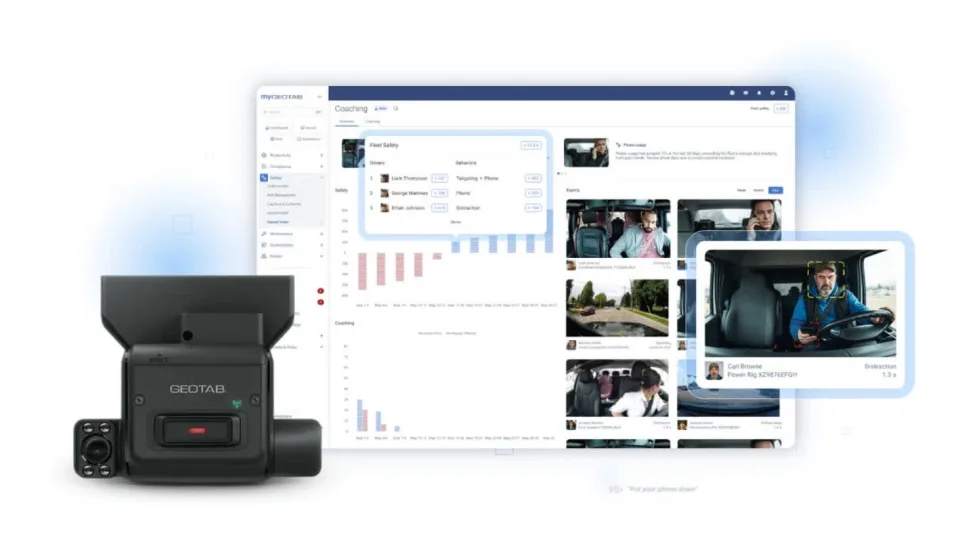
Geotab Expands Fleet Safety Tools With Video Coaching, Risk Insights
New safety and video capabilities aim to help fleet managers assess risk, support drivers, and take targeted action through video coaching, red-light violation detection, and more.
Read More →
How to Build a Better School Bus Driver Training Program
Is it time to strengthen your driver training? Here’s how to pick the right talent and improve recruitment, retention, and safety. This video is brought to you by IC Bus.
Read More →

Recent School Bus Accidents Leave 2 Dead, 2 Injured
Four school bus crashes in Florida, Illinois, and Georgia highlight risks in transportation lots, at bus stops, and during student loading and unloading.
Read More →
When Every Second Matters, Clarity Keeps Routes Moving
From routine delays to urgent incidents, strong communication practices help drivers, dispatchers, schools, and families respond with confidence.
Read More →
What Happens When a School Bus Catches Fire — and What Can Help
School bus fires are rare but can be devastating. Learn how advances in fire suppression and asset protection help fleets detect fires earlier, reduce damage, and improve safety.
Read More →
Geotab Launches Tool to Help Fleets Investigate Road Incidents
Geotab Investigations combines telematics data, video, documents, and other evidence to help fleets reconstruct incidents, resolve claims, and determine what happened.
Read More →
Texas Sixth Grader Wins 2026 National School Bus Safety Poster Contest
Sai Darshana Yekolu of Moseley Middle School in Prosper, Texas, was named the newest winner for her artwork, bringing the theme of “Safe Rides, Everyday Heroes” to life.
Read More →
Doing More With Less: How Transportation Directors Can Prioritize Safety Amid Budget Uncertainty
With diesel prices soaring and nearly one-third of transportation directors expecting budget cuts, maintaining student safety has never been more challenging. Download this guide to learn how leading districts are prioritizing risk, funding critical safety technology, and building stronger budget cases with data.
Read More →
Walton County Schools Adds Gatekeeper Stop-Arm Enforcement System
The Florida district will deploy Gatekeeper’s updated Student Protector technology, which now incorporates AI to improve video evidence.
Read More →