




Is the U.K. Catching Yellow Fever?
It seems that the U.K. has turned green over the success of the American yellow. With a formal recommendation to the government and a growing numb...
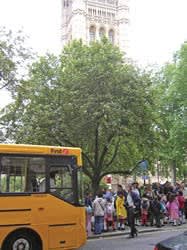
It seems that the U.K. has turned green over the success of the American yellow.
With a formal recommendation to the government and a growing number of pilot projects being put in place, the yellow school bus may be the wave of the future for the country's students.
The distinction of "yellow" along with "school bus" is important here, because there are other types of buses used to carry children to school in the United Kingdom. A recent BBC News report told of four children being injured when their "school bus" crashed into a low bridge. The vehicle was a double-decker bus.
While some children do ride buses to school, they are more often not on dedicated school routes but on established public transport systems. And even those trips are far from being the majority.
According to research by the Boston Consulting Group, of the 743 million primary school trips each year that are more than one mile, 500 million (67 percent) are made by car. Only 94 million (13 percent) are made on a bus of some sort.
But recent developments suggest that this may change for the better.
Scheming all over
Over the past few years, a number of yellow school bus programs (or "schemes," as they're commonly called) have been established across the country, garnering impressive results and favorable reviews.
The Staffordshire County Council now owns and operates its own fleet of 30 yellow school buses. In 1998, the council bought seven, and their efficiency and popularity led to a significant expansion of the fleet. However, private contractors still provide the majority of the buses used for pupil transportation in the county.
First Student UK Ltd., which is part of FirstGroup PLC (as is First Student in the United States), introduced its first school bus scheme in 2002. Starting this fall, the number of First's schemes will be up to 12. The locations range from Windsor in England to Aberdeen in Scotland to Wrexham in Wales.
The buses are operated under contract with the local schools or county councils, and parents pay for the service.
The operations work much like those in the United States: The driver, who stays on the same route throughout the school term, is in contact with the control room at a First depot. Passengers receive safety and evacuation training. Drivers undergo training on topics such as safety, first aid and child behavioral issues. A PSV license (comparable to a CDL in the United States) is required for the drivers.
Some of the vehicles even come from the States. First is running a number of Blue Bird models. Other American-style yellow buses are provided by BMC, a U.K.-based manufacturer of trucks, buses, coaches and vans.
Linda Howard, managing director of First Student UK, says the dedicated school bus service has been well received by pupils, parents and other members of the public.
"Parents like the peace of mind offered by a dedicated transport service, designed to provide a safe, secure, child-friendly environment," she says. "Students like having a transport service designed just for their needs, with a dedicated driver and sufficient seating."
One of the benefits that all residents in these areas can enjoy is the reduction of traffic congestion during "school run" hours, when many parents traditionally drive their children to and from school.
{+PAGEBREAK+} No more school run
The Sutton Trust, a London-based charity agency that helps children from non-privileged backgrounds, issued a thorough report in June that calls for a national yellow-bus network like those in the United States and Canada.
The agency recommends that the government act to implement its proposal in England and Wales. It also suggests that the principles should be applied across the U.K., to Scotland and Northern Ireland.
While a number of pilot projects have been introduced in recent years, the agency says that only about 6 percent of pupils in the U.K. currently ride to school on yellow buses.
The report, titled "No More School Run," presents a number of compelling statistics and ideas, including the following:
Nearly 20 percent of traffic on U.K. roads during the morning rush hour is on the school run.
The school run leads directly to as many as 40 deaths and 900 serious injuries a year while emitting 2.1 million tons of carbon dioxide.
Yellow buses and the additional regulations that should be a part of their use would improve safety, based on results from North American pupil transportation.
A national school bus scheme would cost about £184 million (about US$327 million) per year, but that figure could be reduced to £124 million if existing travel subsidies were maintained.
Estimated savings would outweigh the costs, at £350 million a year for parents and £100 million for the rest of society, based on reducing such factors as vehicle costs, time spent driving, accidents and environmental problems.
The government already subsidizes existing school transportation service by almost £700 million per year, much of which is spent on children with special needs.
The inadequacy of the current home-to-school transport system makes it harder for children from less-affluent backgrounds to attend the best schools (which might not be those closest to their homes).
Looking forward
Soon after the Sutton Trust issued its recommendations to the government, Education Secretary Ruth Kelly told Scotsman.com that the report was "an interesting contribution to the debate on modernizing school transport." However, officials also indicated that there was no current plan to set up a national system of yellow school buses.James Turner, research and information officer for the Sutton Trust, says that there are steps being taken in the right direction.
One such step is the government's School Transport Bill, which went before the General Election in May but did not pass.
Turner says that the bill would allow local authorities to experiment with new ways of providing school transport and new ways of paying for it. But it stops short of calling for a national system available to all students who need it.
"We want the government to go further and introduce legislation that would oblige all local authorities to provide school transport to every pupil, not just those forward-looking authorities that do so at present," Turner says.
An education bill is due in the next few months, which could provide another opportunity to pass the school-transport legislation. But Turner says that it would take much longer for the effects to be felt on the ground level. {+PAGEBREAK+} "We're working hard in pushing the case to politicians and civil servants, so we're optimistic that we'll see at least some progress in the not-too-distant future," Turner says.
While the legislative end may take time, it appears that there is widespread interest in importing U.S.-style pupil transportation. Turner says a consensus is emerging that it is the best way to tackle a variety of problems, such as traffic congestion and pollution.
In addition to support from politicians, the Sutton Trust has heard from many members of the public who support the ideas presented in the agency's report.
"We already know from the pilot schemes running in some parts of the country that the buses are popular with parents and children, too," Turner says.
Case Study: West Yorkshire
Initiatives with U.S.-style yellow buses for school transport by some local councils in England prompted the U.K. Government's Department of Transport to fund a comprehensive pilot scheme in a large, urban region to test the potential advantages.
They chose the West Yorkshire area, which is centered on Leeds but also includes challenging topography serving settlements on hillsides.
Alison Pilling, education transport manager for the West Yorkshire Passenger Transport Executive (commonly called Metro), gives the details: "We were awarded £18.7 million (about US$33 million) over three years by the central government to purchase 150 yellow buses. Currently, there are 30 in service, and we are procuring another 60 to enter service during the 2005 autumn school term."
Metro branded the yellow buses, which are manufactured by BMC, as "MyBus" and initially introduced them on a cross section of routes across the metropolitan area. Five-year contracts were awarded to four operators.
The buses do four journeys a day, serving a secondary and a primary school in the morning and again in the afternoon.
"The government is especially interested in seeing if this approach can cut the traffic congestion associated with the 'school run,'" Pilling says. "So far, our results are encouraging. About 70 percent of primary-age children using the yellow buses were previously driven to school by private car."
The buses carry 55 seats (except when some are removed for wheelchair space), which have three-point seat belts and high backs. Each bus is equipped with six cameras.
The service has gone over well with students. Says Pilling: "We have had a lot of success with improved behavior by older students in the first year. Our focus groups with them reveal that they especially like the CD players and friendly drivers."
Metro is procuring the buses and training the drivers, but once the vehicles are delivered, they are owned and maintained by the operator for the duration of the contract.
Once the pilot scheme is fully implemented in about a year and a half, yellow buses will still operate only 25 percent of Metro's supported school services. The supported services themselves are around 50 percent of the total bus routes used for school travel. The others, which include some tweaking of timetables on scheduled routes that pass schools as well as specific runs, are provided by operators as a commercial decision.
Contributed by Brian Baker, a freelance writer based in Glasgow, Scotland.
More Safety
School's Back. Here's What Happened to Traffic, Speeding & Distraction
What happens to traffic when school resumes? New data analysis examines changes in distracted driving, congestion, and speeding around schools.
Read More →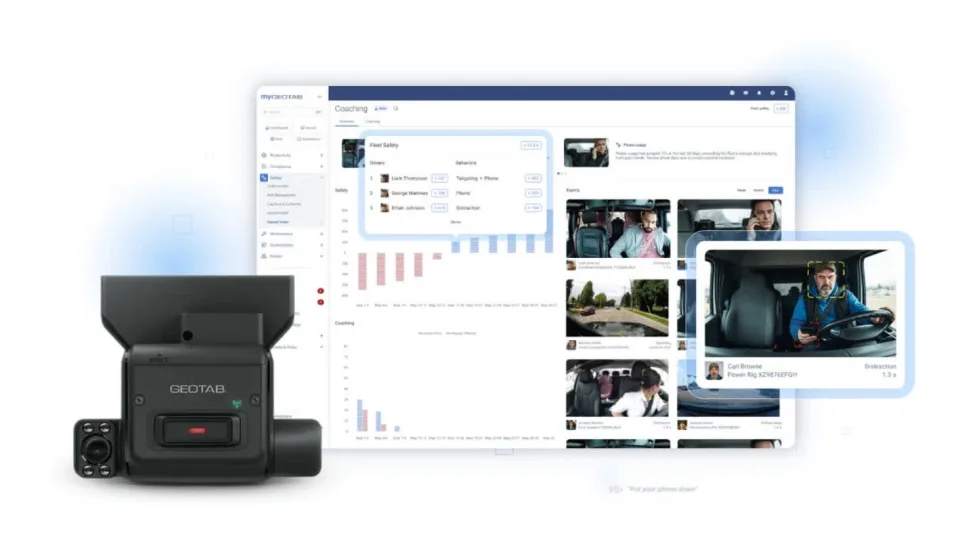
Geotab Expands Fleet Safety Tools With Video Coaching, Risk Insights
New safety and video capabilities aim to help fleet managers assess risk, support drivers, and take targeted action through video coaching, red-light violation detection, and more.
Read More →
How to Build a Better School Bus Driver Training Program
Is it time to strengthen your driver training? Here’s how to pick the right talent and improve recruitment, retention, and safety. This video is brought to you by IC Bus.
Read More →

Recent School Bus Accidents Leave 2 Dead, 2 Injured
Four school bus crashes in Florida, Illinois, and Georgia highlight risks in transportation lots, at bus stops, and during student loading and unloading.
Read More →
When Every Second Matters, Clarity Keeps Routes Moving
From routine delays to urgent incidents, strong communication practices help drivers, dispatchers, schools, and families respond with confidence.
Read More →
What Happens When a School Bus Catches Fire — and What Can Help
School bus fires are rare but can be devastating. Learn how advances in fire suppression and asset protection help fleets detect fires earlier, reduce damage, and improve safety.
Read More →
Geotab Launches Tool to Help Fleets Investigate Road Incidents
Geotab Investigations combines telematics data, video, documents, and other evidence to help fleets reconstruct incidents, resolve claims, and determine what happened.
Read More →
Texas Sixth Grader Wins 2026 National School Bus Safety Poster Contest
Sai Darshana Yekolu of Moseley Middle School in Prosper, Texas, was named the newest winner for her artwork, bringing the theme of “Safe Rides, Everyday Heroes” to life.
Read More →
Doing More With Less: How Transportation Directors Can Prioritize Safety Amid Budget Uncertainty
With diesel prices soaring and nearly one-third of transportation directors expecting budget cuts, maintaining student safety has never been more challenging. Download this guide to learn how leading districts are prioritizing risk, funding critical safety technology, and building stronger budget cases with data.
Read More →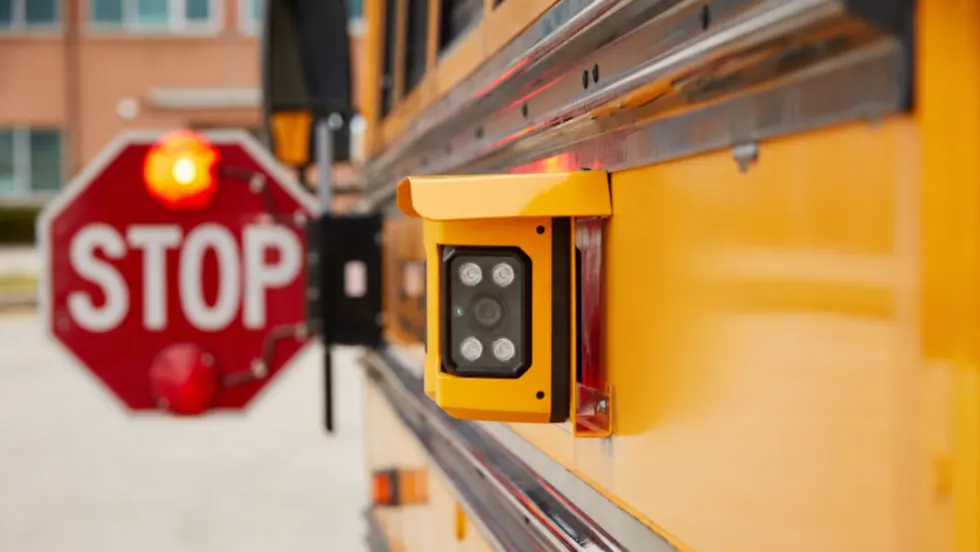
Walton County Schools Adds Gatekeeper Stop-Arm Enforcement System
The Florida district will deploy Gatekeeper’s updated Student Protector technology, which now incorporates AI to improve video evidence.
Read More →