





Risk Management Solutions Provider Releases Report on School Safety, Security
How to Prepare for Potential Threats to School Bus Safety, Security
With threats ranging from hijackings to active shooter scenarios, you can never be too prepared. Here, School Bus Fleet rounded up several best practices for de-escalating violent incidents on the bus, and equipping districts with tools to develop their own training programs.
July 12, 2021
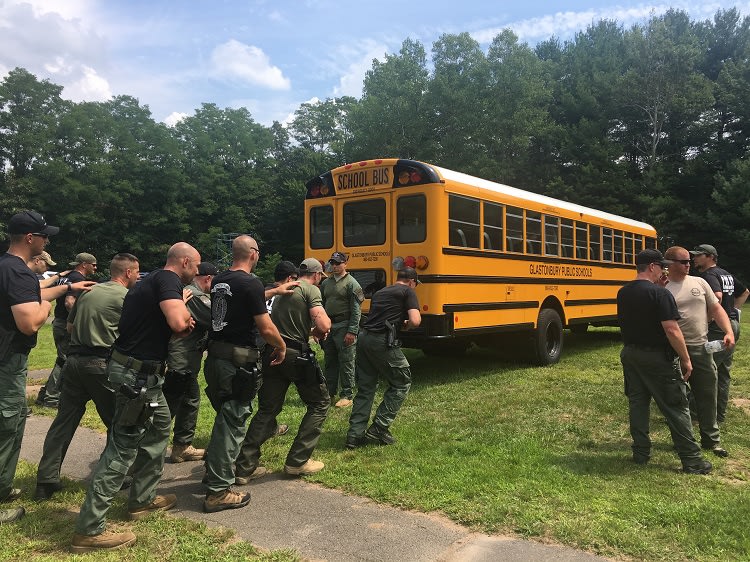
New Britain, Connecticut-based bus dealership and transportation company DATTCO Inc. has worked with a local SWAT team to conduct training that covered active shooter response techniques.
Photo courtesy DATTCO Inc.
7 min to read
We never want to think that something dangerous could happen to students on their way to school, but it is a reality that has prompted the need for awareness, preparedness, and response training for school bus drivers and district personnel around the country.
With threats ranging from hijackings to active shooter scenarios, you can never be too prepared when it comes to safety and protecting young riders. Here, School Bus Fleet rounded up several best practices for de-escalating these type of incidents on the bus, and how school districts, agencies, and industry associations can provide training programs to prepare drivers for the worst possible scenario.
South Carolina’s Hijacking Incident
One recent event that received national media coverage — even landing a spot on Good Morning America — happened in May in South Carolina.
Eighteen students aboard a Richland School District Two bus were headed to Forest Lake Elementary NASA Explorer School when an armed soldier-in-training hijacked the vehicle, reportedly looking for a ride to another town. The Army trainee was later arrested and charged with kidnapping, but the swift work of the bus driver is credited for their ultimate safety.
Driver Kenneth Corbin’s calm demeanor helped de-escalate the dangerous situation and exemplified the training he received through a "Safe Pupil Training" course, the district said in a statement on its website. In recognition for his response and commitment, Richland School District Two held a ceremony in his honor.
“In Richland Two, the goal of our training is to equip our bus drivers with the knowledge, self-confidence, and encouragement they need to handle any situation to the best of their ability,” Libby Roof, the district’s chief communications officer, says.
The transportation training team in the district uses Infini-I Workforce Solutions, an online training platform, to facilitate quarterly training for bus drivers. Drivers watch a minimum of four hours on a handful of different topics. A key component of the regular bus driver training is preparing for dangerous situations that they may encounter on the road, Roof explains. The district’s drivers also receive hostage training from the Richland County Sheriff’s Department, as well as active shooter training with the South Carolina State Law Enforcement Division.
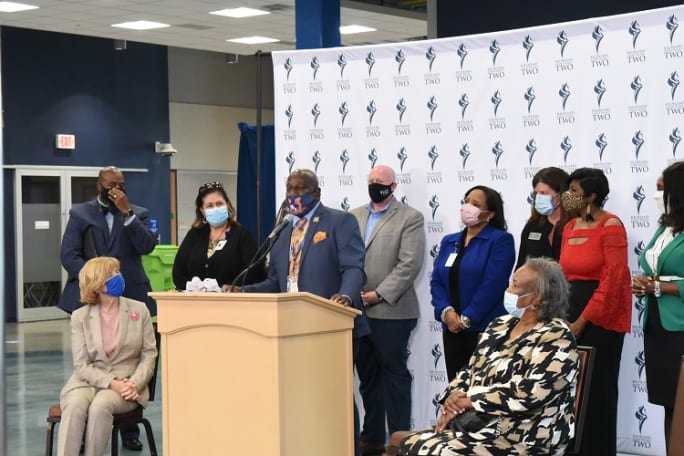
Kenneth Corbin, a school bus driver for Richland School District Two, was recognized for his heroism during a school bus hijacking incident that took place in South Carolina on May 6. The district credited Corbin’s calm demeanor and training for his quick response and ability to de-escalate the situation.
Photo courtesy R2 Communications and Strategic Partnerships
The Need for Training
While we were unable to find statistics on the number of school bus incidents, Frank Baio, assistant VP of safety and risk management for DATTCO Inc., says “The propensity for these events to occur in the future is significant enough to take up a position to address them if and when they do arise.”
“It’s vitally important [to provide driver de-escalation training] because it’s something you don’t want to encounter, but if and when you do, you need the tools to diffuse a situation, do the right thing, and get in contact with law enforcement,” Curt Macysyn, executive director of the National School Transportation Association (NSTA), adds. “Any missteps along the way could be critical. We’re transporting children, so we have to be hyper aware of our surroundings to keep them out of harm’s way.”
Training Topics
NSTA last offered an interactive school bus hijacking simulation training at its annual meeting and convention in 2019 in Austin, Texas. The workshop was presented by the Transportation Security Administration (TSA) and the National Tactical Officers Association. Speakers and sessions covered warning signs of an attack and what to watch for, different aspects of bus breaches and the respective appropriate response, and potential tactical maneuvers should a bus be in jeopardy.
DATTCO developed active shooter protocols in 2013 and evolved it into specific areas of driver behavior. Baio says they also took aspects of Department of Homeland Security protocols.
“Weaving those together, we tried to raise the awareness level of our employees and provide an appropriate response to any of the various scenarios that could be encountered,” he explains.
All individuals in the DATTCO program are exposed to media presentations ranging from overall security awareness to terrorism, active shooter scenarios, and relieving themselves of a vehicle to summon help. The company calls it their “seven steps to safety” exercise.
In Florida, Orange County Public Schools provides five days of training and dry runs for drivers before school starts, says Kim Frye, the district’s director of transportation services. The training includes de-escalating and traumatic behavior.
“We have also had discussion about active assailants, but this is an area I believe all of us need more training materials on,” she says.
Frye shares the key outcomes for Orange County’s current training program, which include:
Defining trauma.
Identifying causes or triggers of trauma.
Understanding the effects of traumatic stress and recognize the signs.
Discussing best practices in preventing and de-escalating.
Verbalizing de-escalation techniques.
Control of self.
Physical stance.
De-escalation discussion.
Avoid power struggles.
Active listening — concentrate on, acknowledge, respond to, and empathize with students.
The key takeaway from the active shooter and hostage training at Richland School District Two is remaining calm, which helps students remain calm and compliant with commands, Roof explains.
“Additional safety training with students helps build trust between students and drivers, so that in emergencies students are trained to listen to the driver and follow the driver’s lead,” she says.
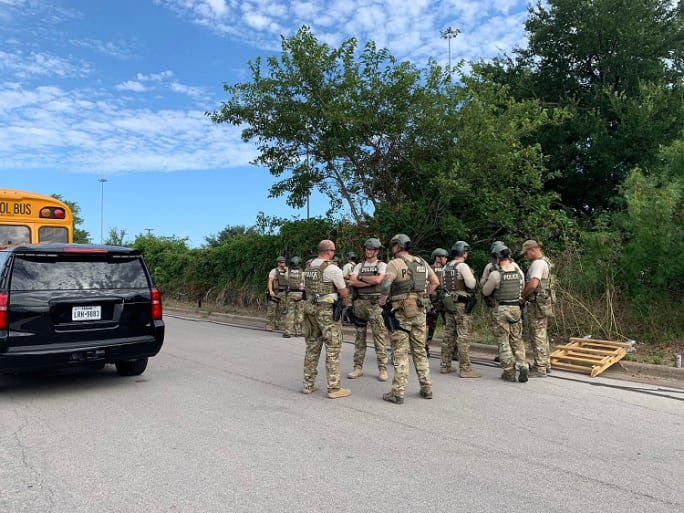
During the National School Transportation Association's (NSTA's) 2019 Annual Meeting in Austin, Texas, members had the chance to participate in a "School Bus Hijacking Simulation Training" presented by the Transportation Security Administration and the National Tactical Officers Association.
Photo courtesy National School Transportation Association
The Importance of Updates
It’s important to offer more than the occasional or even annual training. DATTCO’s employees receive ongoing bulletins on trends and tips, and drivers must attend six safety meetings per year.
Frye shares her district’s “T.I.P. of the day,” which stands for "Thoughts, Information, and Pointers." A new initiative started at the end of the 2020-21 school year, it involves sending out phone messages, texts, and emails with a tip once a week during the school year.
Training Development Tips
Our experts agreed that more than just bus drivers should complete training programs. Include safety trainers, stduent resource officers (SROs), occupational health and safety managers, and any other key staff.
Baio also recommends a multi-stage, multimedia approach.
“We have to recognize that as adult learners, our employees take information in very different ways,” he says. “Each training session consists of lectures, DVDs, practical skills attainment, live drills, and an overall interaction between the trainer and an employee. We’ve found that [this] works best for us and for our employees to absorb the material.”
If you need help formulating your own training program, Baio advises to do your homework and contact agencies that have templated platforms and formats that can be modified to your needs and overall response.
“Be careful in buying a corporate product that is one-size-fits-all,” he warns.
And if you need a partner, Durham School Services says that “With every district we serve, we are always willing to partner on any customized training programs. Trainings we’ve performed previously for de-escalation proved to be an invaluable course, and we will always be here for our partners to cover critical topics and training that can better serve their respective communities.”
Similarly, the TSA partners with groups to assess operations and responses in the field with its BASE Tool. TSA also offers its First Observer Plus video training for school buses available online for individual or classroom study and the opportunity to receive a certificate of completion. The agency’s School Bus Counterterrorism Guide can also be found online.
Staying on Trend
NSTA’s Macysyn said it’s crucial to stay on top of new and emerging threats, too; currently, the NSTA is focused on cybersecurity. As buses are equipped with more and more technological features, it’s up to administrators to stay on top of new ways that could cause an attack while transporting students.
“It really is critical to foster relationships with law enforcement for these and other reasons such as changing traffic patterns due to construction, emergency road closures, and law enforcement activity,” Macysyn says. “The evolution of where breaches of security occur continues to evolve. It’s a race to stay in front of the threat.”
Above all, Baio believes in maintaining a level of awareness without underlying fear.
“When you let fear of an inevitable catastrophic event take over, your judgement is impaired,” he says. “If you prepare, train, and stay on top of trends, you are in a much better position to adapt your response and to prepare you employees for what they may encounter in the future.”
Subscribe to Our Newsletter
More Safety

How to Build a Better School Bus Driver Training Program
Is it time to strengthen your driver training? Here’s how to pick the right talent and improve recruitment, retention, and safety. This video is brought to you by IC Bus.
Read More →
Recent School Bus Accidents Leave 2 Dead, 2 Injured
Four school bus crashes in Florida, Illinois, and Georgia highlight risks in transportation lots, at bus stops, and during student loading and unloading.
Read More →
Sponsored•September 8, 2026
When Every Second Matters, Clarity Keeps Routes Moving
From routine delays to urgent incidents, strong communication practices help drivers, dispatchers, schools, and families respond with confidence.
Read More →

What Happens When a School Bus Catches Fire — and What Can Help
School bus fires are rare but can be devastating. Learn how advances in fire suppression and asset protection help fleets detect fires earlier, reduce damage, and improve safety.
Read More →
Geotab Launches Tool to Help Fleets Investigate Road Incidents
Geotab Investigations combines telematics data, video, documents, and other evidence to help fleets reconstruct incidents, resolve claims, and determine what happened.
Read More →
Texas Sixth Grader Wins 2026 National School Bus Safety Poster Contest
Sai Darshana Yekolu of Moseley Middle School in Prosper, Texas, was named the newest winner for her artwork, bringing the theme of “Safe Rides, Everyday Heroes” to life.
Read More →
Sponsored•August 27, 2026
Doing More With Less: How Transportation Directors Can Prioritize Safety Amid Budget Uncertainty
With diesel prices soaring and nearly one-third of transportation directors expecting budget cuts, maintaining student safety has never been more challenging. Download this guide to learn how leading districts are prioritizing risk, funding critical safety technology, and building stronger budget cases with data.
Read More →
Walton County Schools Adds Gatekeeper Stop-Arm Enforcement System
The Florida district will deploy Gatekeeper’s updated Student Protector technology, which now incorporates AI to improve video evidence.
Read More →
How To Build a More Secure School Bus Yard During and After Hours
As thefts and overnight security threats continue, school transportation leaders are combining stronger operational practices with AI-enabled surveillance to better protect buses, facilities, and staff.
Read More →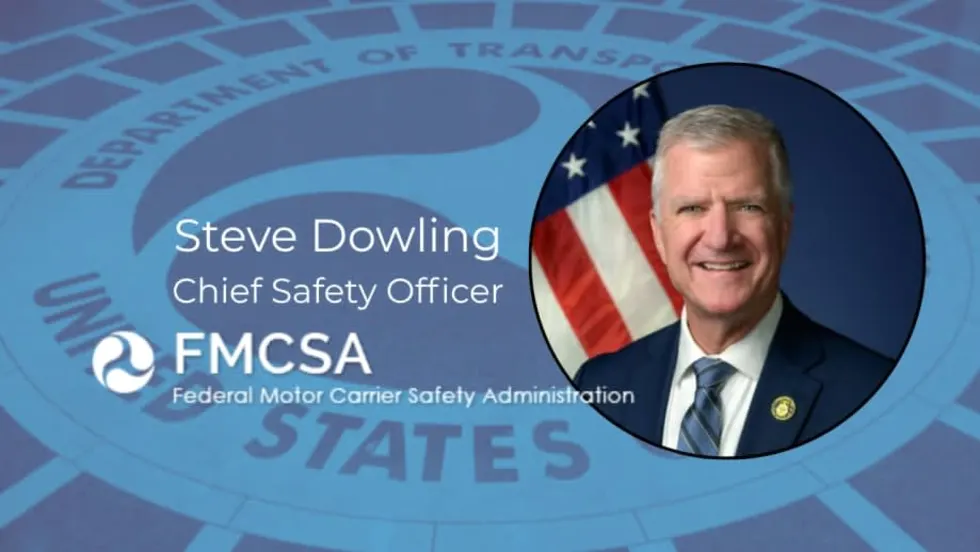
FMCSA Names New Chief Safety Officer: What School Bus Operators Should Know
Steve Dowling is set to lead the federal agency's efforts to advance commercial motor vehicle safety and reduce crashes, fatalities, and injuries on the nation's roadways.
Read More →