



Highway-Rail Intersection Awareness
• Look for the advance warning sign, a yellow circle marked by an “R X R,” to allow time for a gradual stop. Motorists traveling behind the bus may no...

• Look for the advance warning sign, a yellow circle marked by an “R X R,” to allow time for a gradual stop. Motorists traveling behind the bus may not be aware of the stopping requirement. • At multiple-track crossings, the number of tracks is indicated below the railroad crossbuck sign. Stay alert after the last car of a train has passed. It could be blocking the view of a train approaching on another set of tracks. Wait for an unobstructed view in both directions before crossing. • Buses aren’t the only vehicles that stop. Federal regulations and the laws of most states require trucks carrying hazardous materials (noted by placards on the vehicle) to stop at all highway-rail grade crossings. Be prepared to stop behind them. • Before crossing tracks, make sure there will be enough space for the bus on the other side in case a sudden stop becomes necessary. • To avoid stalling and getting stuck on the tracks, never change gears while crossing a highway-rail intersection. Use the highest gear which will allow you to cross. • If the bus does stall on the crossing, immediately evacuate and get everyone to a safe distance from the tracks. Check signposts or signal housing for emergency notification information and call 911. Give the Department of Transportation number if it is posted as well as the location of the crossing. • A loaded freight train moving at 55 mph takes at least a mile to stop after fully applying its brakes. Light rail trains need about 600 feet, and an eight-car passenger train needs about a mile to stop when traveling at 80 mph. • Don’t try to judge a train’s speed or distance, especially at night. An optical illusion may make it appear to be farther away and traveling more slowly than it really is. Source: Operation Lifesaver. To schedule a free highway-rail safety presentation, contact the Operation Lifesaver Coordinator in your state. Certified presenters are available to speak to school classrooms, scout groups and community service groups. For more information, visit www.oli.org/oli.
More Management

Zum Reaches 19 States With New York Expansion
The addition of the Empire State to the student transportation company's roster marks a growing expansion in the Northeast as it scales its tech and school bus services.
Read More →
First Student Updates Its Parent App
First View connects both yellow bus and alternative transportation, giving families one platform to track student trips for the new school year, with 15 languages supported.
Read More →
The Back-to-School Checklist Every Director Should Complete Before the First Bell
Help your transportation team start the school year strong with these tips for contingency planning, communication, fleet visibility, technology, and trip management.
Read More →
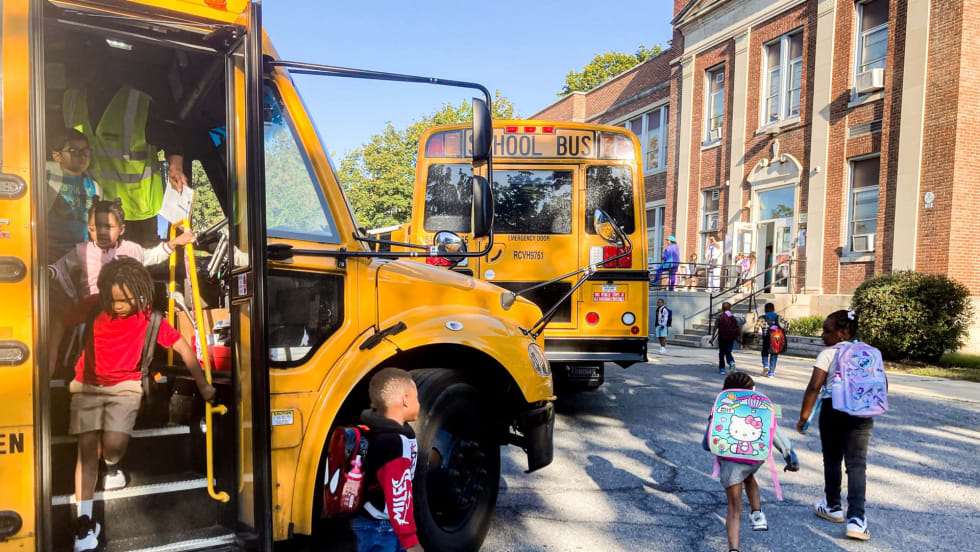
How a New York District Cut Nearly $1M in Transportation Costs While Expanding Bus Access
A data-driven overhaul with BusRight reduced Poughkeepsie City School District's planned routes from 26 to 17 while extending school bus service to about 1,200 additional students.
Read More →
Budgets Down, Enrollment Shifting: What the Data Says Districts Should Watch
School transportation departments face two converging challenges this year: tightening budgets and shifting enrollment. Most districts still address these issues separately, but the assumption that either trend will simplify operations is proving incorrect.
Read More →
These 8 School Transportation Companies Made the 2026 Inc. 5000 List
Find out which school transportation contractors, technology providers, and suppliers ranked among America’s fastest-growing private companies.
Read More →
The Link Between Emotional Intelligence and School Bus Safety
How can emotional intelligence help transportation pros navigate stress, manage change, and build stronger relationships? Listen to find out.
Read More →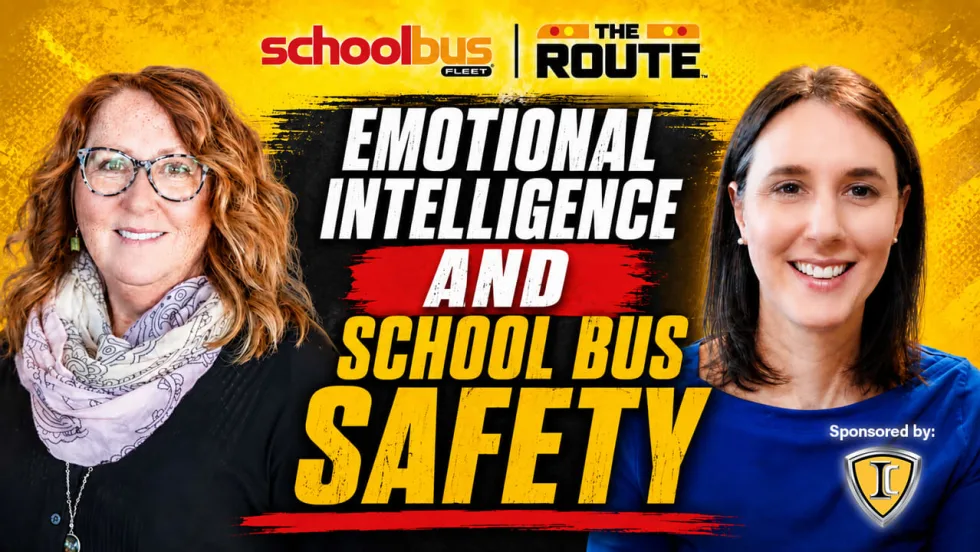
What Emotional Intelligence Has to Do With School Bus Safety
In this video, discover how emotional intelligence can help transportation leaders and drivers navigate stress, manage change, and build stronger relationships. The Route is sponsored by IC Bus.
Read More →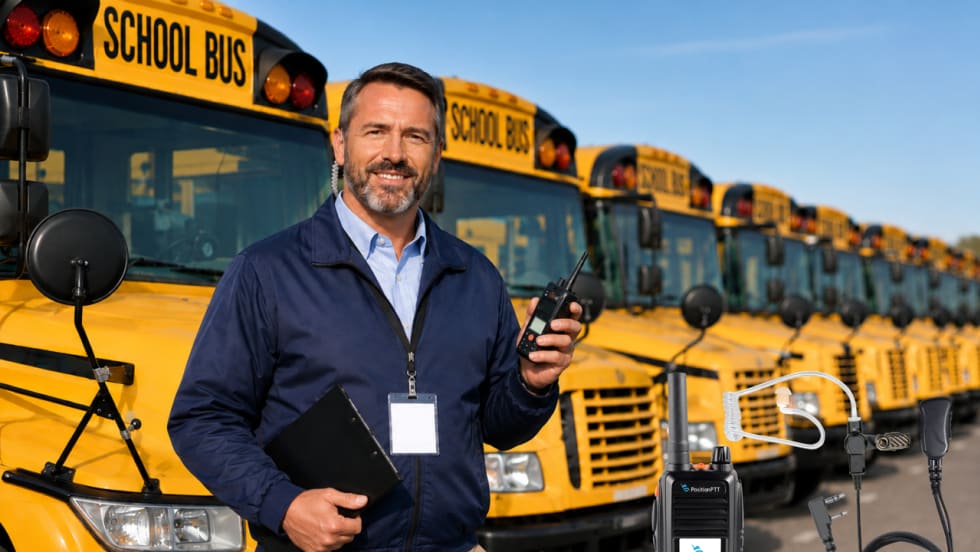
Beyond Two-Way Radios: School Bus Communications Evolve With Push-to-Talk Over Cellular
PRYME Radio and PositionPTT join forces to advance hands-free radio use and reduce distracted driving. See how PoC compares with traditional radios on range, cost, safety, and connectivity.
Read More →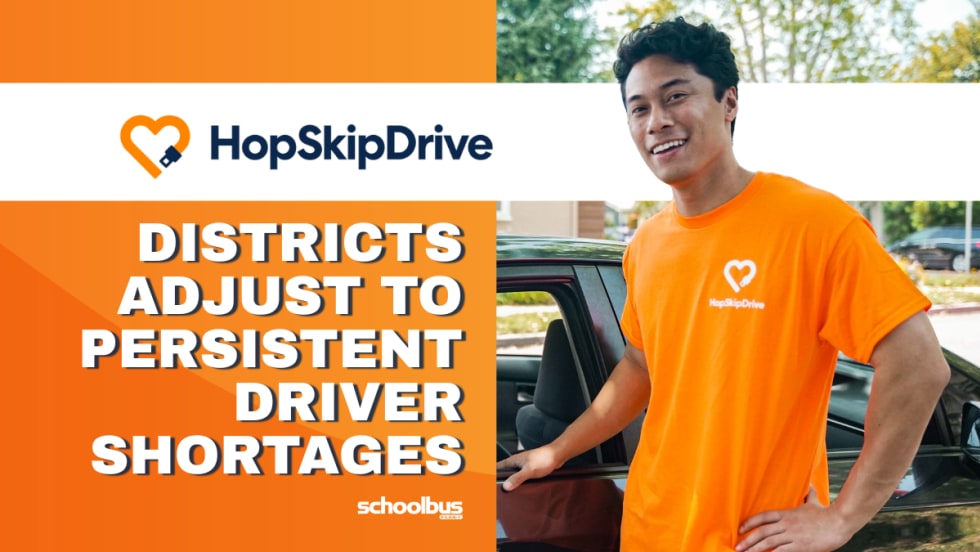
Have School Districts Adapted to Bus Driver Shortages or Simply Accepted Less Service?
According to a recent report from HopSkipDrive, many districts appear to have recalibrated what "normal" transportation service looks like.
Read More →